
Pont Woljeonggyo (월정교)
19.2Km 2025-03-26
274, Gyo-dong, Gyeongju-si, Gyeongsangbuk-do
Ce pont a été construit à Gyo-dong dans la ville de Gyeongju-si (région Gyeongsangbuk-do) pendant la période du royaume unifié de Silla. Il a été endommagé sous la dynastie Joseon avant d'être restauré en avril 2018 en tant que plus grand pont en bois de Corée.
Selon le livre Samguksagi, il fut bâti durant la 19e année du règne du roi Gyeongdeokwang (760) du royaume unifié de Silla afin de relier Wolseong et Namsan à Gyeongju.
Pohang Traditional Culture Center / 포항전통문화체험관
19.3Km 2025-08-11
7, Deokdongmunhwa-gil Gibuk-myeon, Buk-gu, Pohang-si, Gyeongsangbuk-do
+82-54-280-9371~3
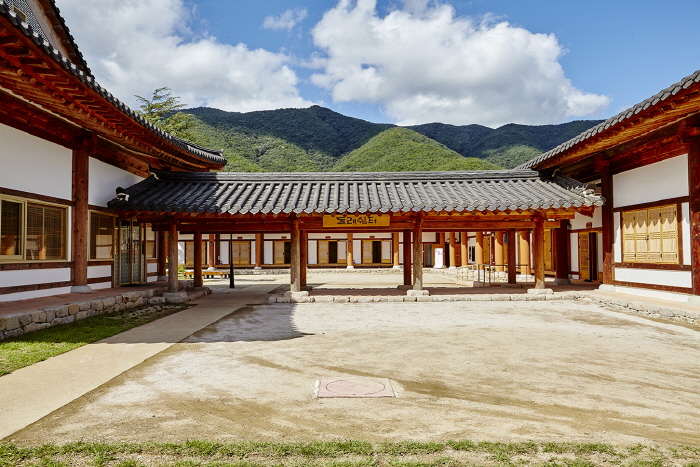
Located in Deokdong Village about 40 minutes from downtown Pohang, the Pohang Traditional Culture Center consists of three traditional Korean buildings -- 'Lodge Building,' 'Cultural Training Hall,' and 'Food Experience Hall' -- and 'Guestroom Building' forming the shape of 'ㄱ' on an 8,251m² area. The hills surrounding the center create a cozy environment, and a grove of pine and fir trees right past the entrance adds to the beautiful natural landscape. Thanks to the clean air, you will be able to see stars in the night sky. The site originally belonged to an elementary school before being transformed into a cultural center as part of Pohang City's urban project. The center is managed and maintained by Pohang City Facilities Management Corporation as commissioned by Pohang City. As a place for learning and appreciating Korean culture in the natural landscape of Deokdong Village, which has a long history, it's now a popular field trip destination among schools. The Center offers various educational and character building programs designed to restore the traditional culture of Korea by providing students with an opportunity to learn their culture, including 'seodang (private village school that provided elementary education during the Goryeo and Joseon dynasties),' calligraphy, tea drinking, and ecosystem classes. Other programs include 'nanta (Korean traditional percussion instrument),' 'taekkyeon (traditional Korean martial art),' straw and Korean paper handicraft, and natural dyeing classes. The most popular program at the center is the traditional cooking class wherein participants get to make and try various traditional food items such as bean curd and rice cake. It's popular because the teachers/instructors use traditional recipes that many people think are fun to follow. Most of these are one or two-day programs and are participated in by groups of over 20 guests. Individual guests are also welcome to sign up for the program. The Guestroom Building has 10 guestrooms, each furnished with television, refrigerator, air conditioner, dressing table, and hair dryer for the convenience of the guests. Men's and women's bathrooms and shower rooms are in a separate building because they are shared among the guests. One of the biggest advantages of staying at this center is the reasonable room rates, which are fixed regardless of season and day (whether weekday or weekend). Moreover, there is no extra charge for additional guests in each guestroom. Paid breakfast is served at the cafeteria in the 'Experience Hall.' The breakfast is reasonably priced as well, not to mention delicious.
Site de parapente du mont Gonnyunsan (곤륜산 활공장)
19.4Km 2025-03-17
Heunghae-eup, Buk-gu, Pohang-si, Gyeongsangbuk-do
Le site de parapente du mont Gonnyunsan est une destination tendance à Pohang, permettant de profiter de belles vues du littoral.
Tombeau Royal de la Reine Seondeok (경주 선덕여왕릉)
19.6Km 2021-02-02
Baeban-dong, Gyeongju-si, Gyeongsangbuk-do
+82-54-779-6100
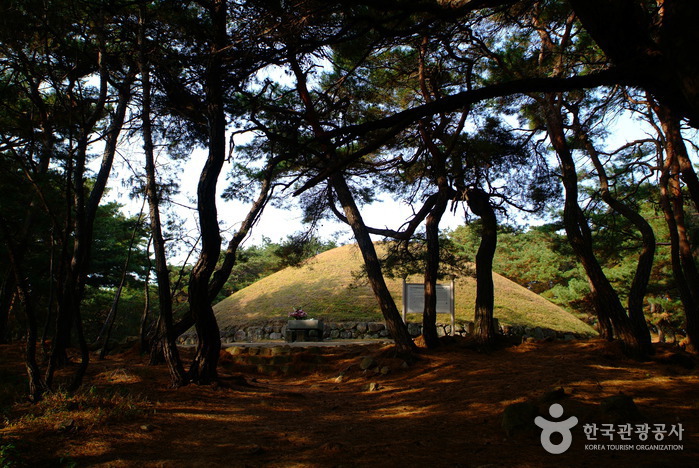
Le Tombeau Royal de la Reine Seondeok, situé à Bomun-dong, est un tombeau de forme ronde avec des couches de terre, et d’une circonférence de 73 mètres. A part le fait qu’il fut construit avec une double couche de pierre naturelle, le tombeau n’a pas d’autres caractéristiques uniques. En tant que fille la plus âgée du Roi Jinpyeong, la Reine Seondeok devint la première reine de la Dynastie Shilla. Durant la seizième année de son règne, le Temple Bunhwangsa et l’Obesrvatoire Cheomseongdae furent bâtis. Elle ordonna aussi la construction de la célèbre pagode à neuf étages du Temple Hwangyongsa, véritable réussite d’architecture bouddhiste. Alors que ses nombreux efforts ont posé les fondations de l’unification des Trois Royaumes, le règne de la Reine Seondeok fut infesté par les révoltes et les conflits. Elle décéda en 647, durant une révolte, 23 ans avant que l’unification n’ait lieu.
 Français
 한국어
한국어 English
 日本語
日本語 中文(简体)
 Deutsch
 Español
 Русский


