
YOU&I Clinic Jamsil (유앤아이의원 잠실점)
16.2Km 2025-11-24
3rd Floor, Lotte World Wellbeing Center, 240 Olympic-ro, Songpa-gu, Seoul
YOU&I Clinic is a trusted dermatology and aesthetic clinic with extensive experience and expertise accumulated since 2006.
At YOU&I Clinic, we are committed to using authentic products, providing precise and honest treatments, and offering personalized services tailored to each individual’s needs.
We welcome clients not only from Korea but also from Japan, China, and Thailand, and offer Japanese and Chinese interpretation services. All foreign clients receive treatments at the same prices as Korean clients.
YOU&I Clinic specializes in lifting, petite procedures, and skin boosters, as well as a wide range of aesthetic skin treatments. We also provide thorough aftercare to ensure the highest level of satisfaction for every client.
SHINE BEAUTY MEDICAL (해우광해외무역)
16.2Km 2025-10-23
#510, MV Tower, 55 Gangnam-daero 132-gil, Gangnam-gu, Seoul
This International Medical Agency Company has been engaged in international patient attraction since 2015, focusing on South Korea and Vietnam (Hanoi and Ho Chi Minh City). The representative has experience at Konkuk University Hospital/ International Medical Center and currently serves as an expert advisor for the Ministry of Health and Welfare and the Korea Health Industry Development Institute in the fields of overseas medical expansion and international patient attraction. In addition, the institution is designated as an official international patient attraction partner of Gangnam District, Seoul, and collaborates with a wide range of medical institutions—including plastic surgery clinics, dermatology clinics, urology clinics, dental clinics, ophthalmology clinics, and Korean traditional medicine hospitals—to support both international patient attraction and overseas medical expansion.
Soonplus Plastic Surgery · Dermatology (순플러스성형외과의원)
16.2Km 2026-01-02
(12th-13th Floors, Mulberry Hills Medical Building), 589 Gangnam-daero, Seocho-gu, Seoul
At Soonplus Plastic Surgery · Dermatology, we are dedicated to enhancing the unique beauty of each individual through meticulous diagnoses and ongoing research.
For 25 years, we have quietly pursued the path of true beauty, and now, we are reaffirming our commitment to the principles that have guided us since the beginning.
Our focus is on natural beauty, helping you discover and embrace your own distinctive charm—one that is authentic and not influenced by fleeting trends.
This unwavering dedication to preserving individuality has been our hallmark for over two decades.
At Soonplus Plastic Surgery · Dermatology, we are committed to continuing this journey with you, bringing out the pure beauty that is uniquely yours.
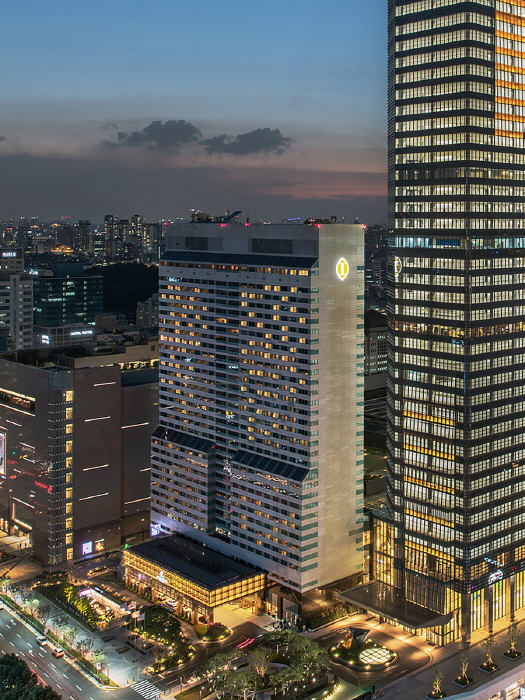
Grand InterContinental Seoul Parnas (그랜드 인터컨티넨탈 서울 파르나스)
16.3Km 2024-08-20
521, Teheran-ro, Gangnam-gu, Seoul
The Grand InterContinental Seoul Parnas is conveniently located in the heart of southern Seoul’s business district, featuring COEX convention and exhibition center, and City Airport. THe nearby COEX Mall offers duty free shops, a casino, cinema and over 200 shops.
The hotel is the largest 5-star hotel in Korea, featuring state-of-the-art amenities, including a grand ballroom and 15 banquet halls, perfect for hosting conventions and gathers of all sizes. Each of the 516 guestrooms is large and decorated comfortably for the perfect stay. Also, the hotel offers various restaurants from French, Italian, Asian, Japanese, to Chinese with top of the line chefs that cook up a delicious meal.
Parnas Mall (파르나스몰)
16.3Km 2025-01-06
521, Teheran-ro, Gangnam-gu, Seoul
+82-2-559-7089
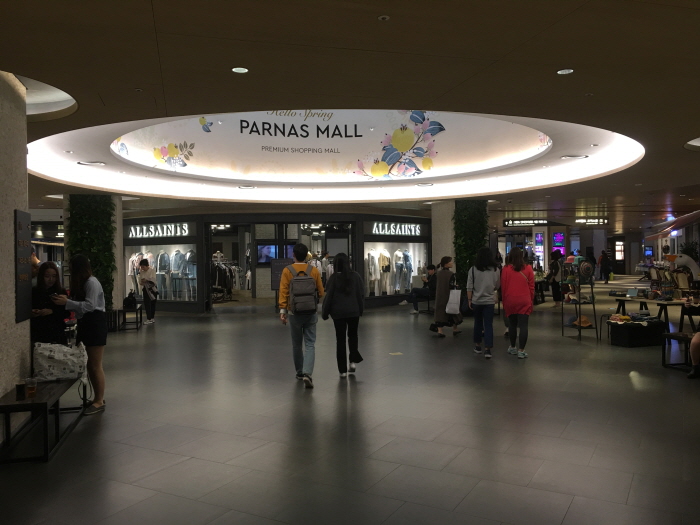
Parnas Mall is the first premium casual shopping mall opened by a hotel chain. Grand Intercontinental Seoul's Parnas Mall is located on the first underground level and features shopping, food, beverages, and cultural activities all in one place.

Lotte World Tower & Mall (롯데월드타워&롯데월드몰)
16.3Km 2024-11-28
300 Olympic-ro, Songpa-gu, Seoul
+82-2-3213-5000
Lotte World Tower was designed with a conceptual motif inspired by Korean ceramics and writing brushes. With 123 floors total, the tower is the fifth tallest building in the world, standing at 555 meters. The tower contains galleries, cafés, and a luxury hotel, in addition to a skywalk and an observation deck. It is one of the best spots to appreciate the breathtaking view of Seoul's vibrant city lights.
Lotte World Mall, located next to the tower, features Avenuel, a complex of luxury department stores. The multi-leveled mall draws in many visitors as one of the top shopping attractions in Seoul, with a variety of domestic and foreign brands. The mall also offers a wide-range of entertainment facilities, such as a movie theater, aquarium, concert hall, and more.
Sichuan House (시추안하우스 본점)
16.3Km 2025-12-10
29 Teheran-ro 87-gil, Gangnam-gu, Seoul
02-508-1320
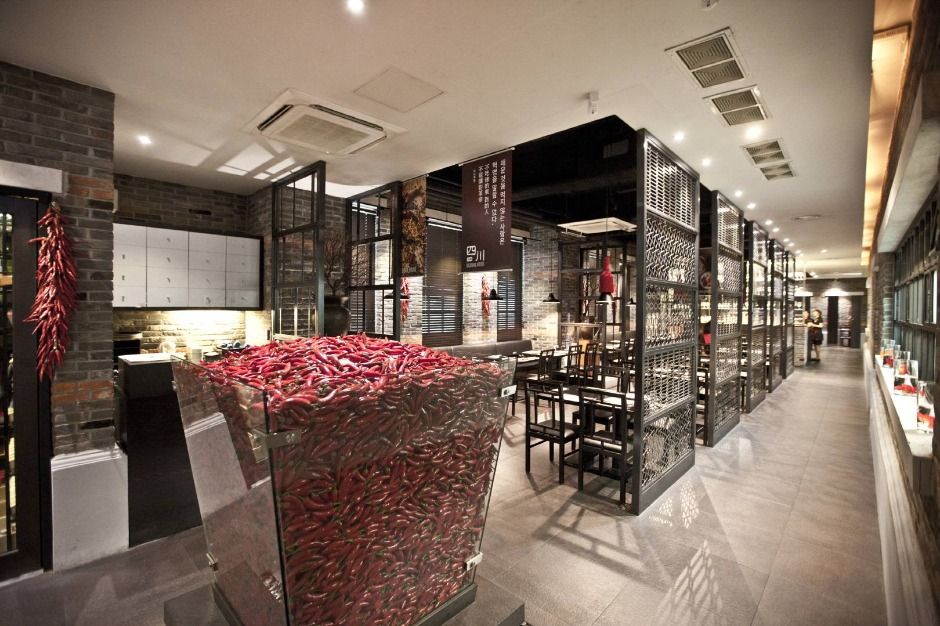
Sichuan House serves over 30 Chinese dishes, featuring fiery chili peppers from Sichuan perfectly balanced with 17 spices from around the world. Since introducing authentic mala food for the first time in Korea in 2009, it offers dishes such as mala hot pot, Sichuan spicy fried chicken, and tan tan noodles. The interior, utilizing brown bricks and black frames, creates an atmosphere reminiscent of the streets of Shanghai.
Seoul Center for National Intangible Cultural Asset (서울국가무형문화재전수회관)
16.3Km 2023-06-13
406, Bongeunsa-ro, Gangnam-gu, Seoul
+82-2-566-6300
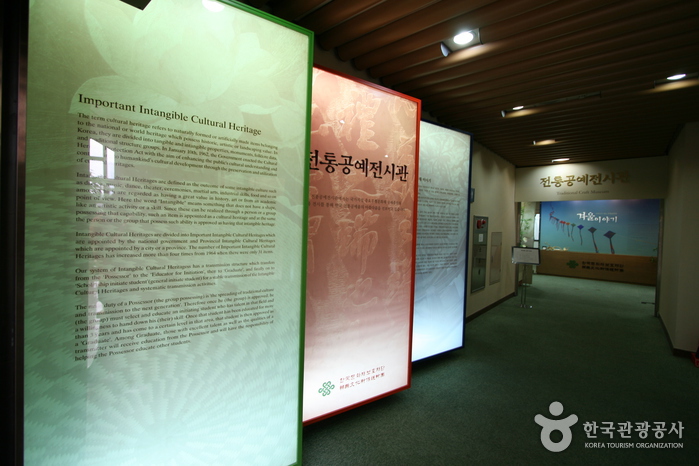
Created by the government to hand down traditions and preserve important, intangible cultural assets, the center supports cultural masters in the training of their pupils and their efforts to promote Korean traditional culture to the general public.
The center houses 8 groups that represent the music field. Serving not only as a training ground for those specializing in the arts, the center also seeks to reach out to the general public through regular programs and recitals. Musicians also participate in musical conferences, events and performances on a national and international level.
There are 12 craft groups at the center that are directed by craft masters who have been designated 'National Intangible Cultural Assets.' Craft groups host a number of training programs.
Other special features of the center include the 'Pungryu,' a 147-seat folk theatre; the 2 or 3 story 'Traditional Craft Hall' with an open-run exhibition hall and planned exhibition hall; a shop selling the works of the artists; a seminar room; a training room; and a practical training room.
Mudiocean Inc. (주식회사 뮤디오션)
16.3Km 2025-10-23
4F, 7 Bongeunsa-ro 49-gil, Gangnam-gu, Seoul
Mudiocean Inc., is a professional medical tourism agency that has successfully launched the Holistic Beauty Tour, a tourism brand. It started as an IT-based AI solution provider and later transformed itself into a tourism startup by obtaining a venture business certification and a tourism venture business certification (for businesses in their early phase). Based on this, the company provides differentiated services by combining IT and medical tourism services.
Mudiocean Inc., is currently engaged in various activities to promote the superiority of Korean medical tourism around the globe, particularly focusing on attracting Chinese tourists. The company actively participates in medical tourism events in Thailand, Japan, Indonesia, etc., to expand its presence in the global market. Moving forward, Mudiocean Inc., will recommend business models that combine Korean medical services and tourism. The company will strive to provide the best experience for domestic and overseas customers.
Hema Studio (헤마스튜디오)
16.3Km 2023-06-22
20-10 Nonhyeon-dong, Gangnam-gu, Seoul
+82-70-7504-1415
Hema Studio is a place that provides experience services for K-pop lovers and is located in Gangnam, Seoul. Hema Studio offers products that allow foreign tourists to record their favorite K-pop songs and shoot personal music videos. You can go through the entire process from recording to cover music video shooting with a 1:1 director. After cover recording and music video shooting are complete, the completed work can be put on a USB and shared with friends and family. It is also possible to upload to SNS such as YouTube and TikTok. Hema Studio is located in the downtown area of Gangnam, so it is easily accessible via public transportation such as subway and bus.
 English
 한국어
한국어 日本語
日本語 中文(简体)
 Deutsch
 Français
 Español
 Русский


