Rakkojae Seoul Bukchon Hanok Hotel (락고재 서울 북촌 한옥호텔)
10.3Km 2025-10-27
49-23 , Gyedong-gil, Jongno-gu, Seoul
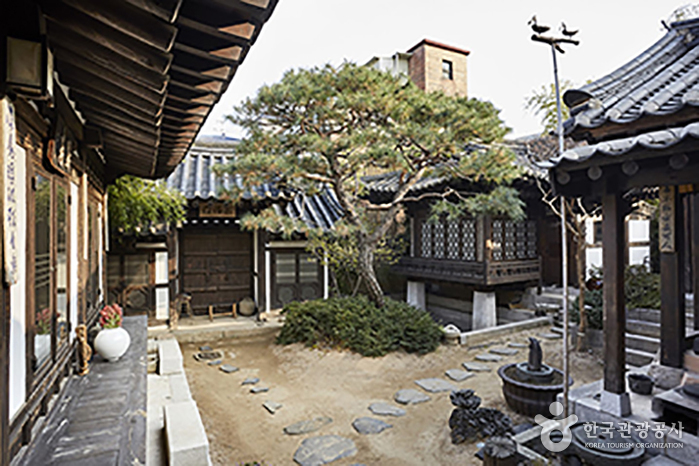
Rakgojae Bukchon Hanok Hotel in Jongru-gu, Seoul, is a traditional hanok compound with a 130-year history, renovated by master carpenter Jeong Yeong-jin. The elegant gate and stone walls, the traditional roof tiles, the jangdokdae jar store, the pavilions and ponds - not to mention the beautiful pine trees - express the archetypal beauty of hanok. Sitting on the daecheongmaru (wooden patio) with a breeze in the trees, guests will feel taken back in time. Guestrooms are clean and comfortable, and visitors can relax in a wood-fired red-clay sauna and a jade-covered ondol room,. Traditional culture programs are available.
Hwanggeum Kongbat (황금콩밭)
10.3Km 2025-10-31
9 Mapo-daero 16-gil, Mapo-gu, Seoul
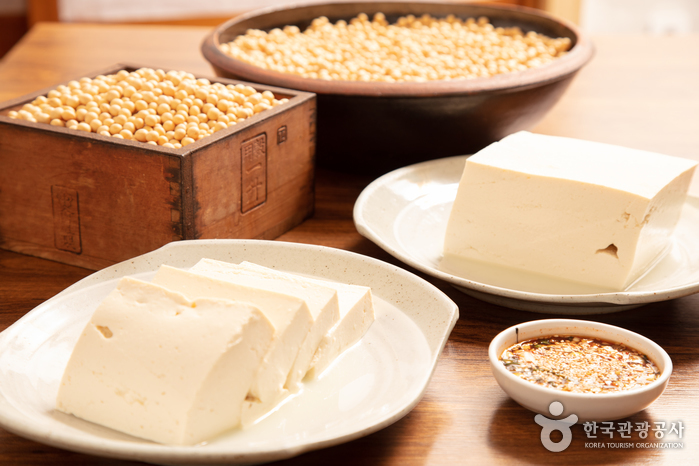
Hwanggeum Kongbat specializes in bean curd, using 100% Korean-grown soybeans and salt to make their bean curd fresh daily. The restaurant is famous for their method of making a bean curd that is smooth and maintains the nutty yet sweet flavor of the soybeans.
Aromind (아로마인드)
10.3Km 2024-01-30
19-7 Bukchon-ro 5-gil, Jongno-gu, Seoul
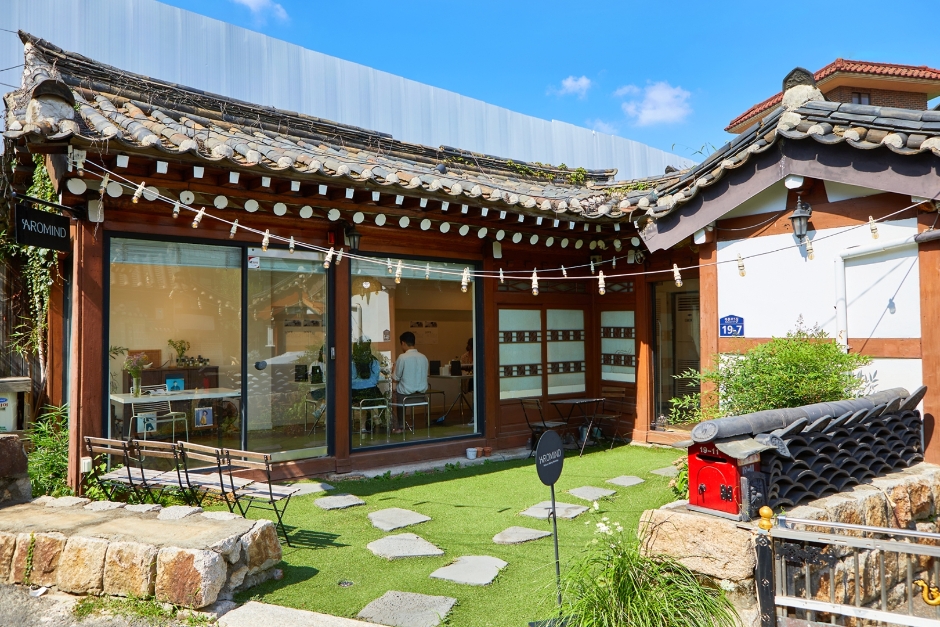
Aromind is a perfume workshop that offers a perfume-making experience with a professional perfumer in a quiet hanok building. Visitors can create their own one-of-a-kind perfume by choosing three out of 30 different scent options that change on a seasonal basis. A perfume one-day class is held for one to eight people for one to one and a half hours. The fee for the experience includes a 50 ml product and a 10 ml sample. They also offer the class in Korean with English interpretation when there non-Korean speaking participants. Aromind is the perfect place to create your own scent to associate your memory of Korea.

Bukchon Hanok Village Gamgodang Street (북촌한옥마을 감고당길)
10.3Km 2025-10-30
Anguk-dong, Jongno-gu, Seoul
An alley with cute cafes and galleries
This is the road that appeared in the last episode and the flashback scene where Choi Ung (played by Choi Woosik) and Kuk Yeonsoo (played by Kim Dami) got drunk. Behind the Seoul Craft Museum in Bukchon Hanok Village, it extends for about 440m from Poongmoon Girls' High School to Jeongdok Library. There are many pretty cafes and galleries on the cozy road, and there are also craft markets open, so there is plenty to look around. The alley where Kuk Yeonsoo walked with the drunken Choi Ung on her back is Yunboseon Street in the middle of Gamgodang Street. It stretches along the hill between narrow tiled walls and stone walls, giving off a unique atmosphere.

Yongma Land (용마랜드)
10.3Km 2025-10-28
118 Mangu-ro 70-gil, Jungnang-gu, Seoul
Yongma Land, a private amusement park, was opened at the foot of Yongmasan Mountain in 1983, and closed its doors in 2011. Having spent some time as a derelict building, it has now been repurposed as a nostalgia-filled space. It was made famous as the filming location of Crayon Pop’s "Bar Bar Bar" music video. Since then, it has become a renowned destination for photography, thanks to its unique atmosphere created by the combination of lush greenery and derelict amusement rides. Entry may be restricted in the case of filming or space rentals, so make sure to check with the management before you head to the amusement park. Yongma Land is located next to Bonghwa Middle School, at Exit 1 of Mangu Station, Gyeongui–Jungang Line.
Hanji House (한지가헌)
10.3Km 2025-07-25
31-9 Bukchon-ro, Jongno-gu, Seoul
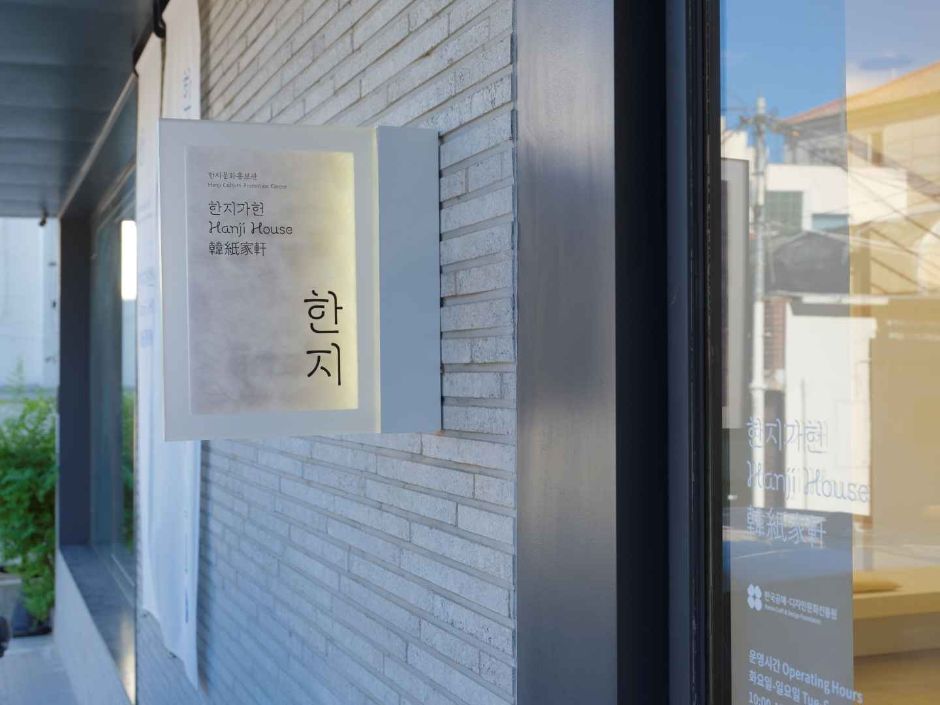
Hanji House was founded to pass on the cultural heritage of hanji, traditional Korean paper, as well as to promote its excellence and uses in everyday life. The center is operated by Korea Craft & Design Foundation, and offers a variety of programs that consist of exhibitions, hands-on activities, classes, and marketing hanji products. On the first floor is Hanji Showroom, where various exhibitions take place to showcase hanji of the past and the present. The basement floor comprises Hanji Open Archive, Hanji Print Studio, and Hanji Workroom, where most of the hands-on activities and classes are held. Hanji House also offers a docent program for exploring the whole area.
Medical Avenue ((주)메디컬애비뉴)
10.3Km 2025-10-23
(#1433, Mapo T Town), 144 Mapo-daero, Mapo-gu, Seoul
Since its inception in 2014, Medical Avenue has been a leading medical agency, providing world-class healthcare services in Korea to patients from around the globe. Our deep understanding of patients' cultural backgrounds and the Korean medical system allows us to minimize language and cultural barriers through the support of professional interpreters and multicultural coordinators. This dedication has resulted in over 5,000 patients receiving stable treatment with a satisfaction rate that boasts over 98% returning patients. Medical Avenue is committed to ensuring that patients receive comfortable and trustworthy care, continually striving to deliver the best medical services available.
Sejong-ro Park (세종로공원)
10.4Km 2022-08-31
jiha 189, Sejong-daero, Jongno-gu, Seoul
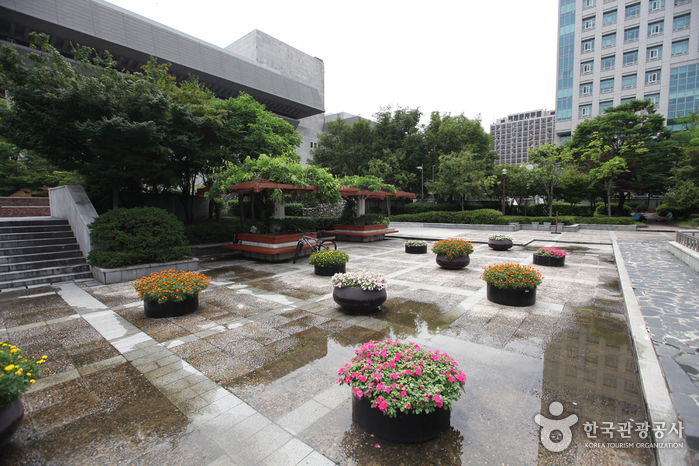
Sejong-ro Park is located next to Sejong Center for the Performing Arts in central Seoul. Inside the park, there are wooden benches and shaded areas where people can sit and relax. Also available are water fountains, a round outdoor stage, and various sculptures. The lunch crowd from the nearby office buildings often come to the park during weekdays. On the weekends, the park is also used as a venue for outdoor weddings.
Seoul's anthem and the poem "Bulnori" by Ju Yo-han are written on a memorial stone that can be found inside the park.
Songhyeon Green Plaza (열린송현 녹지광장)
10.4Km 2025-11-11
Songhyeon-dong, Jongno-gu, Seoul
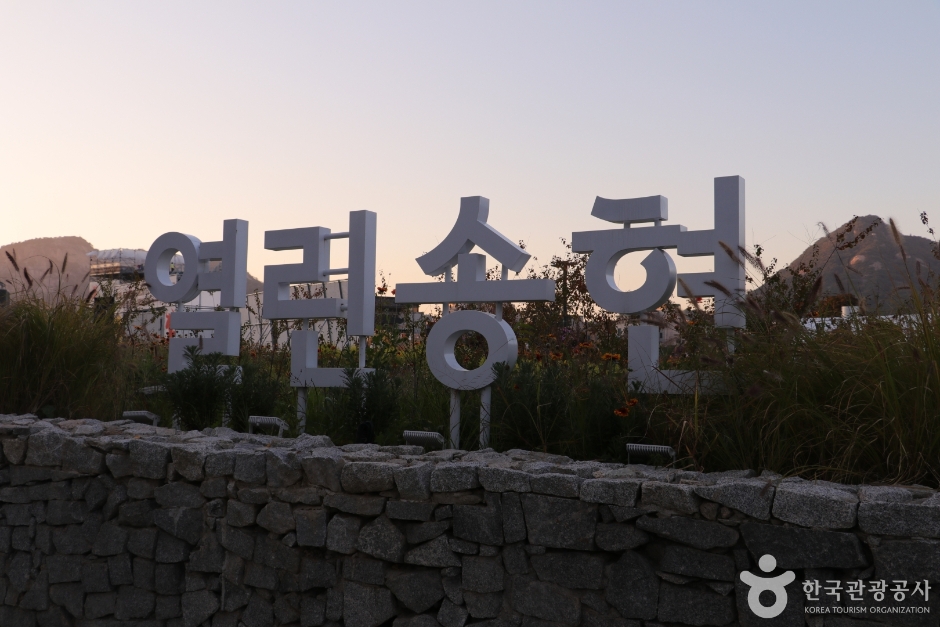
Songhyeon Green Plaza, located between Gyeongbokgung Palace and Jongno, is a space for culture and rest. The site was formerly used as housing for Shiksan Bank during Japanese rule. After Korea’s liberation, it served as a residence for the US Embassy and military personnel. Later in 1997, it was returned to the Korean government but remained unused for years. In 2022, the ownership was transferred to the Korean House and Land Corporation and then to the Seoul Metropolitan Government, which redeveloped it into a green plaza and opened it to the public. Upon entering the plaza, visitors are greeted by a spacious lawn adorned with flowers during the blooming season. The plaza is connected to the nearby tourist attractions through shortcuts cutting through it, including Cheong Wa Dae (Blue House), Gwanghwamun Plaza, Insa-dong, and Bukchon Hanok Village.
YallaKOREA (얄라코리아)
10.4Km 2025-10-23
#700, The Salvation Army Building, 69 Saemunan-ro, Jongno-gu, Seoul
YallaKOREA is a medical tourism agency specialized in serving Arab patients, providing medical services since 2016 for those wishing to visit plastic surgery and dermatology clinics in Korea. For patients undergoing surgery, it offers customized services including medical interpretation, private transportation, hotel reservations, airport pick-up and drop-off services, and daily tours. With years of experience and a deep understanding of Arab culture, it ensures safe and convenient medical tourism.
 English
 한국어
한국어 日本語
日本語 中文(简体)
 Deutsch
 Français
 Español
 Русский


