
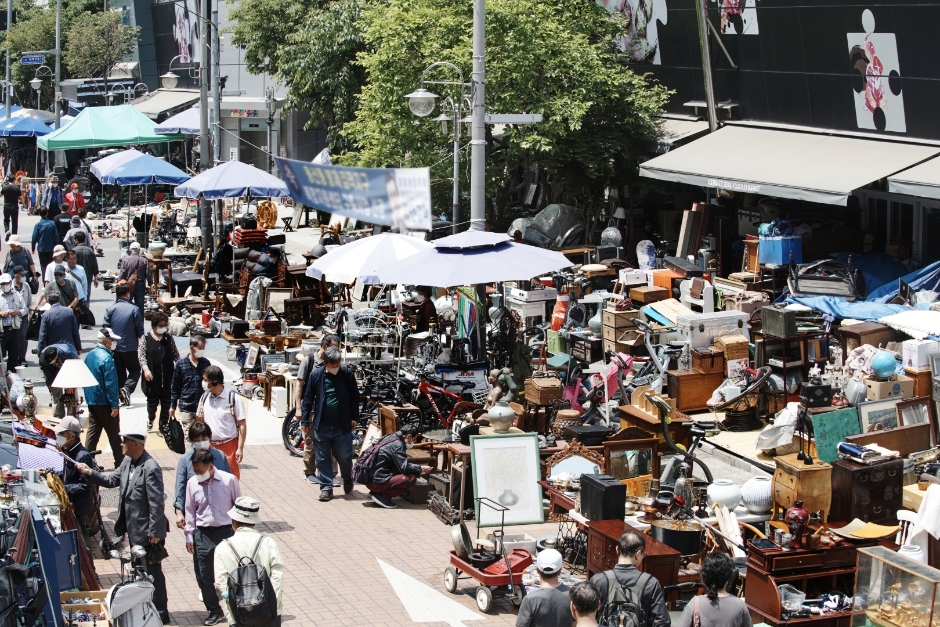
Seoul Folk Flea Market (서울 풍물시장)
18.6Km 2025-04-11
21 Cheonho-daero 4-gil, Dongdaemun-gu, Seoul
+82-2-2232-3367
The Seoul Folk Flea Market is located around Cheonggyecheon Stream's Hwanghakgyo Bridge and Sinseol-dong Station and is on its way to becoming a famous tourist attraction along with the already famous Cheonggyeocheon Stream. The Seoul Folk Flea Market is one of the major folk flea markets preserving the culture of the traditional Korean marketplace and drawing in visitors with a range of folk items that embody the unique charm of Korea. Folk items include everyday items, souvenirs, traditional goods and even traditional foods, allowing visitors to enjoy shopping and eating all under the same roof.
The Seoul Folk Flea Market originated from the flea market in Hwanghak-dong where many street shops and vendors gathered around Cheonggyecheon Stream before it was restored and modernized into its current state. The market was relocated to the Dongdaemun History & Culture Park (Formerly Dongdaemun Stadium) while the Cheonggyecheon Stream was undergoing restorations, and was moved back to Cheonggyecheon Stream sometime later. Seoul City aims to market Seoul Folk Flea Market as a new shopping spot at its current location, the former site of Sungin Girls' Middle School on Cheonggyeo 8-ga Street, near Cheonggyeocheon Stream to develop the Korean representative folk flea market-related tourism industry.
The main items of the Seoul Folk Flea Market include a diverse range of folk items, traditional crafts, local specialties and fashion items. You may also enjoy a range of foods and snacks including traditional Korean food and fusion cuisine from all over the world. What is special about the market is that you can find rare goods and authentic traditional items that cannot be found at other markets. The market atmosphere is a mix of old, revered traditions and modern aspects, providing visitors with a great shopping experience. The Seoul Folk Flea Market is truly a traditional flea market well worth visiting.
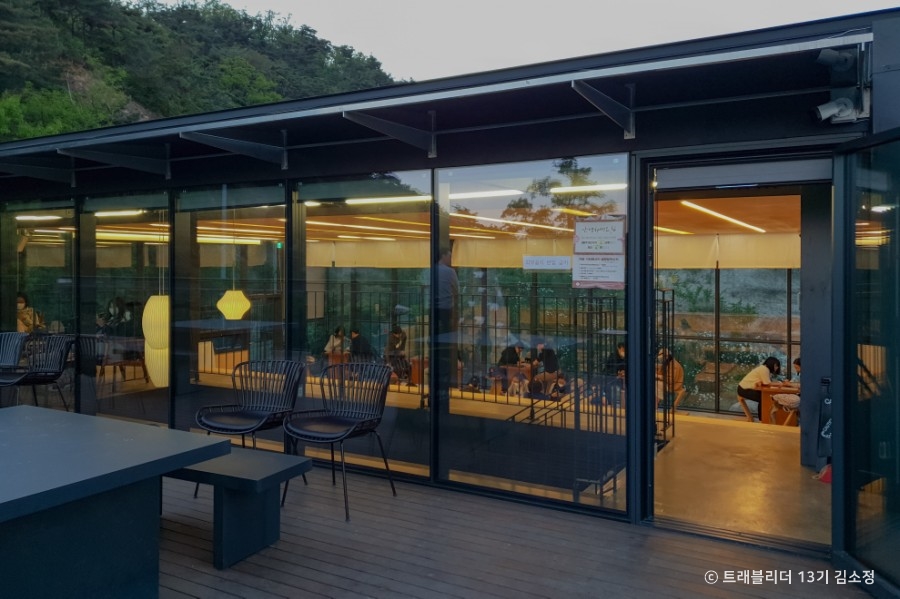
Inwangsan Mountain Chosochaekbang (인왕산 더숲 초소책방)
18.6Km 2024-03-06
172 Inwangsan-ro, Jongno-gu, Seoul
Inwangsan Mountain Chosochaekbang is a bakery and book café located along the trail of Inwangsan Mountain, remodeled from an old police station. Surrounded by glass walls within the forest, it blends seamlessly with nature, offering a panoramic view of Namsan Tower through the transparent windows. On the second floor terrace, guests can enjoy the scenic view of Seoul. Freshly baked bread and desserts are available daily, and the venue occasionally hosts book talks and music concerts.
![Hongneung and Yureung Royal Tombs [UNESCO World Heritage] (남양주 홍릉(고종과 명성황후)과 유릉(순종과 순명,순정 황후) [유네스코 세계문화유산])](http://tong.visitkorea.or.kr/cms/resource/20/2005620_image2_1.jpg)
Hongneung and Yureung Royal Tombs [UNESCO World Heritage] (남양주 홍릉(고종과 명성황후)과 유릉(순종과 순명,순정 황후) [유네스코 세계문화유산])
18.6Km 2021-07-19
352-1, Hongyureung-ro, Namyangju-si, Gyeonggi-do
+82-31-591-7043
Hongneung and Yureung Royal Tombs is Historic Site No. 207. Hongneung Tomb is the resting place of Emperor Gojong and his wife Empress Myeongseong, while Yureung Tomb is the resting place of Emperor Sunjong, his first wife Empress Sunmyeonghyo, and his second wife, Empress Sunjeonghyo. Hongneung and Yureung look different from other royal tombs. When the name of the country changed from the Joseon dynasty to the Daehan Empire, the rulers of Korea were called emperors. Therefore, the tombs of the two emperors were modeled after the tomb of the Ming dynasty’s ruler, King Taizu (Zhu Yuanzhang). Surrounding Hongneung and Yureung are statues carved in the shape of animals such as giraffes, elephants, and lions, which can’t be seen at the other royal tombs of the Joseon dynasty. The stonework of Hongneung tomb was made in a traditional way, while the stonework of Yureung tomb shows a more realistic and advanced technique.
London Bagel Museum Anguk Main Store (런던베이글뮤지엄 안국점)
18.6Km 2024-02-20
20 Bukchon-ro 4-gil, Jongno-gu, Seoul
London Bagel Museum is a bagel specialty shop adorned with a wooden-tone interior and a garland in the shape of the British flag. The bagels are made using the traditional British method of fermenting the dough, boiling it, and then baking it in the oven. Jambon butter sandwich bagel, made with sesame bagel filled with ham and butter, is a signature menu item.
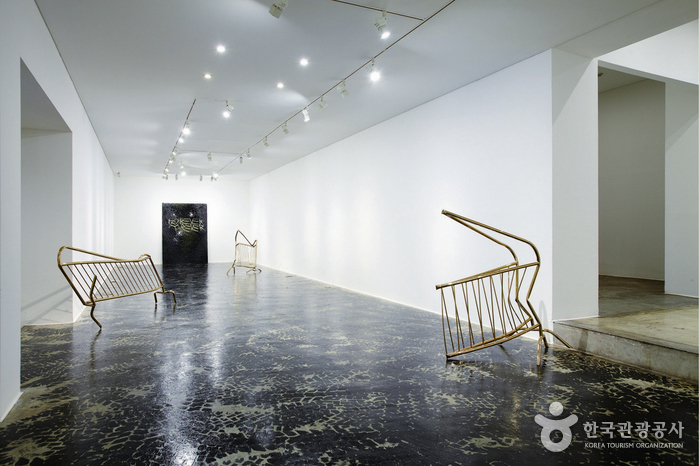
Kukje Gallery (국제갤러리)
18.6Km 2021-07-29
54, Samcheong-ro, Jongno-gu, Seoul
+82-2-735-8449
The Kukje Galley has been committed to presenting the work of significant Korean and international contemporary artists to the public since 1982. The gallery has established itself as a leading venue for international exhibits such as Helen Frankenthaler, Sam Francis, Jim Dine, Frank Stella, Robert Mangold, Anthony Caro, Cy Twombly, Edward Ruscha, Anselm Kiefer, Joseph Beuys, and Bill Viola, attracting enthusiastic responses from both the public and the media.
The gallery has placed emphasis on collaborations between artists, galleries, and art dealers around the world and nurturing upcoming artists by sponsoring their artwork and giving them international exposure.
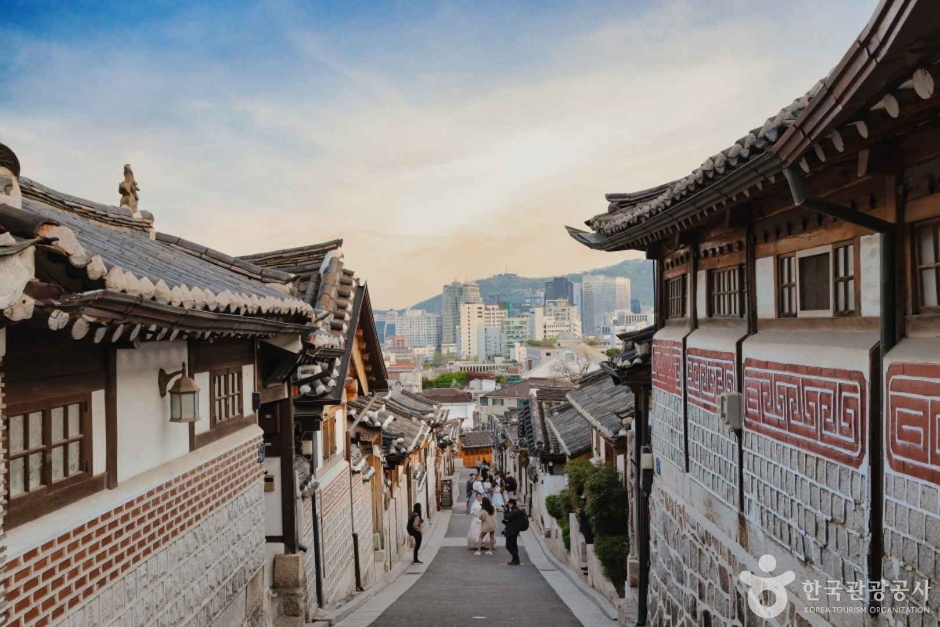
Bukchon Hanok Village (북촌한옥마을)
18.6Km 2025-06-19
37 Gyedong-gil, Jongno-gu, Seoul
Surrounded by Gyeongbokgung Palace, Changdeokgung Palace and Jongmyo Shrine, Bukchon Hanok Village is home to hundreds of traditional houses, called hanok, that date back to the Joseon dynasty. The name Bukchon, which literally translates to "northern village," came about as the neighborhood lies north of two significant Seoul landmarks, Cheonggyecheon Stream and Jongno. Today, many of these hanoks operate as cultural centers, guesthouses, restaurants and tea houses, providing visitors with an opportunity to experience, learn and immerse themselves in traditional Korean culture. As Bukchon Hanok Village is an actual neighborhood with people's homes, visitors are advised to be respectful at all times while looking around.
Hanboknam (한복남)
18.6Km 2021-01-27
17, Bukchon-ro 5ga-gil, Jongno-gu, Seoul
+82-10-6485-8507
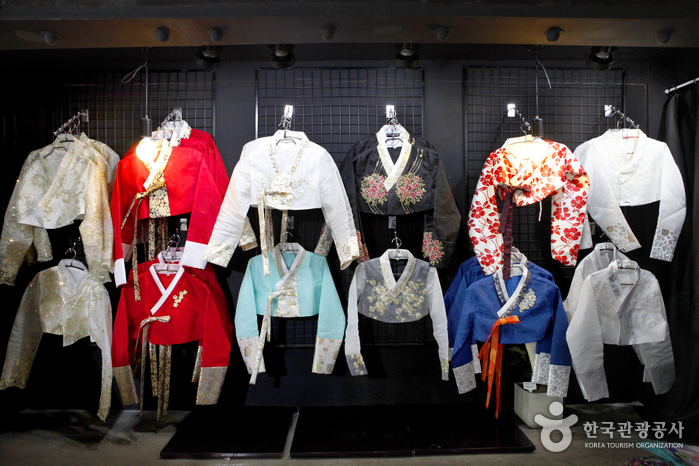
Started in Jeonju in 2012, Hanboknam strived to promote the beauty of hanbok, earning recognition by the Ministry of Culture, Sports and Tourism in 2015. Following this, Hanboknam opened a hanbok exhibition and rental shop in the Bukchon area of Seoul in 2016. The shop provides customers with numerous styles of hanbok, from royalty to beggars. The rental shop also offers various accessories to pair with the different hanbok for a complete look.
Public Hanok Night Out (공공한옥 밤마실)
18.6Km 2025-06-10
37 Gyedong-gil, Jongno-gu, Seoul
+82-2-741-1033
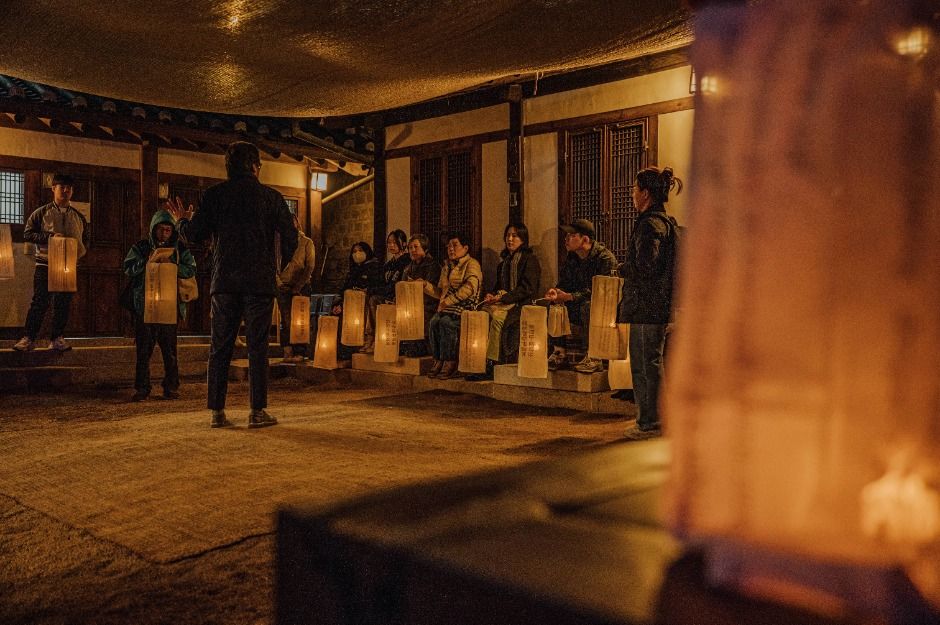
Public Hanok Night Out is a special evening event that allows limited access to the nine public hanok buildings, including the Bukchon Culture Center, after sundown. The event is carefully prepared to make the hanok buildings accessible as much as possible. In addition, the event also offers a variety of programs to entertain the visitors. The event aims to raise awareness about embracing differences and diverse values during this time of ever-changing global society, as well as expand the the cultural values of hanok as something more unique.
Hanji House (한지가헌)
18.6Km 2025-07-25
31-9 Bukchon-ro, Jongno-gu, Seoul
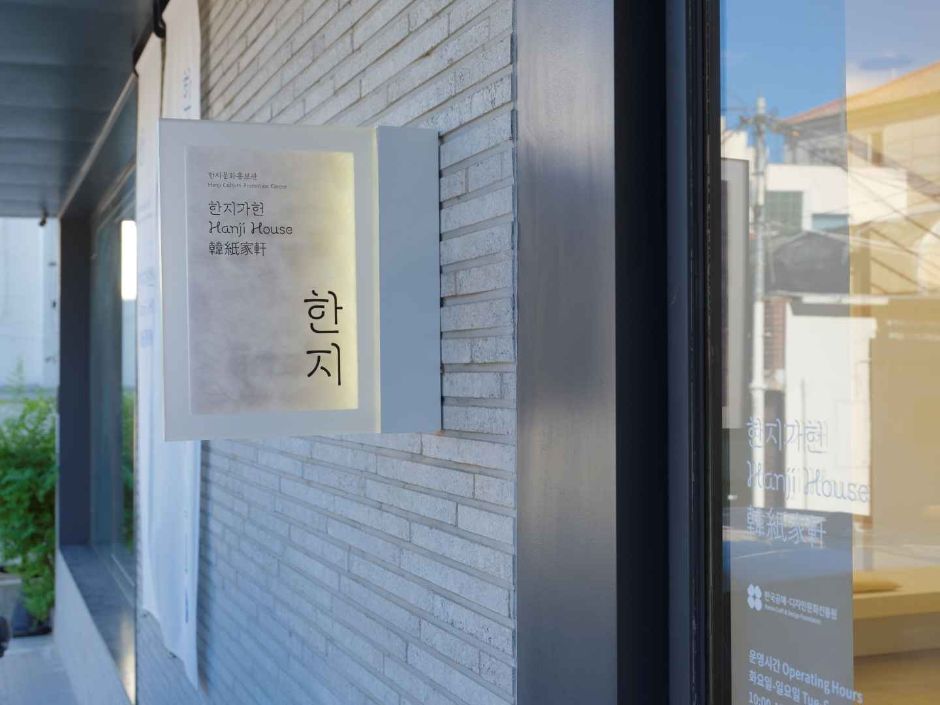
Hanji House was founded to pass on the cultural heritage of hanji, traditional Korean paper, as well as to promote its excellence and uses in everyday life. The center is operated by Korea Craft & Design Foundation, and offers a variety of programs that consist of exhibitions, hands-on activities, classes, and marketing hanji products. On the first floor is Hanji Showroom, where various exhibitions take place to showcase hanji of the past and the present. The basement floor comprises Hanji Open Archive, Hanji Print Studio, and Hanji Workroom, where most of the hands-on activities and classes are held. Hanji House also offers a docent program for exploring the whole area.
 English
 한국어
한국어 日本語
日本語 中文(简体)
 Deutsch
 Français
 Español
 Русский


