![Venture Business hotel [Korea Quality] / 벤처 비즈니스 호텔(유한회사 벤처) [한국관광 품질인증]](http://tong.visitkorea.or.kr/cms/resource/97/2630397_image2_1.jpg)
Venture Business hotel [Korea Quality] / 벤처 비즈니스 호텔(유한회사 벤처) [한국관광 품질인증]
18.0Km 2024-07-08
5-6 , Sangmujungang-ro 38beon-gil, Seo-gu, Gwangju
Venture Business Hotel stands close to Sangmu station on subway line 1 in Gwangju, Jeollanam-do. Visitors can chose from several types of room including ondol rooms, family rooms, VIP twin bed rooms with terrace, and accessible rooms with bathrooms for disabled customers. All rooms are equipped with air dressers to keep your clothing fresh, and some have massage chairs and jacuzzis. Hotel facilities include free breakfast, use of washing machine and dryer, a business center and a 24-hour information desk.
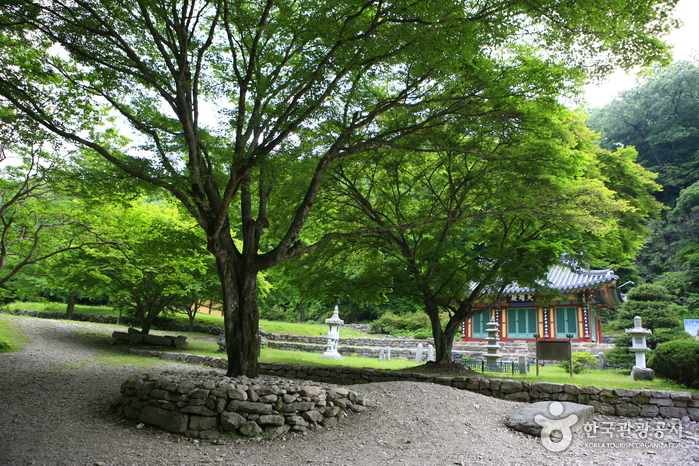
Sunchang Gangcheonsa Temple (강천사 (순창))
18.1Km 2024-04-07
270, Gangcheonsan-gil, Sunchang-gun, Jeonbuk-do
Located approximately 1.8 kilometers from the entrance of Gangcheonsan County Park, Gangcheonsa Temple was built by Monk Doseon during the first year of Queen Jinseong of Silla (AD 887). In the third year of King Chungsuk of Goryeo (1316), the temple saw the addition of a five-story stone pagoda, built by Monk Deokhyeon. At its peak, the temple was said to have had 12 hermitages and housed 1,000 monks. It was burned down during the Imjin War (1592-1598), leaving only the pagoda, but was rebuilt a few years later by Monk Soyo during the 37th year of King Seonjo (1604). Unfortunately, the temple was burned down again in the Korean War, but was once again restored to its original state in 1959.
Cultural assets found at the temple include Stone Guardian Post of Chungsin-ri & Namgye-ri, Sunchang Guesthouse, and the Three-story Stone Pagoda of Sunhwa-ri. Nearby tourist attractions include Geumseongsanseong Fortress, Yongsopokpo Falls, Gangcheonho Lake, Damyangho Lake, Chuwolsan Mountain, Huimunsan Mountain, and Naejangsan National Park.
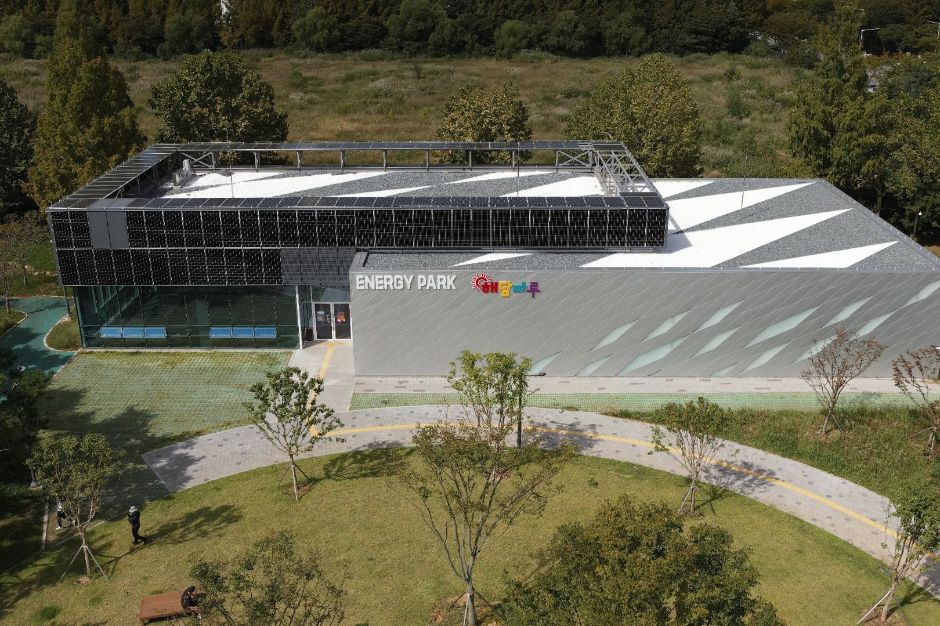
Energy Park Haedammaru (광주에너지파크 해담마루)
18.3Km 2024-12-17
131 Sangmugongwon-ro, Seo-gu, Gwangju
Energy Park Haedammaru opened in September 28, 2021, to educate visitors on the importance of energy. By exhibiting new and renewable energy, as well as different experience programs, visitors are able to understand the importance of energy usage and how to save more energy in daily life.
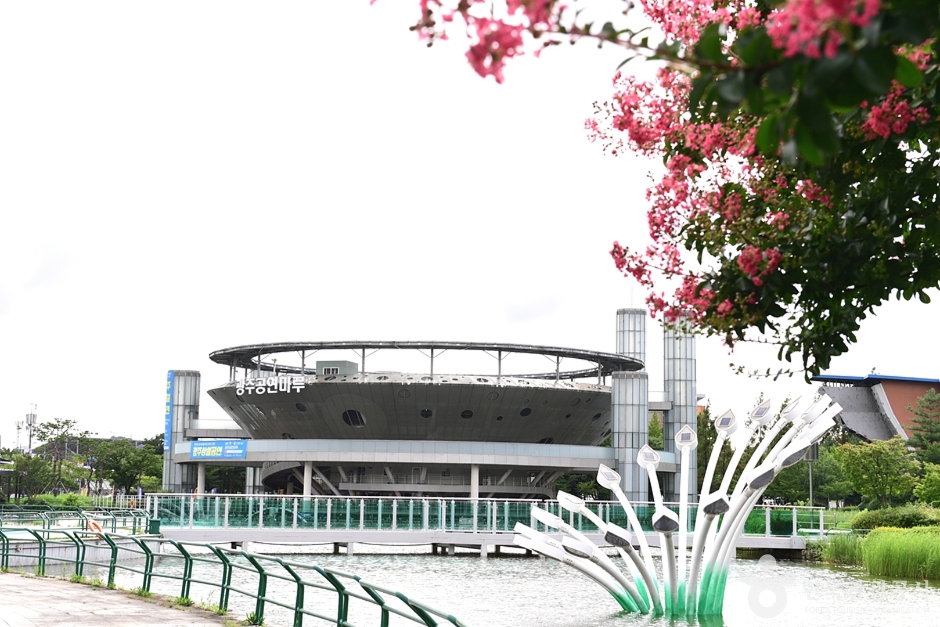
Gwangju Gongyeon Maru (광주광역시공연마루)
18.5Km 2025-03-15
3 Sangmusimin-ro, Seo-gu, Gwangju
Gwangju Gongyeon Maru (Performance Maru) was the performance hall that was used during the World Photonics Expo 2010 Gwangju. After the Expo, the performance hall continued to host various events and performances. After becoming an official performance hall in 2014, it became a permanent performance hall of Gwangju in 2018 after a renovation.
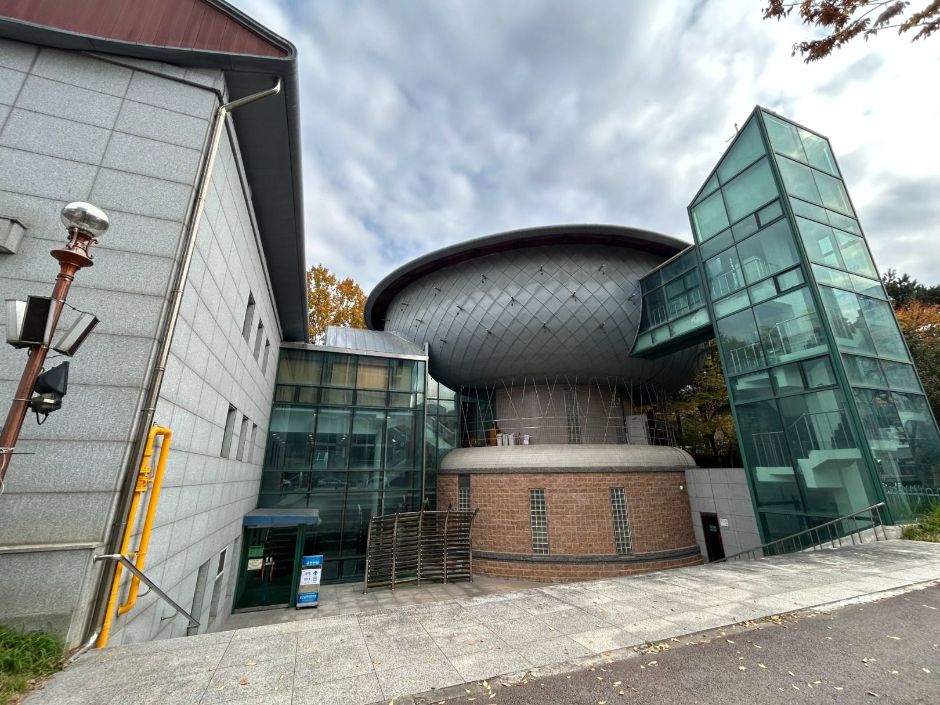
Bitgoeul Korea Traditional Classical Music Instruction Hall (빛고을국악전수관)
18.5Km 2024-12-17
182 Punggeum-ro, Seo-gu, Gwangju
Bitgoeul Korea Traditional Classical Music Instruction Hall offers various programs throughout the year. Since 2002, classes on traditional instruments are available, as well as separate children gugak classes. Special exhibition on the second floor has various instruments that visitors can actually try. The permanent exhibition on the third floor has 45 different gugak instruments as well as videos to further provide detailed information. The main area is the performance hall on B1-B2F, with 137 seats, that offers performances every Thursday for free from traditional gugak to fusion music.
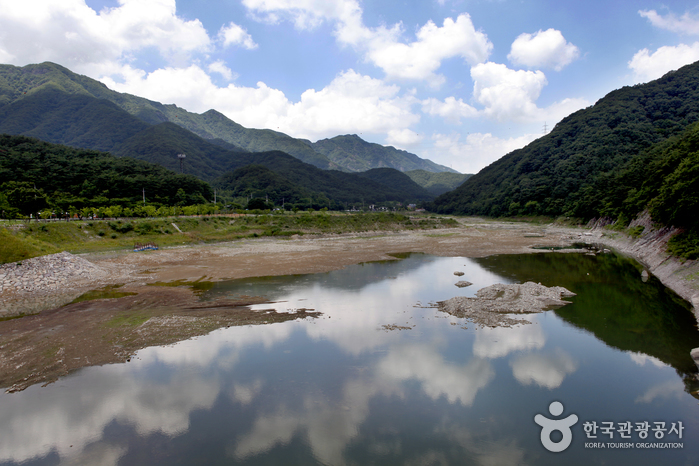
Chuwolsan Mountain (추월산)
18.7Km 2025-01-13
981, Chuwolsan-ro, Damyang-gun, Jeollanam-do
Located 13 kilometers away from Damyang-eup, Chuwolsan Mountain (731 m) was designated Jeollanam-do Provincial Monument No. 4 and is one of the five famous mountains of Jeollanam-do. It marks the boundary between Jeollanam-do, South Jeolla Province (Wolgye-ri, Yong-myeon, the most northern town in Damyang-gun) and Jeollabuk-do, North Jeolla Province (Bokheung-myeon, Sunchang-gun). The mountain has a dense forest, rock formations and stones, and rock walls that look like manmade fortifications with a narrow path to the west which can accommodate only one person at a time.
Shaped like a Buddhist monk lying down when it is seen from Damyang-eup's side, it is popular for its various naturally grown medicinal herbs as well as rare kinds of Chuwolsan orchids. The base of the mountain has gentle slopes and densely packed old pine trees, making it the best destination for families in summer. The hiking trail is hard to climb despite the fact that the peak is not very high. However, it is visited by mountain climbers all year long.
Before reaching Sangbong Peak, there is a hermitage and a mineral spring that never dries up. The peak also boasts an impressive view of the surrounding area, including Damyangho Lake. Chuwolsan Mountain was a battle site during the Imjin War along with the nearby Geumseongsanseong Fortress. The last battle of Donghak Peasant Revolution also took place at Chuwolsan Mountain.
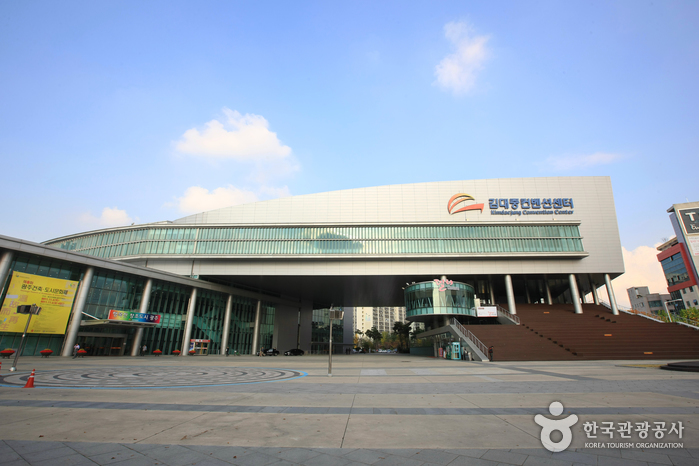
Kimdaejung Convention Center (김대중컨벤션센터)
18.9Km 2025-01-07
30, Sangmunuri-ro, Seo-gu, Gwangju
Kimdaejung Convention Center is a state-of-the-art facility in Gwangju, a city with rich cultural heritage and tourism resources. It was built as part of the efforts to promote Gwangju’s competitiveness as a main trade city in northeast Asia to boost local economy and, particularly, tourism resources. The center has served as a main venue for international meetings and exchanges (concerning products, information, culture, and technologies), significantly improving Gwangju’s image. Outstanding services, professional staff, and diverse amenities will make any meeting at Kimdaejung Convention Center pleasant and successful.
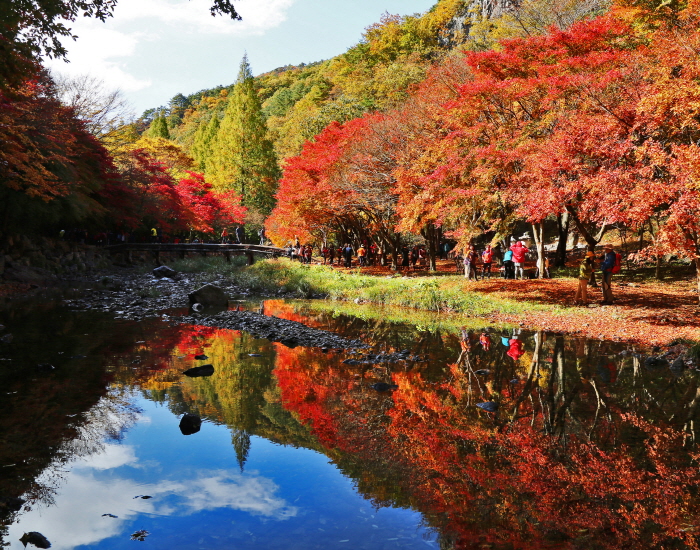
Gangcheonsan County Park (강천산 군립공원)
19.4Km 2024-04-07
97, Gangcheonsan-gil, Sunchang-gun, Jeonbuk-do
Gangcheonsan Mountain is surrounded by Gwangcheonsan Gwangjubong Peak (583.7 meters above sea level), Gwangdeoksan Seonnyeobong Peak (578 meters), and Sanseongsan Yeondaebong Peak (603 meters above sea level) in the area of 996beonji, Cheonggye-ri, Sunchang-gun, Jeollabuk-do. It is divided into small canyons and has an outstanding view with rocky mountains on all sides. The valley was called Gangcheon Valley because clean and clear water flows like a spring on the hard rocks, and all the mountains around it were called Gangcheonsan Mountain. It is said that in the past it was called Yongcheonsan Mountain, named after the shape of two dragons waving their tails toward the sky and ascending to heaven.
Following the Noryeong Mountain Range to Chuwolsan Mountain, it forms Gwangdeoksan Mountain and Yongcheonsan Mountain. On Sanseongsan Mountain (two dragons from the eastern sky to the western sky) that towers high in the sky, two dragons run east side by side. There are numerous peaks, some famous ones are, Yeondaebong, Undaebong, Suyeongbong, Cheonjabong, Gitdaebong, Gwangjubong, Gyeonjebong, and Songrakbong peaks. Between these two mountains is a very deep valley. Some of the famous valleys are, Yeondaegyegok Valley, Seonnyeogyegok Valley (Jeobujegol), Wondeunggyegok Valley (Yongdaeamgol), Buntonggol Pass, Jijigol Valley, Somokgol Valley, Samindaegyegok Valley (Hwangwoojegol), Giwoojegol Valley, Senyanggol Valley, Multonggol Valley, Chodanggol Valley, Ujakgol Valley, Dongmakgol Valley, Geumganggyegok Valley (Tapsanggol), Seungbanggol Valley, Byeondugol Valley, etc. The clear water flowing from every valley joins into one and the sound of the water crashing against the rocks and stones echoes throughout the valley and enters Gangcheonho Lake.
When spring comes, willows bloom, and when the forsythia and azaleas are in full bloom, wild cherry blossoms reach full bloom on every mountain peak. The clear and clean water flows continuously between the gravel along the valley. Visitors can cool off the heat in this river that does not collect moss either because it is too cold or clean. On Gangcheonsan Mountain, there are beautiful shrubs and maple trees, and the baby maples and baby squirrels announce the arrival of autumn among the seven different types of maple trees. The multiple trails on the mountain are not steep or too dangerous, making it popular regardless of age. It is also ideal for mountaineering and mountain-loving hikers. The scenery of the river with white snow and icicles attracts painters who want to capture the moment on a canvas. Gangcheonsan Mountain has four distinct seasons making it a popular destination all year round.

Chonnam National University Hwasun Hospital (화순전남대학교병원)
19.8Km 2025-10-23
B1 Floor, International Medical Center, 322 Seoyang-ro, Hwasun-eup, Hwasun-gun, Jeollanam-do
Chonnam National University Hwasun Hospital (CNUHH) is a globally recognized cancer-specialized hospital, selected one of the “World’s Best Specialized Hospitals” in the oncology field for five consecutive years by Newsweek. Within ten years of its opening, the hospital achieved the highest number of cancer surgeries nationwide, received JCI accreditation twice, and has become a global hospital visited by hospitals in the metropolitan area for benchmarking. The hospital has consistently received top grades in the National Quality Assessment Program by the Health Insurance Review and Assessment Service, demonstrating its excellent medial services. In 2011, the hospital opened the “International Medical Center” to attract foreign patients and pioneering overseas medical markets, and expand it global network. It is the only national university hospital in the nation to have acquired the “Korean Accreditation Program for Hospitals Serving Foreign Patients (KAHF)” by the Ministry of Health and Welfare three times.
 English
 한국어
한국어 日本語
日本語 中文(简体)
 Deutsch
 Français
 Español
 Русский


