
Healthpedia Co., Ltd. (㈜헬스피디아)
1.0Km 2025-10-23
#1014, 2 Toegye-ro 36-gil, Jung-gu, Seoul
HealthPedia is a medical tourism service that connects foreign patients with specialized clinics in Korea, such as dermatology and plastic surgery. We collaborate with partner hospitals by specialty to assist with appointment booking, interpretation, accommodation guidance, as well as pre- and post-treatment consultations and recovery programs. Multilingual support is available in English, Chinese, Vietnamese, and more for a convenient reservation experience.
GS25 - Junggu Toegye Branch [Tax Refund Shop] (GS25중구퇴계점)
1.1Km 2024-06-27
180, Toegye-ro, Jung-gu, Seoul
-
![Olive Young - Myeong-dong Main Branch [Tax Refund Shop] (올리브영 명동본점)](http://tong.visitkorea.or.kr/cms/resource/81/2888381_image2_1.jpg)
Olive Young - Myeong-dong Main Branch [Tax Refund Shop] (올리브영 명동본점)
1.1Km 2024-04-23
53, Myeongdong-gil, Jung-gu, Seoul
-
KongKongY Gallery [Tax Refund Shop] (콩콩이 그림가게)
1.1Km 2024-04-19
Store #325, 3F, 49, Insadong-gil, Jongno-gu, Seoul
-
Bachi Ring (UMC Jewelry) [Tax Refund Shop] (바치링(UMC쥬얼리))
1.1Km 2024-04-19
#414, 49, Insadong-gil, Jongno-gu, Seoul
-
![CheongKwanJang - Jonggak Station Branch [Tax Refund Shop] (정관장 종각역)](http://tong.visitkorea.or.kr/cms/resource/13/2878213_image2_1.jpg)
CheongKwanJang - Jonggak Station Branch [Tax Refund Shop] (정관장 종각역)
1.1Km 2024-04-22
#102, 95, Sambong-ro, Jongno-gu, Seoul
-
Templestay Information Center (템플스테이 홍보관)
1.1Km 2022-10-17
56, Ujeongguk-ro, Jongno-gu, Seoul
+82-2-2031-2000
Templestay Information Center offers various information and services regarding templestays and temple meals for domestic and international visitors. The center also operates traditional cultural experiences, such as tea time with a Buddhist monk, traditional culture activities and more.
![Wiseyou Clinic - Myeong-dong Branch [Tax Refund Shop] (와이즈유의원코스메틱 명동)](http://tong.visitkorea.or.kr/cms/resource/68/2888068_image2_1.jpg)
Wiseyou Clinic - Myeong-dong Branch [Tax Refund Shop] (와이즈유의원코스메틱 명동)
1.1Km 2024-04-17
3F, 52, Myeongdong 8ga-gil, Jung-gu, Seoul
-
Lime Tree Dental Hospital (라임나무치과병원)
1.1Km 2025-10-23
7F, 43 Myeongdong-gil, Jung-gu, Seoul
Located in Myeong-dong, the heart of Seoul tourism, Lime Tree Dental Hospital is a hospital-grade medical institute. It is led by In-su Kim, the Chief Director with 27 years of experience, and it has a team of specialists covering different departments. This hospital boasts superb accessibility as it is right near Myeong-dong Station (Subway Line 4) and Euljiro 1(il)-ga Station (Subway Line 2).
Skilled medical staff in esthetic prosthodontics are in charge of procedures such as One-day Veneer and All Ceramic Crowns. Additionally, medical staff who have experience placing over 35,000 dental implants directly perform implant procedures.
A leader in K-medicine, Lime Tree Dental Hospital is committed to giving customers the utmost satisfaction.
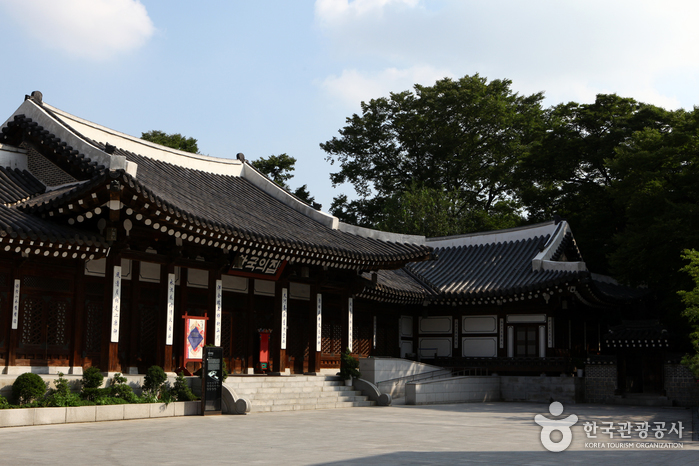
Korea House (한국의집)
1.1Km 2025-10-23
10, Toegye-ro 36-gil, Jung-gu, Seoul
The Korea House was opened in 1981. It is a traditional Korean building that introduces the culture and lifestyle of Koreans, where you can experience traditional architecture and a classical atmosphere. The building was built in the style of the Joseon Dynasty's Jagyeong-jeon building at the Gyeongbok Palace. It is the only building built in the traditional architectural style. You will feel its antiquity as you enter the building.
It is divided into the Haerin-gwan (a space for people to get acquainted with each other), the Traditional Theater, and three annex buildings (Munhyang-ru, Nokeum-jeong and Cheongwu-jeong). At Haerin-gwan, you can enjoy traditional music at Garak-dang and try traditional food at Sohwa-dang. In the square of Garak-dang you can view a traditional wedding (on the weekends) or people playing folk games. Also, at the Traditional Theater, about 156 seats are available, and in the afternoons Human Cultural Assets or members of the National Center for Korean Traditional Performing Arts and the National Corps members present traditional music and dances. Sinayui, Salpuri, Pansori, the Drum Dance and the Bongsan Mask Dance are the most popular programs for foreigners. The programs are all explained in English and Japanese.
In the Cultural Gift Shop you can view various crafts made by traditional craftsmen. It is always open and the crafts are for sale as well. There are pottery, ceramics, golden crafts, knots and embroidery etc; approximately 500 pieces of artwork made by craftsmen from 20 different fields. Next to the House of Korea is the Namsan-gol Hanok Village where visitors can explore traditional houses.
 English
 한국어
한국어 日本語
日本語 中文(简体)
 Deutsch
 Français
 Español
 Русский


