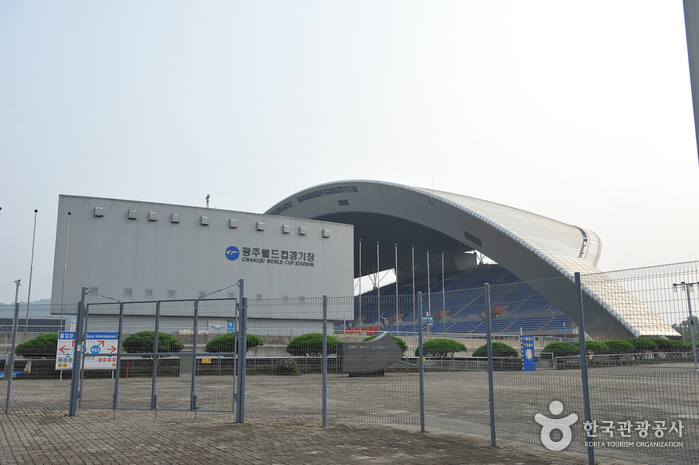
Gwangju World Cup Stadium (광주월드컵경기장)
7.1Km 2021-06-11
240, Geumhwa-ro, Seo-gu, Gwangju
Gwangju World Cup Stadium is a major symbol of Gwangju. Designed to reflect the notion of ‘spreading far and wide’ the exterior is shaped like spokes of a wheel. When lit up, the stadium looks like a glowing dome. The ceiling and large ‘Y’-shaped pillars resemble a ‘Go,’ an instrument used in a traditional game from Gwangju, Gossaumnori. These architectural features were designed to capture and reflect the traditional aspects of Gwangju. The soccer stadium can accommodate up to 40,000 people at once and has many subsidiary facilities, including media center, athlete waiting room, medical care facilities, and more.
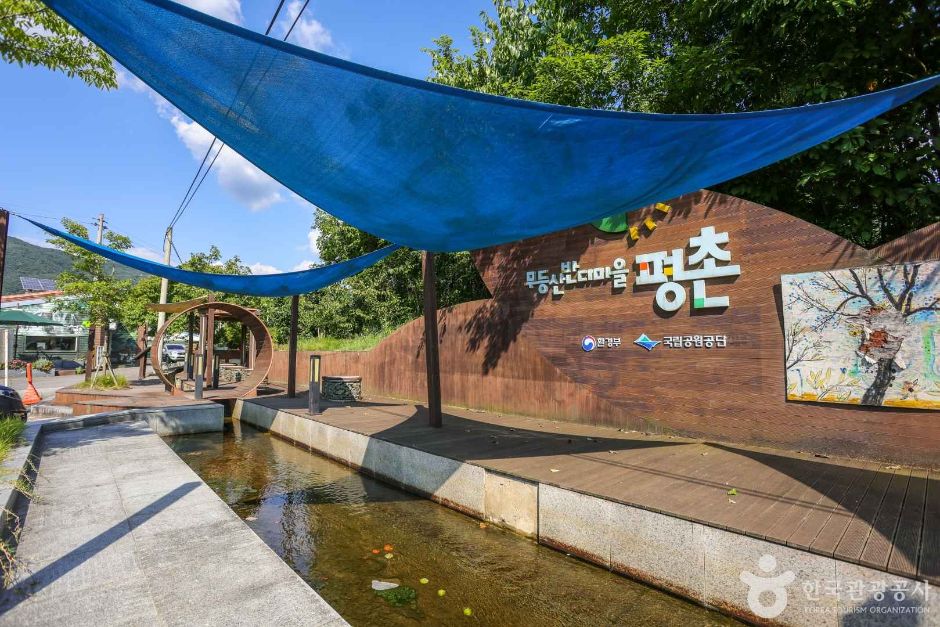
Gwangju Pyeongchon Village (광주 평촌마을)
7.1Km 2025-08-12
15 Pyeongchon-gil, Buk-gu, Gwangju
Gwangju Pyeongchon Village, located north of Mudeungsan Mountain, is a cozy farming village made up of four villages Dongrim, Daman, Woosung, and Dangmoe. The village still has an excellence natural preservation, growing environmental-friendly rice in the fields and Punamcheon stream that runs through the middle of the village is home to fireflies and otters. The village also keeps the tradition of making pottery as the village was the place that made grayish-blue-powdered celadon during the Joseon dynasty. The village street corner offers visitors to Mudeungsan Mountain a place to rest with Mudol-gil shelter and Bandi lodging.
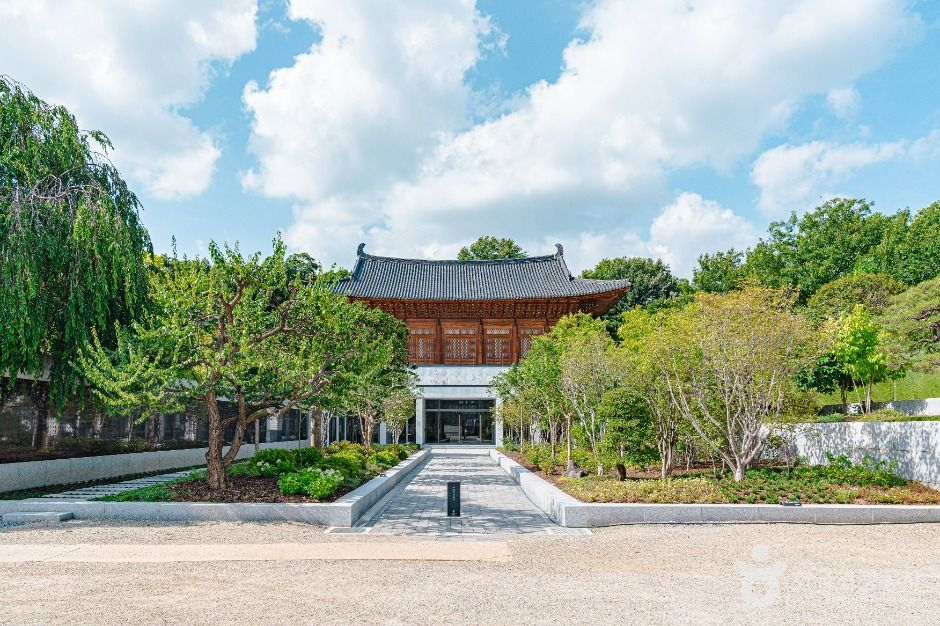
Mugaksa Temple (무각사)
7.2Km 2025-08-18
230, Uncheon-ro, Seo-gu, Gwangju
Nestled at the foot of Yeouisan Mountain in the business center of Gwangju, Mugaksa Temple is an urban Buddhist Temple. Unlike other urban Buddhist Temples, Mugaksa Temple has all the elements of a traditional temple. The temple is used as a cultural resting area and artistic spot for meetings without any religious barrier. The temple is also the starting point of the 2 kilometer walking trail to the 5.18 Memorial Park, leading to a constant flow of visitors.

Soswaewon Garden (담양 소쇄원)
7.3Km 2023-01-04
17, Soswaewon-gil, Damyang-gun, Jeollanam-do
Soswaewon Garden is a private garden from the Joseon period where Korea's traditional beauty is preserved. It was built by Yang San-Bo (1503-1557) after he gave up his success when his mentor Jo Gwang-Jo (1482-1519) was killed during political strife. Soswaewon Garden presents itself as a clean and transparent garden where the righteous enjoy the life of anbinnakdo (being comfortable amid poverty and taking pleasure in an honest lifestyle) surrounded by a bamboo grove.
Including peach trees, various kinds of trees and grass are planted on both sides of the stream while clear water flows down the foot of the garden walls. The log bridge above the valley adds to the charm of the scenery. The harmony between nature and the artificial waterfall is a sight to behold. Soswaewon Garden is 150 meters away from the main road. Passing through the thick bamboo forest, you will find the small valley and Soswaewon Garden on your left.
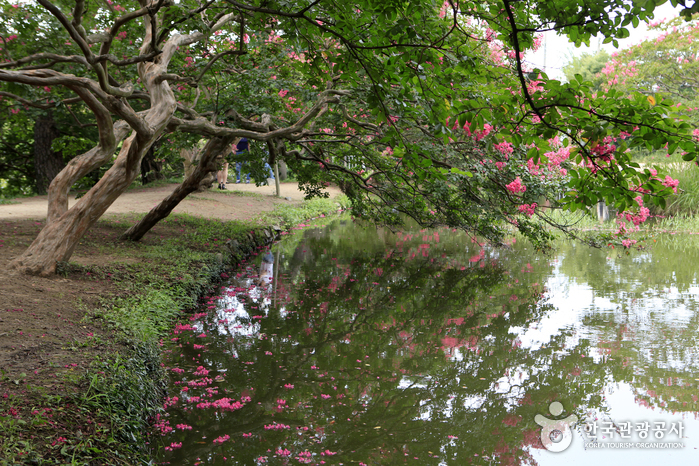
Myeongokheon Garden (담양 명옥헌 원림)
7.4Km 2025-10-23
103 Husan-gil, Goseo-myeon, Damyang-gun, Jeollanam-do
Located in the eco-village of Husan-ri, Myeongokheon Garden was the garden of Oh Hui-do (1583-1623) of the Joseon dynasty and served as a simple, countryside sanctuary where the scholar read and wrote many books. Main features of the garden are the Myeongokheon Pavilion, where the scholar held lectures, and the square-shaped pond in front of the pavilion that is surrounded with graceful flowering trees. The flowering trees around the pond include red pines and crape myrtles. On the right side of Myeongokheon Garden you’ll see a 300 year-old ginkgo tree, which is where King Injo (1623-1649) of the Joseon dynasty tied his horse when he went to visit Oh Hui-do.
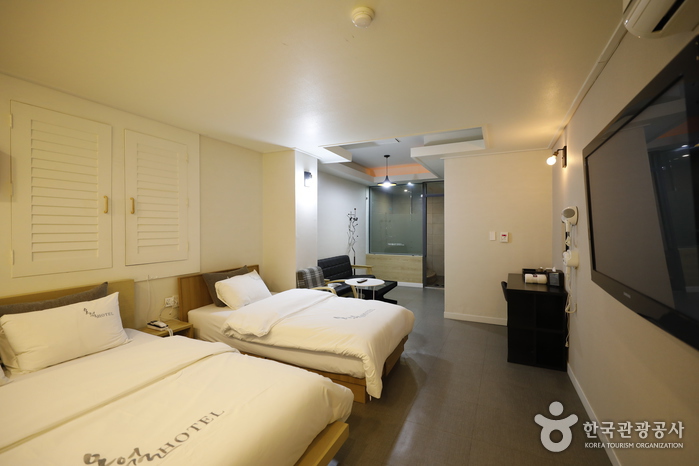
Hotel The May (호텔 5월 (Hotel The May) )
7.4Km 2024-08-22
51 , Sangmubeonyeong-ro, Seo-gu, Gwangju
Hotel The May is a boutique & business hotel located in the Sangmu district of Seo-gu, Gwangju. Business travelers will find a shared work space on the 7th floor equipped with desks, fax machines and computers. Breakfast is served free of charge in the 2nd floor cafeteria, and residents can use a well-equipped shared kitchen. The hotel is close to Gwangju Airport, Songjeong station, and Gwangju Express Bus terminal, making it convenient for both domestic and international travelers.
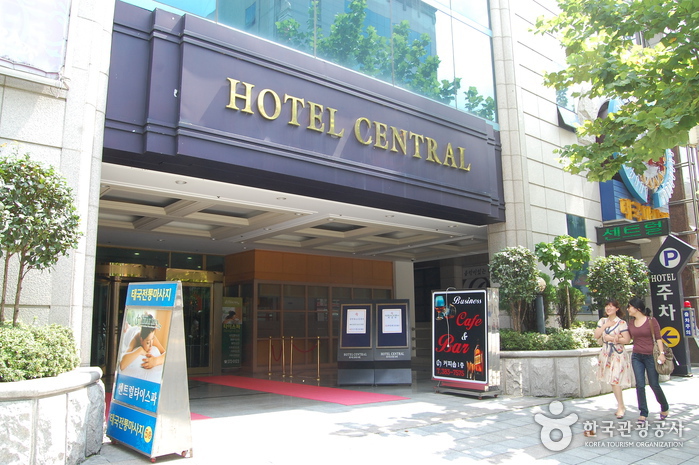
Hotel Central (센트럴관광호텔)
7.6Km 2025-01-07
68, Sangmuyeonha-ro, Seo-gu, Gwangju
Hotel Central is an affordable tourist hotel located in the city center of Gwangju. The hotel aims to meet every need of today's modern travelers, from high-speed internet to safety and comfort.
Korea Medical Institute Gwangju Branch ((재)한국의학연구소 광주분사무소)
7.9Km 2025-10-23
8F-10F, 58 Sangmujungang-ro, Seo-gu, Gwangju
Korea Medical Institute (KMI), a leader in 'K-health checkups,' operates health checkup centers across eight locations nationwide, from Seoul to Jeju. KMI has been striving to prevent and detect diseases early. It has led the popularization of comprehensive medical examinations in Korea. Based on 39 years of accumulated data and expertise, KMI has enhanced its capabilities in health checkups, services, and brand value.
By utilizing its diagnostic data accumulated over the years, KMI provides accurate test results and follow-up care promptly.
KMI will stay committed to becoming a lifetime health management partner and 'K-health checkup' leader by leveraging its excellence in Korean medicine, beyond health checkups for foreign patients.
![Venture Business hotel [Korea Quality] / 벤처 비즈니스 호텔(유한회사 벤처) [한국관광 품질인증]](http://tong.visitkorea.or.kr/cms/resource/97/2630397_image2_1.jpg)
Venture Business hotel [Korea Quality] / 벤처 비즈니스 호텔(유한회사 벤처) [한국관광 품질인증]
7.9Km 2024-07-08
5-6 , Sangmujungang-ro 38beon-gil, Seo-gu, Gwangju
Venture Business Hotel stands close to Sangmu station on subway line 1 in Gwangju, Jeollanam-do. Visitors can chose from several types of room including ondol rooms, family rooms, VIP twin bed rooms with terrace, and accessible rooms with bathrooms for disabled customers. All rooms are equipped with air dressers to keep your clothing fresh, and some have massage chairs and jacuzzis. Hotel facilities include free breakfast, use of washing machine and dryer, a business center and a 24-hour information desk.
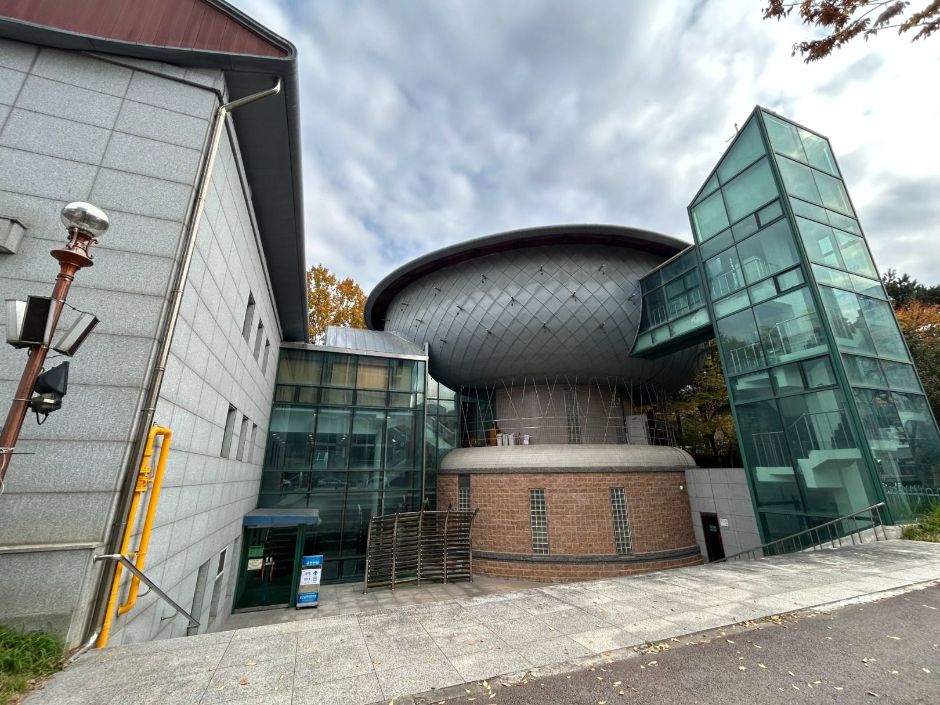
Bitgoeul Korea Traditional Classical Music Instruction Hall (빛고을국악전수관)
8.2Km 2024-12-17
182 Punggeum-ro, Seo-gu, Gwangju
Bitgoeul Korea Traditional Classical Music Instruction Hall offers various programs throughout the year. Since 2002, classes on traditional instruments are available, as well as separate children gugak classes. Special exhibition on the second floor has various instruments that visitors can actually try. The permanent exhibition on the third floor has 45 different gugak instruments as well as videos to further provide detailed information. The main area is the performance hall on B1-B2F, with 137 seats, that offers performances every Thursday for free from traditional gugak to fusion music.
 English
 한국어
한국어 日本語
日本語 中文(简体)
 Deutsch
 Français
 Español
 Русский


