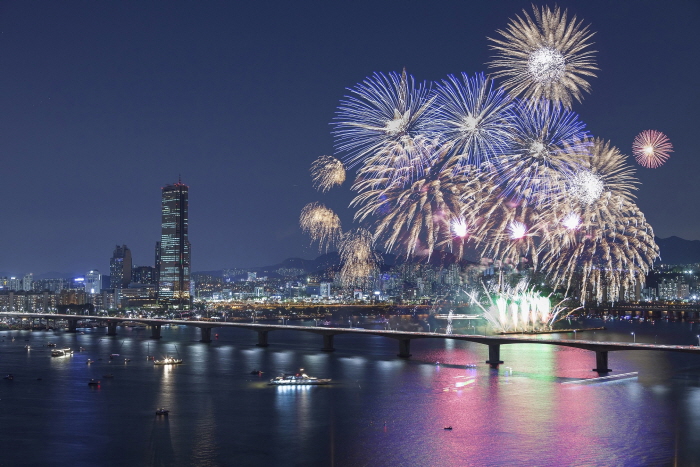
E-Land Cruise (Hangang River Ferry Cruise) (이랜드크루즈 (한강유람선))
3.4Km 2024-10-31
(Nodeulnaru Park), 290, Yeouidong-ro, Yeongdeungpo-gu, Seoul
+82-2-6291-6900
The E-Land Cruise cuts across the Hangang River along the east-west axis. It connects two terminals, one in Yeouido and the other in Jamsil. The company offers a number of different programs, such as the Han River Tour Cruise, a daytime cruise that takes one along the views of Hangang River, and the Moonlight Music Cruise, which offers a beautiful view of Seoul at night with jazz music. One can also enjoy buffet lunch and dinners on the ship.

Seodaemun Prison History Museum (서대문형무소역사관)
3.4Km 2024-12-02
251 Tongil-ro, Seodaemun-gu, Seoul
Seodaemun Prison was built under the Japanese administration to imprison independence movement activists. It first opened on October 21, 1908 under the name Gyeongseong Prison. Eventually, so many activists were imprisoned that the building had to be expanded. At that time, the name changed to Seodaemun Prison on September 3, 1912. Eighty years later, the prison was turned into Seodaemun Independence Park on August 15, 1992 to commemorate the Korean patriots who were tortured in prison, giving their lives for freedom. Of the many buildings, only seven were preserved for their historical significance, among which three prison buildings and the execution site were designated as a Historic Site. In 1998, the park underwent another transformation into today's Seodaemun Prison History Hall to educate the public on the importance of Korea's independence and the sacrifices of those who fought to achieve it.
Dongnimmun Gate (독립문)
3.4Km 2022-12-15
251, Tongil-ro, Seodaemun-gu, Seoul
Dongnimmun stands at the location originally known as Yeongeun, where envoys were once treated. When a Chinese envoy visited, the King would go out through this door to greet. In 1898, to announce the independence from Japan, Dongnimun was constructed with the fund collected by the citizens. The traces of the past still remain on Dongnimmun with two pillars in front of Dongnimmun being the remains of Yeongeunmun.
The Arc de Triomphe in France can be recalled in comparison to Dongnimmun. Dongnimmun was built using granite with a passageway x_height of 14.28 meters. On the top it is written ‘Dongnimmun’ in Korean with the national flag drawn on each side. On the inner-left side there are stone stairs leading to the attic. The national flower Mugunghwa are planted around Dongnimmun. Now it is surrounded by roads and it is eye-catching to view when passing by.
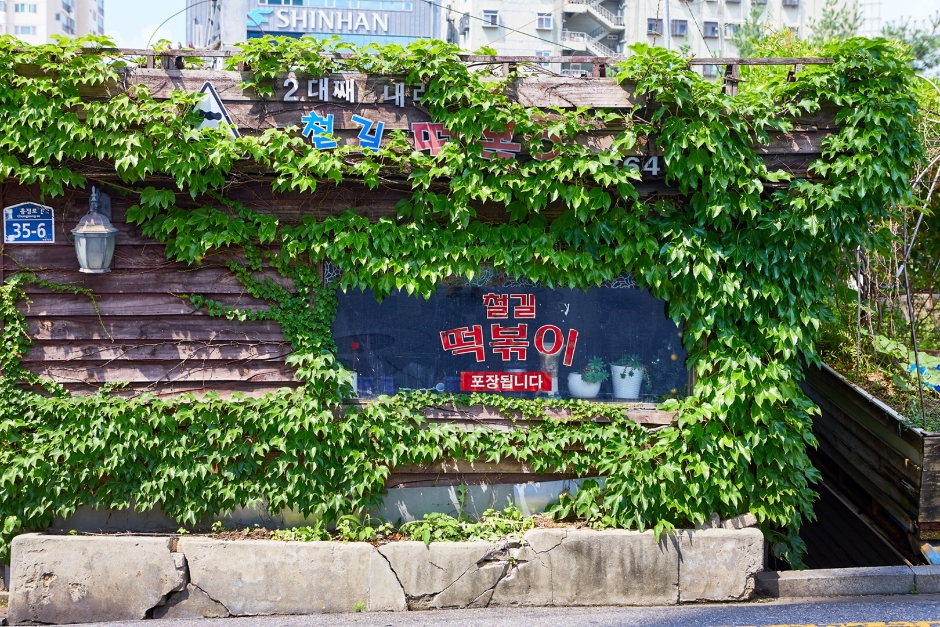
Cheolgil Tteokbokki (철길떡볶이)
3.4Km 2024-03-18
35-6 Chungjeong-ro, Seodaemun-gu, Seoul
Cheolgil Tteokbokki is a famous pilgrimage site for tteokbokki lovers. As the name suggests, it is located next to the railroad (“cheolgil” in Korean) near Chungjeongno Station. There is a wide variety of Korean dishes available, from tteokbokki that will bring back childhood memories to gimbap, deep-fried dishes, and sundae. As the name suggests, it is located next to the railroad near Chungjeongno Station. The restaurant has been in operation for two generations while maintaining its original appearance. The old signboard and exterior have a nostalgic feeling. Unlike tteokbokki in soup, which is currently popular, this tteokbokki with chewy rice cakes is coated well with thick spicy sauce. It's very delicious when mixed with the restaurant’s deep-fried foods. Visitors are recommended to take the seat outdoors to enjoy the view of the railroad tracks while eating.
National Memorial of Korean Provisional Government (국립대한민국임시정부기념관)
3.4Km 2023-01-16
279-24, Tongil-ro, Seodaemun-gu, Seoul
The National Memorial of Korean Provisional Government was established to shine a light on the proud history of the Korean Provisional Government's independence and the spirit of a democratic republic and to pass it on to future generations. The four-story memorial building with three underground floors houses three permanent exhibits, one special exhibit, Larchiveum, Symbol Plaza, storage, multi-purpose hall, and rooftop garden over a total area of 3,656 square meters, a total floor area of 9,703 square meters and a total exhibition space of 2,240 square meters. The permanent exhibits consist of a series of historic events from the March 1st Movement, which served as a turning point for the formation of the Provisional Government, to the foundation of the Korean Government that succeeded the mantle of the provisional government, while the special exhibit on the 1st floor currently hosts a special opening exhibition under the title of 『The Return of the Provisional Government of the Republic of Korea』. Moreover, a symbolic wall installation under the theme of "Waves of History" is displayed in the outdoor plaza on the 1st floor of the memorial expressing the Provisional Government’s desire for independence and the dynamics of the past, present, and future of Korea.
![CheongKwanJang - Jeungsan Station Branch [Tax Refund Shop] (정관장 증산역)](http://tong.visitkorea.or.kr/cms/resource/44/2889544_image2_1.jpg)
CheongKwanJang - Jeungsan Station Branch [Tax Refund Shop] (정관장 증산역)
3.5Km 2024-04-22
#102, 259, Jeungga-ro, Seodaemun-gu, Seoul
-
Seoul Hyochang Park (서울 효창공원)
3.5Km 2024-07-09
177-18 Hyochangwon-ro, Yongsan-gu, Seoul
+82-2-2199-7608
Hyochang Park covers 122,245 square meters spanning across Hyochang-dong and Cheongpa 2-dong. It is a historic landmark that once contained several royal tombs, and was known at that time as Hyochangwon. The cemeteries that were originally located in Hyochangwon belonged to Crown Prince Munhyo, King Jeongjo’s first son who died at the age of five; Royal Noble Consort Uibin of the Seong Clan, King Jeongjo’s royal concubine and Crown Prince Munhyo’s mother; Royal Noble Consort Sugui of the Park Clan, King Sunjo’s royal concubine; and her daughter Princess Yeongon. The royal tombs were moved to Seooreung Tombs in the waning months of the Japanese colonial period. The Japanese empire began the development of Hyochangwon into a park in 1924, and the Japanese governor-general officially assigned the site as a park in 1940.
Presently, several of Korea’s greatest leaders are buried in Hyochang Park. The remains mostly belong to independence activists including Yoon Bong-gil, Lee Bong-chang, and Baek Jeong-gi, whose graves are collectively known as Samuisa Tomb. A statue of Lee Bong-chang has been built in the graveyard. Among the other patriotic martyrs who are interred in the park are Kim Gu and some of the key figures of the provisional government such as Lee Dong-nyeong, Cha I-seok, and Cho Seong-hwan. An ancestral shrine named Uiyeolsa has been built along the main gate and holds the portraits of the deceased independence activists.
Olive Young - Yeouido Station Branch [Tax Refund Shop] (올리브영 여의도역)
3.5Km 2024-04-16
61, Yeouinaru-ro, Yeongdeungpo-gu, Seoul
-
JDX - Yeongdeungpo Branch [Tax Refund Shop] (JDX 영등포)
3.5Km 2024-04-18
JDX Bldg., 9, Beodeunaru-ro 14-gil, Yeongdeungpo-gu, Seoul
-
Louis Castel - Yeongdeungpo Branch [Tax Refund Shop] (루이까스텔 영등포)
3.5Km 2024-04-18
126, Yeongjung-ro, Yeongdeungpo-gu, Seoul
-
 English
 한국어
한국어 日本語
日本語 中文(简体)
 Deutsch
 Français
 Español
 Русский


