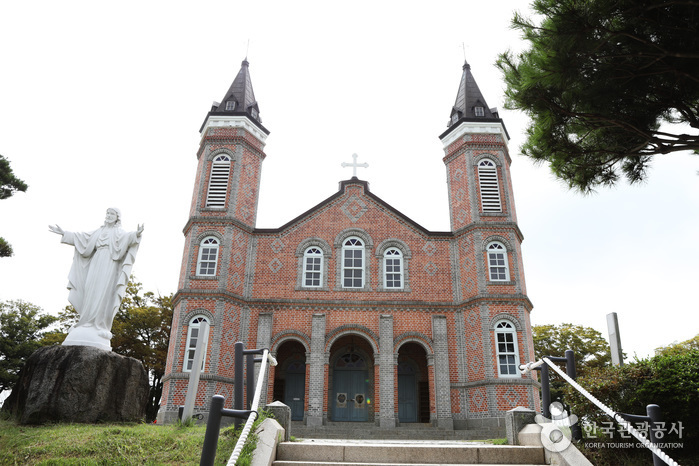
Hamdeok Catholic Church (합덕성당)
15.1Km 2023-06-22
16 , Hapdeokseongdang 2-gil, Dangjin-si, Chungcheongnam-do
Hamdeok Catholic Church was built in 1929 in the gothic style. The church started out as Yangchon Catholic Church in Sanggung-ri, but was moved to the current location by the priest, and renamed Hamdeok Catholic Church. The name was later changed to New Apdeok Catholic Church before being returned to the current Hamdeok Catholic Church.
![E-Mart - Asan Branch [Tax Refund Shop] (이마트 아산)](http://tong.visitkorea.or.kr/cms/resource/05/2883305_image2_1.jpg)
E-Mart - Asan Branch [Tax Refund Shop] (이마트 아산)
15.3Km 2024-04-22
1678, Oncheon-daero, Asan-si, Chungcheongnam-do
-

Hapdeokje Reservoir (합덕제)
15.4Km 2023-07-17
395 Hapdeok-ri, Hapdeok-eup, Dangjin-si, Chungcheongnam-do
Hapdeokje is a reservoir located in Dangjin, Chungcheongnam-do. Designated as a Chungcheongnam-do Monument in 1989, it is known to have been built in the late Unified Silla period for the irrigation of Yedang Plain (Sodeulgangmun Gate). It attracts many tourists in spring with cherry blossoms and canola flower blossoms and in summer with lotus flowers in full bloom. The Hapdeokje Ecotourism Experience Center (opened in 2021) and Hapdeok Folk Irrigation Museum are located nearby, so you can stop by when traveling in the area.
![Uniqlo - Asan Punggi Branch [Tax Refund Shop] (유니클로 아산풍기)](http://tong.visitkorea.or.kr/cms/resource/08/2883308_image2_1.jpg)
Uniqlo - Asan Punggi Branch [Tax Refund Shop] (유니클로 아산풍기)
15.5Km 2024-04-18
1692, Oncheon-daero, Asan-si, Chungcheongnam-do
-
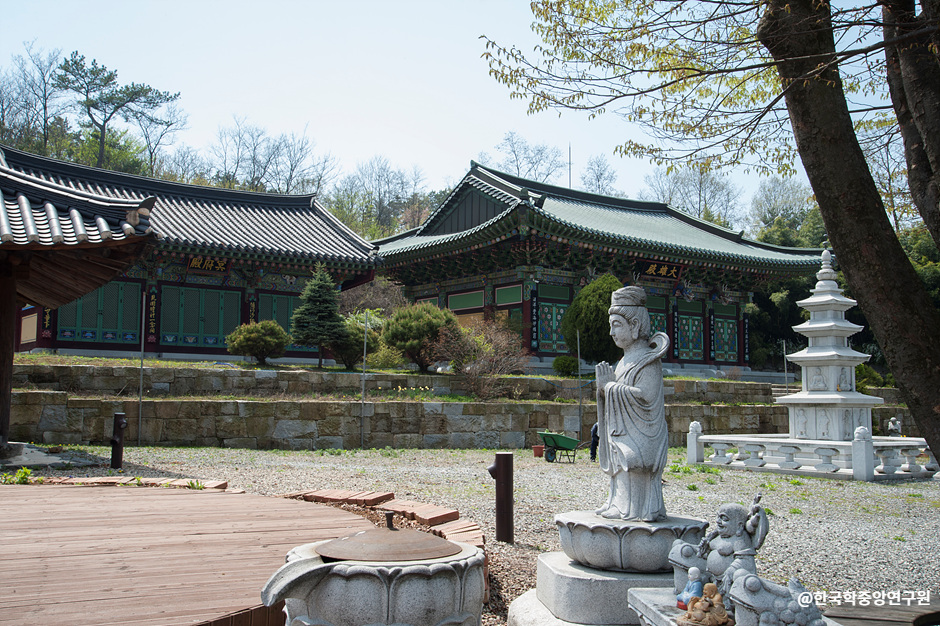
Pyeongtaek Sudosa Temple (수도사 (평택))
15.5Km 2021-08-11
58, Hoam-gil, Pyeongtaek-si, Gyeonggi-do
+82-31-682-3169
Sudosa Temple is known for its well-being food. Designated as “Slow Food Test Village,” the temple emphasizes the idea that healthy food cleanses the body and enriches the soul, leading to true salvation. Sudosa Temple operates traditional temple food and temple experience programs that allow visitors to gain a deeper understanding of Monk Wonhyo’s beliefs.
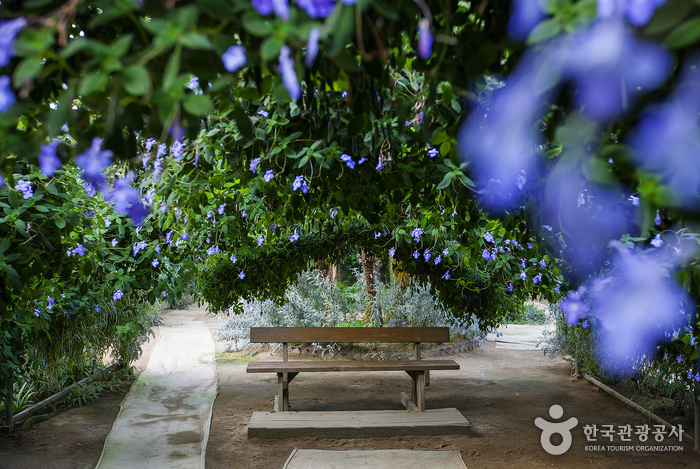
World Flower Botanical Garden (세계꽃식물원)
15.5Km 2022-12-26
37-37, Asanman-ro, Asan-si, Chungcheongnam-do
+82-41-544-0746
World Flower Botanical Garden opened to the public in 2004 and sees 15,000~20,000 visitors every year. This internationally recognized garden is Korea's largest greenhouse garden that features over 3,000 species of plants and flowers. To cultivate gardening culture in Korea, the garden founded LIAF Garden Center, acronym for "Life is a Flower." The garden center offers diverse gardening programs and products.
Asan Mediterranean Village (지중해마을)
16.3Km 2024-02-22
55-7, Tangjeongmyeon-ro 8beon-gil, Tangjeong-myeon, Asan-si, Chungcheongnam-do
Asan Mediterranean Village, also called Blue Crystal Village, is made up of buildings reminiscent of those found in a Mediterranean village. It is particularly interesting because it is housed in the heart of a modern city. The village is divided into two sections, one taking after the Provence in southern France and the other resembling Santorini in Greece. Famous sights include the photo areas of angel’s wings and a lighthouse-shaped red postbox, along with cafés and stores.
![Mokhwa Banjeom (Asan) [목화반점(아산)]](http://tong.visitkorea.or.kr/cms/resource/99/3050399_image2_1.jpg)
Mokhwa Banjeom (Asan) [목화반점(아산)]
16.5Km 2024-02-21
7-3, Onju-gil 26beon-gil, Asan-si, Chungcheongnam-do
Mokhwa Banjeom is a Chinese restaurant in Asan enjoying a loyal following. Its expertise is evident in the popularity of customers’ favorites such as tangsuyuk (deep-fried pork with sweet and sour sauce), jjajangmyeon (black bean sauce noodles), and jjamppong (spicy seafood noodle soup). Many people visit this restaurant, so waiting is the norm. Mokhwa Banjeom’s signature dish is tangsuyuk (deep-fried pork with sweet and sour sauce), made with egg batter for a rich, crispy, yet fluffy texture.
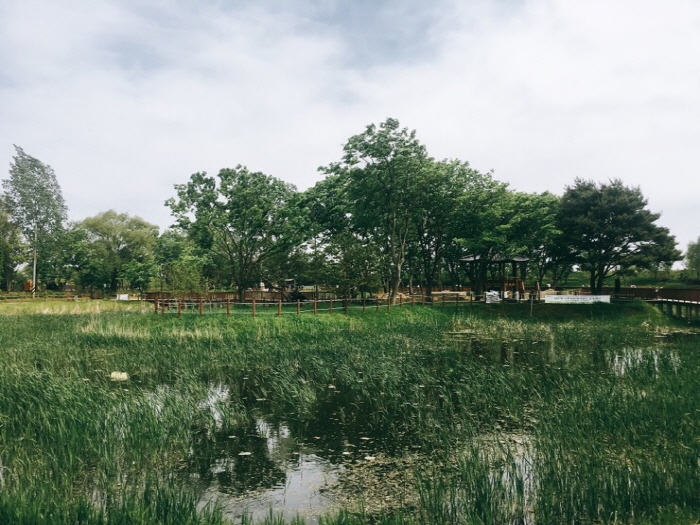
Baramsae Village Picnic Garden (바람새마을 소풍정원)
16.9Km 2021-03-10
Gung-ri, Pyeongtaek-si, Gyeonggi-do
+82-31-8024-4246
Baramsae Village Picnic Garden opened in 2013 as a waterside park in Pyeongtaek. The park serves as a space where nature and humanity can coexist in harmony. In 2018, the park was divided into four themed sections, including a section open in the evening. There are wooden walking paths and trails throughout the park, decorated with sotdae (wooden bird poles) and pinwheels.
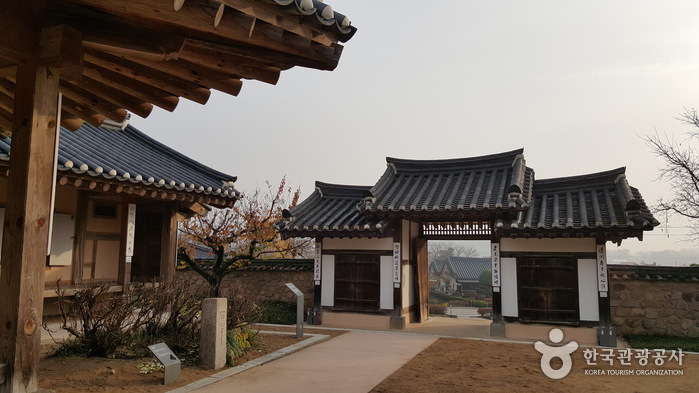
House of Chusa (추사고택)
18.2Km 2022-12-28
261, Chusagotaek-ro, Yesan-gun, Chungcheongnam-do
+82-41-339-8248
House of Chusa, Chusa Gotaek in Korean, is the traditional Korean house of the renowned scholar and calligrapher Chusa, also known as Kim Jeong-hui. This old house is known to have been constructed by the great-grandfather of Chusa, Kim Han-Sin.
The Korean-style house compound (266.11 m²) consists of munganchae (a guesthouse), soseuldaemun (a high gate), sarangchae (ㄱ-shaped men's quarters), anchae (ㅁ-shaped women’s quarters) and a shrine where the remains of Chusa are enshrined. Theㄱ-shaped Sarangchae stretches for one kan (traditional measuring unit) to the south and 2 kans to the east and is comprised of two rooms and a daecheongmaru (living area). The Anchae consists of a six-kan daecheongmaru and two one-kan rooms.
Located on the ground is a tomb where Chusa’s great-grandfather (Kim Han-Sin) and his wife (Hwasun Princess) are buried. Nearby, visitors will see a gate that was constructed to commemorate Princess Hwasun’s faithfulness to her husband.
Located approximately 600 meters to the north of the old house is a lacebark pine tree, which was designated as a Natural Monument. The lacebark pine tree, originally from northern China, is among the few of its kind in Korea. It is said that Chusa snuck the pine across the border from China (formerly, the Qing dynasty) into the country when he was 25 years old and planted it at the tomb of his great-grandfather. Originally, the tree had three branches, but two were broken and the third branch was damaged. In 1980, the damaged branch was treated and since then, the tree has been kept under strong protection.
 English
 한국어
한국어 日本語
日本語 中文(简体)
 Deutsch
 Français
 Español
 Русский


