
Gucci - Shinsegae Gwangju Branch [Tax Refund Shop] (구찌 신세계 광주점)
9.9Km 2024-04-23
1F, 932, Mujin-daero, Seo-gu, Gwangju
-
YSL - Shinsegae Gwangju Branch [Tax Refund Shop] (입생로랑 신세계 광주점)
9.9Km 2024-04-18
2F, 932, Mujin-daero, Seo-gu, Gwangju
-
![Beanpole - Shinsegae Gwangju Branch [Tax Refund Shop] (빈폴 신세계 광주점)](http://tong.visitkorea.or.kr/cms/resource/38/3313838_image2_1.jpg)
Beanpole - Shinsegae Gwangju Branch [Tax Refund Shop] (빈폴 신세계 광주점)
9.9Km 2024-06-27
932, Mujin-daero, Seo-gu, Gwangju
-
Street of Duck Stew (오리요리의 거리)
9.9Km 2025-08-06
125 Gyeongyang-ro, Buk-gu, Gwangju
The Street of Duck Stew in Gwangju is lined with restaurants specializing in duck dishes. Its origins trace back to the 1970s, when a duck farmer began selling duck stew, adding their own twist by incorporating water parsley and perilla seeds to the recipe they had learned. The affordable price and clean, rich taste of stew made it popular among visitors, eventually leading to the formation of the current street. The popular dishes include ori tang (duck stew), ori roseu (grilled duck), and ori jumulleok (spicy stir-fried marinated duck).
Burberry Kids - Shinsegae Gwangju Branch [Tax Refund Shop] (버버리 아동 신세계 광주점)
9.9Km 2024-04-23
8F, 904, Mujin-daero, Seo-gu, Gwangju
-
Burberry - Shinsegae Gwangju Branch [Tax Refund Shop] (버버리 신세계 광주점)
9.9Km 2024-04-23
1F, 904, Mujin-daero, Seo-gu, Gwangju
-
![ER NC Department Store - Gwangju Branch [Tax Refund Shop] (ER NC백화점 광주)](http://tong.visitkorea.or.kr/cms/resource/32/2886832_image2_1.jpg)
ER NC Department Store - Gwangju Branch [Tax Refund Shop] (ER NC백화점 광주)
9.9Km 2024-04-23
249, Gyeongyeol-ro, Buk-gu, Gwangju
-
![Gwangju IAM Guest House [Korea Quality] / 아이엠게스트하우스 [한국관광 품질인증]](http://tong.visitkorea.or.kr/cms/resource/52/2017452_image2_1.JPG)
Gwangju IAM Guest House [Korea Quality] / 아이엠게스트하우스 [한국관광 품질인증]
10.0Km 2024-07-24
23 , Gyeongyang-ro 165beon-gil, Buk-gu, Gwangju
+82-62-528-0012
The cozy and clean I Am Guesthouse in Gwangju, Jeollanam-do, stands right opposite Gwangju station. The guesthouse offers free Korean breakfast and brunch, there’s a personal locker for valuables and a powder room for female travelers. The location is convenient for sightseeing, with Mudeungsan Mountain nearby, and visitors can taste tteokgalbi and other delights of Namdo cuisine in local restaurants.
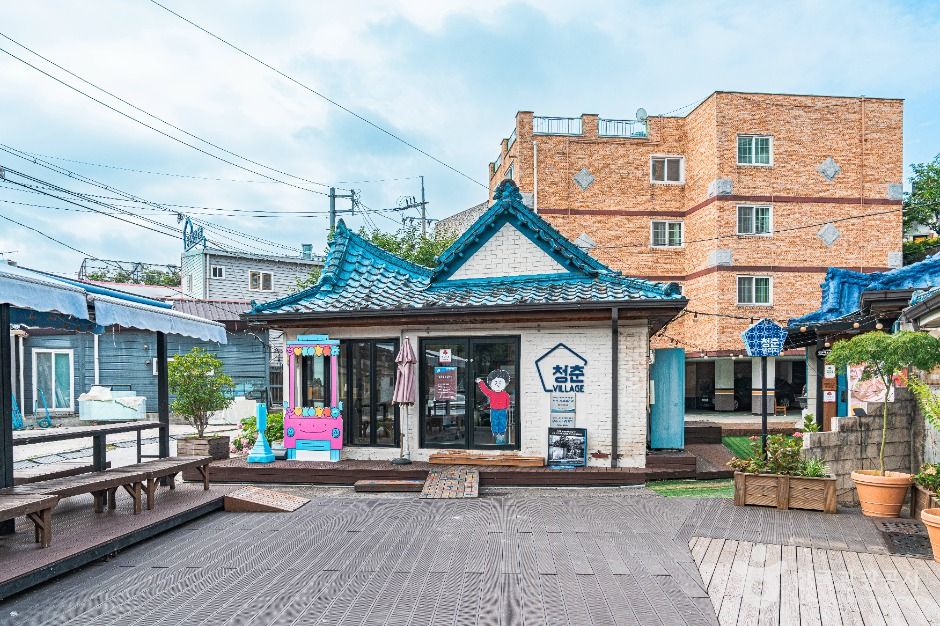
Cheongchun Balsan Village (청춘발산마을)
10.0Km 2025-10-24
12-16 Cheonbyeonjwa-ro, Seo-gu, Gwangju
Balsan Village is a representative neighborhood of Gwangju and is a prime example of how something amazing can come out of hardship. First settled by Korean war refugees, the small houses jam-packed on a hillside attracted young people looking for work in the 1970s and '80s, mainly females working in the garment factories nearby. Recently, the addition of colorful murals and public spaces has given the village a breath of new life.
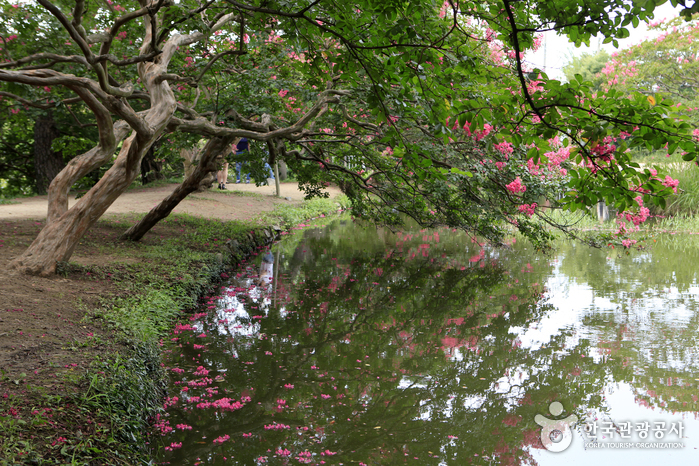
Myeongokheon Garden (담양 명옥헌 원림)
10.0Km 2025-10-23
103 Husan-gil, Goseo-myeon, Damyang-gun, Jeollanam-do
+82-61-380-3752
Located in the eco-village of Husan-ri, Myeongokheon Garden was the garden of Oh Hui-do (1583-1623) of the Joseon dynasty and served as a simple, countryside sanctuary where the scholar read and wrote many books. Main features of the garden are the Myeongokheon Pavilion, where the scholar held lectures, and the square-shaped pond in front of the pavilion that is surrounded with graceful flowering trees. The flowering trees around the pond include red pines and crape myrtles. On the right side of Myeongokheon Garden you’ll see a 300 year-old ginkgo tree, which is where King Injo (1623-1649) of the Joseon dynasty tied his horse when he went to visit Oh Hui-do.
 English
 한국어
한국어 日本語
日本語 中文(简体)
 Deutsch
 Français
 Español
 Русский


