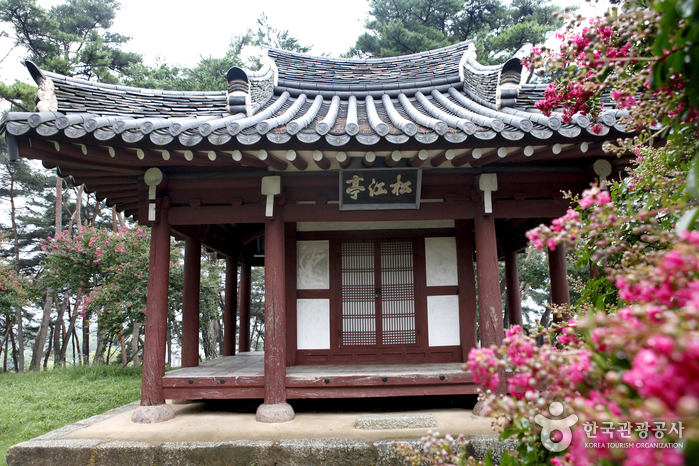
Damyang Songgangjeong Pavilion (담양 송강정)
15.6Km 2021-05-14
232, Songgangjeong-ro, Damyang-gun, Jeollanam-do
+82-61-380-2811
Songgangjeong pavilion is located in Wongang-ri, Damyang-gun, Jeollanam-do. It was registered as Jeollanam-do Provincial Monument No. 1 on January 29, 1972.
Joseon dynasty poet Jeong Cheol (pen name, Songgang) composed his famed poem “Samiingok” from this pavilion. Next to it presently stands the Samingok memorial stone. The two structures at this site, Hwanbyeonkdang and Sigyeongjeong, are collectively referred to as
the “Relics of Jeong Songgang.”
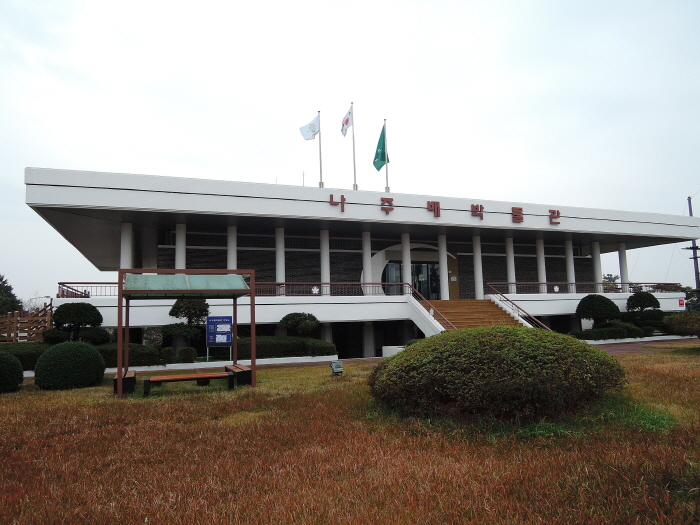
Naju Pear Museum (나주배박물관)
15.8Km 2021-08-13
5838, Yeongsan-ro, Naju-si, Jeollanam-do
+82-61-339-2590
Known as the birthplace of Korean pears, Naju pears are well-known for its long history. The fruit was exported worldwide starting in 1967. The Naju Pear Museum promotes the fruit and is a learning center for its agricultural history. The museum opened on April 20, 1992 and is the world's only pear museum.

National Center for Forest Education, Naju (국립나주숲체원)
16.7Km 2024-02-19
116 Geumseongsan-gil, Naju-si, Jeollanam-do
National Center for Forest Education, Naju is a national recreational facility located on Geumseongsan Mountain. It operates customized forest education and cultural programs based on the wild tea plantation of Geumseongsan Mountain and the culture of Naju. Utilizing the facilities of the forest center and the surrounding nature, it offers various experiential programs such as forest walking, stretching, meditation, and natural dyeing experiences of Naju's traditional culture.
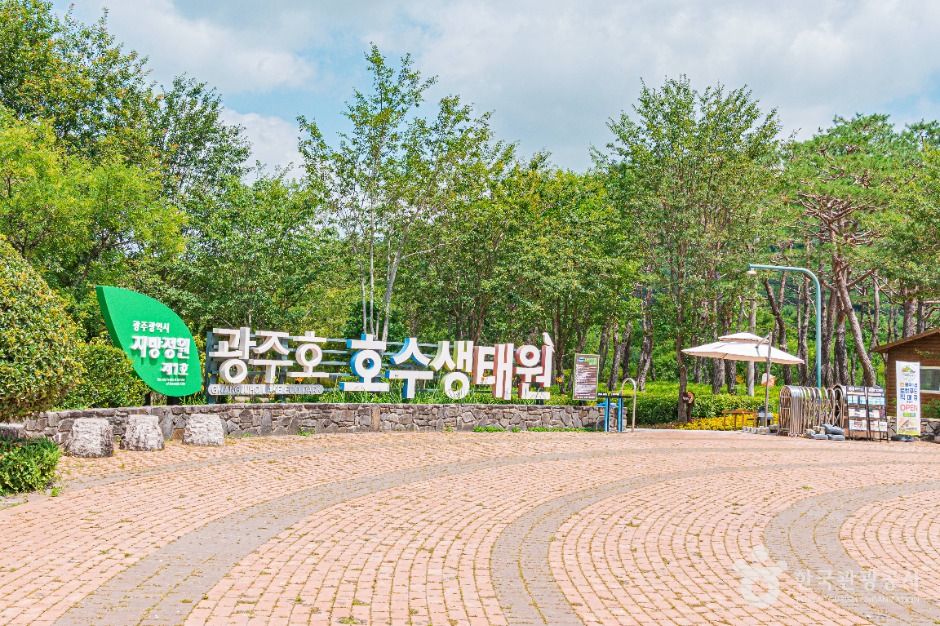
Gwangjuho Lake Eco Park (광주호 호수생태원)
17.0Km 2025-08-12
Chunghyo-dong, Buk-gu, Gwangju
+82-62-613-7891
Gwangjuho Lake Eco Park is an ecological park located near the banks of Gwangjuho Lake, featuring a Nature Observation Center, Nature Learning Center, Lawn Area, and Waterside Wetland. The park is home to around 170,000 wildflowers and over 3,000 trees, offering opportunities to observe various flora and fauna up close. Visitors can witness diverse birds thriving in the wetlands.
![Himart - Naju Branch [Tax Refund Shop] (하이마트 나주점)](http://tong.visitkorea.or.kr/cms/resource/82/2886482_image2_1.jpg)
Himart - Naju Branch [Tax Refund Shop] (하이마트 나주점)
17.0Km 2024-04-18
11, Daeho-gil, Naju-si, Jeollanam-do
-
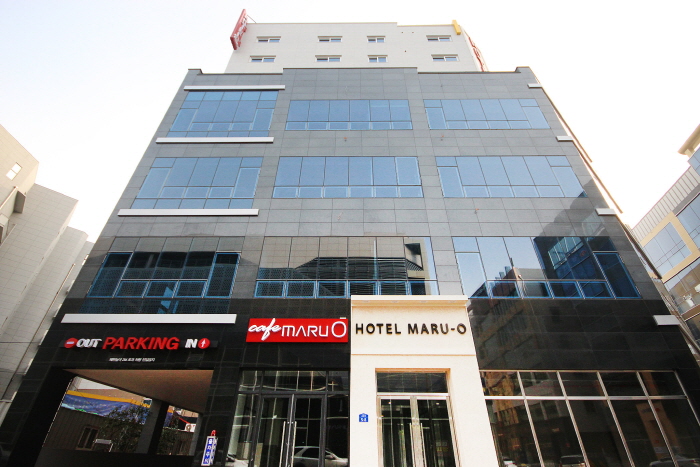
Maru-o / 마루오(MARU-O)
17.1Km 2025-03-05
5-8 , Baemet 3-gil, Naju-si, Jeollanam-do
+82-61-331-0700
The Maru O Hotel is a business hotel in the heart of Naju Innovation City, Jeollanam-do, that has good facilities and is popular with both business travellers and tourists. The underground parking lot has an electric vehicle charging station, and both mobile phone chargers and tourist information for Naju and Jeonam is available at the front desk. Right in front of the hotel is Bitgaram Lake Park where visitors can take a pleasant walk. Naju KTX station and the Intercity Bus Terminal are 15 minutes away by car, and Naju’s Yeongsanpo Hongeo Street and Gomtang Street (famous for its restaurants!) are also nearby.
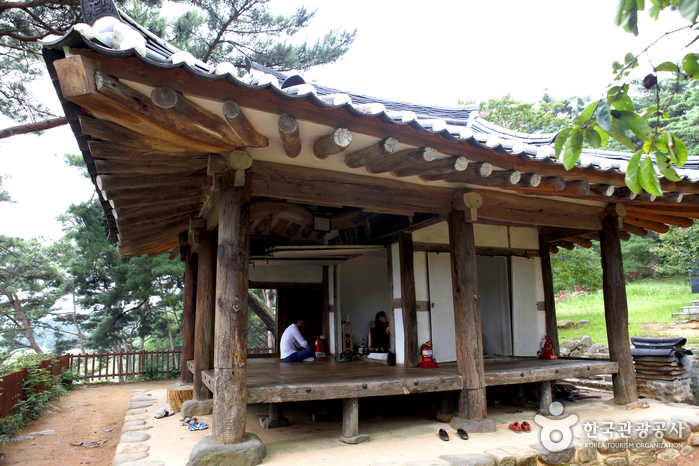
Sigyeongjeong Pavilion (담양 식영정)
17.1Km 2025-01-08
Jigok-ri, Damyang-gun, Jeollanam-do
+82-61-380-2811
Designated as the top monument of Jeollanam-do, Sigyeongjeong Pavilion means a place where even the shadow of the moon can find a place to rest. As its name suggests, this pavilion is set in a lush and remote forested area. Countless number of scholars and writers have been attracted to this pavilion as a place of profound inspiration. The pavilion gained more fame from the legendary lyrics of Seongsanbyeolgok written by the poet Jeong Cheol. The elegant words of Kim Seongwon, a literary scholar, depict the scenic beauty of Seongsan Mountain as the seasons change.
Of all the pavilions situated at the basin of the Yeongsangang River the Sigyeongjeong Pavilion is said to be blessed with a breathtaking view from the side. The current building was restored in the early 1900s. At the Sigyeongjeong Pavilion there is the Buyongdang, a monument with the lyrics to the Seongsanbyeolgok Poem, and next to it an old library building called Jangseogak built to preserve the wooden blocks of Songgangjib, a book of poetry written by Jeong Cheol.
Hwanbyeokdang Pavilion (환벽당)
17.3Km 2023-01-25
10, Hwanbyeokdang-gil, Buk-gu, Gwangju
+82-62-510-1500
Hwanbyeokdang Pavilion was built by Yeongcheonja Sinjam and was also called Byeokgandang, which is recorded in Go Gyeong-myeong's Yuseoseongnok. The building has a hipped-and-gabled roof with three bays in the front space and two bays in the inside space. It is a modified form in which the two rooms in the middle are used as rooms, and the front and right sides are floors. Originally, it was a traditional pavilion, but it seems to have changed to its current form as it was expanded later. A tablet written by Uam Song Si-yeol hangs here, and the poems of Seokcheon Im Eok-ryeong and Jo Ja-i are on a signboard. There are two poems written by Jeong Cheol about Hwanbyeokdang Pavilion, which are published in Songgangsokjip and Gwangjumokji. Jeong Cheol's 4th-generation descendant Jeong Su-hwan bought it from Kim Yun-je's descendants, and Yeon Il-jeong's family is currently managing it.
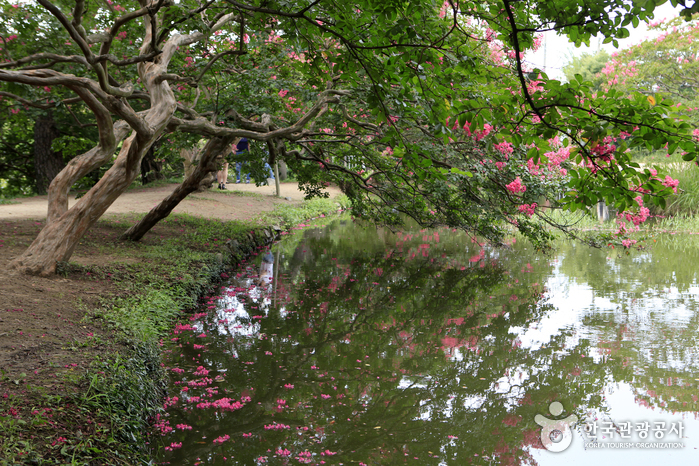
Myeongokheon Garden (담양 명옥헌 원림)
17.4Km 2025-10-23
103 Husan-gil, Goseo-myeon, Damyang-gun, Jeollanam-do
+82-61-380-3752
Located in the eco-village of Husan-ri, Myeongokheon Garden was the garden of Oh Hui-do (1583-1623) of the Joseon dynasty and served as a simple, countryside sanctuary where the scholar read and wrote many books. Main features of the garden are the Myeongokheon Pavilion, where the scholar held lectures, and the square-shaped pond in front of the pavilion that is surrounded with graceful flowering trees. The flowering trees around the pond include red pines and crape myrtles. On the right side of Myeongokheon Garden you’ll see a 300 year-old ginkgo tree, which is where King Injo (1623-1649) of the Joseon dynasty tied his horse when he went to visit Oh Hui-do.
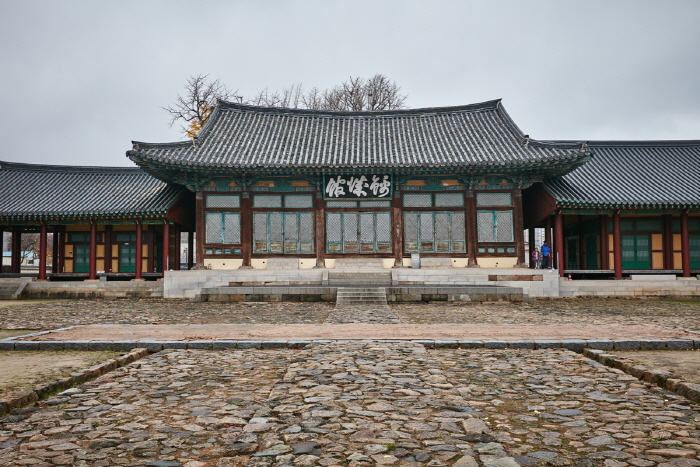
Naju Geumseonggwan Hall (나주 금성관)
17.5Km 2021-08-17
8, Geumseonggwan-gil, Naju-si, Jeollanam-do
+82-61-339-8613
Naju Geumseonggwan Hall was a state-run guesthouse for government officials during the Joseon period. It was the venue for ceremonial praise rituals for the king, taking place on the first and 15th of each month, as well as banquets held in honor of visiting dignitaries. The building was constructed sometime between 1475 and 1479. The building was remodeled during the Japanese occupation, but was restored to its original design in 1977.
 English
 한국어
한국어 日本語
日本語 中文(简体)
 Deutsch
 Français
 Español
 Русский


