
Yeongwol Seobu Morning Market (영월 서부아침시장)
2026-03-19
30-1 Jungang-ro, Yeongwol-gun, Gangwon-do
Established in 1959, Yeongwol Seobu Morning Market is located in the bustling downtown area of Yeongwol. True to its name, the market is open only in the mornings. In the past, farmers would come at dawn to sell their produce, and the market would close at noon as they returned to farming. Even today, various agricultural specialties from the Yeongwol region are available, and visitors can always purchase fresh produce here. In particular, it is a traditional food market where shops selling wheat pancakes and buckwheat pancakes are clustered together.
Seoul Folk Flea Market (서울풍물시장)
2026-10-06
21 Cheonho-daero 4-gil, Dongdaemun-gu, Seoul
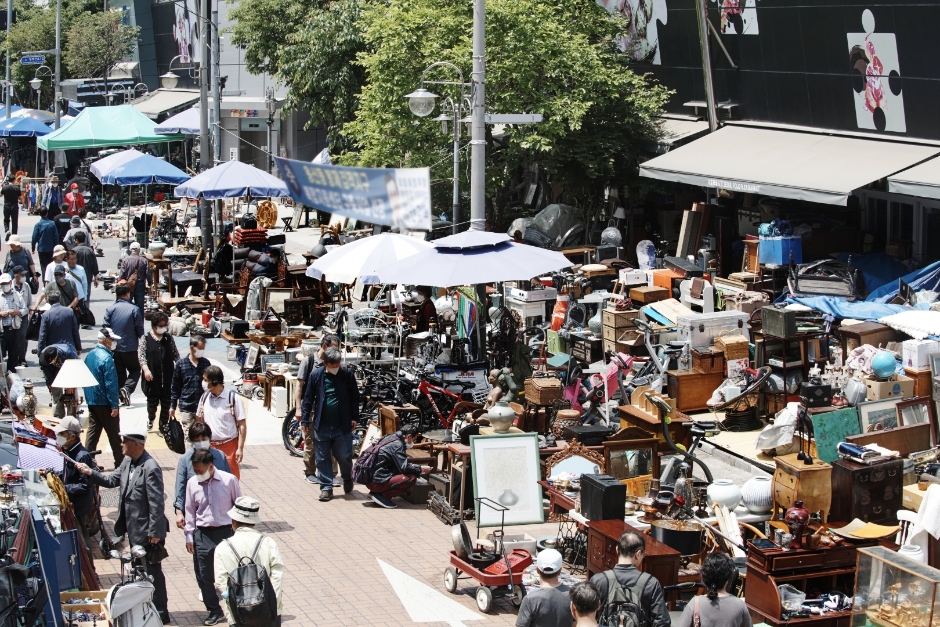
The Seoul Folk Flea Market is located around Cheonggyecheon Stream's Hwanghakgyo Bridge and Sinseol-dong Station and is on its way to becoming a famous tourist attraction along with the already famous Cheonggyecheon Stream. The Seoul Folk Flea Market is one of the major folk flea markets preserving the culture of the traditional Korean marketplace and drawing in visitors with a range of folk items that embody the unique charm of Korea. Folk items include everyday items, souvenirs, traditional goods and even traditional foods, allowing visitors to enjoy shopping and eating all under the same roof. The Seoul Folk Flea Market originated from the flea market in Hwanghak-dong where many street shops and vendors gathered around Cheonggyecheon Stream before it was restored and modernized into its current state. The market was relocated to the Dongdaemun History & Culture Park (Formerly Dongdaemun Stadium) while the Cheonggyecheon Stream was undergoing restorations, and was moved back to Cheonggyecheon Stream sometime later. Seoul City aims to market Seoul Folk Flea Market as a new shopping spot at its current location, the former site of Sungin Girls' Middle School on Cheonggyeo 8-ga Street, near Cheonggyecheon Stream to develop the Korean representative folk flea market-related tourism industry. Seoul Folk Flea Markets sells a wide variety of goods, ranging from antiques, items from modern and contemporary history, and traditional Korean artifacts to household goods, bags, and second-hand clothing. It is a distinctive market where various sights, foods, and entertainment, such as a traditional household goods Exhibition Hall, are all available in one space.

Moldir Korea (몰더코리아)
2016-08-02
749, Samseong-ro, Gangnam-gu, Seoul
+82-2-775-4842
Moldir Korea is a fashion store located in the neighborhood of Cheongdam-dong in Gangnam. The store opened in January 2014 by Kim Jae-joong of the K-pop group JYJ who is actively involved in the brand as the Art Director. It features 100% leather fashion items.

Gwangmyeong Traditional Market (광명전통시장)
2022-12-29
17-5, Gwangi-ro 13beon-gil, Gwangmyeong-si, Gyeonggi-do
+82-2-2614-0006
Gwangmyeong Market can trace its origins back to the early 1970s as a small five-day market, meaning it opened once every five days. Now with more than 350 stalls and stores, Gwangmyeong Market is the most famous of Gyeonggi-do’s three major traditional markets. Through large scale remodeling, the market has become a pleasant and convenient place to shop, not unlike more modern grocery stores.

Chuncheon Jungang Market (춘천 중앙시장)
2026-10-01
34 Myeongdong-gil, Chuncheon-si, Gangwon-do
Established in 1960, Chuncheon Jungang Market is one of Chuncheon’s representative traditional markets and is connected to the bustling Chuncheon Myeongdong area. An arcade covers the market walkways, making it convenient to visit regardless of the season or weather. Visitors can enjoy exploring the market’s alleys while looking for hidden murals and sculptures along the way. The market has shops selling hanbok, clothing, household goods, and various ingredients, as well as several restaurants serving noodles, sundae guk (Korean sausage soup), Vietnamese rice noodles, and more.
Guryongpo Fifth-Day Market (구룡포장 (3, 8일))
2025-01-06
72-1, Guryongpo-gil, Nam-gu, Pohang-si, Gyeongsangbuk-do
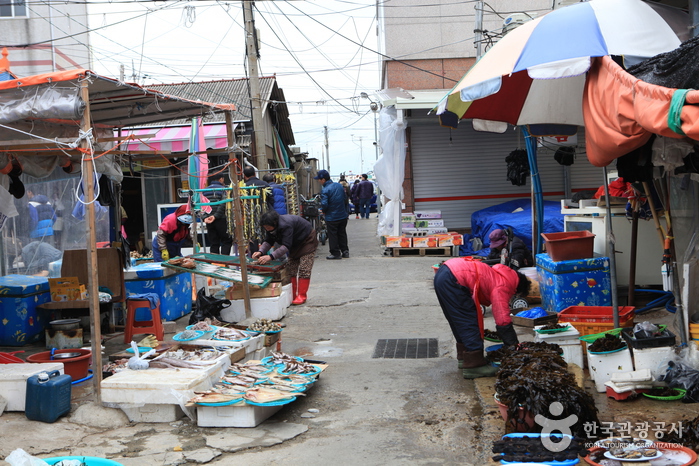
Guryongpo Market area expands all the way to Changjucheon Stream area every fifth-day market day, bustling with crowds of merchants and customers. Guryongpo Fifth-Day Market is held on the 3rd, 8th, 13th, 23rd, and 28th of every month. The market first started when a small village was formed around Guryongpo Port. In the 1950s and '60s, when Guryongpo was incorporated into the county of Yeongil, Guryongpo Market flourished because it became the main market of Yeongil.
Nowadays, thanks to the rows of seafood restaurants inside, the market became even more popular among seafood lovers. The market carries a wide variety of fresh vegetables and produce, herbs, grains, and regional specialties. The seafood at the market is delivered fresh from Guryongpo Port. The squid at Guryongpo Port, which is also the specialty of the market, makes up about 70% of the total catch in Gyeongsangbuk-do. The market is also frequently visited by seafood gourmets for its squid.

Tongyeong Jungang Market (통영 중앙시장)
2026-01-29
14-16, Jungangsijang 1-gil, Tongyeong-si, Gyeongsangnam-do
With almost 400 years of history, Tongyeong Jungang Market is a popular tourist spot in the city of Tongyeong, attracting tourists during weekends and even on weekdays. The market is located next to Dongpirang Village. In front of the market is Gangguan Port, a major fishing port and where replicas of the turtle ship (geobukseon) are docked in honor of Admiral Yi Sun-sin. The spacious cultural venue called Munhwa Madang is quite reminiscent of Byeongseon Madang, a place for anchoring or mooring warships in the past. As the market is located close to the coastline, fresh fish and dried fish make up a huge part of the market's offerings. Here, visitors can also find mother-of-pearl inlaid wares, quilted products, and rice cakes.

Kolon Sport Cheongdam Flagship Store (코오롱스포츠 직영점)
2016-10-28
832, Seolleung-ro, Gangnam-gu, Seoul
+82-2-545-8886
Kolon Sport Cheongdam Flagship Store offers the latest fashionable and high-tech outdoor and related gear, aiming to foster a future-oriented relationship with sustainable business practices.
Gurye Fifth-Day Market & Gurye Traditional Market (구례5일장 / 구례전통시장(3, 8일))
2021-01-13
20, 5ilsijangjageun-gil, Gurye-gun, Jeollanam-do
+82-61-780-2358
Gurye is famous for its location near the first national park, Jirisan Mountain, and is home to clean water and spacious fields near Seomjingang River. The main products of this area include a variety of wild herbs, vegetables, sansuyu (cornus fruit) and plums from Jirisan Mountain and Baegunsan Mountain.
Houses with cornus fruit trees are easily found in the district of Sandong-myeon, Gurye-gun and the whole village gets dyed yellow in the spring and red in the fall. The amount of sansuyu from the area accounts for nearly half Korea’s total.
Also, chestnuts are common in Gurye Market as a complex of chestnut tree takes up 1,400 ㏊ of the land.
Bupyeong (Kkangtong) Market (부평시장(깡통시장))
2026-06-26
48 Bupyeong 1-gil, Jung-gu, Busan
Busan's Bupyeong Market is also known as Kkangtong (tin can) Market. It earned that funny name when it had a variety of imported canned goods from the United States for the US forces stationed in Korea during the Korean War. It was also known as "Dottegi (bustling plea) Market." All foreign products found in the country at that time were supplied from this market. Due to its vast property and many rare goods that were hard to find anywhere else during the time, it was also referred as "Gukje (International) Market." Nowadays, the market has reduced in size as many foreign products are freely imported, but the reputation and potential still remain. Some imported goods including liquor, clothes, ornaments, accessories, fashion items and electronic goods are still sold here. A night market opens from 19:30-23:30 at the public parking lot and at Arcade 2 of the market . Along the 110m-long street market are 11 kiosks selling Korean food, 6 kiosks selling international food such as Japanese and Filipino foods, and 13 vendors selling clothes and accessories. The entrance of the market greets visitors with bright LED lights and fun performances. A magic show and a guitar performance take place twice a day by the entrance of the market and the at the four-way intersection inside the market.
 English
 한국어
 日本語
 中文(简体)
 Deutsch
 Français
 Español
 Русский


