Jukseoru Pavilion (삼척 죽서루)
2.5Km 2025-02-03
37 Jukseoru-gil, Samcheok-si, Gangwon-do
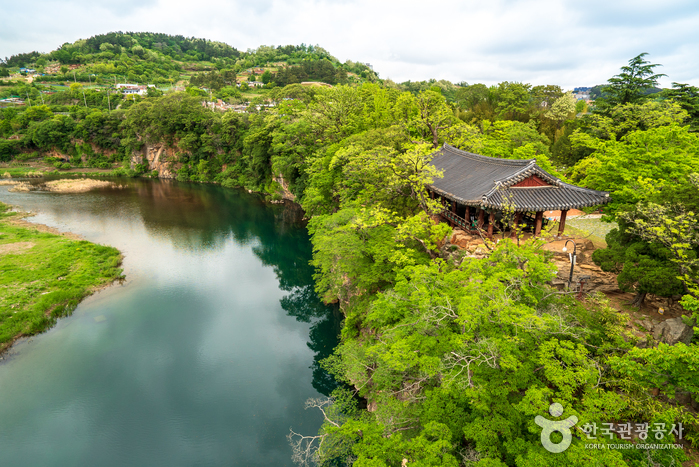
Jukseoru Pavilion, estimated to have been built around 1266, is one of the eight major attractions of Gwandong District in middle eastern Korea collectively known as Gwandong Palgyeong (eight famous sites). Sitting on the edge of a cliff overlooking Osipcheon Stream, the pavilion incorporates the rocks on the cliff as cornerstones, with a five-girder paljak (ancient-style roof).
Then, there are 26 signboards hanging from the rafters of the pavilion. The signboards contain inscriptions of famous ancient scholars such as 'Jeilgyeongjeong' ('The best riverside pavilion'; 1662) by Heo Mok, 'Jukseoru' and 'Gwandong Jeilru' ('The best pavilion in Gwandong'; 1711) by Yi Seong-jo, and 'Haeseon Yuhui Jiso' ('The place that marine gods enjoy'; 1837) by Yi Gyu-heon. Others who have left their mark include King Sukjong (1674-1720), King Jeongjo (1776-1800) and Yulgok YiYi (1536-1584). Evidently, Jukseoru Pavilion has served as an inspiration since its establishment, and continues to inspire visitors today through the stunning view of its surrounding nature.
Jageunhujinhaebyeon Beach (작은후진해수욕장)
3.3Km 2024-03-19
467 Saecheonnyeondo-ro, Samcheok-si, Gangwon-do
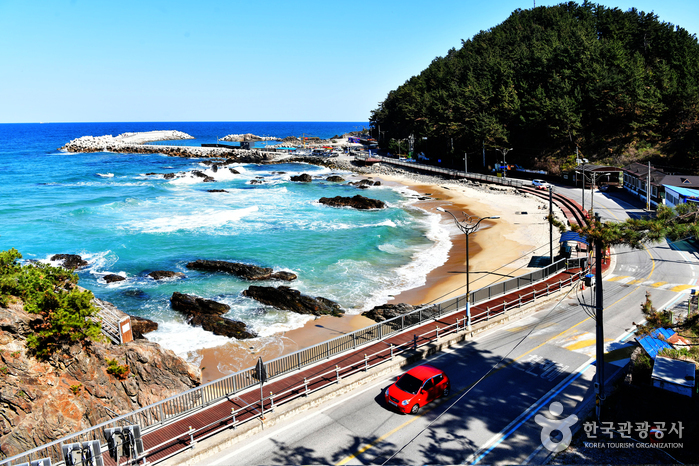
Jageunhujinhaebyeon Beach, situated adjacent to Samcheokhaebyeon Beach, provides a serene and picturesque setting. Its proximity to Samcheok Port allows visitors easy access to fresh hoe (sliced raw fish). Additionally, the Hujin Breakwater, located right beside the beach, is an ideal spot for fishing enthusiasts. The area is also well-equipped with a network of bicycle paths and decked trails, offering various recreational opportunities for visitors.

Samcheok Beach (삼척해변)
4.0Km 2025-01-16
76 Thema town-gil, Samcheok-si, Gangwon-do
Samcheok Beach is easily accessible and has a vast white sandy beach that is 1.2 kilometers long and 100 meters wide. Thanks to its pine tree forest, clean white sand, shallow waters, and convenient amenities, over 500,000 vacationers visit the beach every year. Entertaining events such as a barehanded flounder fishing contest also take place here.
Sangmaengbanghaebyeon Beach (상맹방해변)
4.3Km 2025-01-16
Sangmaengbang-gil, Geundeok-myeon, Samcheok-si, Gangwon-do
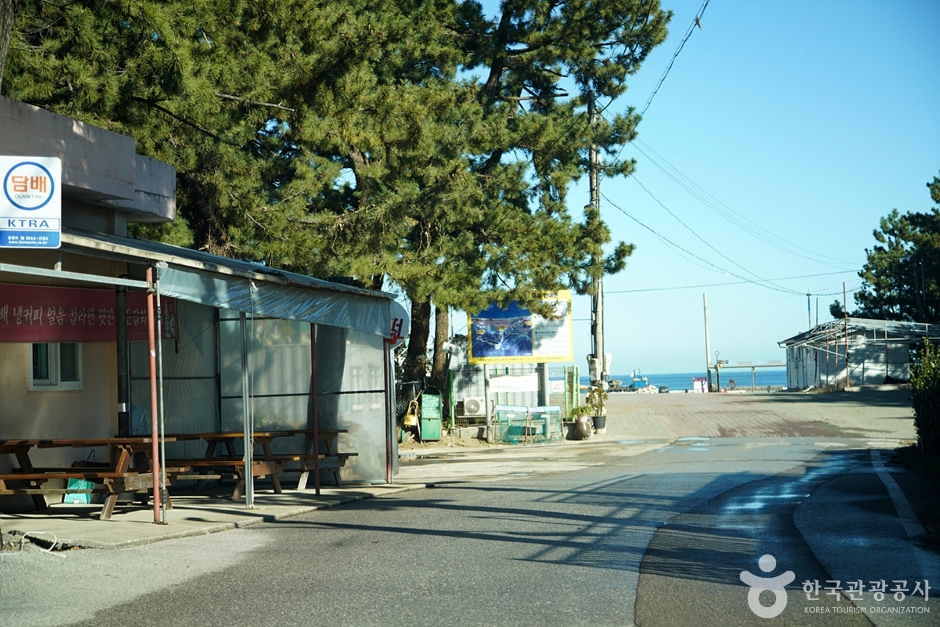
Sangmaengbanghaebyeon Beach is located 5 kilometers from downtown Samcheok and connected to Maengbanghaebyeon Beach. With a shallow average depth of 1-2 meters, its crystal clear water and white sand makes it a perfect location for a family vacation. The pine forest stretched across the beach allows visitors to enjoy forest bathing. Various beach events are held here such as clam collecting contest, bare-hand trout catching contest, and more. For those who enjoy sports, there is a golf practice range nearby. In spring, the nearby canola field blooms with flowers, creating a picturesque background for visitors to enjoy.
Samcheok Maengbang Yuchaekkot Village (삼척 맹방유채꽃 마을)
4.5Km 2024-03-08
3916-112 Samcheok-ro, Geundeok-myeon, Samcheok-si, Gangwon-do
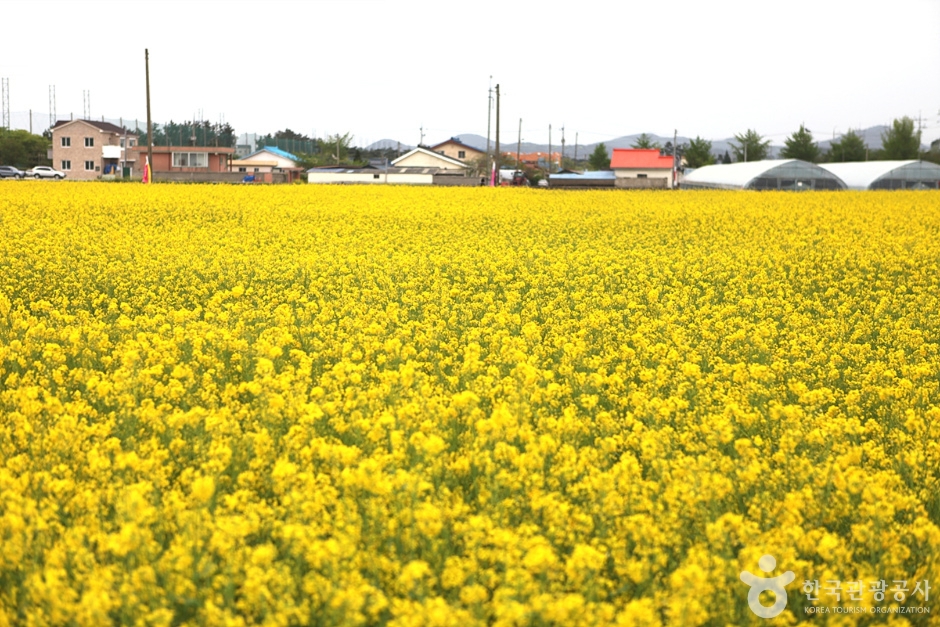
Maengbang Yuchaekkot Village is where one can enjoy the scenic view of canola flowers, cherry blossoms, and the ocean all in one place. Located in Geundeok-myeon, Samcheok, this village was considered as a sacred land during the Goryeo dynasty. Now, it is a village that attracts a flock of visitors every April with beautiful canola flowers. The village also holds a canola flower festival every year to celebrate the beauty of canola flowers that bloom near the 4.2-kilometer stretch of cherry blossom road.
Haegasa Site (Surobuin Park) (해가사의 터(수로부인공원))
4.7Km 2021-07-22
401, Surobuin-gil, Samcheok-si, Gangwon-do
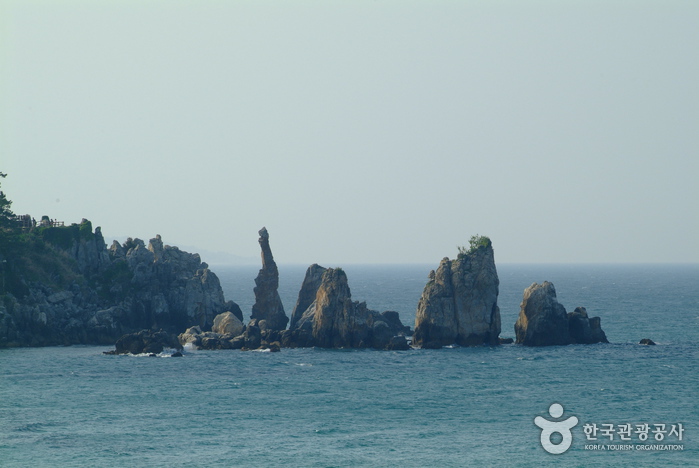
Haegasa is a site named after the tale of 'Haega' in "The Heritage of the Three States." While the original Haegasa is assumed to be on Wausan Mountain at the northern end of Samcheok Beach, it has been restored on Jeungsandong Beach against the backdrop of beautiful scenery. Located near Haegasa are Chuam Beach and Surobuin Park, which hosues a dragon ball, upon which people make their wishes.
Jeungsan Beach (증산해변(증산 해수욕장))
4.9Km 2021-07-15
Jeungsan-dong, Samcheok-si, Gangwon-do
A small and quiet beach, Jeungsan Beach is located four kilometers away from downtown Samcheok. With an average depth of one to two meters, it attracts many vacationers in the summer. The beach's close proximity to Chuam Beach allows visitors to take in the view of Chotdaebawi Rock as well as beautiful sunrise. In winter, flock of seagulls flying over the ocean is a sight to see.
Haeamjeong Pavilion (동해 해암정)
5.3Km 2025-07-18
19 Chotdaebawi-gil, Donghae-si, Gangwon-do
Built on a coast in Bukpyeong-dong, Donghae, Haeamjeong Pavilion is located in a spot where the ocean and oddly shaped rocks come together to create a picturesque view. Haeamjeong Pavilion was originally built by Sim Dong-ro in 1361. However, the original pavilion had been damaged and underwent reconstruction in 1530 by Sim Eon-gwang, the founder's 7th descendant in line, and took today's form after the final renovation in 1794. The pavilion is a great spot to watch the breathtaking sunrise.
Chuam Chotdaebawi Rock (추암 촛대바위)
5.4Km 2022-12-26
Donghae-si, Gangwon-do
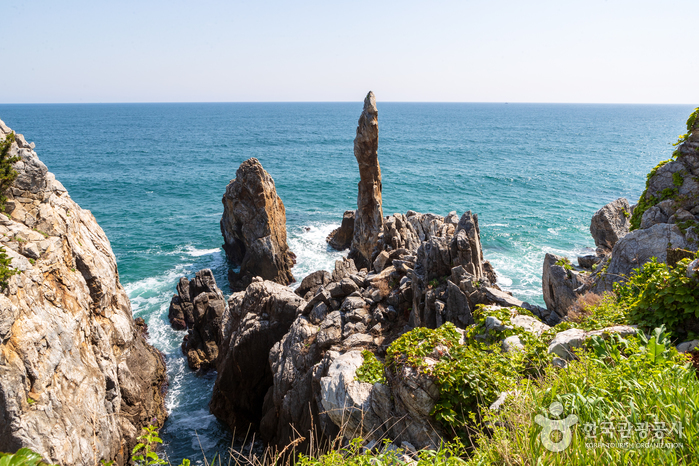
Chuam Chotdaebawi Rock in Donghae-si, Gangwon-do is one of Korea’s most famous tourist attractions. The beautifully formed rock towers high into the sky and resembles a candlestick, from which it gets its name. Chotdaebawi Rock and the nearby rock formations seem to change the shape they resemble along with the waves that crash against the rocks. The view of the sunrise from behind Chotdaebawi Rock is so popular that it attracts photographers and tourists nationwide.
* The Legend of Chotdaebawi Rock
Once upon a time, there was a man who lived in Chuam who had a concubine. His wife was jealous of the second wife and the conflict between the two women continually escalated. One day, god became enraged over their continual quarreling and threw lighting down from heaven, striking both women dead. The newly-made widower missed his wives so much that he remained frozen in his loneliness and eventually turned into a rock, which is now called Chotdaebawi Rock.
Chuam Beach (추암해변)
5.4Km 2025-01-16
26 Chotdaebawi-gil, Donghae-si, Gangwon-do
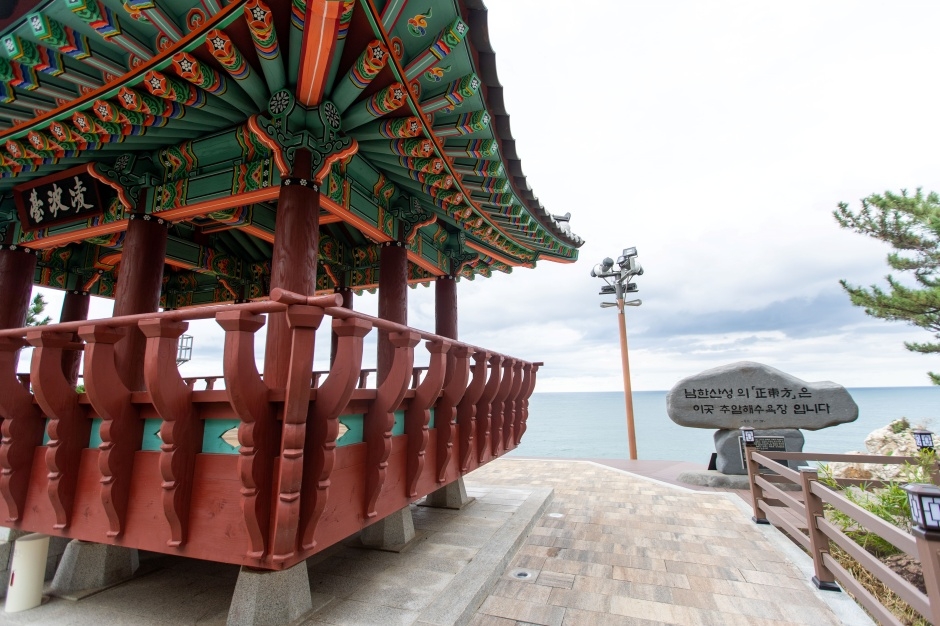
Chuam Beach is a white sandy beach with various unique rock formations. Even though the beach itself is small, there are plenty of things to see like beautiful sunsets, a suspension bridge over the ocean, and the famous Chotdaebawi Rock. The suspension bridge is a perfect photo spot with the East Sea in the backdrop. There is also Haeamjeong Pavilion, first built in 1361 and renovated in 1790. Chuam Sculpture Park at the end of the suspension bridge is also worth a visit.
 English
 한국어
한국어 日本語
日本語 中文(简体)
 Deutsch
 Français
 Español
 Русский


