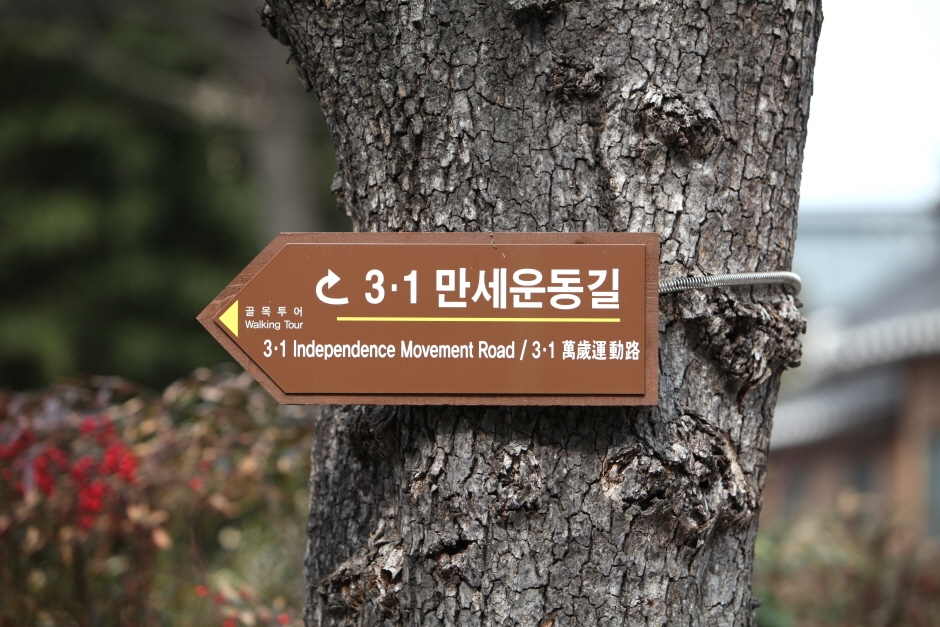
March 1st Independence Movement Road (3·1만세운동길)
14.9Km 2023-01-20
Dongsan-dong, Jung-gu, Daegu
March 1st Independence Movement Road is a historical location where Daegu citizens gathered for the independence movement on March 8, 1919, and the midpoint of Daegu Modern Alley Tour Course 2. Passing Cheongna Hill Missionary's House and Jeil Church, you will come to a road with murals of the independence movement. The March 1st Independence Movement Road is a hilly road leading to Gyesan Cathedral. It is also called 90 Stairs because there are 90 steps. On the wall of the stairs, there is an augmented reality (AR) experience zone along with site photos from history. By scanning the QR code is a 3D video that vividly reproduces the independence movement, enabling a realistic experience of history. Follow the signs of the Daegu March 8th Independence Movement marching road to reach the main road and it will lead to the the 100th anniversary monument of the March 1st Movement and the starting point of the March 8 Movement. A guided alley tour is available for free with an online reservation on the official website.

Olive Young - Gyeongsan Choyeong Branch [Tax Refund Shop] (올리브영 경산조영점)
14.9Km 2025-10-28
321 Daehak-ro, Gyeongsan-si, Gyeongsangbuk-do
Korea Medical Institute Daegu Branch ((재)한국의학연구소 대구분사무소)
14.9Km 2025-10-23
B1-B2, 20 Jungang-daero 66-gil, Jung-gu, Daegu
Korea Medical Institute (KMI), a leader in 'K-health checkups,' operates health checkup centers across eight locations nationwide, from Seoul to Jeju. KMI has been striving to prevent and detect diseases early. It has led the popularization of comprehensive medical examinations in Korea. Based on 43 years of accumulated data and expertise, KMI has enhanced its capabilities in health checkups, services, and brand value.
By utilizing its diagnostic data accumulated over the years, KMI provides accurate test results and follow-up care promptly.
KMI will stay committed to becoming a lifetime health management partner and 'K-health checkup' leader by leveraging its excellence in Korean medicine, beyond health checkups for foreign patients.
Olive Young - Yeungnam Univ. Branch [Tax Refund Shop] (올리브영 영남대점)
15.0Km 2025-10-28
285, Daehak-ro, Gyeongsan-si, Gyeongsangbuk-do
Olive Young - Homeplus Gyeongsan Branch [Tax Refund Shop] (올리브영 홈플러스 경산점)
15.1Km 2025-10-28
288, Gyeongan-ro, Gyeongsan-si, Gyeongsangbuk-do
Dongsan Cheongna Hill (동산청라언덕)
15.1Km 2025-10-24
2029 Dalgubeol-daero, Jung-gu, Daegu
+82-53-627-1337
Cheongna Hill is the place where Christian missionaries resided during the early 20 century, planting many ivies along the site. It is also called Dongsan Cheongna Hill for being on the eastern side of Daegu's center. There are many attractions in this beautiful garden including Chamness’ House, Switzer’s House, Blair’s House, 90 stairs, Daegu 3.1 Independence Movement Road, Daegu's first western apple tree, a memorial stone inscribed with the song "Thinking of My Friend” , and the cemetery of the missionaries and their family. Cheongna Hill is also the starting point of Daegu's Street Tour Course 2 as well as a popular drama film location.
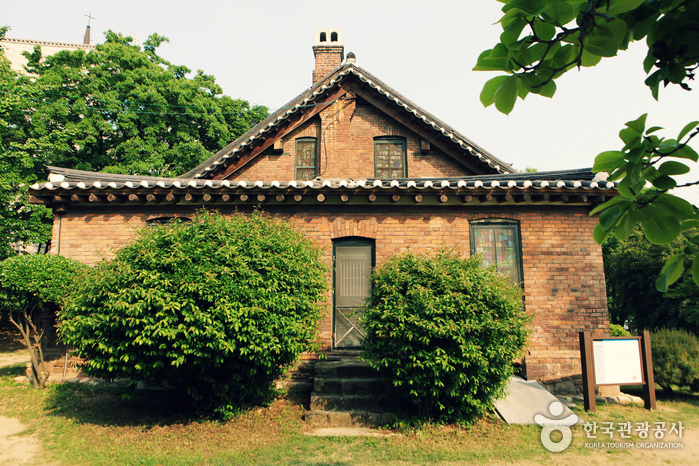
House of Missionary Switze (선교사스윗즈주택)
15.1Km 2024-08-05
2029 Dalgubeol-daero, Jung-gu, Daegu
The House of Missionary Switze served as home for a host of American missionaries. Built between 1906 and 1910, the home is a Western-style structure with two above-ground floors and one basement level. In 1981, the house was used as company housing for doctors at the nearby Dongsan Hospital, at which point changes were made to the interior and exterior of the house. It was later changed into a missionary museum, displaying items used by the missionaries who lived in.
House of Missionary Chamness (선교사챔니스주택)
15.1Km 2022-09-06
2029, Dalgubeol-daero, Jung-gu, Daegu
+82-53-661-2193
House of Missionary Chamness was the home of American Christian missionary Chamness and his family. It was built in the Western-style and provides a glimpse into the daily life of American missionaries in Korea. The house, a simple building in comparison with the houses of America at the time, is now considered a very important treasure of Korea's modern history. The building has been converted into a small museum using artifacts from the missionaries to bring the past to life.
Daegu Stadium (대구스타디움)
15.1Km 2022-06-30
180, Universiad-ro, Suseong-gu, Daegu
+82-53-803-8300
Daegu Stadium is a sports stadium located in Daeheung-dong, Suseong-gu in Daegu. Construction of the stadium began on July 28, 1997 and was completed on May 20, 2001. Its roof is designed to resemble a globe, incorporating the beautiful curves found in the roofs of traditional Korean houses.
The stadium seats approximately 66,000 people and is suitable for hosting large-scale international sports games and 74% of the seats are protected by a Teflon-coated overhang. The 47,407 square meter stadium has three stories below ground and three above ground floors and is built on a 512,479 square meters of land just 9 kilometers southeast of the city’s downtown area.
Stadium facilities include a gymnasium, baseball field, indoor ice rink, horseback riding track, tennis court, fitness center, shooting range, archery range, skateboard park, and an indoor jogging course. There are smaller buildings for taekwondo, judo, and rock climbing.
Daegu Stadium has hosted a number of 2002 FIFA World Cup matches; Senegal vs. Denmark (June 6), Slovenia vs. South Africa (June 8), Korea vs. U.S.A. (June 10) and Korea vs. Republic of Turkiye (June 29).
Daegu Dalseong Park (대구 달성공원)
15.1Km 2023-11-14
35 Dalseonggongwon-ro, Jung-gu, Daegu
+82-53-803-7350
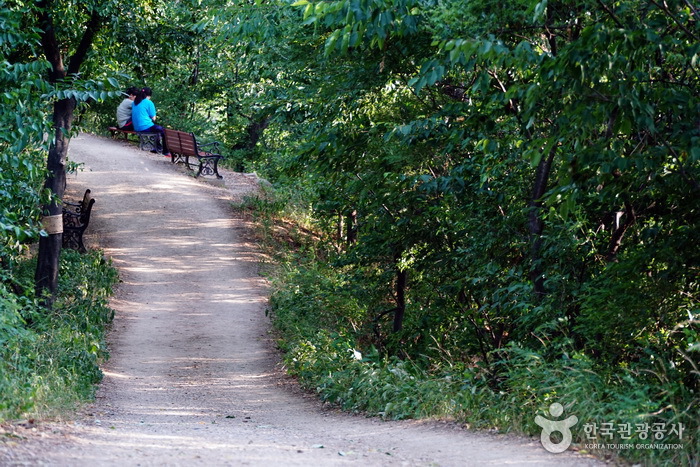
Daegu Dalseong Park is the oldest outdoor leisure place in Daegu. The park was once a fortress location of Dalgubeol, a tribal country of the Three Kingdoms Era. The area was established as a park in 1905, and in 1965, the city of Daegu transformed the park into the well-organized leisure area loved by citizens and visitors today. Within the park is Historical Monument Gwanpungnu Pavilion, built in 1601 and moved from the entrance of Gyeongsanggamyeon to the park in 1906.
 English
 한국어
한국어 日本語
日本語 中文(简体)
 Deutsch
 Français
 Español
 Русский


