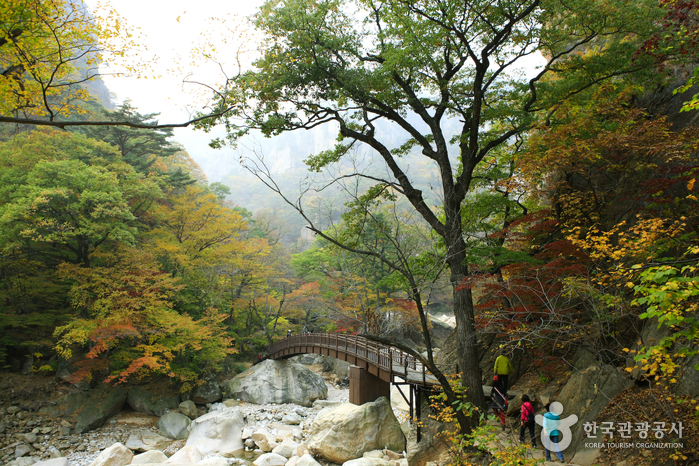
Seoraksan National Park (Southern Section) (설악산국립공원 (남설악))
16.6Km 2024-04-02
801 Seorak-ro, Yangyang-gun, Gangwon-do
Seoraksan Mountain, the highest amid the Taebaek Mountain Range, boasts beautiful landscape and scenery all year round. To the east of Hangyeryeong and Misiryeong Passes is classified as the outer section ("Oeseorak"), to the west is the inner section ("Naeseorak"); and to the south of Hangyeryeong Pass as the southern section ("Namseorak").
The southern section is famous for its mineral water, hot springs, and waterfalls including Yongsopokpo, Sibipokpo, and Yeosinpokpo Falls. Jeongbongsan Mountain (1,424.2 meters) is also included in the area. There are also several different hiking courses varying in distance and duration.
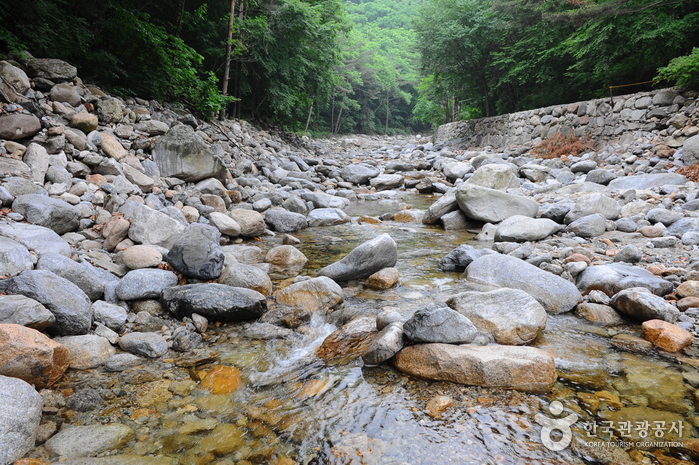
Sibiseonnyeotang (Tangsudonggyegok Valley) (십이선녀탕(탕수동계곡))
16.6Km 2021-02-24
Sibiseonnyeotang-gil, Inje-gun, Gangwon-do
+82-33-462-2554
Sibiseonnyeotang Valley (Valley of the Twelve Angels’ Bath) is a beautiful valley filled with water flowing through a cascade of waterfalls and pools. In the past, there were 12 of each, although the size and shape has changed over time. The valley also features many uniquely shaped rocks and a forest comprised of many types of trees, including maple, pine nut, and pine trees. The path passing through the V-shaped valley crosses the stream often, so visiting after heavy rainfall is not recommended.
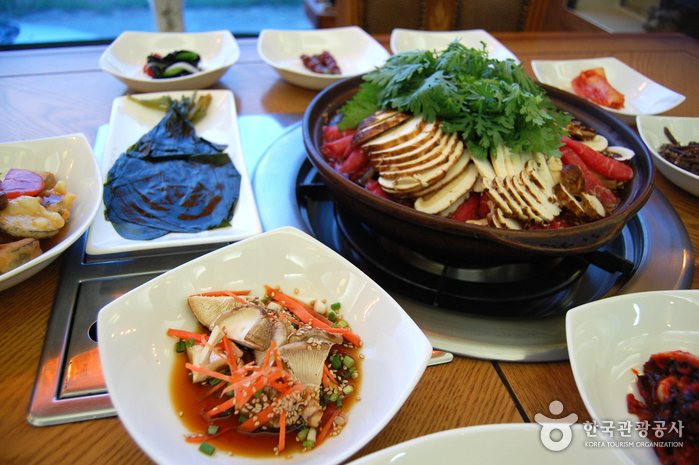
Songibeoseot Maeul (송이버섯마을)
16.7Km 2024-12-27
55-20 Namdaecheon-ro, Yangyang-eup, Yangyang-gun, Gangwon-do
033-672-3145
This restaurant serves a variety of dishes made with pine mushrooms. You can, for instance, enjoy songibeoseot jeongol (pine mushroom hot pot) with Korean beef in a shabu-shabu style. After eating the mushrooms and the beef, you can add noodles to the soup, which goes quite well with the broth, now richly infused with the flavors of pine mushrooms and Korean beef.
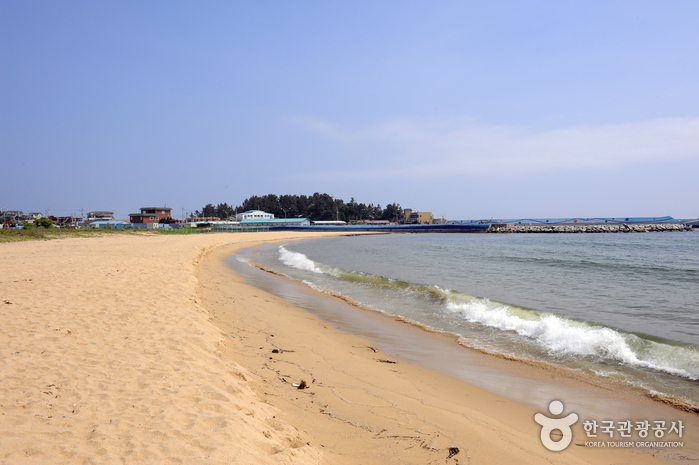
Bongsudae Beach (봉수대해변)
16.9Km 2022-08-04
Oho-ri, Goseong-gun, Gangwon-do
+82-33-680-3356
Bongsudae Beach is located 200 meters north of Sampo Beach and the white-sand coastline stretches along the side of National Road No. 7. This beach was opened in 1997, and remains relatively cleaner than other beaches. The beach is used as an auto-camping site in summer. The beach shore is only 800 meters long and 50 meters wide, but boasts clean and fine sand.
Songjiho Makguksu (송지호막국수)
17.3Km 2025-11-05
5866 Donghae-daero Jugwang-myeon, Goseong-gun, Gangwon-do
Restaurants of‘In the Soop : Friendship trip’
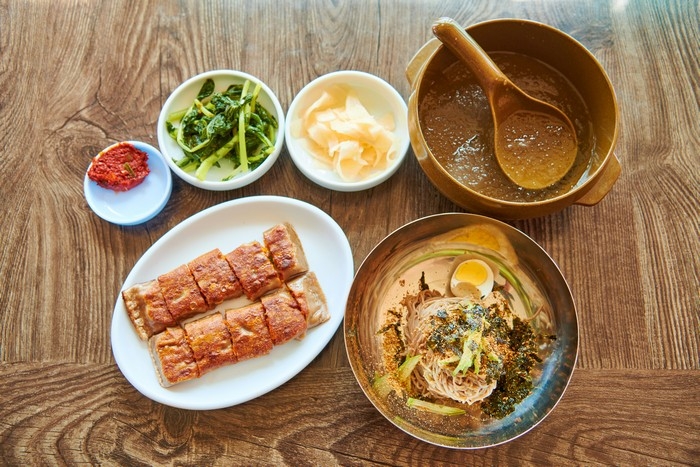
In Gangwon-do, various cuisines using buckwheat have developed. One of the most popular menu items is probably the Buckwheat Noodles. Songjiho Makguksu, the place they go to eat in Episode 1 of In the Forest, was famous for its Buckwheat Noodles before filming. Buckwheat Noodles with plenty of Radish Water Kimchi, seasoning, and Perilla Oil, warm Mandu, and thin Potato Pancake will make a hearty meal during your trip.
Songjeonhaebyeon Beach (송전해수욕장)
17.6Km 2024-02-05
21-7 Songjeon-ri, Sonyang-myeon, Yangyang-gun, Gangwon-do
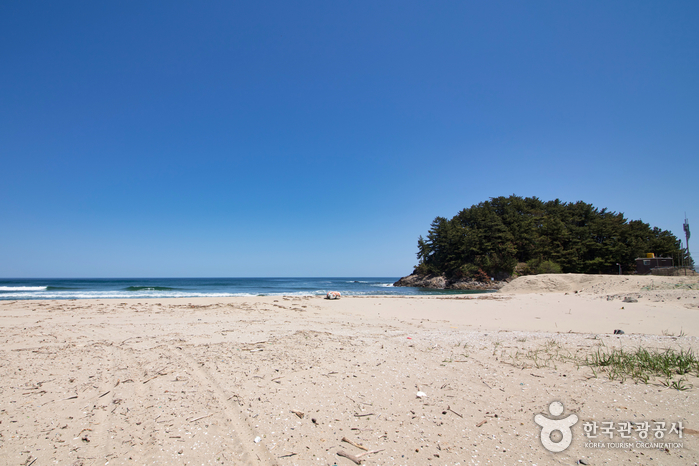
This beach ranks among Korea's most favored surfing destinations. With its pristine white sand, it stretches 900 meters in length and 80 meters in x_width, and has a depth of 1 meter. It holds the distinction of being the second largest and longest white sand beach in Yangyang-gun, following Naksanhaebyeon Beach. Notably, the water here is so clean and clear that visitors can enjoy clamming.
Songjiho Beach (송지호 해수욕장)
17.9Km 2024-03-18
85 Simcheungsu-gil, Jugwang-myeon, Goseong-gun, Gangwon-do
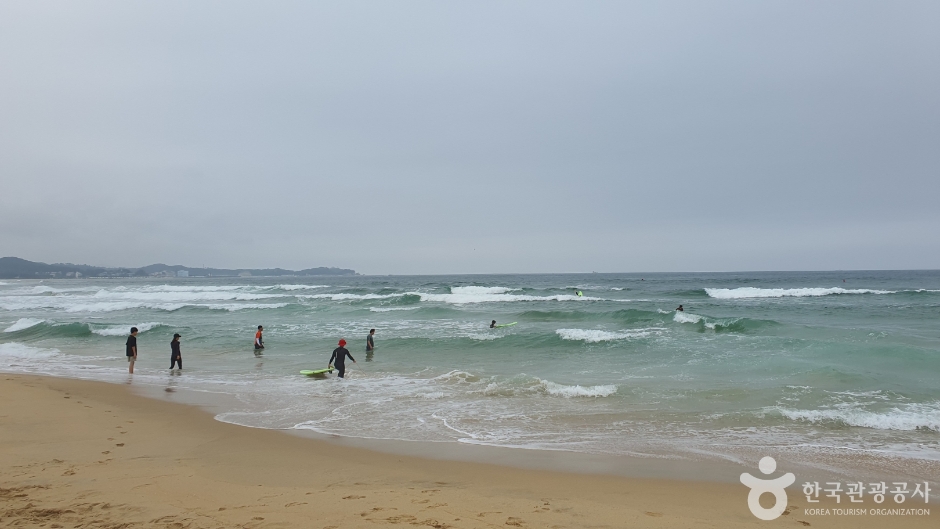
Located near Songjiho Lake, one of the most famous lagoons on the eastern coast of Korea, Songjiho Beach stretches 2 kilometers in length and is 100 meters wide. It is also located close to Seoraksan Mountain. The beach is quite popular, thanks to its clear water and shallow depth. The island just off the coast, Jukdo Island, features a handsome collection of bamboo trees and unique rock formations.
Jeombongsan Mountain Gombaeryeong Pass (점봉산 곰배령)
18.0Km 2024-02-16
12 Gombaeryeong-gil, Girin-myeon, Inje-gun, Gangwon-do
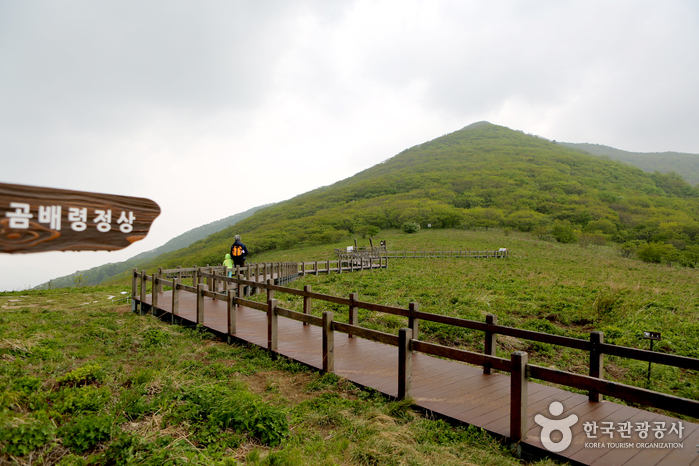
This ecological area at the summit of Jeombongsan Mountain, situated 1,100 meters above sea level, spans approximately 16.5 hectares. It is often referred to as the "garden of heaven" due to the sheer diversity of plants and wildflowers in the area. The trail leading to the pass has a relatively gentle slope, making it accessible to all. It extends for 10.5 kilometers and typically takes about four hours to complete. Visitors need to make reservations to visit the pass.
Osan-ri Prehistory Museum (오산리선사유적박물관)
18.1Km 2021-08-11
33, Hakpo-gil, Yangyang-gun, Gangwon-do
+82-33-670-2442
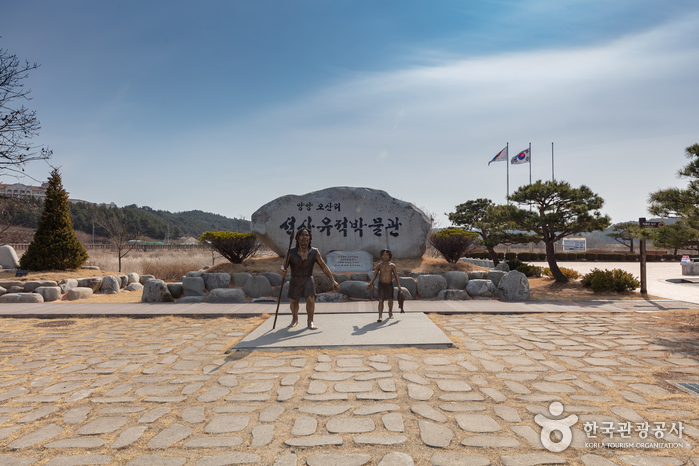
Osan-ri Prehistory Museum is dedicated to preserving, researching, and exhibiting artifacts found in the Archaeological Site in Osan-ri, Yangyang. These artifacts, dating back to the Neolithic period about 8,000 years ago, were found over the course of public works on the museum’s surrounding wetlands. The collection of nearly 40,000 artifacts, include earthenware with a raised design, stone arrowheads, and net weights, represent one of the premier archaeological findings of the Neolithic period in Korea. The artifacts themselves speak to the fishing, hunting, and gathering activities of the Neolithic residents of Osan-ri. The museum is divided into indoor and outdoor exhibitions, storage, and research areas. Exhibition Hall 1, located indoors, offers a diorama of the Neolithic lifestyle in Osan-ri, such as fishing, gathering, and earthenware production. Exhibition Hall 2 introduces the prehistoric culture of the Yeongdong region, encompassing the periods from the Neolithic to the Iron Age in Yangyang, Goseong, and Gangneung. Outdoor Exhibition includes Neolithic cottage models, exploration paths, and Ssangho Wetlands, whose nickname of “the dancing reed bed” comes from the mysterious sight of the reed bed rising over the wetlands like an island, dancing to the winds.
Goseong Wanggok Village (고성왕곡마을)
18.6Km 2024-12-10
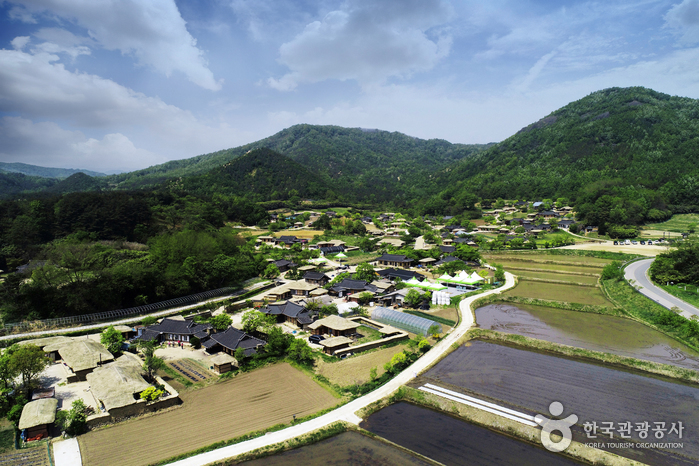
Goseong Wanggok Village is a traditional village located about 1.5 kilometers away from the East Sea. Its secluded location nestled among five hills has allowed the village to retain its appearance and tradition for a long time. Because of its geographic features, the village was also protected from disasters like wars and mountain wildfires, allowing the area to preserve its form. Wanggok Village’s origins are said to date back to the 14th century, when it was first settled as a clan village and survived for over nearly 600 years. The entire village has preserved its original appearance and is recognized for its historical and academic value. Here, visitors can observe traditional northern-style houses, clusters of thatched houses, and a gateless yard. Some traditional hanok buildings offer accommodations as well, accepting visitors to stay overnight through online reservations.
 English
 한국어
한국어 日本語
日本語 中文(简体)
 Deutsch
 Français
 Español
 Русский


