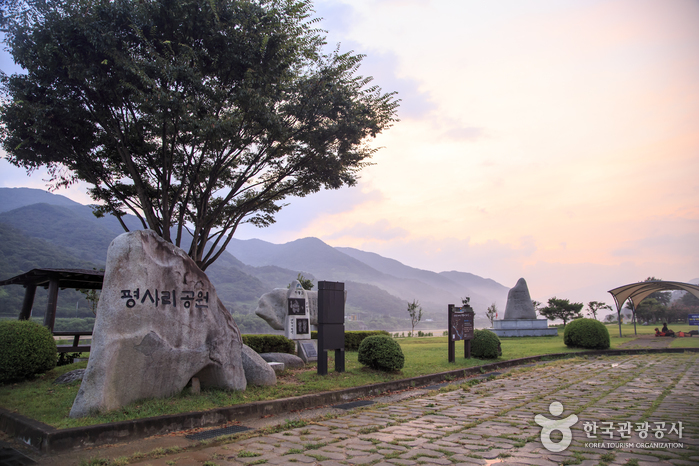
Pyeongsari Park (평사리공원)
12.5Km 2022-08-22
3145-1, Seomjingang-daero, Hadong-gun, Gyeongsangnam-do
+82-55-883-9004
Situated along Seomjingang River between Gurye and Hadong, Pyeongsari Park was built for the enjoyment of summer tourists to the area. In addition to the beautiful river, the park is home to campgrounds, numerous shaded rest spots, basketball courts, soccer fields, and an abundance of parking space. Decorated with Jangseung (totem poles, which used to be set at the entrance of villages), the spacious park is full of excellent amenities: barbecue grills, benches, drinking fountains, and clean bathrooms. The sandy banks of the river offer a unique opportunity to catch marsh clams.
Pyeongsari Park and its nearby attractions appeared in Toji (The Land), the epic historical novel by Park Kyung-ni. Visitors may want to tour the group of houses that have been reproduced to commemorate the novel, including the famous Choi Champan House.
Nearby attractions include Hwagae Market, Ssanggyesa Temple, and Seomjingang Maehwa Village, host of the Gwangyang Maehwa Festival.
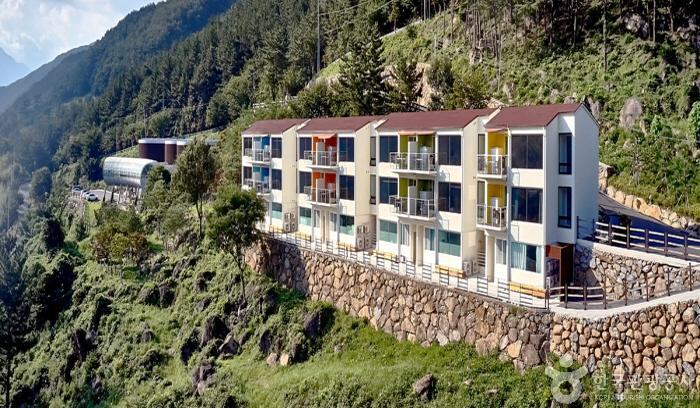
Starway Hadong Healfort (힐포트하동)
12.9Km 2024-12-13
3352-1 , Seomjingang-daero, Hadong-gun, Gyeongsangnam-do
Hadong Healfort, situated halfway up the mountain in Akyang-myeon, Hadong, Gyeongsangnam-do, is located near Pyeongsa-ri, which is the setting of the novel Toji, and offers a panoramic view of the Seomjingang River. In the living room, the view from the window is as lovely as a framed picture. There are 13 guestrooms, divided into three types: double, twin, and ondol (underfloor heated), each with a living room, bedroom, bathroom, and private terrace. This is an ideal location for couples to relax and enjoy the view.
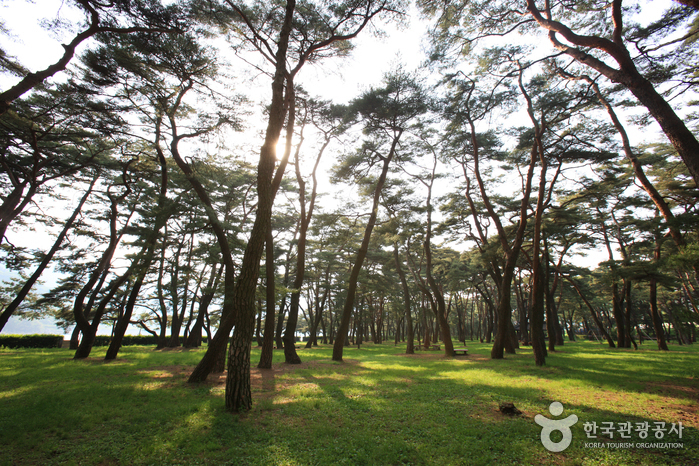
Hadong Pine Forest (하동송림)
13.1Km 2021-07-21
2107-8, Seomjingang-daero, Hadong-gun, Gyeongsangnam-do
+82-55-880-2651
Hadong Pine Forest grows along the Seomjingang River near Seomjingang Iron Bridge. It was planted in 1745, during the 21st year of Joseon King Yeongjo’s reign, to block wind and sand. Now, it is one of the best pine groves in Korea.
In a total area of 26,000 ㎡ are approximately 750 old-growth pine trees. Along with the white sand on the riverside, the forest provides picturesque scenery when seen from Hasangjeong Pavilion within the forest. The forest park is used as a venue for folk games and major events hosted by the local government. There are sports facilities and recreational facilities teenagers, children, and families can enjoy, attracting many locals and tourists.

Yeoyeo Sikdang (여여식당)
13.2Km 2025-01-22
92 Gyeongseo-daero, Hadong-eup, Hadong-gun, Gyeongsangnam-do
055-884-0080
If you want to get the basics of jaecheop (Freshwater Marsh Clam) dishes in the Hadong-eup center area, head to Yeoyeo Sikdang. This restaurant serves a rich bowl of jaecheop-guk with a good selection of side dishes and a bowl of steamed rice.
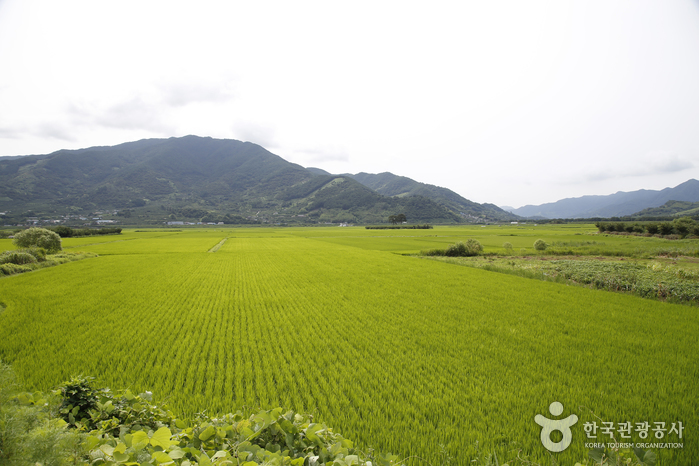
Pyeongsari Field (평사리들판)
13.3Km 2022-08-26
Pyeongsari-gil, Hadong-gun, Gyeongsangnam-do
+82-55-880-2651
Pyeongsari Field was created by Seomjingang River flowing through the canyon which attracted people to form a village. The field served as the central farming field and fed the villagers for many years and appeared as a setting in Park Kyongni's novel "Land." Pyeongsari field is one of the largest fields found along Seomjingang River, boasting a size of 2,743,801 ㎡.
Buheung Jaecheop Sikdang (부흥재첩식당)
13.3Km 2025-01-22
98 Gyeongseo-daero, Hadong-eup, Hadong-gun, Gyeongsangnam-do
055-884-3903
Like many other restaurants in Hadong, this restaurant serves freshwater marsh clam dishes. The restaurant is most famous for jaecheophoe (raw freshwater marsh clam). This dish is served on a bed of pear, carrot, cabbage, cucumber, and other vegetables tossed with sweet and sour red chili paste. Another popular menu is the Modum Jeongsik (assorted freshwater marsh clam set menu), which has jaecheopguk, jaecheopjeon, and jaecheophoe.
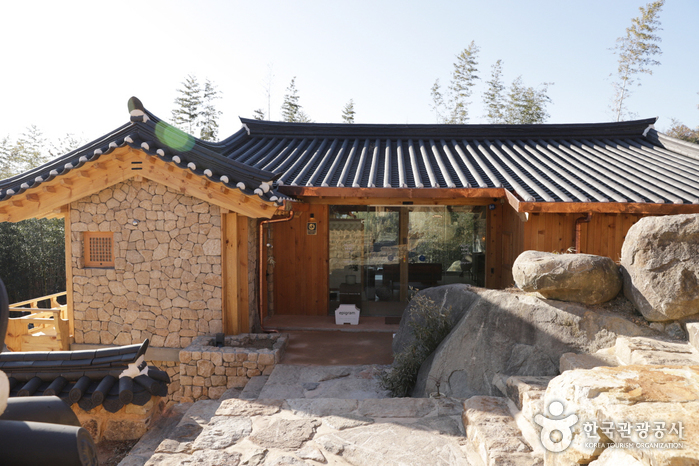
House of Choi Champan (최참판댁 한옥숙박시설)
13.9Km 2024-12-19
75 , Pyeongsari-gil, Hadong-gun, Gyeongsangnam-do
+82-10-2086-5330
House of Choi Champan is a hanok stay in Pyeongsa-ri, Akyang-myeon, where the Seomjin River flows down from Jirisan Mountain, Jeollanam-do. The accomodation is in several different configurations: the two-storey Ilyeongjae and Wolyeongjae are both rented out as houses; Yeonhajae and Hoeramjae, which are single-storey with numaru(a raised open floor); while Unrakjae and Hoegyeongjae have several rooms with bathrooms, each rented out. Only the "Hoegyeongjae-1" room is equipped with Numaru. Cooking strong-smelling food in guestrooms is not allowed.
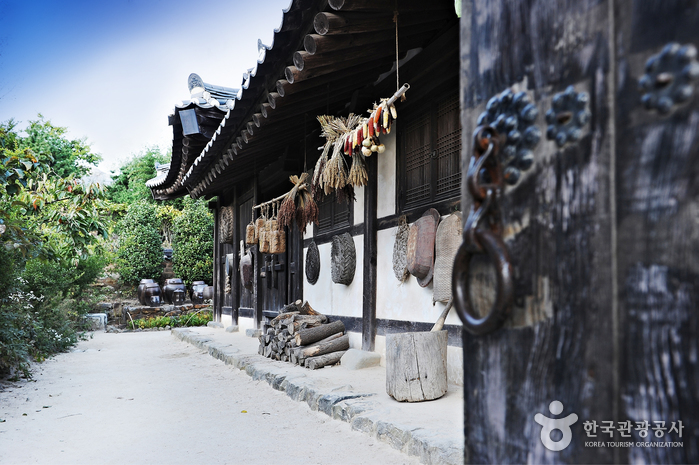
Choi Champandaek (House of Choi Champan) (최참판댁)
14.1Km 2021-12-16
66-7, Pyeongsari-gil, Hadong-gun, Gyeongsangnam-do
+82-55-880-2651
The House of Choi Champan is known as the setting of the famous novel "Toji" ("The Land") by noted novelist Park Kyongni. Located in a small folk literature village in Agyang-myeon, Pyeongsa-ri along the Seomjingang River at the foot of Jirisan Mountain, Choi Champandaek consists of fourteen hanok (traditional Korean house) buildings.
Also used as the main set of the drama version of "Toji" (2004), Choi Champandaek gives visitors a look at the life of Korean people in the late Joseon era. The house has not only made its appearance in many films, but is also a valuable cultural asset of Hadong-gun.
The Daecheong Maru (wooden-floored hall) connected to the Sarangchae (men’s quarters in a hanok) offers a wide view of the vast field of Pyeongsa-ri and gives an opportunity to meditate and reflect while appreciating the beautiful surroundings. Located in the vicinity are numerous tourist attractions including the Pyeongsari Literature Center, Hwagae Market, and Ssanggyesa Temple. During fall season every year, Choi Champandaek hosts the Toji Literature Festival.
Suncheon Utjang Market (순천 웃장)
14.4Km 2025-10-23
40 Bukmun-gil, Suncheon-si, Jeollanam-do
Suncheon Utjang is a familiar five-day-interval market in Suncheon that combines the convenience of a permanent market with the charm of a traditional one. Every five days starting from the 5th of each month, this market opens for business and bustles with local street vendors, creating a vibrant atmosphere. A notable highlight is the Suncheon Utjang Gukbap Alley, a food street designated as both a Namdo Food Street by Jeollanam-do and a Suncheon Specialty Food Zone. It’s renowned for its flavorful Gukbap (rice soup dishes). In particular, when ordering two or more servings, diners receive complimentary dishes such as boiled pork slices or blood sausage, depending on the type of Gukbap ordered, making the meal even more appetizing and filling. A favorite of all ages, Utjang Gukbap has become a signature comfort food of the five-day-interval market. In addition, visitors can enjoy a variety of fresh seasonal produce and regional delicacies that capture the unique spirit of Suncheon.
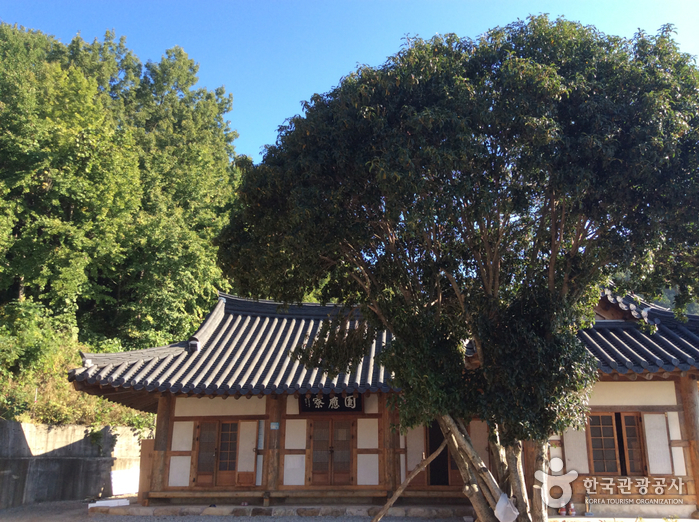
Suncheon Heungryunsa Temple (흥륜사 (순천))
14.4Km 2022-09-19
102, Jangdae-gil, Suncheon-si, Jeollanam-do
+82-61-744-7773
Heungryunsa Temple is a missionary center of the Hwaeomsa Temple. Located in Jukdobong Park (downtown Suncheon), the site was previously used as an archery range.
*History
Heungryunsa Temple is a branch of Hwaeomsa Temple, which is the 19th local temple of Jogye Order. It is said that Heungryunsa Temple was constructed during the reign of King Seonjo of the Joseon dynasty and that the site was used as a place where naval forces practiced archery during the Imjin War in 1592. At the same time, the temple was the first military base of monk-turned-military officers from Hwaeomsa, Songgwangsa, and Seonamsa Temples.
The current building was reconstructed in 1986 by Monk Jongwon, who is still the chief abbot of the temple.
 English
 한국어
한국어 日本語
日本語 中文(简体)
 Deutsch
 Français
 Español
 Русский


