Guryonggyegok Valley (구룡계곡)
9.6Km 2024-04-07
Guryongpokpo-gil, Namwon-si, Jeonbuk-do
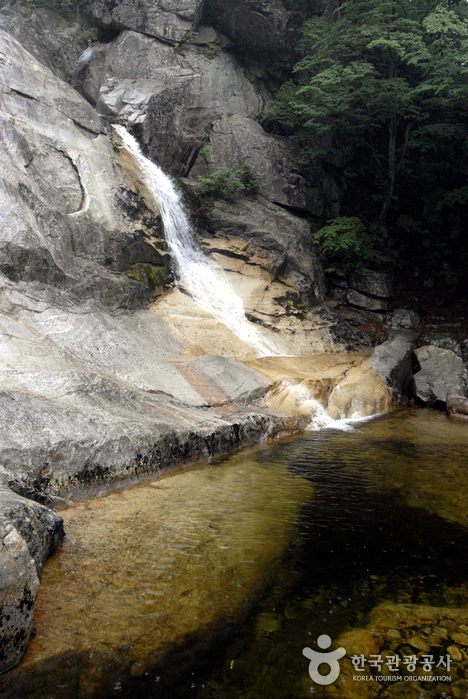
Guryonggyegok Valley, a 3 kilometer-long valley in the northern part of the Jirisan National Park, located in Namwon, Jeollabuk-do, is just the place to enjoy a panoramic view of the unusually shaped rocks and precipitous cliffs. Under the Guryongpokpo Falls, located at the peak of the valley, is a small pond called, ‘Yongso’ (meaning ‘dragon pond’). Legend has it that a dragon lived here before it ascended to heaven. Visitors can tour the valley by driving along the skyway, an extension of the tourist road of Jirisan Mountain, or take an invigorating hike up a mountain by taking the Jeongnyeongchigan route, which extends along the valley to Baemsagol Valley(Banseon) and Nogodan Peak.
Maewoldang (매월당)
11.2Km 2024-04-07
47-34 Maechon-gil, Geumji-myeon, Namwon-si, Jeonbuk-do
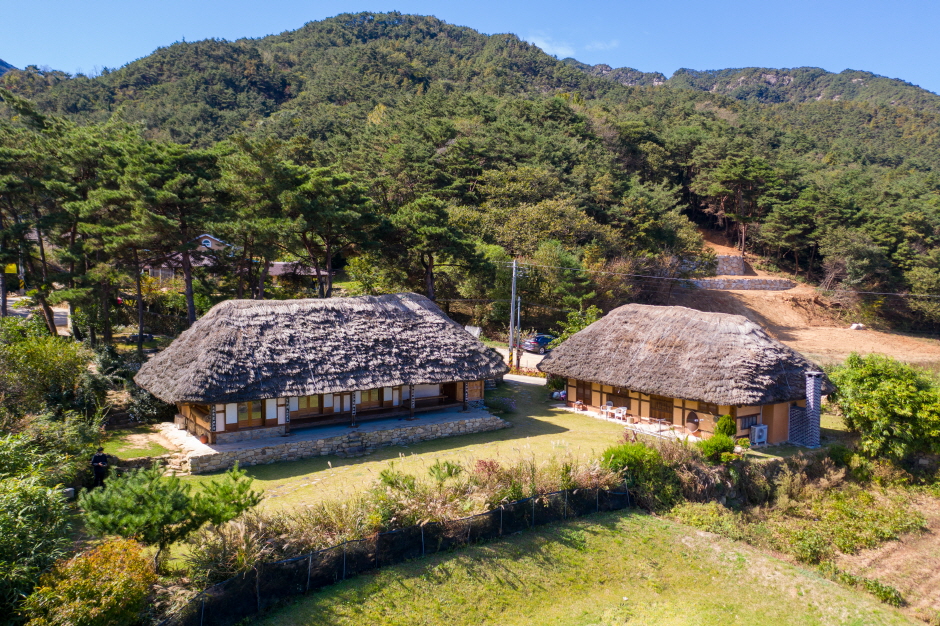
Maewoldang is a café that sells traditional Korean tea made from hand-picked tea leaves harvested in the wild. Their signature drink is Goryeo dancha (fermented wild tea), made by roasting leaves in an cast-iron pot using traditional methods, sourced from a large wild tea plantation discovered in Namwon's Maechon Village. Visitors can enjoy tea in a traditional thatched-roof house, and reservations are required in advance.

Jirisan National Park (Namwon) (지리산국립공원(남원))
12.0Km 2024-04-07
255 Jeongnyeongchi-ro, Jucheon-myeon, Namwon-si, Jeonbuk-do
Jirisan National Park is the second-highest mountain in South Korea, standing at an elevation of 1,915 meters, spanning across the provinces of Gyeongsang-do and Jeolla-do. Revered as a sacred mountain alongside North Korea's Baekdusan Mountain, it is home to the Asiatic Black Bear and features numerous peaks, including Cheonwangbong Peak. In spring, various flowers such as Royal Azalea bloom, while lush forests thrive in summer, vibrant foliage adorns the landscape in autumn, and the winter scenery boasts snow-covered peaks and icy landscapes.
Jirisan Cheese Land (지리산치즈랜드)
14.9Km 2026-06-30
1590-62 , Saneop-ro, Gurye-gun, Jeonnam-Gwangju Special Metropolitan City
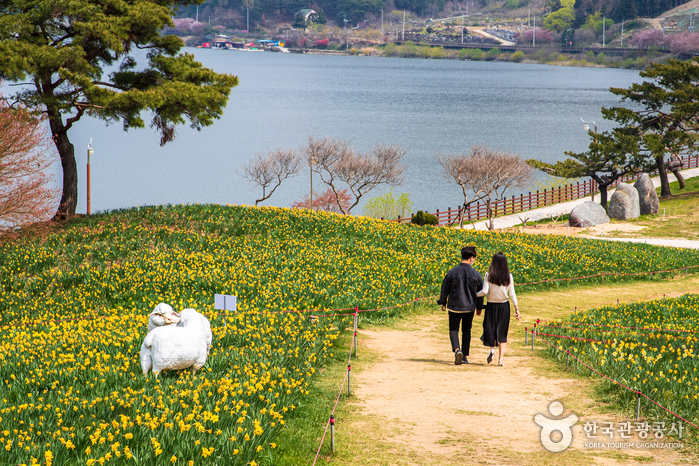
Chowon Ranch, which started milking with two cows in 1979, built Jirisan Cheese Land, an experience ranch, in 2012 to introduce the dairy industry and milk to more people based on its 30 years of experience. Jirisan Cheese Land distributes homemade cheese and yogurt, and at the experience center, you can experience making mozzarella cheese, feeding calves, and riding a grass sleigh. Over 130 dairy cows are grazing in the green meadow pasture, and the lake is adjacent to it, creating beautiful scenery. The specialty of Jirisan Cheese Land is nature. The dazzling greenery and fragrance of scenery, flowers, and grass are the special features.
Jirisanhosu resort / 지리산호수리조트
15.0Km 2026-06-30
610 , Gumanje-ro, Gurye-gun, Jeonnam-Gwangju Special Metropolitan City
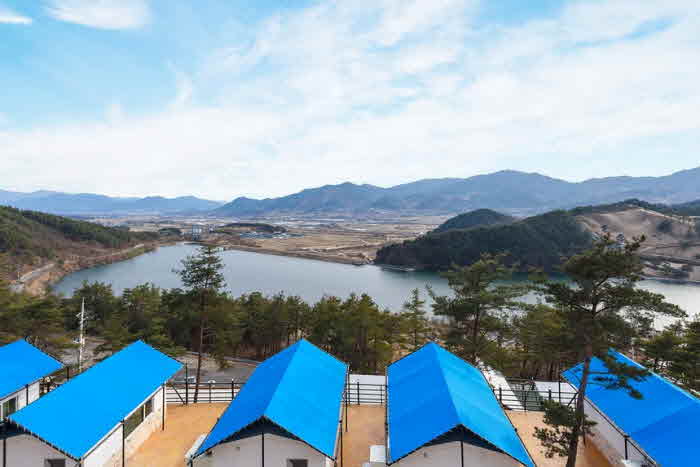
Jirisan Lake Resort in Gurye-gun, Jeollanam-do, accomodates travellers in glamping-style lodges arranged in terraces on a sloping hill - from where guests can enjoy the beautiful scenery of Gumanje Lake and Jirisan Mountain. The lodges have tables and barbecues outside. Starting at the entrance to the resort is a pedestrian bridge across the lake where guests can stroll; and on the other side is a free-range farm where visitors can have a go at cheese-making. Pets are allowed.
Seomjingang Train Village (섬진강기차마을)
15.6Km 2026-06-30
232, Gichamaeul-ro, Gokseong-gun, Jeonnam-Gwangju Special Metropolitan City
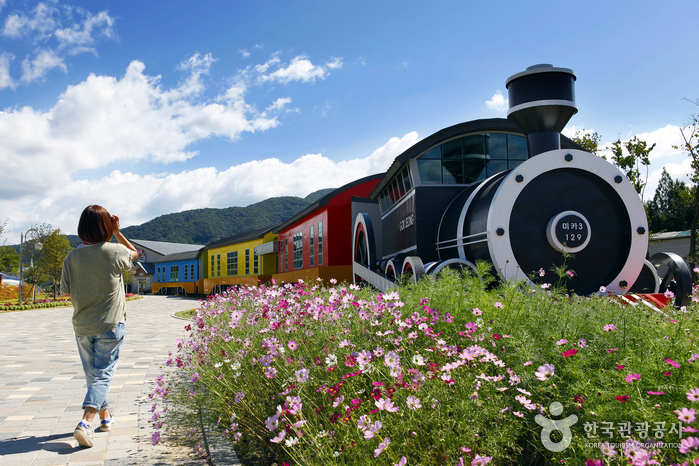
Since its development in April 1999 as a part of government efforts to boost regional tourism, Seomjingang Train Village has established itself as a popular attraction in Gokseong. A replica of the region's old steam engine train runs 10 kilometers between the old Gokseong Station in Seomjingang Train Village and Gajeong Station. The train runs along the old tracks at a moderate speed, allowing passengers to enjoy the scenic view along the tracks.
Gokseong Leisure Culture Center (곡성 레저문화센터)
15.7Km 2026-06-30
855, Gokseong-ro, Gokseong-gun, Jeonnam-Gwangju Special Metropolitan City
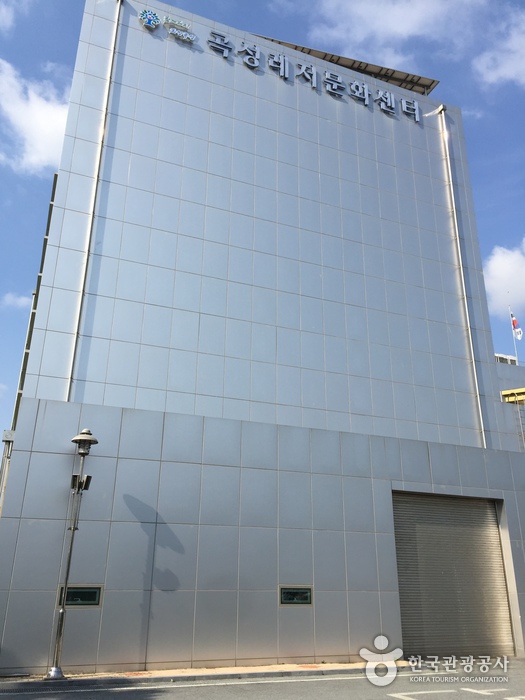
Gokseong Leisure Culture Center was built to provide culture, education, and leisure facilities to the public. There are three concert and lecture halls, Dongak Art Hall, Seomjin Hall, and Daehwang Hall. There are also facilities for hobby and health classes. The center opened on March 11, 2010.
Chaewondang (채원당)
15.8Km 2026-06-30
217-28 , Gichamaeul-ro, Gokseong-gun, Jeonnam-Gwangju Special Metropolitan City
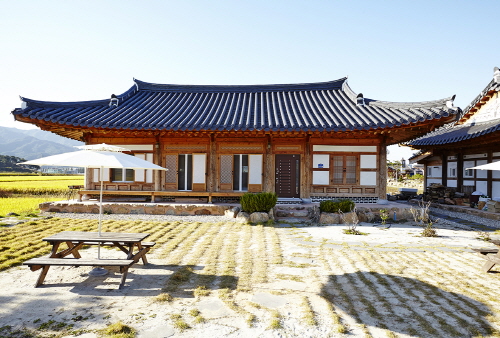
Chaewondang is a hanok stay next to the Seomjingang Train Village in Gokseong-gun, Jeollanam-do. Its Sarangbang guestroom is suitable for one family while the Anchae and Yegaheon rooms are for large families or group travelers. The grassy yard contains flower beds and a jangdokdae or storage jar stand, and has scenic views over surrounding rice fields and countryside. If pre-booked, breakfast can include local specialties such as marsh snail stew and spicy beef soup. Various experience programs such as hanbok wearing and local road biking are offered, while visitors get discount tickets for riding the Seomjingang train, horse riding and other amenities.
Yonggwonsan Sky Walk (용궐산하늘길)
16.6Km 2024-10-10
562 Janggunmok-gil, Donggye-myeon, Sunchang-gun, Jeonbuk-do
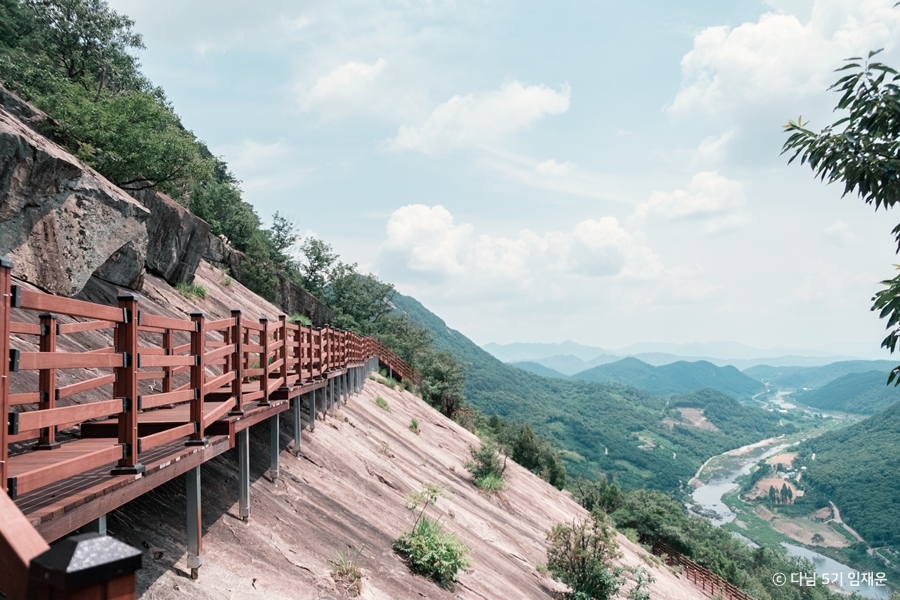
Yonggwolsan Sky Walk is a wooden trail built high up on the mountainside. Opened in 2023, the 1,096-meter-long trekking course offers thrilling views of the mountain's unique rock formations and an unobstructed view of the sky that is not for the faint of heart. It takes roughly 30 minutes to walk from the start of the trail to Biryongjeong Pavilion at the summit.
Gurye Cheoneunsa Temple (천은사(구례))
17.5Km 2026-06-30
209, Nogodan-ro, Gurye-gun, Jeonnam-Gwangju Special Metropolitan City
Located north of Gurye on Jirisan Mountain, and built during the Unified Silla Period, Cheoneunsa Temple is one of the three great Buddhist temples of Jirisan Mountain. Cheoneunsa Temple is believed to have been built by Monk Deokun and Monk Seru from India in AD 828 during the 3rd year of King Heungdeok. Because it initially laid next to spring water as clean and cold as a morning dew, the temple was also called Gamrosa, meaning Sweet Dew Temple. The spring water was rumored to clean one’s body and soul, leading to crowd of Buddhist monks to visit the temple. During King Chungryeol’s reign, the temple was named the Best Temple in the south.
The temple was burned down during the Imjin War (1592-1598) and then later rebuilt and renamed Cheoneunsa. Legend has it that while the temple was being rebuilt, a large serpent often came out of the spring. When the serpent was finally captured and killed, the spring waters suddenly dried up. Hence the name Cheoneunsa, meaning Disappearance of Spring Water, was given.
 English
 한국어
한국어 日本語
日本語 中文(简体)
 Deutsch
 Français
 Español
 Русский


