
The Catholic University of Korea Seoul St. Mary's Hospital (가톨릭대학교 서울성모병원)
19.4Km 2025-10-23
222 Banpo-daero, Seocho-gu, Seoul
Equipped with world-class medical staff and state-of-the art medical equipment, the Catholic University of Korea Seoul St. Mary's Hospital is a representative hospital of the Catholic University of Korea, Catholic Medical Center, the largest medical network in Korea. The hospital is part of the largest single-building hospital in Korea, with 22 above-ground floors, six underground floors, and 1,374 beds.
The hospital consists of 48 departments and 26 specialized centers. It was certified by the Joint Commission International (JCI) for five consecutive years until 2022 and has maintained a world-class and safe medical environment.
The hospital’s safe and competent medical services have earned the hospital high credibility among both Korean and international patients. Over 30,000 international patients from approximately 100 countries visit the hospital every year.
Its international healthcare center provides multilingual interpretation services (e.g., English, Russian, Arabic, Japanese, and French), a prayer room for Muslims, and customized meals such as halal and Russian-friendly meals to meet international patients’ needs, all in an effort to provide patients with safe and convenient treatments.
National Hangeul Museum (국립한글박물관)
19.4Km 2022-12-15
139, Seobinggo-ro, Yongsan-gu, Seoul
The National Hangeul Museum was established to preserve, spread, and develop the Korean alphabet, Hangeul. The museum showcases the history and value of Korean orthography, Korean’s most-valued cultural asset, through exhibitions, activities, and education. Occupying over 11,322 ㎡, the museum has one basement level and three ground levels, along with an outdoor grass field and rest area perfect for cultural events, exhibits, and education.
The museum is comprised of the Hangeul library on the first floor, a permanent exhibition hall, ㅎ Café, and cultural product shop on the second floor, and a planned exhibition hall and Hangeul playground for children and foreigners on the third floor.
Bongwonsa Temple (봉원사)
19.4Km 2023-03-13
120, Bongwonsa-gil, Seodaemun-gu, Seoul
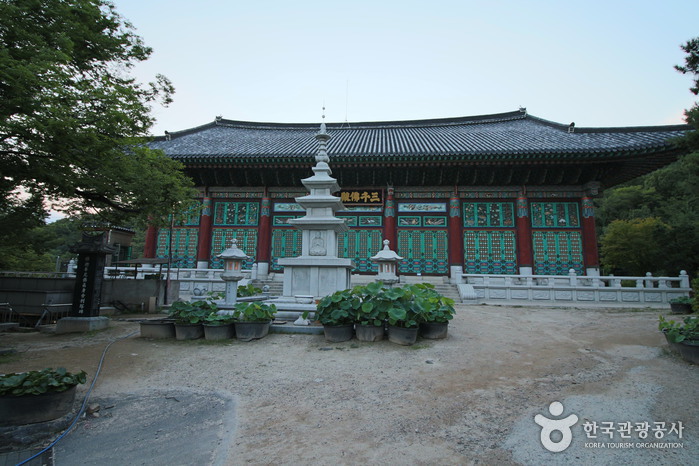
Located on the outskirts of Ansan Mountain in Bongwon-dong, Seodaemun-gu, Seoul, Bongwonsa Temple, as the center of Korean Buddhism Taego, is a thousand-year-old temple with a long history and tradition. In 889 (3rd year of Shilla Queen Jinseong’s reign), Monk Doseon founded it at the ground of Yeonhui Palace (now Yonsei Univ.) and named it Banyasa temple. It was destroyed during the Imjin War in 1592, and later in 1748 (the 24th year of Joseon King Yeongjo’s reign), it was rebuilt and renamed “Bongwonsa” by two Buddhist monks, Chanjeup and Jeungam.
“Yeongsanjae,” one of the Buddhist rituals and also a National Intangible Cultural Property, takes place at Bongwonsa on June 6 every year wishing for world peace and the reunification of North and South Korea. It was designated as one of the Intangible Cultural Heritage of Humanity by UNESCO in 2009. During Yeongsanjae, visitors can enjoy the Buddhist arts such as Beompae (Buddhist temple music for rituals) and dancing. Also, during summertime, Seoul Lotus Flower Culture Festival takes place, where visitors can enjoy the beautiful lotus flowers which are a symbol of Buddhism.
Banpo Hangang Park (반포한강공원)
19.5Km 2025-10-23
40 Sinbanpo-ro 11-gil, Seocho-gu, Seoul
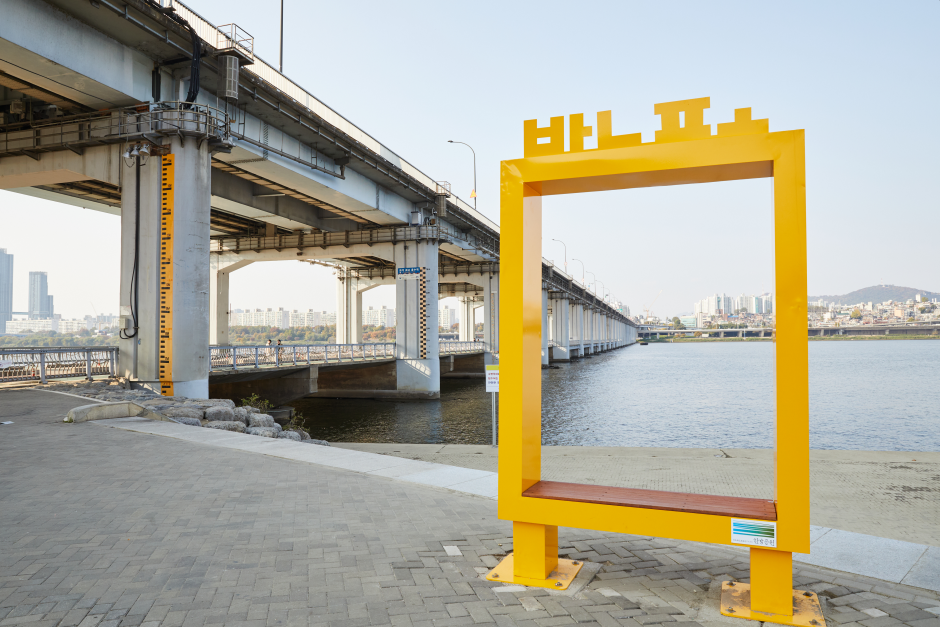
Banpo Hangang Park is located on the southern side of the river centering on Banpo Bridge (Jamsu Bridge) between Hamnam Bridge (upstream) and Dongjak Bridge (downstream). The Rainbow Fountain built on both sides of Banpo Bridge was registered in The Guinness Book of Records in 2008 as the longest bridge fountain in the world with a total length of 1,140 meters. At night, over 200 lights create a fantastic view of a beautiful rainbow.
In addition, the park is equipped with sports facilities including bubble playground, in-line skating track, soccer field, and basketball court. You may also enjoy the gorgeous view of Hangang River and skyscrapers on the riverside from Gureum and Noeul cafes, lookout places located on the southernmost part of Dongjak Bridge.
Seoraeseom Island which connects from Banpo Hangang River Park is an artificially created island to provide a leisure space for Seoul urbanites. Every spring, the place is flooded with waves of canola flowers and people to enjoy picnic and spring events like ‘Searaeseom Butterfly, Canola Flower Festival’.
Your joyful experience in the park doesn’t end here - there are more things to see and enjoy including a nature experience field, boat quay, bike lane, and picnic spots.
Hwanggeum Kongbat (황금콩밭)
19.5Km 2025-10-31
9 Mapo-daero 16-gil, Mapo-gu, Seoul
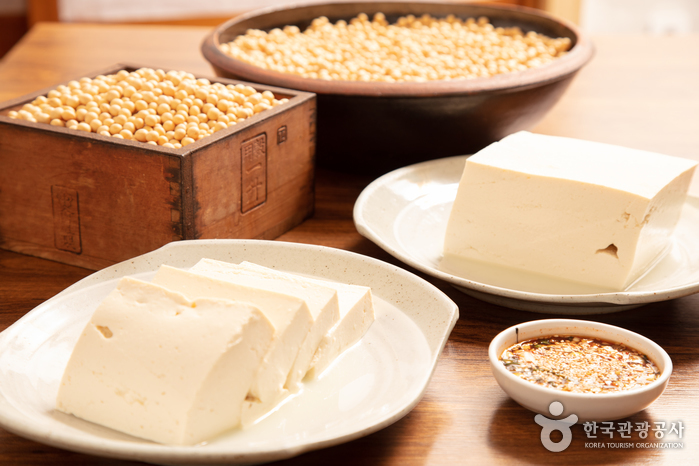
Hwanggeum Kongbat specializes in bean curd, using 100% Korean-grown soybeans and salt to make their bean curd fresh daily. The restaurant is famous for their method of making a bean curd that is smooth and maintains the nutty yet sweet flavor of the soybeans.
Banpo Bridge Rainbow Fountain (반포대교 달빛무지개분수)
19.5Km 2025-10-23
647 Banpo-dong, Seocho-gu, Seoul
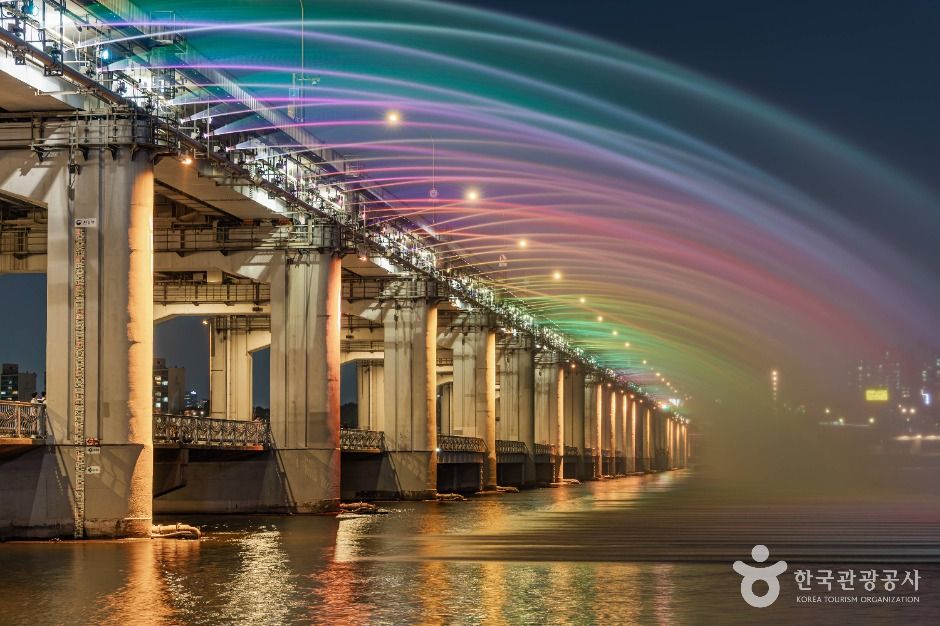
The Rainbow Fountain plunges 20 meters into the water on both side of Banpo Bridge over the Hangang River. When the sun goes down, 200 lights illuminate the fountain as it sends out dancing, rainbow-colored jets of water in the air in synchronization with music. The fountain boasts spectacular views from the hills, the Hangang River observation deck, and the moon-shaped Moonlight Square. Banpo Bridge Rainbow Fountain operates every day from April to October, four to six times a day for 20 minutes.
The National Library of Korea (국립중앙도서관)
19.6Km 2021-06-22
201, Banpo-daero, Seocho-gu, Seoul
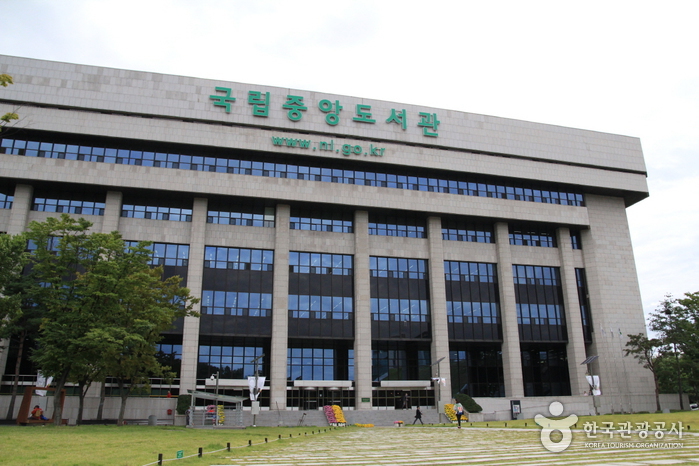
The National Library of Korea collects and preserves many important documents and books, promoting a culture of appreciation for these cultural heritages. The library was founded on May 28, 1988 in the area of Seocho Park, later expanding to include an annex. The scenery of the park is beautiful and the atmosphere is very relaxing, perfectly suited to the pursuit of knowledge. For further understanding, the library also offers guided tours for those interested in library science. Many materials have also been scanned and are accessible online through the digital library.
Supsok Hanbang Land (숲속한방랜드)
19.6Km 2024-03-18
75-7 Bongwonsa-gil, Seodaemun-gu, Seoul
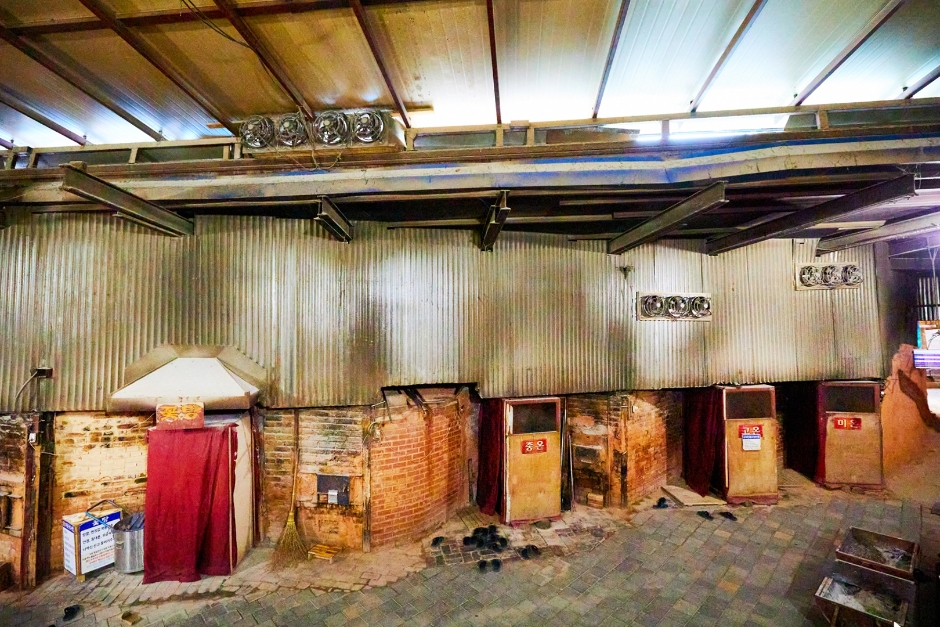
Jjimjjilbang, a Korean-style sauna that combines a traditional bathhouse with a hot steam room, is often ranked high among the unique experiences in Korea chosen by foreigners. Taking a steam bath in a charcoal kiln discharges waste products from the skin through sweat and eliminates accumulated fatigue. Supsok Hanbang Land has several charcoal kilns for different temperatures. Using them in order from low to high-temperature rooms is good, but the highest-temperature room, “Kkottang,” has a risk of causing skinburn, so visitors are advised to wear socks and cotton gloves to enter the room. Another unique experience is to grill sweet potatoes or rice cakes on the brazier in front of the charcoal kiln.
Kim Koo Museum & Library (백범김구기념관)
19.6Km 2022-08-30
26, Imjeong-ro, Yongsan-gu, Seoul
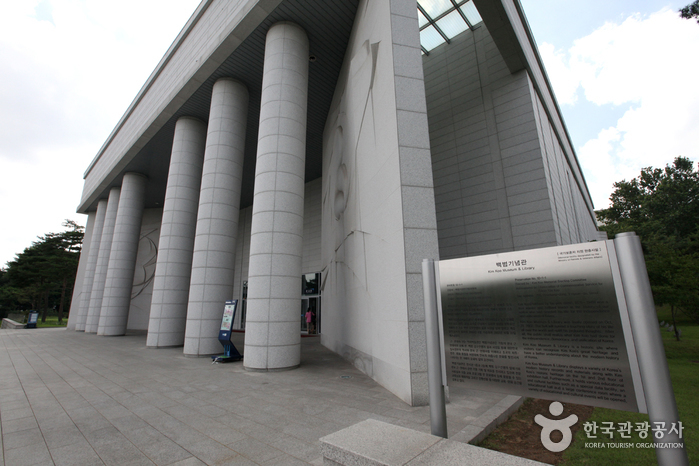
Kim Koo Museum & Library was built in Yongsan-gu, Seoul to commemorate Baekbeom Kim Koo (1876-1949), a highly respected Korean independence activist. It opened on October 22, 2002 to commemorate Kim Koo's efforts and achievements in Korean history. The main hall is comprised of two floors, exhibiting relics related to his entire life. A statue of a seated Kim Koo is situated in the central space of the first hall.
Cheongansa Temple (천간사)
19.7Km 2021-10-12
20-8, Bulgwang-ro 10-gil, Eunpyeong-gu, Seoul
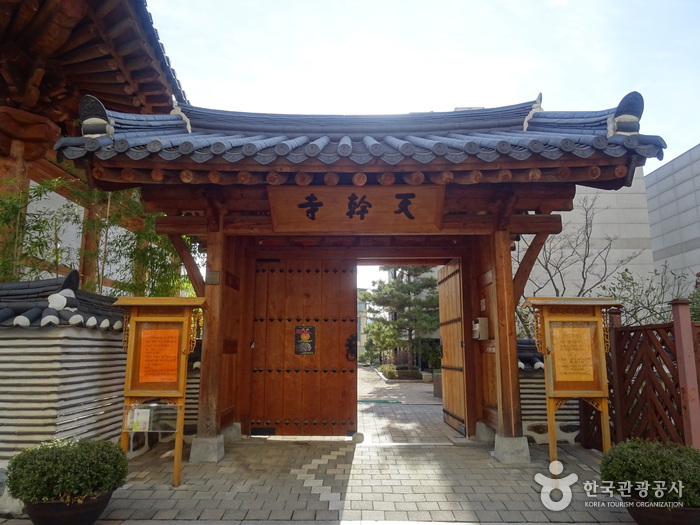
Cheongansa Temple was first built in 1960, and was re-built in 2009. It has many pagodas and monuments: a pagoda filled with sari relics of Buddha; Budotap Pagoda, which is a shrine to the monk who found the temple and his sacred relics; and a monument honoring the late first lady Yuk yeong-su. The re-built temple was awarded the Hanok Prize in the Hanok Competition 2011. Located along the Bukhansan Mt. Dulaegil Trail, the temple provide visitors with the chance to enjoy fresh air and a rest from hiking along the trail.
 English
 한국어
한국어 日本語
日本語 中文(简体)
 Deutsch
 Français
 Español
 Русский


