
Song Won (송원)
7.4Km 2024-03-15
35-4 Dongho-ro 24-gil, Jung-gu, Seoul
+82-2-2275-3118
Song won is a Korean restaurant located in Jangchung-dong Gourmand Alley. They specialize in high-quality Korean beef barbecue such as bulgogi and galbi, seasoned with a variety of 20 different natural ingredients. Additionally, they offer traditional Korean dishes like hot stone pot rice and noodles. Across the street, visitors can find Jangchung-dong Jokbal Street, and both Jangchungdan Park and Jangchung Gymnasium are within walking distance.
Gwangnaru Hangang Park (광나루한강공원)
7.4Km 2021-12-25
83-66, Seonsa-ro, Gangdong-gu, Seoul
+82-2-3780-0501
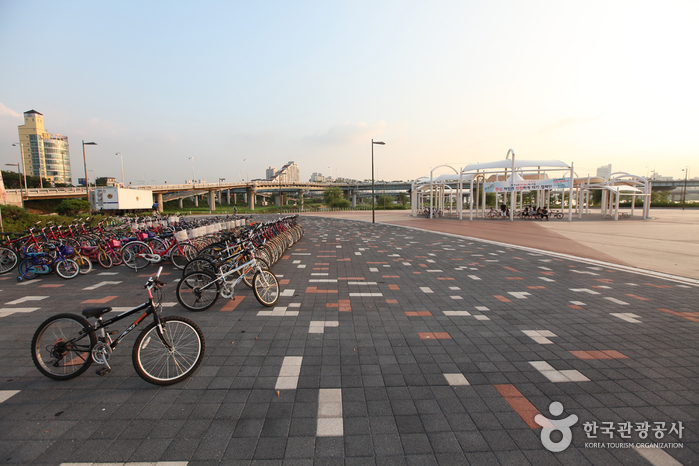
Hangang Citizen's Park, composed of 12 areas including Jamsil, Ttukseom and Jamwon, is an eco-friendly park providing areas for sports and leisure. The park is equipped with various cultural and recreational facilities and also has an ecological park. Gwangnaru Hangang Park formed naturally through rich silt that flowed in from the upper Hangang River that was then filled with reeds, creating an ideal habitat for groups of migratory birds.
![CheongKwanJang - Dongbuichon Branch [Tax Refund Shop] (정관장 동부이촌)](http://tong.visitkorea.or.kr/cms/resource/24/2888324_image2_1.jpg)
CheongKwanJang - Dongbuichon Branch [Tax Refund Shop] (정관장 동부이촌)
7.4Km 2024-04-17
1F, 245, Ichon-ro, Yongsan-gu, Seoul
-
Songwol Naengmyeon (송월냉면)
7.4Km 2023-12-22
26 Gucheonmyeon-ro 29-gil, Gangdong-gu, Seoul
Songwol Naengmyeon is a cold noodle restaurant passed down for two generations, from 1988 to the present. It is a restaurant specializing in naengmyeon, or cold buckwheat noodles. It has three simple menu items: yeolmu naengmyeon (cold buckwheat noodles with young summer radish kimchi), mul naengmyeon (cold buckwheat noodles), and bibim naengmyeon (spicy buckwheat noodles). Yeolmu is the stem of young radish and is used as an ingredient in kimchi, one of the traditional Korean fermented foods, as well as salads, naengmyeon, and bibimbap. Harvest usually begins in early summer, so it can often be found on dinner tables in the summer. The combination of naengmyeon with ice, young radish, and cool dongchimi (radish water kimchi) creates a wholesome and refreshing taste. This restaurant is also popular among locals and visitors may have to wait in line during peak hours, but manages their table turnover in an organized fashion so their customers in queue won’t have to wait for too long.
![Sujeong Pharmacy [Tax Refund Shop] (수정약국)](http://tong.visitkorea.or.kr/cms/resource/57/2878757_image2_1.jpg)
Sujeong Pharmacy [Tax Refund Shop] (수정약국)
7.4Km 2024-04-22
1F, 195, Jangchungdan-ro, Jung-gu, Seoul
-
Gwanghuimun Gate (광희문)
7.4Km 2021-02-24
344, Toegye-ro, Jung-gu, Seoul
+82-2-3700-3900
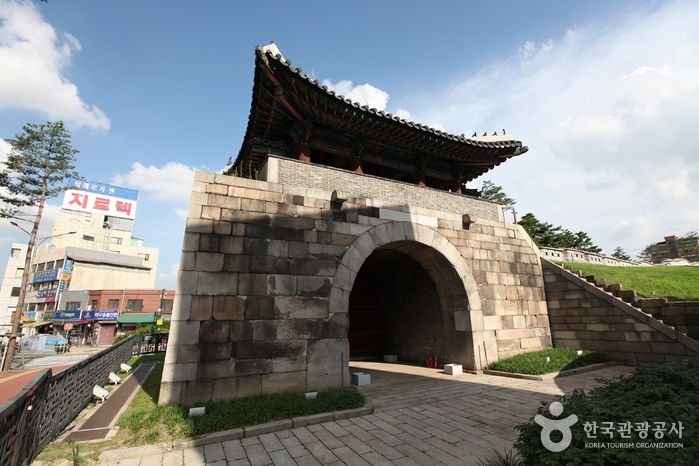
Gwanghuimun Gate is said to have been originally constructed in 1396, the 5th year of King Taejo, at the southeast of the capital city. It was often referred to as Sugumun Gate (water channel gate) and was actually used as a Sigumun, literally meaning “corpse gate,” as funeral processions passed through this gate when exiting to the east.
During the Imjin War (1592-1598), the fortress gate was destroyed to such a degree that it made finding the original location close to impossible. Nevertheless, reconstruction efforts were started in 1711 (37th year of King Sukjong) and the gate was restored together with the gate's watchtower. Gwanghuimun Gate remained intact even when the fortress walls were demolished to build tram tracks during the Japanese occupation, but it was later damaged during the Korean War and left neglected. In 1975, restoration work was carried out to relocate Gwanghuimun Gate to a site 15 meters south of its original location since it stood in the middle of the road.
![Olive Young - Dongbuichon Branch [Tax Refund Shop] (올리브영 동부이촌)](http://tong.visitkorea.or.kr/cms/resource/03/2888303_image2_1.jpg)
Olive Young - Dongbuichon Branch [Tax Refund Shop] (올리브영 동부이촌)
7.4Km 2024-04-17
16, Ichon-ro 75-gil, Yongsan-gu, Seoul
-
![Queens Bucket - Dongdaemun Branch [Tax Refund Shop] (쿠엔즈버킷 동대문)](http://tong.visitkorea.or.kr/cms/resource/47/2878747_image2_1.jpg)
Queens Bucket - Dongdaemun Branch [Tax Refund Shop] (쿠엔즈버킷 동대문)
7.4Km 2024-04-18
5-4, Toegye-ro 64-gil, Jung-gu, Seoul
-
Homeplus - Dongdaemun Branch [Tax Refund Shop] (홈플러스 동대문)
7.4Km 2024-04-23
133, Cheonho-daero, Dongdaemun-gu, Seoul
-
Seoul National Cemetery (국립서울현충원)
7.5Km 2024-03-07
210, Hyeonchung-ro, Dongjak-gu, Seoul
+82-2-813-9625
Seoul National Cemetery is a national cemetery for individuals who worked or fought for Korea and sacrificed their lives. It encompasses those who fought for Korea's independence from the late 19th century to the early 20th century, those who perished in the Korean War (1950-1953), and former presidents, totaling over 165,000 individuals. There are exhibition halls and parks with related artifacts. Shuttle buses are provided for the convenience of visitors.
 English
 한국어
한국어 日本語
日本語 中文(简体)
 Deutsch
 Français
 Español
 Русский


