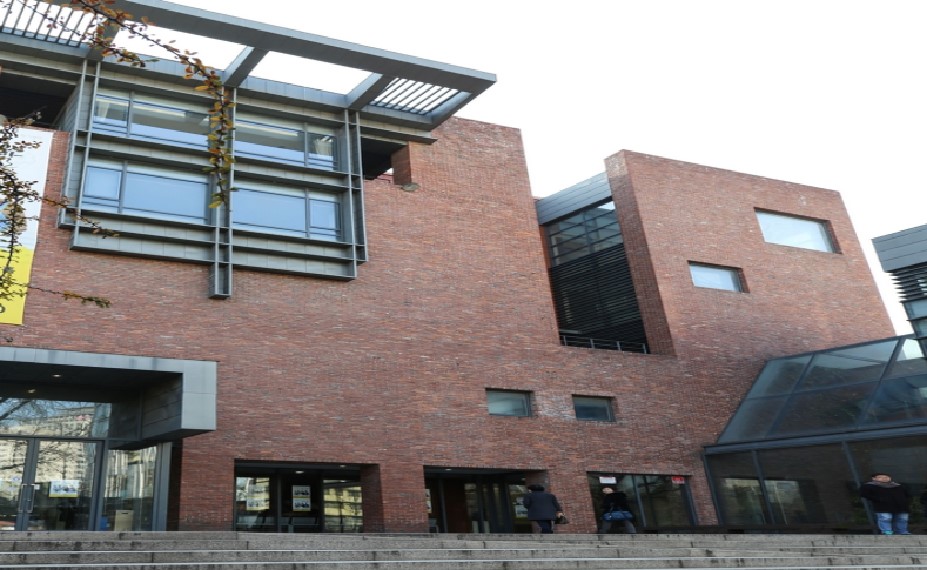
Ewha Centennial Hall (이화여고100주년기념관)
7.9Km 2024-02-20
26 Jeongdong-gil, Jung-gu, Seoul
Ewha Centennial Hall is a multimedia education center located next to Ewha Girls' High School. Spanning underground and five above-ground floors, it features a gallery, a cafe, music rooms, individual practice rooms, and audio-visual rooms. The Hwaham Hall on the first and second floors is utilized for performances such as musicals and concerts, as well as educational events.
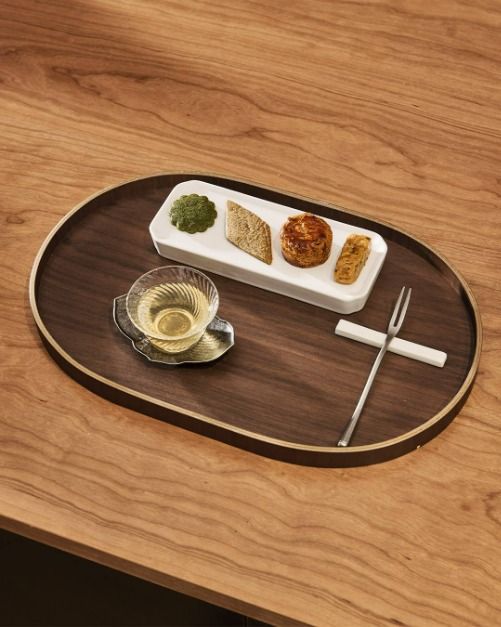
Pyunkang Yul Flagship & Tea house (편강 율 플래그십&티하우스)
7.9Km 2025-12-10
35-4 Bukchon-ro 5ga-gil, Jongno-gu, Seoul
Pyunkang Yul Flagship & Tea house is a cafe in Bukchon Hanok Village near Gyeongbokgung Palace. The first floor is a teahouse where one can enjoy Korean tea infused with traditional ingredients and delightful desserts with a view of the cafe's serene garden, and the second floor is a flagship store of Pyeongang Yul, a K-beauty brand known for integrating hanbang (traditional Korean medicine) in their skincare products. The third floor features a rooftop that offers a sweeping view of the Bukchon Hanok Village and Gyeongbokgung Palace.
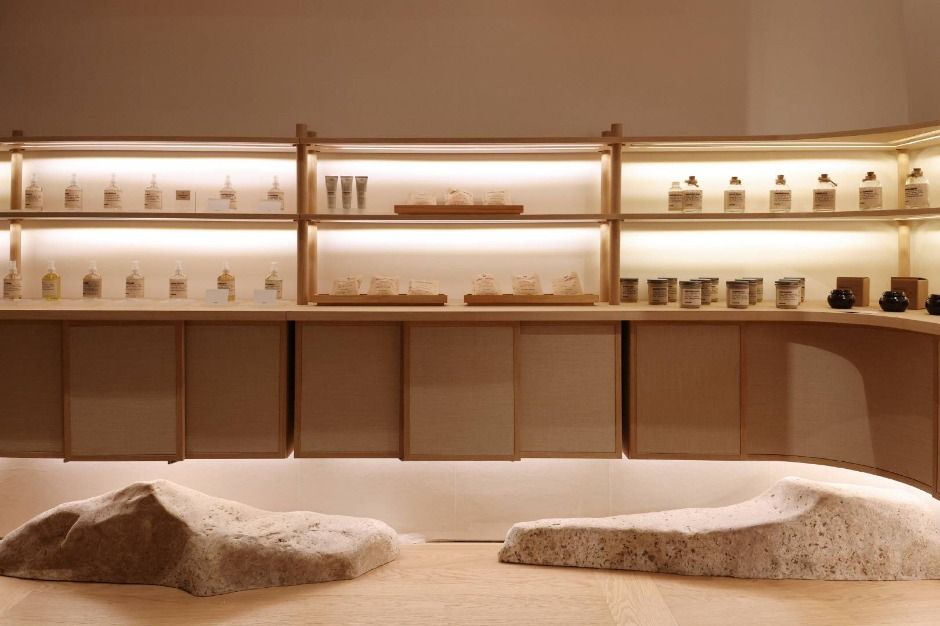
GRANDHAND. Gahoe (그랑핸드 가회점)
7.9Km 2025-12-04
61 Bukchon-ro 11-gil, Jongno-gu, Seoul
Launched in 2014 at a small hanok in Bukchon Hanok Village, this Korean perfume brand now has nine stores around Seoul. With no advertisements or online sales, GRANDHAND has preserved its roots for years. GRANDHAND. Gahoe located amidst the beautiful surroundings of Bukchon Hanok Village and various art museums has customers of all ages and nationalities.

Seoul Arts Center (예술의전당)
7.9Km 2025-01-17
2406 Nambusunhwan-ro, Seocho-gu, Seoul
The Seoul Arts Center is the representative art complex of Korea. It is comprised of the Opera House, Concert Hall, Art Gallery, Calligraphy Museum, Art Material Hall, and an outdoor stage. You can enjoy various performances and exhibitions all in one site.
The Opera House and Concert Hall consist of a total of five performance halls offering an average of 800 performances ever year, whereas the Art Gallery and Calligraphy Museum has seven exhibition halls providing various exhibitions throughout the year. The outdoor stage also provides various genres of performances all year round.
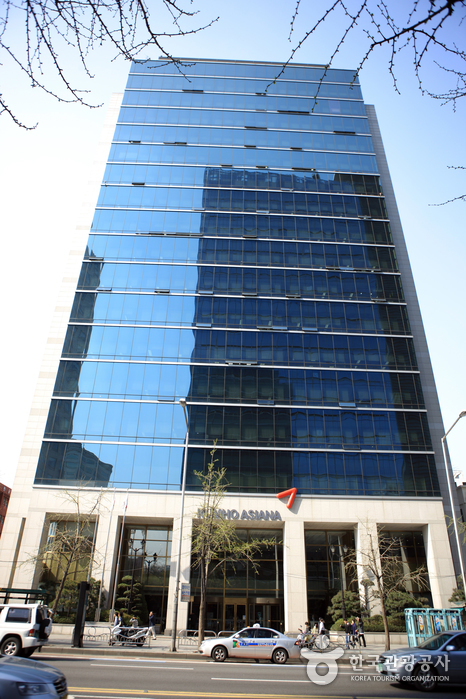
Kumho Art Hall (금호아트홀)
7.9Km 2021-05-28
76, Saemunan-ro, Jongno-gu, Seoul
+82-2-6303-1977
Kumho Art Hall was built in 2000 exclusively for classical music concerts, with 390 seats, the perfect structure for chamber concerts. All seats are recital hall chairs and the wide spacing between rows of chairs helps the audience to have a pleasant time. Upon entering the theater, all cell phones will turn off automatically. This helps all visitors to enjoy the concert without being interrupted by ringing cell phones. The interior is cozy and luxurious, and the stage is made of maple.
Davich Optical - Mia Sageori Branch [Tax Refund Shop] (다비치안경 미아사거리)
7.9Km 2024-04-22
1F, 3, Wolgye-ro, Gangbuk-gu, Seoul
-
Kukje Gallery (국제갤러리)
8.0Km 2021-07-29
54, Samcheong-ro, Jongno-gu, Seoul
+82-2-735-8449
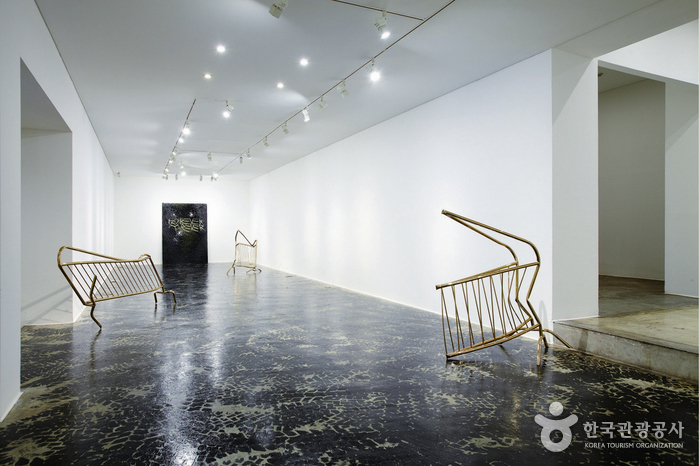
The Kukje Galley has been committed to presenting the work of significant Korean and international contemporary artists to the public since 1982. The gallery has established itself as a leading venue for international exhibits such as Helen Frankenthaler, Sam Francis, Jim Dine, Frank Stella, Robert Mangold, Anthony Caro, Cy Twombly, Edward Ruscha, Anselm Kiefer, Joseph Beuys, and Bill Viola, attracting enthusiastic responses from both the public and the media.
The gallery has placed emphasis on collaborations between artists, galleries, and art dealers around the world and nurturing upcoming artists by sponsoring their artwork and giving them international exposure.
![SAINT JAMES SAMCHEONG[Korea Quality]/세인트 제임스 삼청[한국관광 품질인증]](http://tong.visitkorea.or.kr/cms/resource/08/2628608_image2_1.jpg)
SAINT JAMES SAMCHEONG[Korea Quality]/세인트 제임스 삼청[한국관광 품질인증]
8.0Km 2024-06-26
78 , Samcheong-ro, Jongno-gu, Seoul
+82-742-4628(extension number 207)
The Saint James Samcheong store opened in July 2016 in Samcheong-ro, Jongno-gu, Seoul. The store exemplifies the quiet yet bustling atmosphere of the Samcheong-dong district, and is well-known for its marine styling. It sells men’s, women's and children's wear, plus shoes, bags and fashion accessories. Featured brands include SAINT JAMES (France), BUDDY (Japan), VEJA (France), SOLUDOS (USA), and BRONTE (Netherlands).
![Saint James - Samcheong Branch [Tax Refund Shop] (세인트제임스 삼청)](http://tong.visitkorea.or.kr/cms/resource/56/2889656_image2_1.jpg)
Saint James - Samcheong Branch [Tax Refund Shop] (세인트제임스 삼청)
8.0Km 2024-04-23
B2F, 124, Singomae-ro, Giheung-gu, Yongin-si, Gyeonggi-do
-
Gwanghwamun Gate (광화문)
8.0Km 2024-12-04
161 Sajik-ro, Jongno-gu, Seoul
+82-2-3700-3900
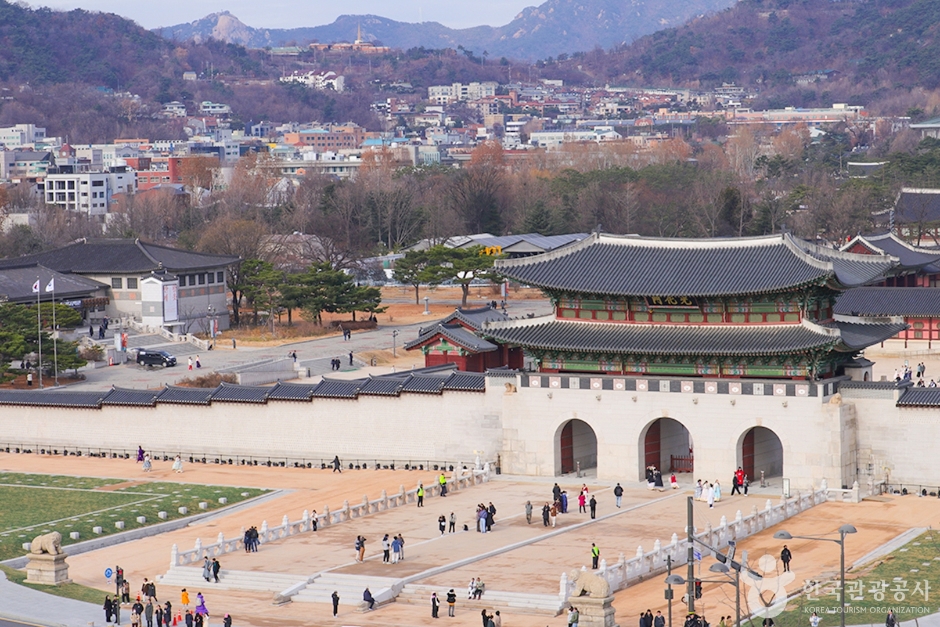
Built in 1395 under the reign of King Taejo, the first king of the Joseon dynasty, Gwanghwamun Gate is the southern gate of Gyeongbokgung Palace. It is also the main gate of the palace, therefore larger and fancier in comparison to the other gates. Gwanghwamun Gate consists of three arched gates; the center gate was used by the king, while the other two were used by the crown prince and royal officials. The tall granite walls of the gate serve as a platform for the wooden gate tower that watches over the city. The gate has a sign with its name written at the top center of the gate tower.
Gwanghwamun Gate went through several damages and restorations over the course of history. It was first severely damaged during the Imjin War (1592-1598) and was not restored until the reconstruction of Gyeongbokgung Palace in 1864. Under the Japanese administration, the gate was demolished and relocated to the north of the palace's eastern gate, followed by series of damages during the Korean War (1950-1953). In 1968, Gwanghwamun Gate was relocated back to the south of the palace and was rebuilt using concrete; however, the gate’s position was shifted a few meters away from its original location. In 2006, a major reconstruction project took place to restore Gwanghwamun Gate to its original state and location, disassembling the structure completely and replacing concrete with granite and wood. After three years and eight months of construction, Gwanghwamun Gate was fully restored to its original form and was open to the public on August 15, 2010.
 English
 한국어
한국어 日本語
日本語 中文(简体)
 Deutsch
 Français
 Español
 Русский


