![Innisfree - Sinseol-dong Station Branch [Tax Refund Shop] (이니스프리 신설동역)](http://tong.visitkorea.or.kr/cms/resource/30/2888030_image2_1.jpg)
Innisfree - Sinseol-dong Station Branch [Tax Refund Shop] (이니스프리 신설동역)
18.2Km 2024-04-17
1F, 20, Wangsan-ro, Dongdaemun-gu, Seoul
-
![CheongKwanJang - Sinseol-dong Branch [Tax Refund Shop] (정관장 신설동점)](http://tong.visitkorea.or.kr/cms/resource/38/3313538_image2_1.jpg)
CheongKwanJang - Sinseol-dong Branch [Tax Refund Shop] (정관장 신설동점)
18.2Km 2024-06-27
9, Wangsan-ro, Dongdaemun-gu, Seoul
-
![Hwa-un [Korea Quality]화운[한국관광 품질인증]](http://tong.visitkorea.or.kr/cms/resource/29/2948829_image2_1.jpg)
Hwa-un [Korea Quality]화운[한국관광 품질인증]
18.2Km 2025-05-20
42 , Bukchon-ro 11da-gil, Jongno-gu, Seoul
+82-507-1373-2457
Hwa-un is a friendly hanok stay in Samcheong-dong, Jongno, Seoul, which is rented out as a single house. The house is high on a hill, giving superb views of Bugaksan Mountain, Inwangsan Mountain, Cheongwadae (Blue House), and Samcheong-dong Road.
There’s a beam projector for watching movies, and a jacuzzi for relieving fatigue.
![Inwoohouse [Korea Quality] / 인우하우스 [한국관광 품질인증]](http://tong.visitkorea.or.kr/cms/resource/56/3009456_image2_1.jpg)
Inwoohouse [Korea Quality] / 인우하우스 [한국관광 품질인증]
18.2Km 2023-09-12
1-9 , Gyedong 6-gil, Jongno-gu, Seoul
+82-2-742-1115
Inwoo House is a traditional hanok down an alley in Gye-dong, Jongno, Seoul. There is a swallow's nest under the eaves, and the pride of this house is that the swallow family returns every spring. Each room in the house has a private bathroom. Residents can sample Korean culture by taking part in traditional paper crafts, knot bracelet making, and fan decorating. The location is convenient for restaurants, cafes, and convenience stores, and Gyeongbokgung Palace, Changdeokgung Palace, Insadong, and Samcheong-dong are all within walking distance.

Lagidang [Korea Quality] / 락이당 [한국관광 품질인증]
18.2Km 2024-08-27
121, Gyedong-gil, Jongno-gu, Seoul
+82-507-1358-3701
Lagidang is a foreigner-only guesthouse in the heart of Bukchon Hanok Village in Jeongno-gu, Seoul. Public transportation links are good, with Exit 3 of Anguk Subway Station just a seven-minute walk away. The house has a fine view over Bukchon Hanok Village, and early-rising guests will also catch the sunrise in the south-eastern sky. The guesthouse is decorated with art works and Joseon-period antiques.
![Go-un [Korea Quality] 고운 [한국관광 품질인증]](http://tong.visitkorea.or.kr/cms/resource/08/2948908_image2_1.JPG)
Go-un [Korea Quality] 고운 [한국관광 품질인증]
18.2Km 2024-08-14
35-1, Bukchon-ro 12-gil, Jongno-gu, Seoul
+82-504-0904-2464
Go-un, meaning "High Cloud," is a hanok stay atop a steep hill in Gahoe-dong, Bukchon Hanok Village, Jeongno-gu, Seoul. The view from the house’s big windows takes in hanok tiled roofs, Seoul’s downtown, and Inwangsan Mountain - a vista that merges the past and the present. After enjoying Bukchon's attractions, entertainment, and food, guests can relax in the hanok’s half-body bath overlooking the yard (mugwort bath salts provided) - or enjoy a movie on the beam projector.
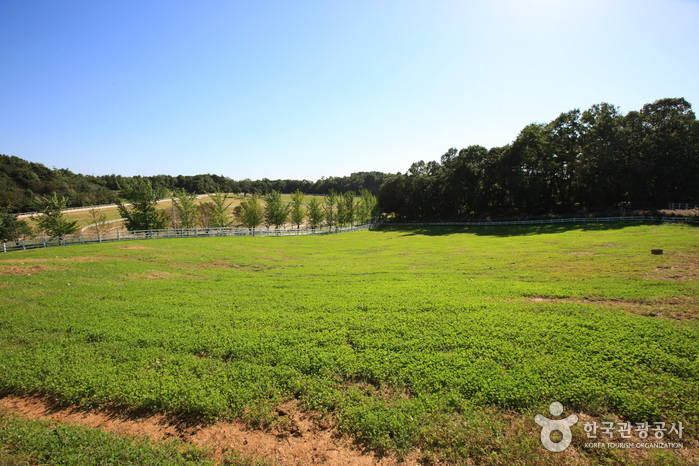
Wondang Horse Ranch (Let's Run Farm) (원당종마목장 (렛츠런팜 원당))
18.2Km 2021-11-29
233-112, Seosamneung-gil, Deogyang-gu, Goyang-si, Gyeonggi-do
+82-2-509-2672
Wondang Horse Ranch became famous as it was used as a drama filming site. It includes some dangerous facilities and therefore certain restrictions apply to the public. Inside the ranch, visitors can watch horses taking a leisure walk on the pasture.
The ranch is a place for training jockeys and horse-related workers, and do not serve as a citizen’s park. Hence, drinking, cooking, making noises, engaging in any forms of sports activity including using balls or installing tents are prohibited in this area. In addition, all visitors must clear and take their leftovers, if any, before leaving.
* Area: approx. 363,638 ㎡
* Grass field: approx. 165,290 ㎡
GS25 - Jongno Korea Natinal Open Unniversity Branch (No. 2) [Tax Refund Shop] (GS25종로방통대2점)
18.3Km 2024-06-27
1F, 78, Ihwajang-gil, Jongno-gu, Seoul
-
Dal Café (달 카페)
18.3Km 2024-03-18
94-1 Samcheong-ro, Jongno-gu, Seoul
+82-2-735-7355
Dal Café is a café located in Bukchon Hanok Village, housed within a traditional Korean hanok. "Dal" means "moon" in Korean. The café is designed with lighting fixtures that give the impression of the moon hanging on the wall, making it a perfect spot for photography. The signature menu item here is the traditional Korean shaved ice with topping served in a traditional pot.
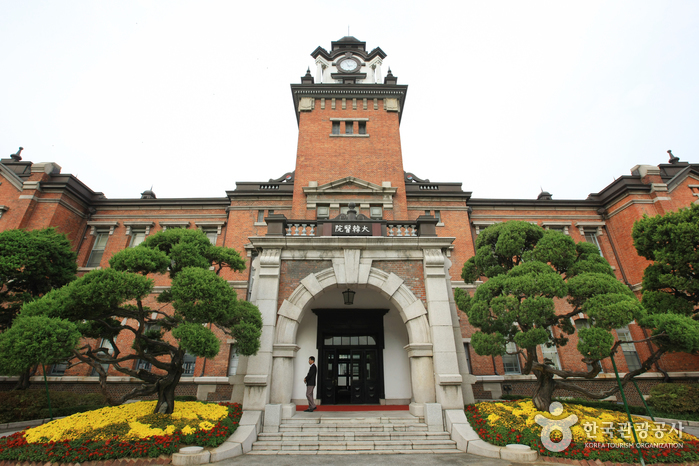
Seoul Daehan Hospital (서울 대한의원)
18.3Km 2021-12-23
101, Daehak-ro, Jongno-gu, Seoul
+82-2-2148-1842
Daehanuiwon (Daehan Medical Center) is an antique two-story brick building within the grounds of Seoul National University Hospital. It was established under the direct administration of the Uijeongbu (State Council), combining the Gwangjewon (under the Home Ministry), Gyeongseong Medical School and the Korean Red Cross Hospital (under the Royal Household).
Built in the Madubong Hill area, this location where Hamchunwon, the outer garden of Changgyeonggung Palace, once stood in 1484 (15th year of King Seongjong), was also once the site of Gyeongmogung Palace, where King Jeongjo enshrined the mortuary tablet of his birth father Crown Prince Sado Seja in 1776 (the year King Jeongjo ascended to the throne).
These places that held importance for the royal family were destroyed as the Japanese built Gyeongseong Empire University in its place. In 1907, with the announcement of the plan to establish Daehan Medical Center, construction began on the main building, seven wards and affiliated buildings. Construction was completed in November 1908.
The Daehan Medical Center opened in Gwangjewon, but upon Japanese colonization in 1910, its name was changed to the Japanese Viceroyalty Hospital. In 1926, it was included as a part of Gyeongseongjeguk University to become a university hospital. Since the liberation of Korea in 1945, it has been a hospital affiliated with Seoul National University.
 English
 한국어
한국어 日本語
日本語 中文(简体)
 Deutsch
 Français
 Español
 Русский


