Surisan Provincial Park (수리산도립공원)
18.4Km 2025-01-08
347-4, Sokdal-ro, Gunpo-si, Gyeonggi-do
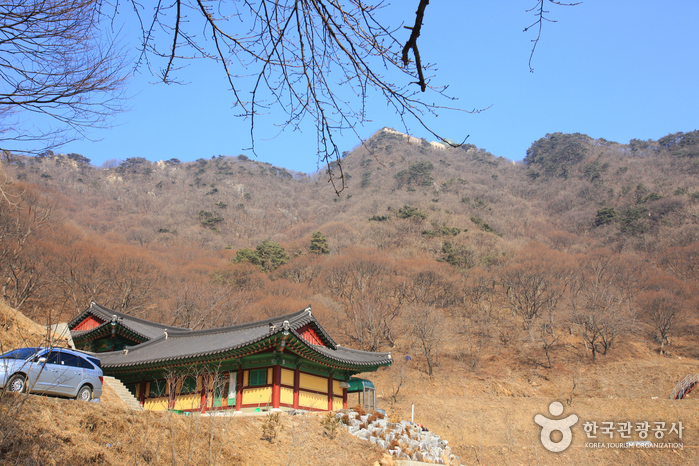
Surisan Mountain, a provincial park of Gyeonggi-do, surrounds Gunpo and is also easily accessible from Anyang and Ansan. Surisan Mountain is said to be named because there is a rock in the shape of an eagle. Another legend says it is named after the nearby Surisa Temple.
Surisan Mountain is part of the Gwangju Mountain Range along with Cheonggyesan, Gwanggyosan, Gwanaksan, and Baekunsan mountains. The mountain has four peaks and the highest is Taeulbong Peak (489 m).
Grand old trees that range from 100 to 300 years old make for picturesque scenery. The mountain also won first place in the 2002 Beautiful Forest contest hosted by the Korea Forest Service.
Cheongansa Temple (천간사)
18.4Km 2021-10-12
20-8, Bulgwang-ro 10-gil, Eunpyeong-gu, Seoul
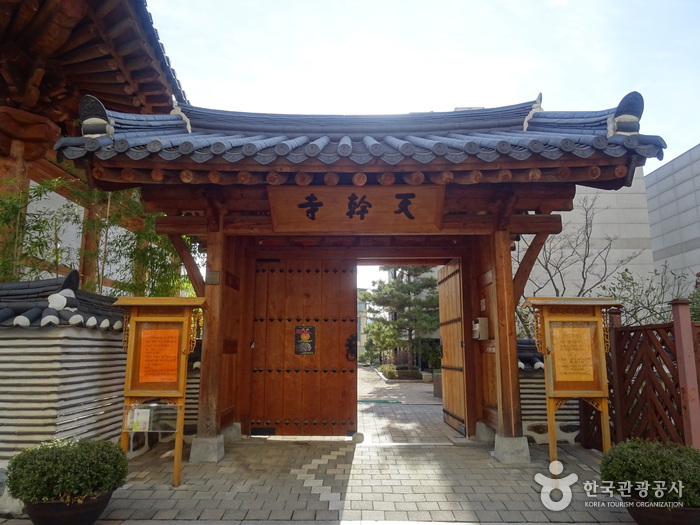
Cheongansa Temple was first built in 1960, and was re-built in 2009. It has many pagodas and monuments: a pagoda filled with sari relics of Buddha; Budotap Pagoda, which is a shrine to the monk who found the temple and his sacred relics; and a monument honoring the late first lady Yuk yeong-su. The re-built temple was awarded the Hanok Prize in the Hanok Competition 2011. Located along the Bukhansan Mt. Dulaegil Trail, the temple provide visitors with the chance to enjoy fresh air and a rest from hiking along the trail.
SMOB Hanam (스몹 하남)
18.4Km 2025-10-23
750 Misa-daero, Hanam-si, Gyeonggi-do
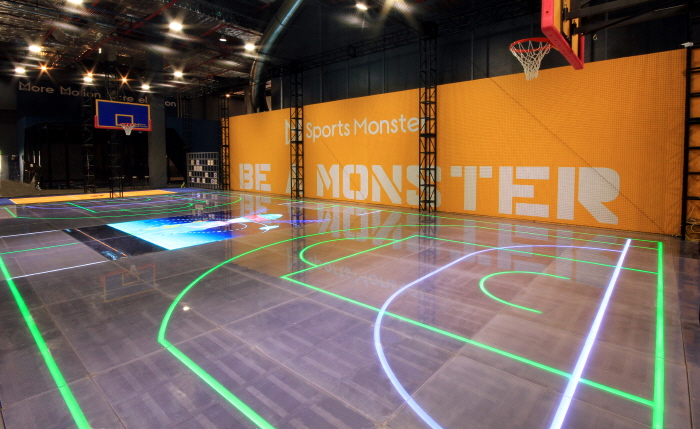
SMOB is a game and sports experience center located on the fourth and top floors of Starfield Hanam. The center provides activities for all, with no need for special equipments and gears. About 30 activities are prepared, divided into Basic Zone, Exciting Zone, Adventure Zone, and Digital Zone.
![Taereung and Gangneung Royal Tombs [UNESCO World Heritage] (서울 태릉과 강릉 [유네스코 세계문화유산])](http://tong.visitkorea.or.kr/cms/resource/16/2658216_image2_1.jpg)
Taereung and Gangneung Royal Tombs [UNESCO World Heritage] (서울 태릉과 강릉 [유네스코 세계문화유산])
18.7Km 2022-09-19
681, Hwarang-ro, Nowon-gu, Seoul
Designated as a Historic Site, Taereung & Gangneung Royal Tombs is comprised of two tombs. Taereung Royal Tomb houses the burial mound of Queen Munjeong who was the second queen of King Jungjong, the 11th King of the Joseon dynasty, and Gangneung Royal Tomb houses the burial mounds of King Myeongjong, the 13th King of Joseon dynasty, and Queen Insun. King Myeongjong ascended the throne after his elder brother, King Injong, when he was twelve years old at Geunjeongjeon Hall in Gyeongbokgung Palace in 1545. The king’s mother, Queen Munjeong ruled behind the scenes, acting as guardian for eight years.
100 Years Market 100 Years Night (백년시장 백년나이트)
18.8Km 2025-10-23
16 Hancheon-ro 144-gil, Gangbuk-gu, Seoul
+82-2-903-9110
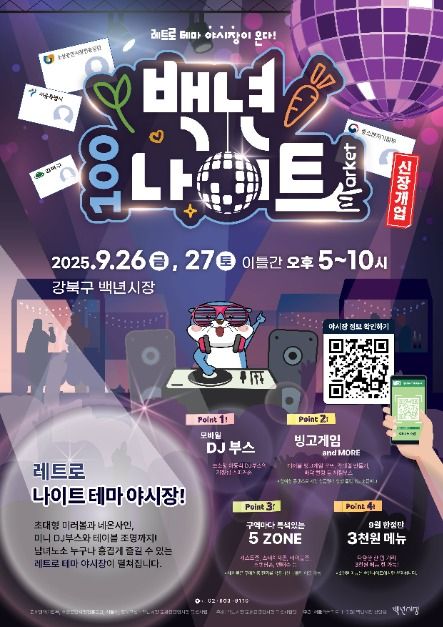
100 Year Market, a traditional market with a long history, transforms into a vibrant night market as evening falls. With a mini mirror ball, neon signs, and a mini DJ booth alongside new dining options each month, this retro-themed market is perfect for visitors of all ages.
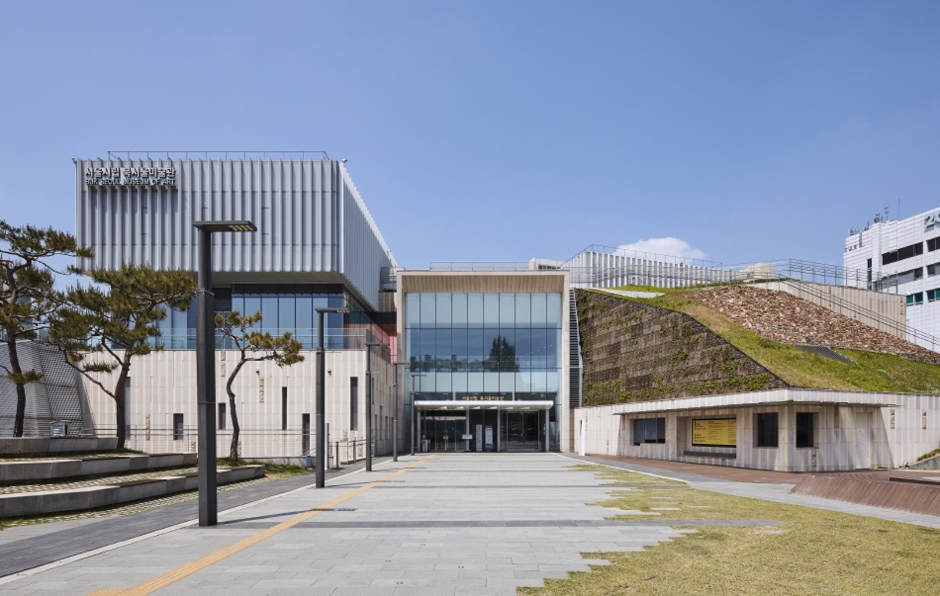
Seoul Museum of Art (SeMA) (서울시립 북서울미술관)
18.8Km 2024-03-18
1238, Dongil-ro, Nowon-gu, Seoul
The Seoul Museum of Art (SeMA) coexists with its local community. Located in Nowon-gu, an area name that is derived from the “Reed Hill” nearby, the museum is an open structure with its entrance connected to a park. In addition to outdoor sculpture exhibitions, it offers maze-like galleries, an art library, a cafe, and a multipurpose hall. These spaces host a variety of programs for families, which make up the majority of visitors to this museum.

Pureun Arboretum & Hang-dong Railroad (푸른수목원&항동철길)
19.0Km 2025-01-17
240 Yeondong-ro, Guro-gu, Seoul
Pureun Arboretum is a botanical garden boasting well-established ecological parks and scenic walking trails. It encompasses diverse themed gardens, including the Wildflower Garden, Hydrangea Garden, Conifer Garden, Broadleaf Tree Garden, Bulbous Plant Garden, Wetland Garden, and Rose Garden, complemented by an Visitor Center. The Forest Learning School, functioning as a greenhouse, showcases plants from various corners of the globe and hosts educational programs. Visitors can avail themselves of facilities like the book café, a café, and a library. Additionally, the arboretum is intersected by the abandoned railroad tracks of Hang-dong.
Bumin Hospital Seoul (서울부민병원)
19.0Km 2025-10-23
1st Floor, International Healthcare Center, 389 Gonghang-daero, Gangseo-gu, Seoul
Seoul Bumin Hospital, a 300-bed general hospital that opened in April 2011, is a leader in medical culture with its exceptional medical staff, diagnostic equipment, and eco-friendly hospital practices. In particular, the Spine and Joint Center's medical staff, with their huge experience and expertise, provide Korea's highest level of medical services, including 3D navigation-assisted knee and hip surgery, stem cell therapy, robotic joint replacement surgery, hip endoscopic surgery, spinal deformity surgery, minimally invasive spinal surgery, and non-surgical treatments.
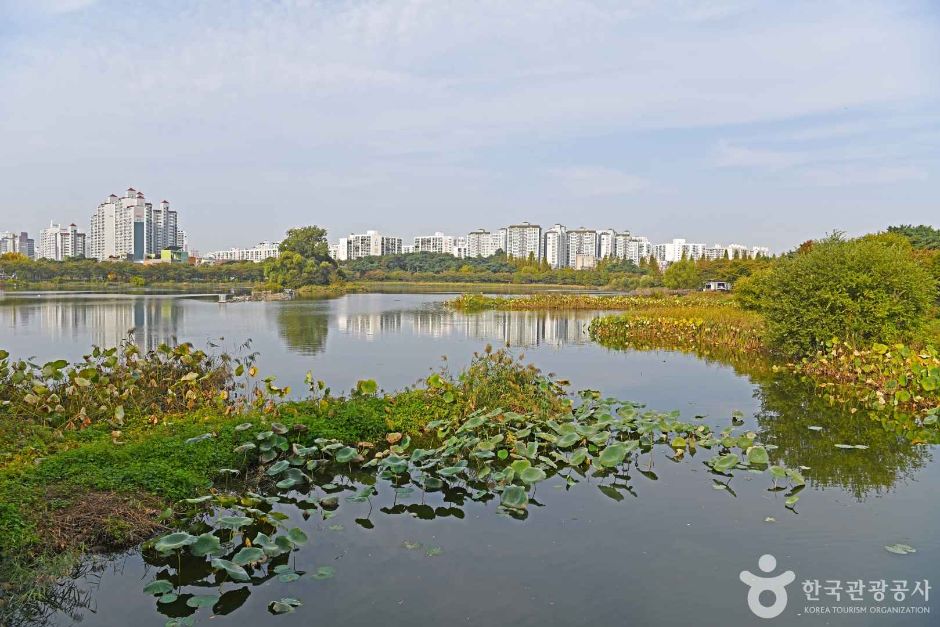
Manseokgeo Park (만석거공원)
19.2Km 2024-12-23
1087 Jeongjo-ro, Jangan-gu, Suwon-si, Gyeonggi-do
Manseokgeo Park centers around Manseokgeo Reservoir, built in 1795 to combat drought by transforming barren land into a water source. The park features a pavilion, tennis courts, a playground, small convenience store, an outdoor concert hall, and an art museum. In spring, cherry blossoms bloom, while summer brings beautiful lotus flowers to the lake. A well-maintained walking trail encircles the reservoir, and at night, the rainbow-colored musical fountain provides a spectacular view.
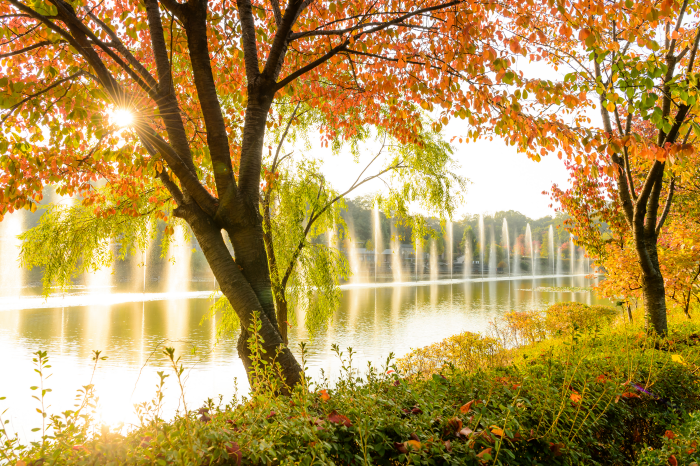
Seoseoul Lake Park (서서울호수공원)
19.4Km 2022-10-19
20, Nambusunhwan-ro 64-gil, Yangcheon-gu, Seoul
Covering over 225,000 ㎡ of land in the southwestern part of Seoul, Seoseoul Lake Park, also known as West Lake Park, was to resolve the regional imbalance in the city. The park is a eco-friendly park designed with the themes of "water" and "recycling." Before turning into a park, the area was used as a purification plant that produced approximately 120,000 tons of tap water to Seoul. The park has a children's playground, sports facilities like the soccer field, basketball court and badminton courts, and a cultural plaza. With its vast space and 24-hour operation, the park provides a relaxing ground for the citizens of Seoul.
 English
 한국어
한국어 日本語
日本語 中文(简体)
 Deutsch
 Français
 Español
 Русский


