
Seoul Doseonsa Temple (도선사(서울))
17.2Km 2025-06-25
504 Samyang-ro 173-gil, Gangbuk-gu, Seoul
Doseonsa Temple was established 1,100 years ago during the latter part of the Silla Kingdom when the renowned Buddhist priest Doseonguksa was traveling through the mountains. After visiting the site, Doseonguksa made a prophecy that led to the construction of the temple. According to legend, he used only his walking stick to carve the large Bodhisattva that sits at the temple. Interestingly enough, the statue does not show any evidence of chisel marks, further adding to the mystery of how the statue was made.
During the 7th year of King Gwangmu of the Joseon dynasty, Doseonsa Temple was officially named the representative temple of Korea with the purpose of promoting Cheongdamdaejongsa's Korean Buddhism movement, aiming at a religious revival. Due to these special circumstances Deseonsa Temple gained a high reputation and much recognition, which have held strong to this day.
Inside the temple, visitors can view the remains and written works of Cheongdamdaejongsa in the Cheongdamdaejongsa Memorial Hall. Next to the road leading to Cheonbuljeon Hall is a pond where you can toss a coin and make a wish and just past Yongammun Gate is a hiking path connecting Baegundae Cliff and Insubong Peak. Inside the Ksitigarbha Hall are portraits of President Park Chung-hee, Yuk Yeong-su, and Hyundai Chairman Chung Ju-yung. In front of the hall is a tree that is said to have been planted by a Buddhist priest who brought it from India 200 years ago. Historical artifacts can be found throughout the temple.
Seoul Hiking Tourism Center - Bukhansan Branch (서울도심등산관광센터(북한산))
17.2Km 2024-03-05
5F, 181-7 Ui-dong, Gangbuk-gu, Seoul
+82-1533-2608
The Seoul Hiking Tourism Center is located 5 minutes on foot from Exit 2 of Bukhansan Ui Station and provides various services to hikers. It provides hiking course guidance and information (available in Korean, English, Chinese, and Japanese) about the mountains of Seoul, including Bukhansan, Bugaksan, and Inwangsan Mountains, as well as promotional materials such as Seoul hiking tourism guidebooks and maps. Also, it operates hiking tour programs with various themes every week for foreigners and offers hiking gear rental services such as hiking boots, hiking attire, trekking poles, gloves, and crampons for foreigners. (Koreans accompanied by foreigners can also rent the gear.) In addition, there is a storage locker and lounge for visitors, so they can pack up and rest before hiking.
![Bukhansan Dulle Trail Section 1 ([북한산 둘레길] 1 소나무숲길 )](http://tong.visitkorea.or.kr/cms/resource/30/1898430_image2_1.jpg)
Bukhansan Dulle Trail Section 1 ([북한산 둘레길] 1 소나무숲길 )
17.2Km 2024-01-04
12 Samyang-ro 173-gil, Gangbuk-gu, Seoul
Bukhansan Mountain is a mountain representing Seoul, which 5 million people visit every year. It is not easy to hike up to the top, but the dulle trail allows one to enjoy the beauty of the mountain without too much effort. Bukhansan Dulle Trail is a low-lying, horizontal walking trail created by connecting and refining existing side paths, allowing for a leisurely walk along the foot of the mountain. The Pine Forest Trail, one section of the trail consisting of 21 themes, is 2.9 kilometers long from the entrance to Uiryeong Trail to the top of Solbat Neighborhood Park. It is filled with majestic pine trees, and the road is wide and gentle, making it a perfect place to enjoy a walk. Most of the section is shaded by trees, so visitors can feel cool while walking up even on hot summer days.

Kansong House (간송옛집)
17.3Km 2025-04-01
149-18 Sirubong-ro, Dobong-gu, Seoul
The 100-year-old traditional hanok Kansong House sits by the burial mound of Kansong Jeon Hyeong-pil (1906-1962), who played a significant role in preserving the cultural heritages of Korea during the Japanese colonial period. This house was orginally built by Kansong's adoptive father Jeon Myeong-gi (1870-1919) to us as a storage facilities for harvested agriculture from the northern Gyeonggi-do and Hwanghae. After his father's death, Kansong used the house as a ritual house for his father and often stayed here. Some damages were done to the house during the Korean War, and partial repair was made after his death.
SMOB Hanam (스몹 하남)
17.4Km 2025-10-23
750 Misa-daero, Hanam-si, Gyeonggi-do
+82-1668-4832
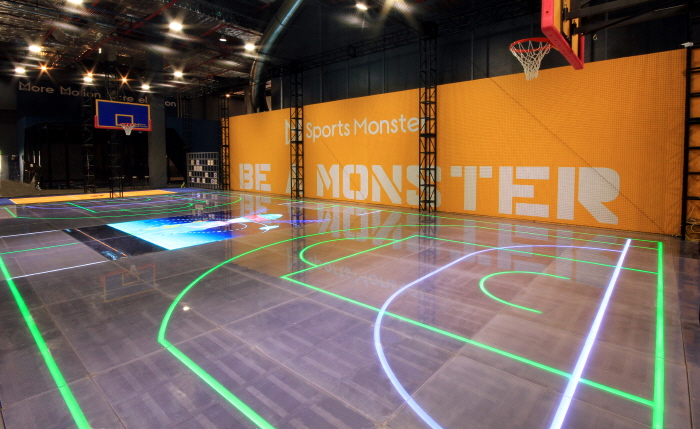
SMOB is a game and sports experience center located on the fourth and top floors of Starfield Hanam. The center provides activities for all, with no need for special equipments and gears. About 30 activities are prepared, divided into Basic Zone, Exciting Zone, Adventure Zone, and Digital Zone.
Heojun Museum (허준박물관)
17.5Km 2021-08-13
87, Heojun-ro, Gangseo-gu, Seoul
+82-2-3661-8686
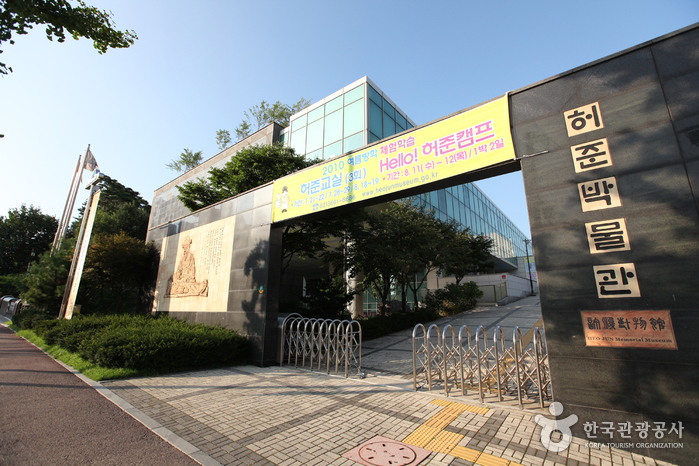
The Heojun Museum opened in honor of the academic accomplishments and charitable deeds of the renowned medical scientist, Heojun of the Joseon dynasty. Located next to Heojun Neighborhood Park, the museum collects and displays Heojun related materials.
Yuldong Park (율동공원)
17.6Km 2021-11-30
145, Munjeong-ro, Bundang-gu, Seongnam-si, Gyeonggi-do
+82-31-702-8713
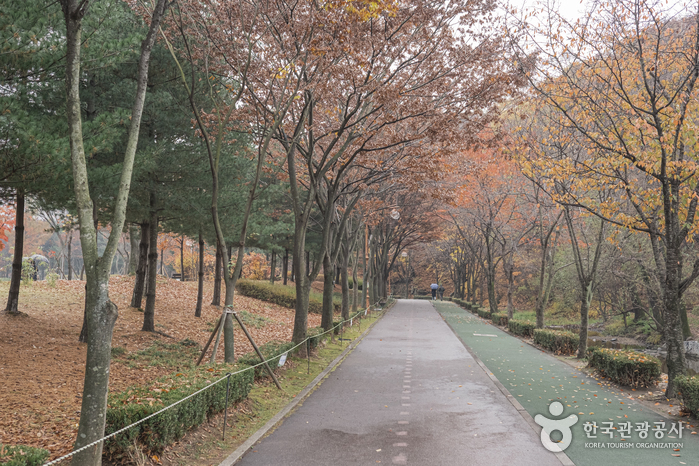
Yuldong Park is a large urban neighborhood park located in the Bundang area of Seongnam. Since its opening in 1999, the park has become a favorite weekend hangout, frequented by residents of Seongnam and Seoul. This well-equipped park has a 45-meter bungee jumping site, a large fountain and a 33-acre reservoir encircled by a 2.5 kilometer promenade/bike path. Other facilities include a 13 meter-high artificial rock climbing wall, badminton center, children’s playground, foot acupressure path, grass plaza, year-round flower garden, field of reeds and theater. The park is also a popular date course for couples at nighttime as there are many quiet cafes located near the reservoir.
Gwangmyeong Cave (광명 동굴)
17.8Km 2025-10-27
142 Gahak-ro 85beon-gil, Gwangmyeong-si, Gyeonggi-do
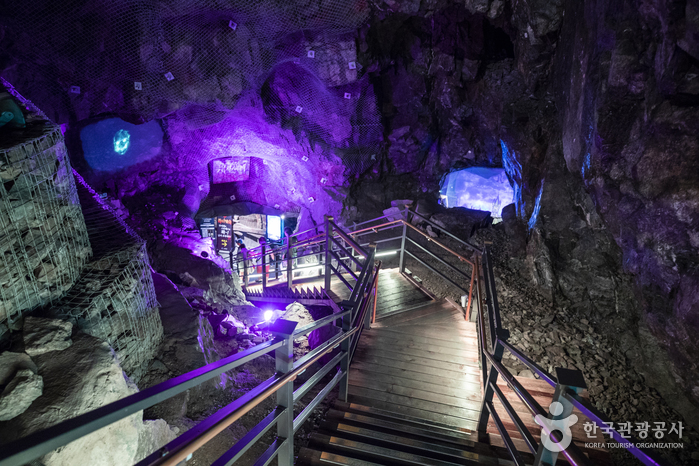
Gwangmyeong Cave was developed in 1912 during the Japanese colonial period to exploit resources, including gold mines, and continued to be developed for industrial purposes after liberation. After the mine was closed in 1972, it was used as a salted seafood warehouse for about 40 years. Gwangmyeong City purchased the site, reorganized it, and made it available to the public. It is currently recognized as a modern industrial heritage site with high historical value, and is well known as a cave theme park in the metropolitan area. Along with the cave, colorful lights and sculptures create a spectacular sight. Aside from tasting and purchasing Korean wine at the Gwangmyeong Wine Cave, visitors can also see the largest media art piece in Korea at the Lascaux Exhibition Hall, enjoying a more diverse travel experience.
Seoul Novos Hospital (서울노보스병원)
17.8Km 2025-10-23
720 Dobong-ro, Dobong-gu, Seoul
Seoul Novos Hospital which is located in Banghak-dong, Dobong-gu, Seoul has convenient transportation network.( 2 minutes from Exit 1 of Line 1 subway station)
we have more than 300 staffs. highly skilled medical professionals, and state-of-the-art equipment (latest MRI, CT). And we provide rehabilitation therapy/inpatient care, dementia & stroke testing, electromyography, electroencephalography, painless sedation endoscopy (upper and lower), ultrasound (abdominal, cardiac), osteoporosis testing, comprehensive blood tests (cancer screening), national health checkups, and personalized comprehensive health checkups.
we aim to be a comfortable and trusted hospital
Geomdansan Mountain (검단산)
17.9Km 2021-08-17
Cheonhyeong-dong, Hanam-si, Gyeonggi-do
+82-31-790-6341
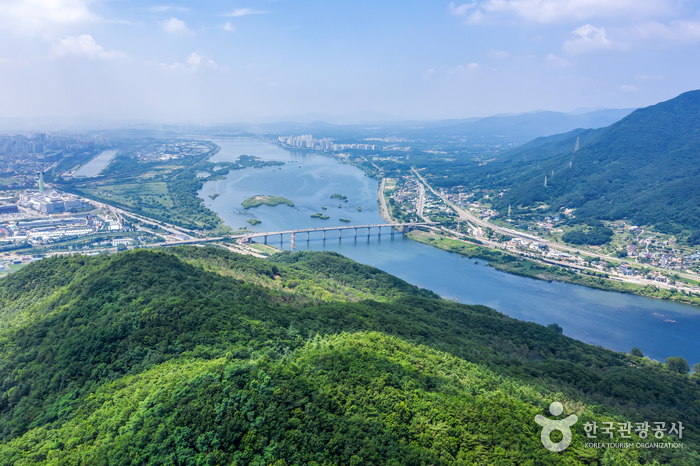
Geomdansan Mountain (alt. 657 m) is one of the major mountains in Hanam. During the Baekje period, it was a sacred mountain where the kings would offer ceremonial services to the gods. From the summit, one can get a great view of Yangsuri, where the Namhangang River and Bukhangang River meet, as well as Hanam, Seoul, Yangpyeong, and Paldangho Lake area.
Due to its proximity to the Seoul Metropolitan Area, it is a popular day trip course. Getting there is easy and the hiking trails, which are not too difficult, are well maintained. From the summit, one can get a great view of Bukhansan Mountain and Dobongsan Mountain in the distance. Hikers can also see Paldang Dam to the east, Yongmasan Mountain to the south, and the Jungbu Expressway to the west.
 English
 한국어
한국어 日本語
日本語 中文(简体)
 Deutsch
 Français
 Español
 Русский


