![Fendi - Shinsegae Main Branch (2F) [Tax Refund Shop] (펜디 신세계 본점2층)](http://tong.visitkorea.or.kr/cms/resource/85/2890585_image2_1.jpg)
Fendi - Shinsegae Main Branch (2F) [Tax Refund Shop] (펜디 신세계 본점2층)
7.0Km 2024-04-19
63, Sogong-ro, Jung-gu, Seoul
-
![Duko S.T.Dupont - Shinsegae Main Branch [Tax Refund Shop] (듀코 신세게(백)본점 듀퐁)](http://tong.visitkorea.or.kr/cms/resource/10/2887810_image2_1.jpg)
Duko S.T.Dupont - Shinsegae Main Branch [Tax Refund Shop] (듀코 신세게(백)본점 듀퐁)
7.0Km 2024-04-16
6F Shinsegae Department Store Main Branch, 63, Sogong-ro, Jung-gu, Seoul
-
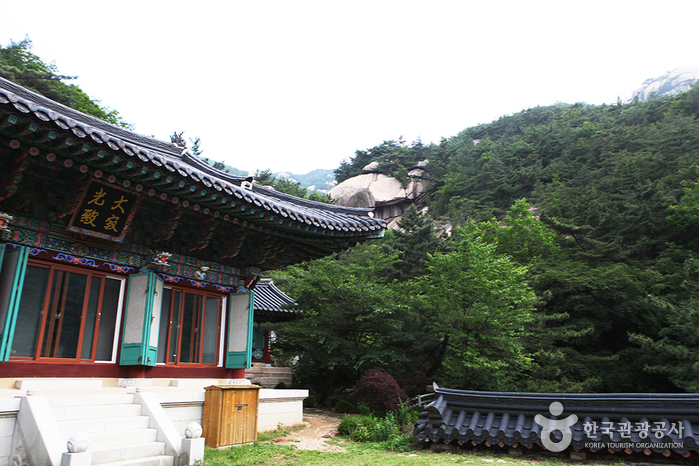
Seoul Geumseonsa Temple (금선사(서울))
7.0Km 2021-08-17
137, Bibong-gil, Jongno-gu, Seoul
+82-2-395-9911
Geumseonsa Temple is located within Bukhansan National Park, just behind Cheong Wa Da (The Blue House) and Gyeongbokgung Palace. The entrance to the temple is just off the hiking path to Bibong Peak.
After passing Banyajeon Hall, where Buddhist services are held, visitors will see a pine tree over 200 years old, and beyond that, a staircase with 108 steps leading up to Daejeokgwangjeon Hall in the temple's main area. To the right is Samseonggak House and Hongyegyo Bridge over the clear waters flowing down from the mountain.
Additional temple buildings include Mitajeon Hall and Yeonhwadang Hall, built in 2004 by Monk Beopan; and Jeokmukdang Hall, built using traditional construction techniques.

Shinsegae Department Store - Main Store (신세계백화점 (본점))
7.0Km 2025-04-07
63 Sogong-ro, Jung-gu, Seoul
+82-1588-1234
Shinsegae Department Store opened its doors as the first modern department store in the country in 1960. It stands where Korea's first department store, the Japanese Misreukkosi Department Store, used to be in the 1930s. After undergoing remodeling in 2007, it reopened as a luxury hall, featuring diverse brands ranging from the top three international luxury brands to new designer brands. In addition, the Trinity Gardens and art halls in the department store serve as a cultural space for a shopping experience that combines art and shopping.
Jeongdong Observatory (정동전망대)
7.0Km 2022-08-11
15, Deoksugung-gil, Jung-gu, Seoul
+82-2-120
Jeongdong Observatory is located on the 13th floor of Seoul City Hall Seosomun building. The observatory has a cafe inside where visitors can enjoy a drink while gazing upon the magnificent view of Deoksugung Palace from above. In addition, the walls of the cafe are decorated with photos of old Jeongdong.
![E-Mart 24 - The Bank Of Korea Branch [Tax Refund Shop] (이마트24 한국은행)](http://tong.visitkorea.or.kr/cms/resource/78/2878578_image2_1.jpg)
E-Mart 24 - The Bank Of Korea Branch [Tax Refund Shop] (이마트24 한국은행)
7.0Km 2024-04-18
9, Namdaemun-ro 5-gil, Jung-gu, Seoul
-
Gyeonghuigung Palace (경희궁)
7.0Km 2024-07-09
45 Saemunan-ro, Jongno-gu, Seoul
+82-2-724-0274
Gyeonghuigung Palace, a designated Historic Site, was originally called the large palace by Saemun Gate, or the Western Palace, for its location within the city. It was not until the eighth year of Gwanghaegun (1616) that the palace was used as a royal residence for the king, changing the name to Gyeongdeokgung Palace. The name later changed again to the current Gyeonghuigung Palace in 1760. The palace grounds included many halls but they were mostly all burned down in a fire in 1829. After the Japanese occupation began, all remaining buildings on the site were torn down and the palace grounds were turned into Gyeongseong Middle School (now Seoul High School). The school moved to Gangnam area in 1987, afterwhich the previous location was turned into a park. The palace grounds currently hold Seoul Museum of Art and walking paths, as well as a restoration of Heunghwamun Gate, the main gate of the palace, and Sungjeongjeon Hall, the main hall, completed in November 1994.
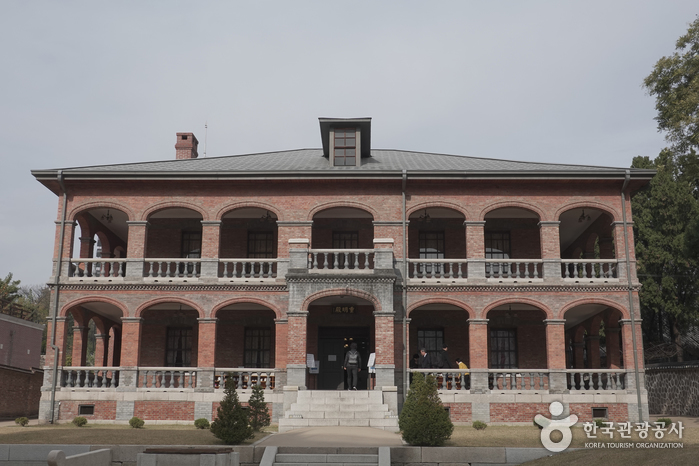
Jungmyeongjeon Hall (중명전)
7.0Km 2025-01-09
41-11, Jeongdong-gil, Jung-gu, Seoul
+82-2-752-7525
Located near Deoksugung Palace, Jungmyeongjeon Hall is a red-brick modern Western-style building. It was built in 1899 as the imperial library of the Korean Empire. After Deoksugung Palace caught on fire in 1904, the place became the temporary residence of Emperor Gojong. It also witnessed the tragic part of history in which the infamous Eulsa Treaty (Japan-Korea Protectorate Treaty), an illegal treaty forced by Japan, was signed in 1905. Its exhibition hall serves as a place for historical education.
![Wangsol Pharmacy [Tax Refund Shop] (왕솔약국)](http://tong.visitkorea.or.kr/cms/resource/27/2887827_image2_1.jpg)
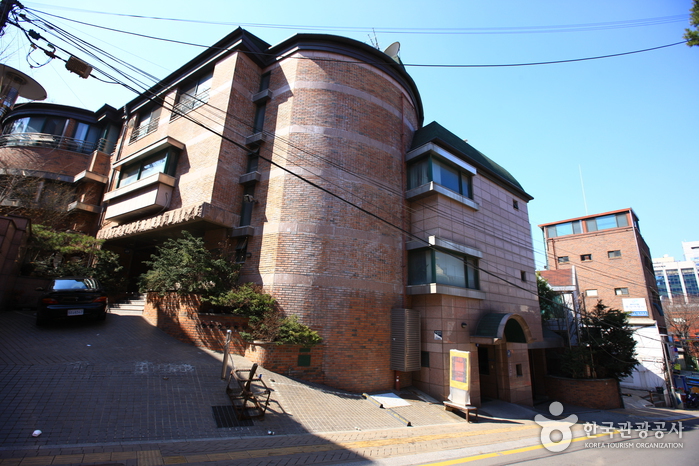
Chojun Textile & Quilt Art Museum (초전섬유ㆍ퀼트박물관)
7.0Km 2024-03-06
29, Toegye-ro 16-gil, Jung-gu, Seoul
+82-2-753-4074~5
Opened in 1998, Chojun Textile & Quilt Art Museum is the only textile art museum in Korea. Visiotrs can learn about the excellence and tradition of Korean textiles by observing a wide range of domestic and international textile artworks. In addition to exhibiting its collection, the museum also holds special exhibitions as well as textile and quilt competitions, giving visitors the opportunity to get up close and personal with textile artworks.
 English
 한국어
한국어 日本語
日本語 中文(简体)
 Deutsch
 Français
 Español
 Русский


