
Boan1942 (보안1942)
6.1Km 2023-08-17
33 , Hyoja-ro, Jongno-gu, Seoul
Prior to becoming an art space in 2007, Tongui-dong Boan served as a place for rest for travelers from 1942 to 2005. After a short suspension, the place was renovated into a cultural space in 2017 to carry on the historical legacy and provide creative inspiration under the concept of "Boanstay."
Boan1942 is divided into a cultural space consisting of a cafe, project workshop, book shop, and exhibition area, and Boanstay on the 3rd and 4th floors that offer temporary lodging services to the cultural nomads. Located in Seochon, the center of culture, history, and convenient traffic in Seoul, Boanstay offers a splendid view of Seoul's historical and cultural assets such as Gyeongbokgung Palace, Cheong Wa Dae, and Seochon Hanok Village.
<Credit: Boanstay>
Seoul Doseonsa Temple (도선사(서울))
6.1Km 2025-06-25
504 Samyang-ro 173-gil, Gangbuk-gu, Seoul
Doseonsa Temple was established 1,100 years ago during the latter part of the Silla Kingdom when the renowned Buddhist priest Doseonguksa was traveling through the mountains. After visiting the site, Doseonguksa made a prophecy that led to the construction of the temple. According to legend, he used only his walking stick to carve the large Bodhisattva that sits at the temple. Interestingly enough, the statue does not show any evidence of chisel marks, further adding to the mystery of how the statue was made.
During the 7th year of King Gwangmu of the Joseon dynasty, Doseonsa Temple was officially named the representative temple of Korea with the purpose of promoting Cheongdamdaejongsa's Korean Buddhism movement, aiming at a religious revival. Due to these special circumstances Deseonsa Temple gained a high reputation and much recognition, which have held strong to this day.
Inside the temple, visitors can view the remains and written works of Cheongdamdaejongsa in the Cheongdamdaejongsa Memorial Hall. Next to the road leading to Cheonbuljeon Hall is a pond where you can toss a coin and make a wish and just past Yongammun Gate is a hiking path connecting Baegundae Cliff and Insubong Peak. Inside the Ksitigarbha Hall are portraits of President Park Chung-hee, Yuk Yeong-su, and Hyundai Chairman Chung Ju-yung. In front of the hall is a tree that is said to have been planted by a Buddhist priest who brought it from India 200 years ago. Historical artifacts can be found throughout the temple.
Haeunjae (하은재)
6.1Km 2024-12-23
68-10 , Jahamun-ro, Jongno-gu, Seoul
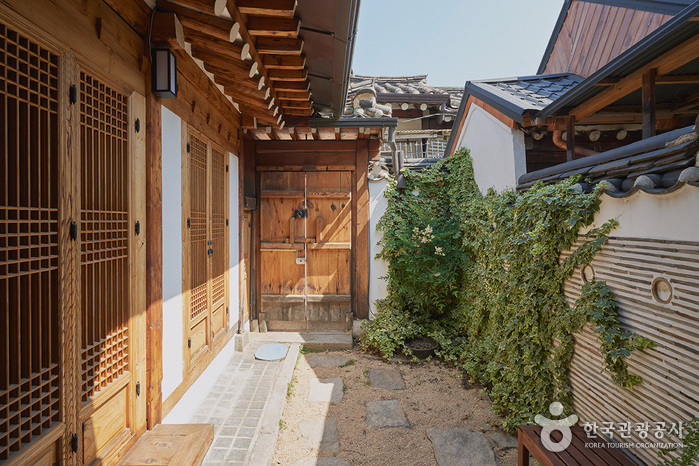
Ha Eunjae is a private hanok stay in Seochon Village, just west of Gyeongbokgung Palace in Seoul. The accommodation comprises a bedroom with queen-size bed, a kitchen, a movie room, and two bathrooms. The movie room is fitted out with a Bose sound system, a beam projector, and a large screen, with a movable footbath as a bonus. The kitchen is equipped for simple cooking. Guests staying 2 nights or more during the week receive a 10% discount, and towel replacement and cleaning services are provided for stays of 3 nights or more. Ha Eunjae is close to major tourist attractions such as Gyeongbokgung Palace and Samcheong-dong.
LoL Park (롤파크)
6.1Km 2025-11-04
33 Jong-ro, Jongno-gu, Seoul
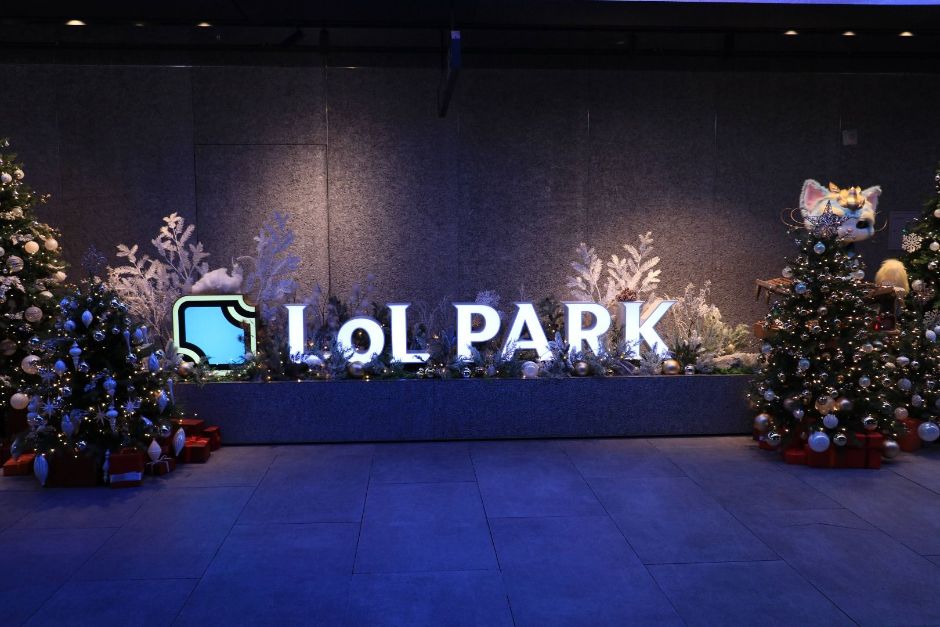
Lol Park is the venue where the largest-scale League of Legends competition in South Korea, LCK (League of Legends Champions Korea), is held. It serves as a space for various esports events and activities, featuring spectator seating, LCK Arena (lounge), Riot Store (merchandise shop), PC rooms, and café.
Cheongun Literature Library (청운문학도서관)
6.1Km 2023-08-16
40 , Jahamun-ro 36-gil, Jongno-gu, Seoul
Cheongun Literature Library is located at the foot of Inwangsan Mountain and can be reached by following the mountain's walking trail starting from Changuimun Gate along the fortress wall. This public hanok library is designed in consideration of the sloped topography and the natural scenery of Inwangsan Mountain. The library consists of two floors: an underground floor and a ground floor. While the ground floor is designed as a traditional hanok, the underground floor is made of concrete to support the hanok building and the spacious outdoor yard. By implementing the natural slope in the library's design, the underground southern entrance is exposed, allowing sunlight to enter. The underground floor features a wide collection of books while the ground floor serves as a place for reading. The natural environment surrounding the library adds to the hanok building's traditional and peaceful charms.

Kansong House (간송옛집)
6.1Km 2025-04-01
149-18 Sirubong-ro, Dobong-gu, Seoul
The 100-year-old traditional hanok Kansong House sits by the burial mound of Kansong Jeon Hyeong-pil (1906-1962), who played a significant role in preserving the cultural heritages of Korea during the Japanese colonial period. This house was orginally built by Kansong's adoptive father Jeon Myeong-gi (1870-1919) to us as a storage facilities for harvested agriculture from the northern Gyeonggi-do and Hwanghae. After his father's death, Kansong used the house as a ritual house for his father and often stayed here. Some damages were done to the house during the Korean War, and partial repair was made after his death.
Seoul Upcycling Plaza (서울새활용플라자)
6.1Km 2024-01-05
49 Jadongchasijang-gil, Seongdong-gu, Seoul
Saehwaryong is a Korean term for upcycling, a process of redesigning or recycling discarded resources or materials to give them a new value or purpose. Seoul Upcycling Plaza operates upcycling-related exhibitions, upcycling practice education and experience programs, design studios, upcycling stores, workshops, and more. It is a great place to look around for ideas and inspirations on how to use products for longer periods of time. The plaza demonstrates the first step to creating a resource-recycling society.
Seoul Hiking Tourism Center - Bukhansan Branch (서울도심등산관광센터(북한산))
6.2Km 2024-03-05
5F, 181-7 Ui-dong, Gangbuk-gu, Seoul
The Seoul Hiking Tourism Center is located 5 minutes on foot from Exit 2 of Bukhansan Ui Station and provides various services to hikers. It provides hiking course guidance and information (available in Korean, English, Chinese, and Japanese) about the mountains of Seoul, including Bukhansan, Bugaksan, and Inwangsan Mountains, as well as promotional materials such as Seoul hiking tourism guidebooks and maps. Also, it operates hiking tour programs with various themes every week for foreigners and offers hiking gear rental services such as hiking boots, hiking attire, trekking poles, gloves, and crampons for foreigners. (Koreans accompanied by foreigners can also rent the gear.) In addition, there is a storage locker and lounge for visitors, so they can pack up and rest before hiking.
![Bukhansan Dulle Trail Section 1 ([북한산 둘레길] 1 소나무숲길 )](http://tong.visitkorea.or.kr/cms/resource/30/1898430_image2_1.jpg)
Bukhansan Dulle Trail Section 1 ([북한산 둘레길] 1 소나무숲길 )
6.2Km 2024-01-04
12 Samyang-ro 173-gil, Gangbuk-gu, Seoul
Bukhansan Mountain is a mountain representing Seoul, which 5 million people visit every year. It is not easy to hike up to the top, but the dulle trail allows one to enjoy the beauty of the mountain without too much effort. Bukhansan Dulle Trail is a low-lying, horizontal walking trail created by connecting and refining existing side paths, allowing for a leisurely walk along the foot of the mountain. The Pine Forest Trail, one section of the trail consisting of 21 themes, is 2.9 kilometers long from the entrance to Uiryeong Trail to the top of Solbat Neighborhood Park. It is filled with majestic pine trees, and the road is wide and gentle, making it a perfect place to enjoy a walk. Most of the section is shaded by trees, so visitors can feel cool while walking up even on hot summer days.
Gallery Simon (갤러리 시몬)
6.2Km 2022-09-15
20, Jahamun-ro 6-gil, Jongno-gu, Seoul
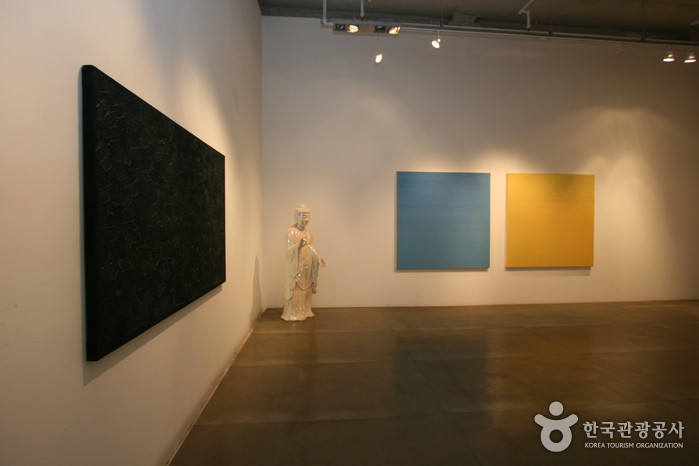
Since its opening in April, 1994, Gallery Simon has continued to focus on promoting the beauty of modern art. Exhibitions include works from experienced artists as well as the works of budding artists, both from Korea and abroad. Select artists, referred to collectively as "Simon's Friends," have exhibitions annually. The changing collections allow the museum and featured artists to constantly strive for improvement and follow the changes in art over time.
 English
 한국어
한국어 日本語
日本語 中文(简体)
 Deutsch
 Français
 Español
 Русский


