![OZO [Tax Refund Shop] (오조크)](http://tong.visitkorea.or.kr/cms/resource/99/3314399_image2_1.jpg)
![Tirr Lirr [Tax Refund Shop] (티르리르)](http://tong.visitkorea.or.kr/cms/resource/89/3314789_image2_1.jpeg)
![Metrocity [Tax Refund Shop] (메트로시티)](http://tong.visitkorea.or.kr/cms/resource/52/3313452_image2_1.jpg)
![Louis Quatorze Umbrella & Parasol [Tax Refund Shop] (루이까또즈 우양산)](http://tong.visitkorea.or.kr/cms/resource/96/3313996_image2_1.jpg)
Louis Quatorze Umbrella & Parasol [Tax Refund Shop] (루이까또즈 우양산)
417.9M 2024-06-27
62, Dobong-ro, Gangbuk-gu, Seoul
-

Nature Republic - Homeplus Wolgok Branch [Tax Refund Shop] (네이쳐리퍼블릭 홈플러스월곡점)
1.4Km 2024-04-23
76, Hwarang-ro, Seongbuk-gu, Seoul
-
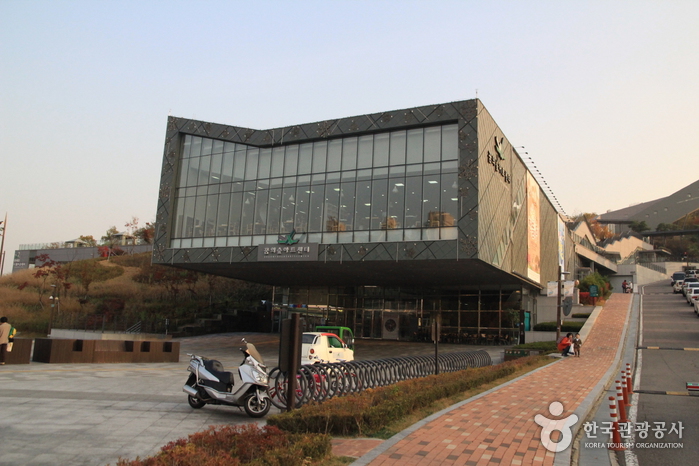
Dream Forest Art Center (꿈의숲 아트센터)
1.5Km 2025-01-15
173, Wolgye-ro, Gangbuk-gu, Seoul
Dream
Forest Art Center, located in Gangbuk, Seoul, is operated by the Sejong Center
for the Performing Arts. Composed of two performance venues (Performance
Hall and Concert Hall), alongside with Sang Sang Tok Tok Art Gallery and Dream
Gallery, there are also a Chinese restaurant, cafe and an observatory deck available
for all visitors to enjoy.
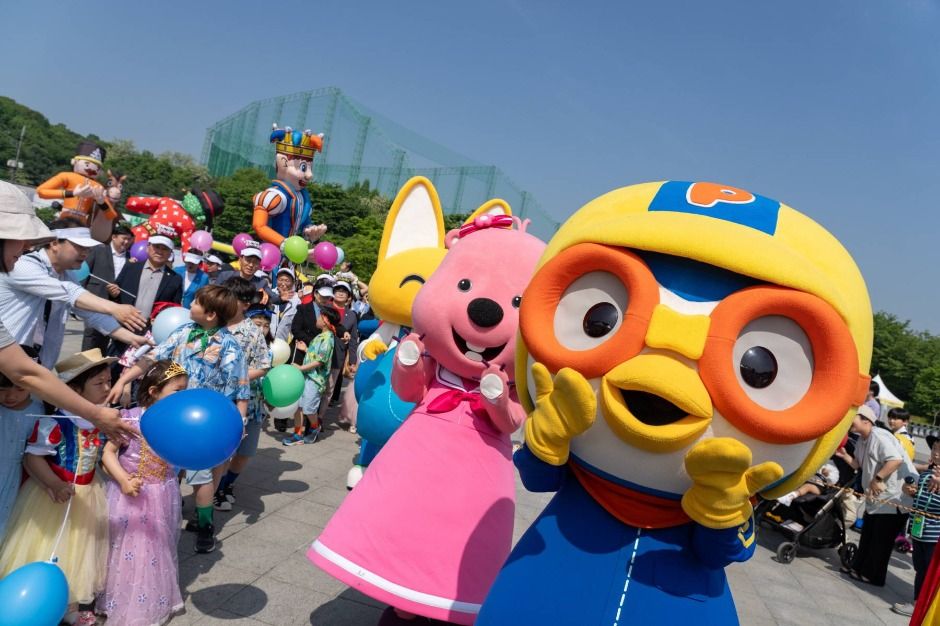
Gangbuk-gu Children's Day Festival (강북구 어린이날 대축제)
1.6Km 2025-05-08
173 Wolgye-ro, Gangbuk-gu, Seoul
+82-2-554-9795
Gangbuk-gu Children's Day Festival takes place at Dream Forest in celebration of Children's Day, which falls on May 5. Programs such as a sing-along show, parades, stage performances, interactive games, and a variety of fun rides are prepared to provide a day filled with fun and laughter.
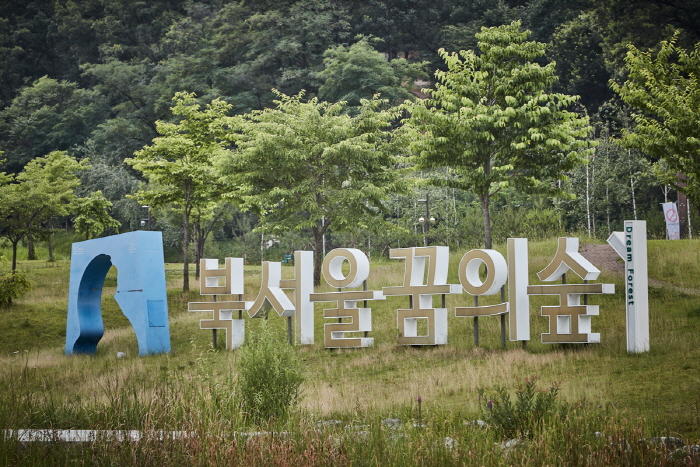
Dream Forest (북서울 꿈의숲)
1.7Km 2023-10-19
173 Wolgye-ro, Gangbuk-gu, Seoul
+82-2-2289-4000
Dream Forest, previously known as Odong Neighborhood Park, is located in Gangbuk-gu, Seoul. The park is surrounded by cherry blossom trees, and the northern section is filled with maple trees, making the park especially attractive in spring and fall. The Changnyeongwigung Ritual House (Registered Cultural Heritage) has been restored with traditional landscaping such as a pond, pavilion and waterfall created nearby to double the genuine beauty of a traditional Korean park. Major attractions of the park include Wolyeongji Pond, Grass Square, Wolgwangpokpo Falls, Aewoljeong Pavilion, Chilbokji Falls, Event Garden, Children’s Gallery, Wild Grass Garden, Deer Ranch, Exploring Path, Forest Rest, and a water park. The slanted hillside which served as sledding slopes is now a complex cultural space with Buk-Seoul Art Center that houses a fantastic-looking observatory, performance hall, book café, gallery, restaurant, jumping fountain, and children’s playground.
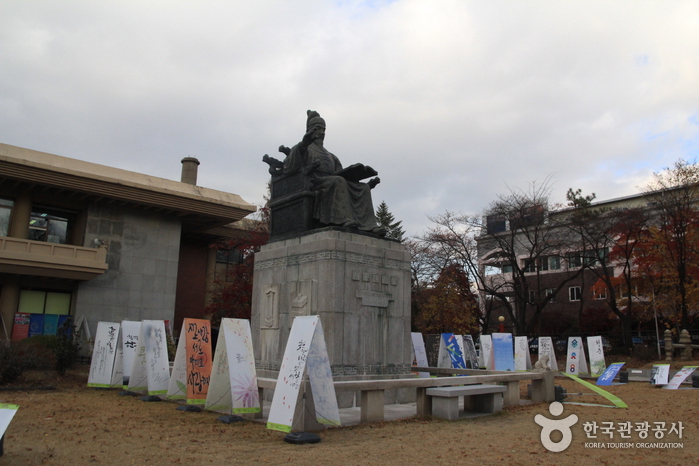
King Sejong The Great Museum (세종대왕박물관)
2.5Km 2024-03-08
56, Hoegi-ro, Dongdaemun-gu, Seoul
+82-2-969-8851
King Sejong The Great Museum is a cultural complex located in the heart of Seoul, near Gwanghwamun Plaza.The Hangeul Room exhibits documents published during the reign of King Sejong, the Science Room displays Cheugugi and celestial planisphere, and the Korean Traditional Music Room showcases various traditional Korean musical instruments. The Biography Room features Portrait of King Sejong and paintings depicting scenes from his life. Outdoors, there are statues of King Sejong, the scahe sundial, the clepsydra, and Cheugugi.
![Uireung Royal Tomb [UNESCO World Heritage] (서울 의릉(경종, 선의왕후) [유네스코 세계문화유산])](http://tong.visitkorea.or.kr/cms/resource/80/2690680_image2_1.jpg)
Uireung Royal Tomb [UNESCO World Heritage] (서울 의릉(경종, 선의왕후) [유네스코 세계문화유산])
2.6Km 2021-06-03
146-20, Hwarang-ro 32-gil, Seongbuk-gu, Seoul
+82-2-964-0579
Uireung is the royal tomb of King Gyeongjong (reign 1720-1724), the 20th ruler of the Joseon dynasty, and his second wife, Queen Seonui.
King Gyeongjong was the first son of King Sukjong and Janghuibin, who was one of King Sukjong’s concubines. King Gyeongjong, who was born weak and anemic, died four years after becoming the king, without any great political achievements. Uireung tombs differ from the other royal double tombs in that they are not placed side-by-side. Instead, according to geomantic theory, one tomb has been placed directly behind the other one. The arrangement also shows that when making tombs, Korean ancestors did their best to protect the natural environment. Another feature of Uireung Royal Tomb is the stone fence raised using twelve stone posts. Each post has a letter inscribed, representing one of the twelve sibijisin gods.
 English
 한국어
한국어 日本語
日本語 中文(简体)
 Deutsch
 Français
 Español
 Русский


