
Seodaemun Independence Park (서대문독립공원)
10.2Km 2022-12-15
251, Tongil-ro, Seodaemun-gu, Seoul
+82-2-3140-8305
Seodaemun Independence Park was built on the former Seoul Detention Camp. It was used to imprison thousands of Korean independence activists until the liberation from the Japanese occupation on August 15, 1945, as well as the political prisoners during the political turmoil in the 1960s. When the prison was moved to Uiwang-si, Gyeonggi-do in November 1987, the area was restored and turned into a memorial park in August 15, 1992 to honor the sacrifices of the martyrs. The park preserves seven prison buildings, an execution ground, underground women’s prison, and the March 1st Movement Monument that has been moved from Tapgol Park in Jongno.
One of the most significant monuments of the Seodaemun Independence Park is Dongnimmun Gate (Independence Gate), which has been designated a Historic Site. Nearby is Dongnipgwan (Independence Hall), originally called Mohwagwan, which was used to greet Chinese envoys during the Joseon dynasty. Today, the hall enshrines 2,327 tablets inscribed with the names of Koreans who died for the cause of national independence. Standing right next to Dongnimmun Gate are the remnants of Yeongeunmun Gate, another Historic Site. Other sights inside the park include the Patriotic Martyr Monument, Declaration of Independence Monument, and Statue of Dr. Seo Jae-pil, who was an independence activist and publisher of Korea’s first independent newspaper. The main highlight of the park is the Seodaemun Prison History Hall, a former prison building that was renovated into a history museum.
![Olive Young - Sagajeong Station Branch [Tax Refund Shop] (올리브영 사가정역)](http://tong.visitkorea.or.kr/cms/resource/19/2888019_image2_1.jpg)
Olive Young - Sagajeong Station Branch [Tax Refund Shop] (올리브영 사가정역)
10.2Km 2024-04-17
Store #103, Geukjang Bldg., 310, Myeonmok-ro, Jungnang-gu, Seoul
-
National Memorial of Korean Provisional Government (국립대한민국임시정부기념관)
10.2Km 2023-01-16
279-24, Tongil-ro, Seodaemun-gu, Seoul
The National Memorial of Korean Provisional Government was established to shine a light on the proud history of the Korean Provisional Government's independence and the spirit of a democratic republic and to pass it on to future generations. The four-story memorial building with three underground floors houses three permanent exhibits, one special exhibit, Larchiveum, Symbol Plaza, storage, multi-purpose hall, and rooftop garden over a total area of 3,656 square meters, a total floor area of 9,703 square meters and a total exhibition space of 2,240 square meters. The permanent exhibits consist of a series of historic events from the March 1st Movement, which served as a turning point for the formation of the Provisional Government, to the foundation of the Korean Government that succeeded the mantle of the provisional government, while the special exhibit on the 1st floor currently hosts a special opening exhibition under the title of 『The Return of the Provisional Government of the Republic of Korea』. Moreover, a symbolic wall installation under the theme of "Waves of History" is displayed in the outdoor plaza on the 1st floor of the memorial expressing the Provisional Government’s desire for independence and the dynamics of the past, present, and future of Korea.
Gyeonggi Cheonggyesa Temple (청계사(경기))
10.2Km 2021-11-23
475, Cheonggye-ro, Uiwang-si, Gyeonggi-do
+82-31-345-2533
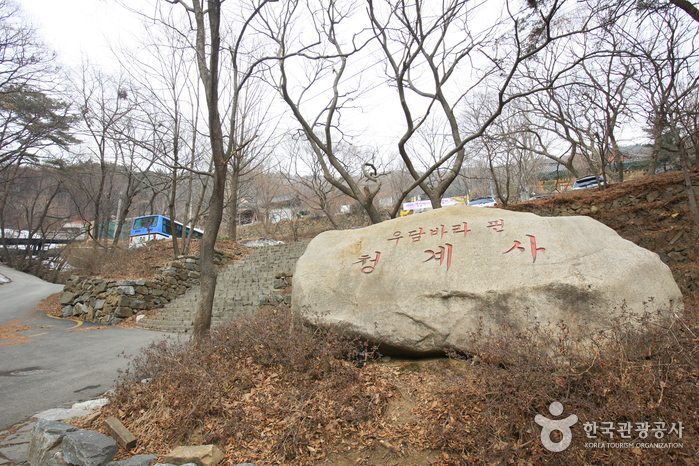
Cheonggyesa Temple is a Buddhist temple near Baegunhosu Lake that became well-known as the site of udumbara flower, a rarity that blooms on Buddhist statues. Built during the Silla Kingdom, the temple offers many sights, including the Cheonggyesa Temple Monument, Geungnakjeon Hall, the bell tower, Samseonggak Shrine, Ksitigarbha Hall, and Gamnoji Pond. Among the many things to see, visitors should not miss a glimpse of the Bronze Bell of Cheonggyesa Temple and the Wood Printing Block in Cheonggyesa Temple. Created in the 27th year of the reign of King Sukjong (1701) of the Joseon dynasty, the Bronze Bell has been designated as a national treasure, and is adorned with elaborate patterns.
Supsok Hanbang Land (숲속한방랜드)
10.2Km 2024-03-18
75-7 Bongwonsa-gil, Seodaemun-gu, Seoul
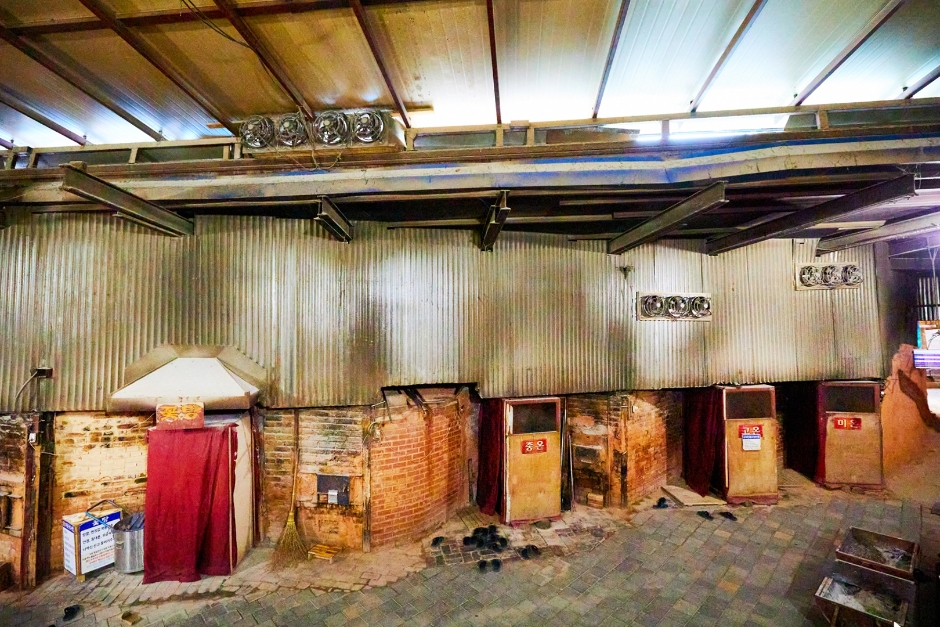
Jjimjjilbang, a Korean-style sauna that combines a traditional bathhouse with a hot steam room, is often ranked high among the unique experiences in Korea chosen by foreigners. Taking a steam bath in a charcoal kiln discharges waste products from the skin through sweat and eliminates accumulated fatigue. Supsok Hanbang Land has several charcoal kilns for different temperatures. Using them in order from low to high-temperature rooms is good, but the highest-temperature room, “Kkottang,” has a risk of causing skinburn, so visitors are advised to wear socks and cotton gloves to enter the room. Another unique experience is to grill sweet potatoes or rice cakes on the brazier in front of the charcoal kiln.
![JDX - Gangdong Station Branch [Tax Refund Shop] (강동역점JDX)](http://tong.visitkorea.or.kr/cms/resource/91/2878891_image2_1.jpg)
JDX - Gangdong Station Branch [Tax Refund Shop] (강동역점JDX)
10.2Km 2024-04-22
1084, Cheonho-daero, Gangdong-gu, Seoul
-
Songwol Naengmyeon (송월냉면)
10.2Km 2023-12-22
26 Gucheonmyeon-ro 29-gil, Gangdong-gu, Seoul
Songwol Naengmyeon is a cold noodle restaurant passed down for two generations, from 1988 to the present. It is a restaurant specializing in naengmyeon, or cold buckwheat noodles. It has three simple menu items: yeolmu naengmyeon (cold buckwheat noodles with young summer radish kimchi), mul naengmyeon (cold buckwheat noodles), and bibim naengmyeon (spicy buckwheat noodles). Yeolmu is the stem of young radish and is used as an ingredient in kimchi, one of the traditional Korean fermented foods, as well as salads, naengmyeon, and bibimbap. Harvest usually begins in early summer, so it can often be found on dinner tables in the summer. The combination of naengmyeon with ice, young radish, and cool dongchimi (radish water kimchi) creates a wholesome and refreshing taste. This restaurant is also popular among locals and visitors may have to wait in line during peak hours, but manages their table turnover in an organized fashion so their customers in queue won’t have to wait for too long.
![Colors Optical Store - Hongdae Branch [Tax Refund Shop] (컬러스안경 홍대)](http://tong.visitkorea.or.kr/cms/resource/18/2889618_image2_1.jpg)
Colors Optical Store - Hongdae Branch [Tax Refund Shop] (컬러스안경 홍대)
10.3Km 2024-04-23
B2F, 124, Singomae-ro, Giheung-gu, Yongin-si, Gyeonggi-do
-
Unplugged Hongdae Branch(언플러그드)
10.3Km 2025-11-05
26 Wausan-ro 33-gil, Mapo-gu, Seou
IU ‘Sleepless Rainy Night’
As the name suggests,it is a cafe with an analog charm. Old wooden floors and furniture, pianos and guitars, and turntables are old and more stylish. In a space full of LPs and CDs, you can feel the warmth and coziness you felt in the music video. A variety of menus are available, from drinks to beer and pretty cocktails named after musicians. There is a performance hall in the basement, where performances are often held.
Alternative Space Loop (대안공간 루프)
10.3Km 2021-01-22
20, Wausan-ro 29na-gil, Mapo-gu, Seoul
+82-2-3141-1377
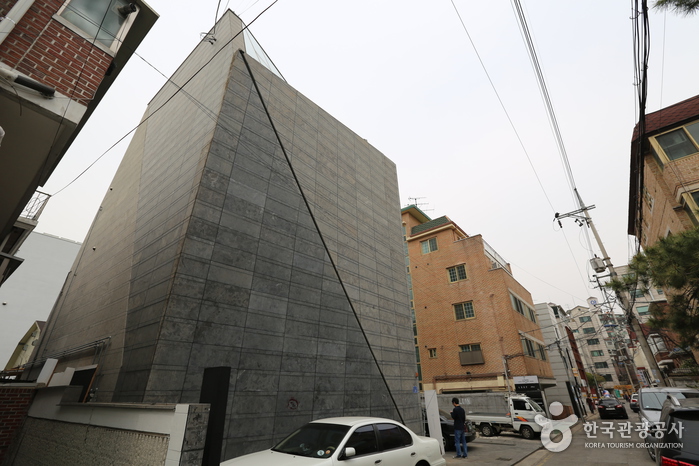
Alternative Space Loop (also known as the “Loop”) is one of few alternative space in Korea, opened in February, 1999. It is a non-profit gallery that provides exhibition space and support programs for young and promising artists, and is currently being supported by the Ministry of Culture, Sports and Tourism and the Korea Arts & Culture Education Service. Since opening, many exhibitions and performances are held every year, and the space has also engaged in diverse international exchanges such as Tirana Biennale and was invited to the Gwangju Biennale as an alternative art space in 2002.
 English
 한국어
한국어 日本語
日本語 中文(简体)
 Deutsch
 Français
 Español
 Русский


