![CheongKwanJang - Seoul Nat’l Univ. Branch [Tax Refund Shop] (정관장 서울대)](http://tong.visitkorea.or.kr/cms/resource/90/2880490_image2_1.jpg)
CheongKwanJang - Seoul Nat’l Univ. Branch [Tax Refund Shop] (정관장 서울대)
7.1Km 2024-04-18
Store #102, Yeseong Officetel, 1798, Nambusunhwan-ro, Gwanak-gu, Seoul
-

Chungmuro Jjukkumi Bulgogi (충무로 쭈꾸미 불고기)
7.1Km 2024-03-11
11, Toegye-ro 31-gil, Jung-gu, Seoul
+82-2-2279-0803
Opened in 1976, Chungmuro Jjukkumi Bulgogi is Michelin-starred restaurant. Their signature dish is jjukkumi (webfoot octopus), which is marinated in hot seasoning using traditional know-how. Grilled over charcoal with pen shells, it offers a perfect dish. The spicy and sweet jjukkumi goes well with the bean sprout soup. When you're done eating, fry up some rice and enjoy a delicious meal.
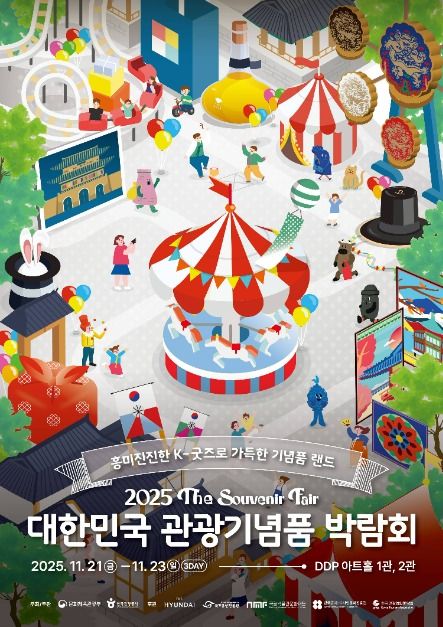
The Souvenir Fair (2025 대한민국 관광기념품 박람회)
7.1Km 2025-10-27
281 Eulji-ro, Jung-gu, Seoul
+82-10-8315-5434
The Souvenir Fair brings together various companies and local governments to showcase a variety of souvenirs, both traditional and trendy. Visitors can freely explore the exhibition space, enjoy souvenir shopping, and take part in various programs. Highlights of the fair include an exhibition of competition-winning works, a zone featuring outstanding local souvenirs, and a special exhibition of overseas souvenirs.
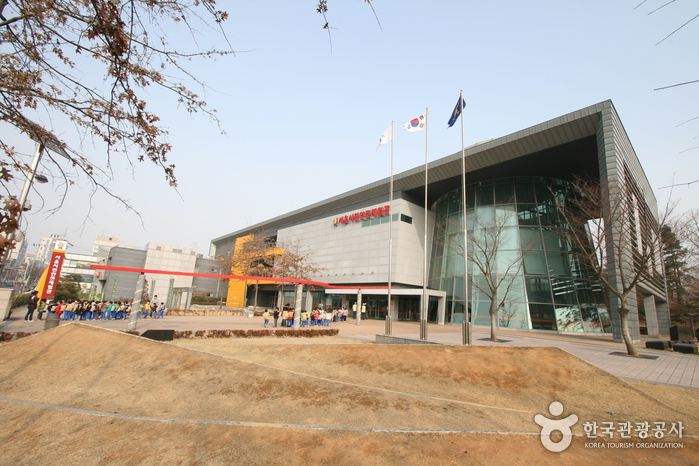
Gwangnaru Safety Experience Center (광나루안전체험관)
7.1Km 2025-03-29
238, Neungdong-ro, Gwangjin-gu, Seoul
+82-2-2049-4061
Gwangnaru Safety Experience Center was founded in 1999 after two fire accidents in which many children lost their lives. These tragedies emphasized the necessity of establishing a disaster training center for common citizens.
Gwangnaru Safety Experience Center is a three-story building with one basement floor, covering an area of more than 5,000 m². The basement floor includes a small theater. The first floor is set up for natural disaster training and consists of an orientation hall, storm simulation training room, earthquake simulation room, computer tests on fire safety knowledge and others. The second floor is a place for artificial catastrophe training. It consists of a smoke escape training room, fire extinguisher training room, first-aid (CPR) training room and practice place for calling 119. The third floor is used for rescue training and consists of a rescue training room, screening room, training for professionals and video examples of the five biggest disasters that have occurred in Seoul. Overall there are about 20 training areas established, so citizens can experience the imitation of a disaster by themselves and learn easily and in an interesting way how to cope with a disaster.
![Olive Young - Gangbyeon Station Branch [Tax Refund Shop] (올리브영 강변역)](http://tong.visitkorea.or.kr/cms/resource/57/2878857_image2_1.jpg)
Olive Young - Gangbyeon Station Branch [Tax Refund Shop] (올리브영 강변역)
7.1Km 2024-04-17
10, Gangbyeonyeok-ro 4-gil, Gwangjin-gu, Seoul
-
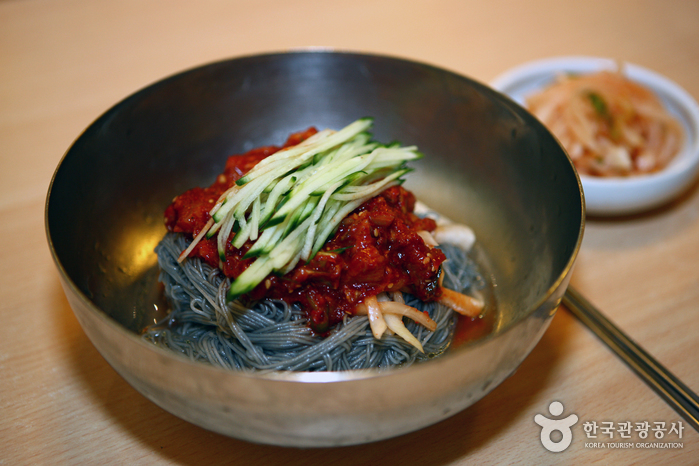
Ojang-dong Hamheung Naengmyeon (오장동 함흥냉면)
7.1Km 2024-02-22
108 Mareunnae-ro, Jung-gu, Seoul
Ojang-dong Hamheung Naengmyeon originated when grandma Han Hyesun, who migrated from Hamgyeongnam-do to Seoul during the Korean War, began selling Hamheung-style "nongma guksu (starch noodles)," eventually naming it Hamheung naengmyeon (Hamheung cold buckwheat noodles). Its signature dish, bibim naengmyeon (spicy buckwheat noodles), features chewy noodles infused with a tangy-sweet seasoning, showcasing the expertise behind its preparation. Alongside the flavorful broth served as a base, the menu also includes variations like hoe naengmyeon (cold buckwheat noodles with raw fish), mul laengmyeon (cold buckwheat noodles), suyuk (boiled pork slices) and mandu.
Seoul Hyochang Park (서울 효창공원)
7.1Km 2024-07-09
177-18 Hyochangwon-ro, Yongsan-gu, Seoul
+82-2-2199-7608
Hyochang Park covers 122,245 square meters spanning across Hyochang-dong and Cheongpa 2-dong. It is a historic landmark that once contained several royal tombs, and was known at that time as Hyochangwon. The cemeteries that were originally located in Hyochangwon belonged to Crown Prince Munhyo, King Jeongjo’s first son who died at the age of five; Royal Noble Consort Uibin of the Seong Clan, King Jeongjo’s royal concubine and Crown Prince Munhyo’s mother; Royal Noble Consort Sugui of the Park Clan, King Sunjo’s royal concubine; and her daughter Princess Yeongon. The royal tombs were moved to Seooreung Tombs in the waning months of the Japanese colonial period. The Japanese empire began the development of Hyochangwon into a park in 1924, and the Japanese governor-general officially assigned the site as a park in 1940.
Presently, several of Korea’s greatest leaders are buried in Hyochang Park. The remains mostly belong to independence activists including Yoon Bong-gil, Lee Bong-chang, and Baek Jeong-gi, whose graves are collectively known as Samuisa Tomb. A statue of Lee Bong-chang has been built in the graveyard. Among the other patriotic martyrs who are interred in the park are Kim Gu and some of the key figures of the provisional government such as Lee Dong-nyeong, Cha I-seok, and Cho Seong-hwan. An ancestral shrine named Uiyeolsa has been built along the main gate and holds the portraits of the deceased independence activists.
GS25 - Dongdaemun Fashion Branch [Tax Refund Shop] (GS25동대문패션점)
7.1Km 2024-06-27
#101, 254, Eulji-ro, Jung-gu, Seoul
-
![Homeplus - Jamsil Branch [Tax Refund Shop] (홈플러스 잠실)](http://tong.visitkorea.or.kr/cms/resource/07/2878907_image2_1.jpg)
Homeplus - Jamsil Branch [Tax Refund Shop] (홈플러스 잠실)
7.1Km 2024-04-18
16, Olympic-ro 35ga-gil, Songpa-gu, Seoul
-
![Olive Young - Homeplus Jamsil Branch [Tax Refund Shop] (올리브영 홈플러스잠실)](http://tong.visitkorea.or.kr/cms/resource/10/2878910_image2_1.jpg)
Olive Young - Homeplus Jamsil Branch [Tax Refund Shop] (올리브영 홈플러스잠실)
7.1Km 2024-04-18
16, Olympic-ro 35ga-gil, Songpa-gu, Seoul
-
 English
 한국어
한국어 日本語
日本語 中文(简体)
 Deutsch
 Français
 Español
 Русский


