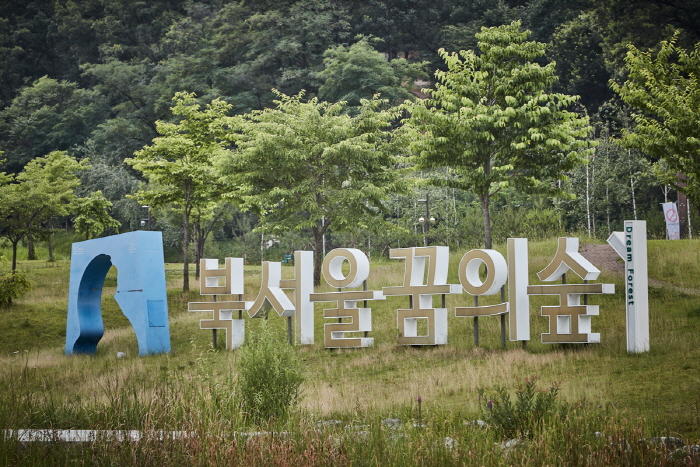
Dream Forest (북서울 꿈의숲)
4.1Km 2023-10-19
173 Wolgye-ro, Gangbuk-gu, Seoul
+82-2-2289-4000
Dream Forest, previously known as Odong Neighborhood Park, is located in Gangbuk-gu, Seoul. The park is surrounded by cherry blossom trees, and the northern section is filled with maple trees, making the park especially attractive in spring and fall. The Changnyeongwigung Ritual House (Registered Cultural Heritage) has been restored with traditional landscaping such as a pond, pavilion and waterfall created nearby to double the genuine beauty of a traditional Korean park. Major attractions of the park include Wolyeongji Pond, Grass Square, Wolgwangpokpo Falls, Aewoljeong Pavilion, Chilbokji Falls, Event Garden, Children’s Gallery, Wild Grass Garden, Deer Ranch, Exploring Path, Forest Rest, and a water park. The slanted hillside which served as sledding slopes is now a complex cultural space with Buk-Seoul Art Center that houses a fantastic-looking observatory, performance hall, book café, gallery, restaurant, jumping fountain, and children’s playground.
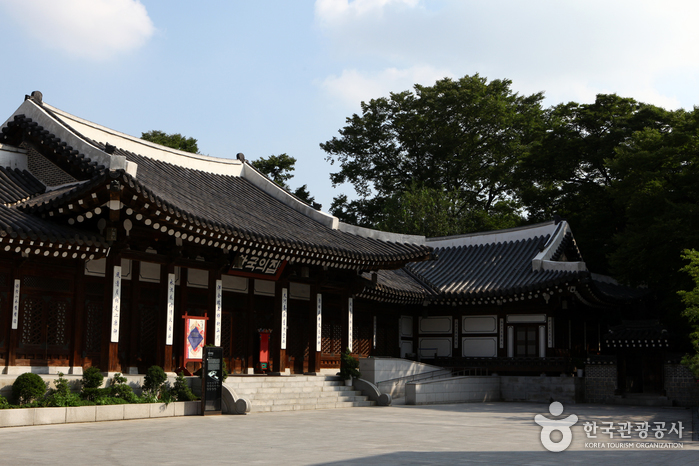
Korea House (한국의집)
4.1Km 2025-10-23
10, Toegye-ro 36-gil, Jung-gu, Seoul
The Korea House was opened in 1981. It is a traditional Korean building that introduces the culture and lifestyle of Koreans, where you can experience traditional architecture and a classical atmosphere. The building was built in the style of the Joseon Dynasty's Jagyeong-jeon building at the Gyeongbok Palace. It is the only building built in the traditional architectural style. You will feel its antiquity as you enter the building.
It is divided into the Haerin-gwan (a space for people to get acquainted with each other), the Traditional Theater, and three annex buildings (Munhyang-ru, Nokeum-jeong and Cheongwu-jeong). At Haerin-gwan, you can enjoy traditional music at Garak-dang and try traditional food at Sohwa-dang. In the square of Garak-dang you can view a traditional wedding (on the weekends) or people playing folk games. Also, at the Traditional Theater, about 156 seats are available, and in the afternoons Human Cultural Assets or members of the National Center for Korean Traditional Performing Arts and the National Corps members present traditional music and dances. Sinayui, Salpuri, Pansori, the Drum Dance and the Bongsan Mask Dance are the most popular programs for foreigners. The programs are all explained in English and Japanese.
In the Cultural Gift Shop you can view various crafts made by traditional craftsmen. It is always open and the crafts are for sale as well. There are pottery, ceramics, golden crafts, knots and embroidery etc; approximately 500 pieces of artwork made by craftsmen from 20 different fields. Next to the House of Korea is the Namsan-gol Hanok Village where visitors can explore traditional houses.
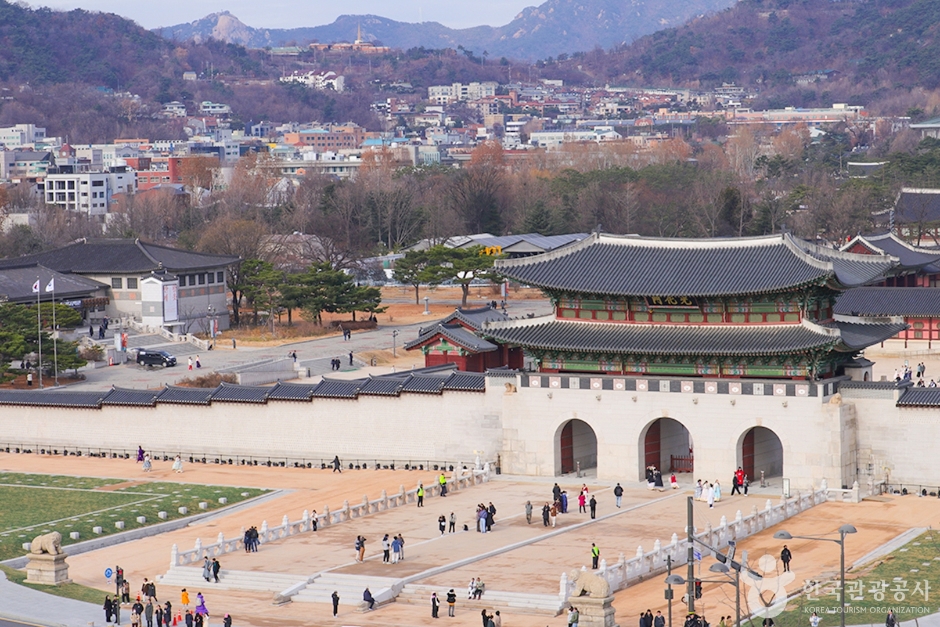
Gwanghwamun Gate (광화문)
4.1Km 2024-12-04
161 Sajik-ro, Jongno-gu, Seoul
+82-2-3700-3900
Built in 1395 under the reign of King Taejo, the first king of the Joseon dynasty, Gwanghwamun Gate is the southern gate of Gyeongbokgung Palace. It is also the main gate of the palace, therefore larger and fancier in comparison to the other gates. Gwanghwamun Gate consists of three arched gates; the center gate was used by the king, while the other two were used by the crown prince and royal officials. The tall granite walls of the gate serve as a platform for the wooden gate tower that watches over the city. The gate has a sign with its name written at the top center of the gate tower.
Gwanghwamun Gate went through several damages and restorations over the course of history. It was first severely damaged during the Imjin War (1592-1598) and was not restored until the reconstruction of Gyeongbokgung Palace in 1864. Under the Japanese administration, the gate was demolished and relocated to the north of the palace's eastern gate, followed by series of damages during the Korean War (1950-1953). In 1968, Gwanghwamun Gate was relocated back to the south of the palace and was rebuilt using concrete; however, the gate’s position was shifted a few meters away from its original location. In 2006, a major reconstruction project took place to restore Gwanghwamun Gate to its original state and location, disassembling the structure completely and replacing concrete with granite and wood. After three years and eight months of construction, Gwanghwamun Gate was fully restored to its original form and was open to the public on August 15, 2010.
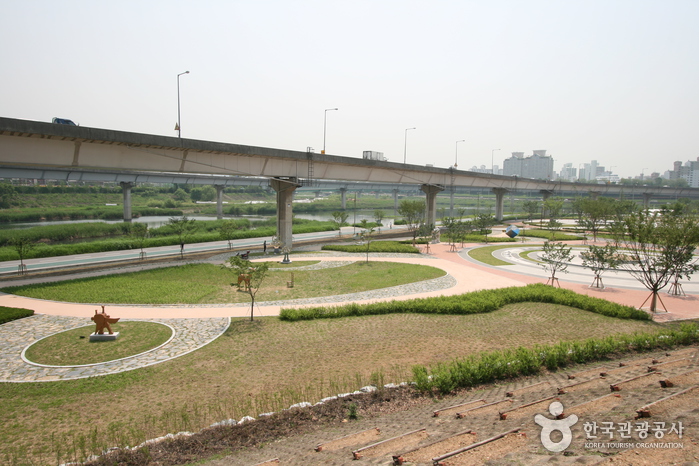
Salgoji Sports Park (살곶이 체육공원)
4.1Km 2024-03-20
16-18 Sageundong-gil, Seongdong-gu, Seoul
Salgoji Sports Park is located along the Joongnangcheon Riverside near Hanyang University. Its name "Salgoji" holds deep historical significance, meaning "the place where an arrow is shot" in Korean. The park features facilities such as an inline skating rink, soccer field, basketball court, and badminton court. There are dedicated bicycle paths and pedestrian walkways around the park. Throughout the year, walking festivals and mini marathons are organized, making it a beloved spot among cyclists. In the summer, an outdoor water playground is operated.
HiKR Ground (하이커 그라운드)
4.1Km 2025-10-29
40 Cheonggyecheon-ro, Jung-gu, Seoul
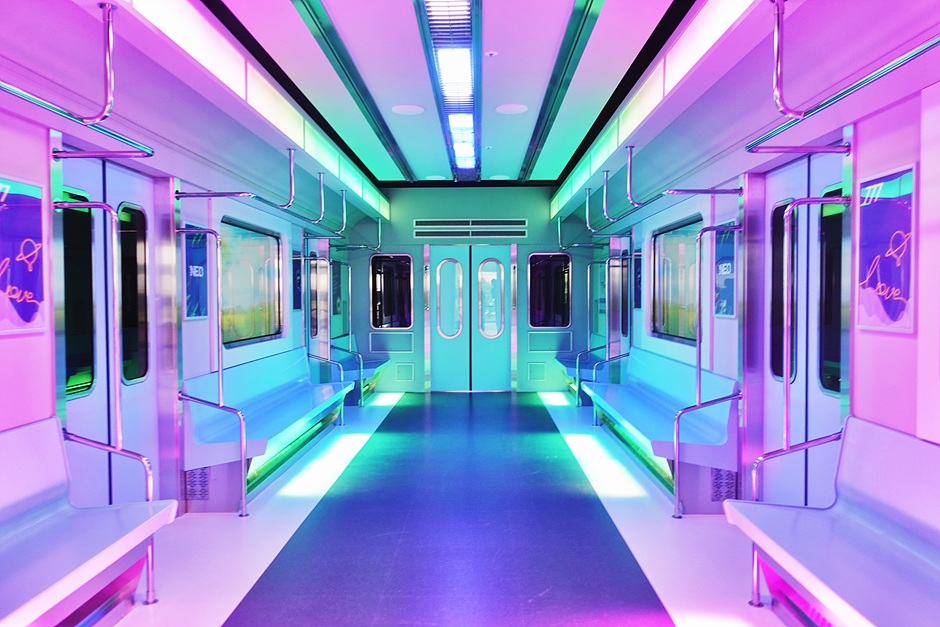
Located inside the Korea Tourism Organization Seoul Center, HiKR Ground is a Korean tourism publicity center where visitors can experience K-pop and view media art at the same time. The name "HiKR Ground" embodies the meaning that Korea (KR) will greet ("Hi") global tourists and become a playground. Notably, it provides Korean tourism content in multiple ways for the younger generation to enjoy. On the first floor, there is a space to enjoy various media arts through the large media screen HiKR Wall, where visitors can see "Landscape of the New City" by media artist Lee Lee-nam, and Korean tourism videos submitted by global hallyu fans. On the second floor, visitors can make their own K-pop music videos using the XR Live Studio. At the window facing the restored Cheonggyecheon Stream, there is a mesmerizing artwork called ''North Wall'' by installation artist Suh Do-ho. On the third and fourth floors, visitors can get immersed in Korean local tourism through various arts, experiences, and exhibitions.

We Ride (위라이드)
4.1Km 2023-07-28
40 , Cheonggyecheon-ro, Jung-gu, Seoul
"The best way to tour Seoul"
With WeRide's certified tour guides, travelers can experience unforgettable memories by riding an electric bicycle to attractions hidden all over Seoul. The tour takes 2 hours and 30 minutes, and participants can safely tour around Seoul with a professional guide. The fun of electric bicycles adds to the joy of the guide's story of Korean culture. If there are guests who cannot ride bicycles, they can use electric rickshaws. There is also a bicycle rental service for bicycle riders traveling in Korea.
Mediround.Corp (주식회사 메디라운드)
4.1Km 2025-10-23
10F, Unit B1031, 8, Gangnam-daero 69-gil, Seocho-gu, Seoul
Mediround is a specialized infrastructure service company providing expert assistance (HELP) for attracting international patients.
- H (Human Resource): Matching medical interpreting and customer service (CS) personnel
- E (Education): Training and development of professionals for international patient attraction
- L (Logic): Registration of international patient attraction institutions and setting up attraction business infrastructure
- P (Promotion): Development of international patient attraction products and global promotion
Mediround operates the international medical coordinator subscription service, Mycoordy. Mycoordy offers information on Korean medical institutions, online consultation, reservation services, interpretating support, and payment services.
MJ FLB ((주)엠제이에프엘비)
4.1Km 2025-10-23
#809, 8F, 40 Cheonggyecheon-ro, Jung-gu, Seoul
MJ FLB attracts foreign patients in eight medical specialties (plastic surgery, dermatology, dentistry, ophthalmology, gynecology, men's urology, orthopedics, and physical checkups), mainly targeting Chinese-speaking clients. It provides dedicated reservation and consultation services to foreign patients. Additionally, it has professional Chinese medical interpreters to ensure smooth communication between the hospital staff and patients, thus ensuring an efficient treatment. MJ FLB attracts foreign patients through customized social media promotions and marketing collaborations with influencers who have experienced its hospital services.
Hanyang University Seoul Hospital (한양대학교병원(서울))
4.1Km 2025-10-23
222-1 Wangsimni-ro, Seongdong-gu, Seoul
Hanyang University Medical Center, established in 1972 with the motto of "Love in Deed and Truth", offers exceptional medical care to patients worldwide. It is equipped with advanced medical equipment and staffed by highly skilled and experienced medical professionals. The hospital has achieved grade 1 in the adequacy evaluation for several diseases, including cardiovascular and cerebrovascular diseases, as well as major cancers, making it a top medical institution. Its goal is to provide prompt and convenient medical care to both domestic and international patients in a patient-centered approach.
Beauty Play (뷰티플레이)
4.1Km 2025-11-14
73 Myeongdong-gil, Jung-gu, Seoul
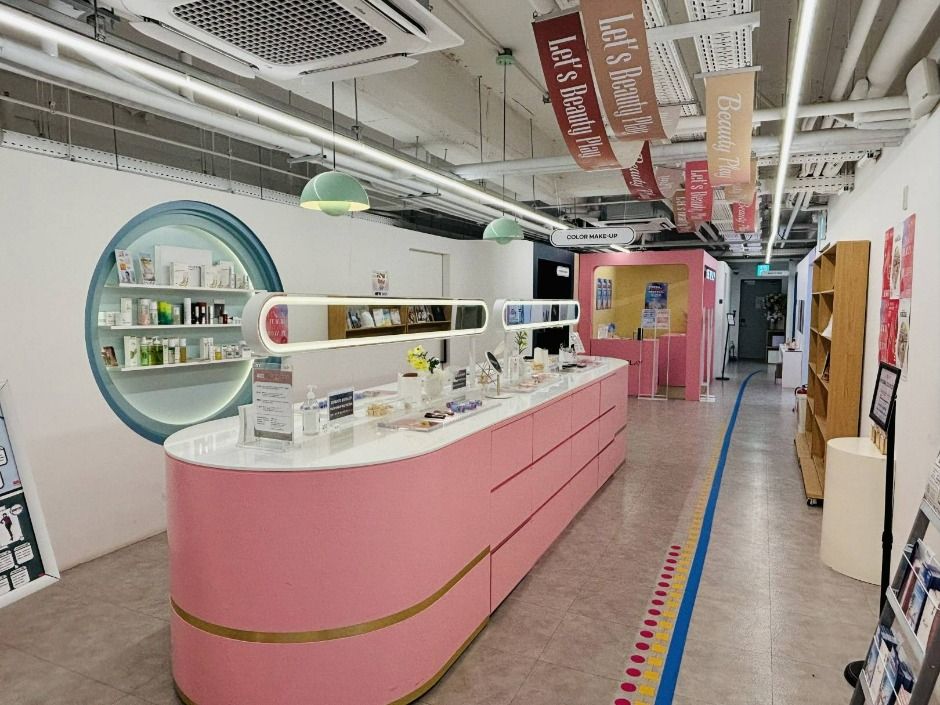
Beauty Play is a K-beauty experience center operated by the Korea Cosmetics Industry Institute and supported by the Ministry of Health and Welfare. It offers a wide variety of sample Korean beauty products for testing as well as diverse beauty experience programs such as makeup touch-up service (choice of base, eyes, or lips), personal color test, and skin evaluation. Visitors can also ask for product recommendation based on their skin type or skincare concerns. Beauty Play also frequently hosts free one-day classes, which are announced online via its official website. It also hosts a variety of sample product giveaway events and the exhibited products get changed every two months, allowing visitors to get familiarized with lesser known quality products as well.
 English
 한국어
한국어 日本語
日本語 中文(简体)
 Deutsch
 Français
 Español
 Русский


