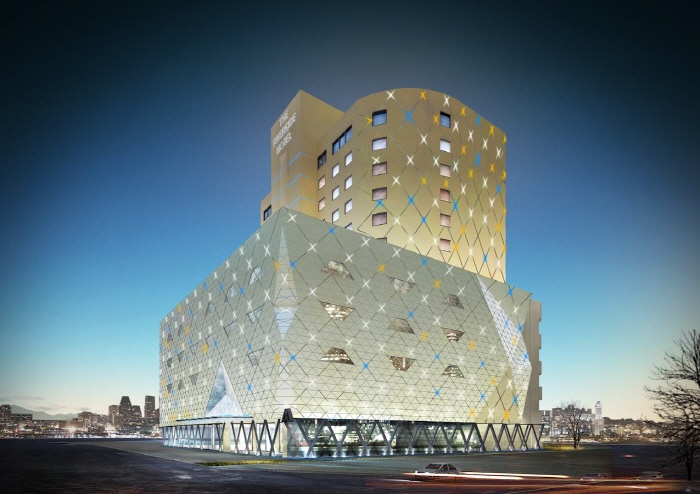
The Riverside Hotel (더 리버사이드 호텔)
5.2Km 2024-05-09
6, Gangnam-daero 107-gil, Seocho-gu, Seoul
Located in Jamwon-dong, the transportation hub of Seoul and the center of the Gangnam business area, The Riverside Hotel has outstanding views of the Hangang River and downtown Seoul. The hotel is located a convenient 5-minute walk from Sinsa Station (Subway Line 3). At The Riverside Hotel, guests can enjoy dining, leisure, and culture.
All guestrooms look out on the magnificent nightscape of the Hangang River. Subsidiary facilities include a conference and wedding hall, a top-quality Japanese restaurant, a custom-tailored fitness system, a luxurious spa, an indoor driving range, 24-hour interpretation service, and customer service provided by English and Japanese speaking staff. The beautiful interior decorations and comfort items make a stay in The Riverside Hotel feel like home, perfect for business travelers.

Seoul Hyochang Park (서울 효창공원)
5.3Km 2024-07-09
177-18 Hyochangwon-ro, Yongsan-gu, Seoul
Hyochang Park covers 122,245 square meters spanning across Hyochang-dong and Cheongpa 2-dong. It is a historic landmark that once contained several royal tombs, and was known at that time as Hyochangwon. The cemeteries that were originally located in Hyochangwon belonged to Crown Prince Munhyo, King Jeongjo’s first son who died at the age of five; Royal Noble Consort Uibin of the Seong Clan, King Jeongjo’s royal concubine and Crown Prince Munhyo’s mother; Royal Noble Consort Sugui of the Park Clan, King Sunjo’s royal concubine; and her daughter Princess Yeongon. The royal tombs were moved to Seooreung Tombs in the waning months of the Japanese colonial period. The Japanese empire began the development of Hyochangwon into a park in 1924, and the Japanese governor-general officially assigned the site as a park in 1940.
Presently, several of Korea’s greatest leaders are buried in Hyochang Park. The remains mostly belong to independence activists including Yoon Bong-gil, Lee Bong-chang, and Baek Jeong-gi, whose graves are collectively known as Samuisa Tomb. A statue of Lee Bong-chang has been built in the graveyard. Among the other patriotic martyrs who are interred in the park are Kim Gu and some of the key figures of the provisional government such as Lee Dong-nyeong, Cha I-seok, and Cho Seong-hwan. An ancestral shrine named Uiyeolsa has been built along the main gate and holds the portraits of the deceased independence activists.
Oganacell Dermatology Clinic (오가나셀피부과의원)
5.3Km 2025-10-23
(2nd Floor, Building A, Cheongdam Square), 420 Dosan-daero, Gangnam-gu, Seoul
Oganacell Dermatology Clinic provides 1:1 personalized skin revision.
Oganacell Dermatology Clinic aims for ‘skin revision’ for ideal skin conditions that naturally become healthy from their root, rather than temporal improvement with simple cosmetic procedures.
Our dermatologists are skilled specialists who have been studying skin for over 10 years. With their treatment experience and know-how, they perform treatments suitable for each customer's skin condition, ensuring high reliability and satisfaction.
We have premium laser equipment supporting the sophisticated technology of Oganacell specialists.
Our dermatologists prescribe the most necessary treatment for each individual after diagnosing the skin, and provide customized and specialized medical services using high-spec & high-performance premium equipment.
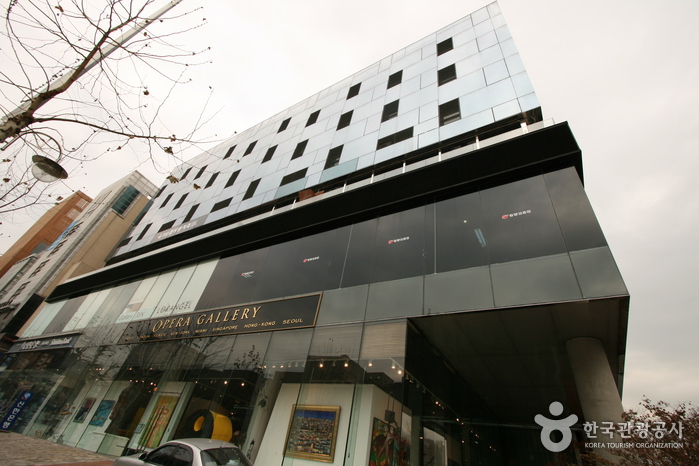
Park Ryu Sook Gallery (박여숙화랑)
5.3Km 2025-01-08
461, Apgujeong-ro, Gangnam-gu, Seoul
Soon after its opening in 1983, the Park Ryu Sook Gallery moved to Cheongdam-dong, an uncharted territory back in 1988. Ever since, the gallery has played a significant role in turning the region into one of the most representative art places in Korea. The Park Ryu Sook Gallery mainly deals with modern art, and contributes to the development of Korea's modern art scene by recruiting and supporting talented rookies in the field, and by introducing artwork of major modern artists from abroad. Moreover, the gallery works to promote Korean art worldwide by joining major art fairs such as the Chicago, Koln, and Basel art fairs.
Through these and similar activities, the Park Ryu Sook Gallery works to provide the public the invaluable opportunity to enjoy quality artwork, maximize their own creativity, and take a moment out of their hectic lives to indulge in a little self-reflection.
Nanoori Hospital (나누리병원)
5.3Km 2025-10-23
(Nonhyeon-dong), 731 Eonju-ro, Gangnam-gu, Seoul
Nanoori Hospital is a spine-specialized hospital and a member of the Accredited Hospitals for serving Foreign patients. Our international healthcare team consists of Russian, English, and Mongolian-speaking coordinators to ensure that international patients can access consultation and treatment services without language barriers.
CMC Confidence (씨엠씨 컨피던스)
5.3Km 2025-10-23
#207, Ra-dong, 14 Eonju-ro 148-gil, Gangnam-gu, Seoul
CMC Confidence combines medicine and tours to offer optimized services. It provides special tour services beyond simple medical services. Instead of simply attracting patients, CMC Confidence provides topping tours where patients can experience treatments while traveling with family and friends. The patient's next medical visit becomes an opportunity for joyful travels, rather than treatments. CMC Confidence offers customers new experiences through specialized services in the Gangnam area of Seoul.
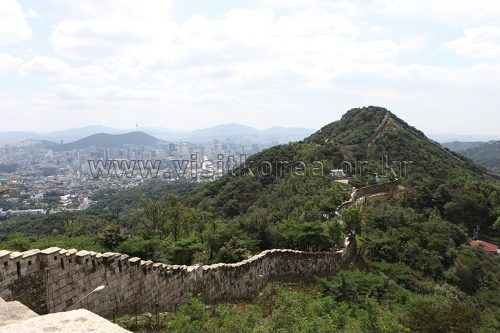
Bugaksan Mountain (북악산)
5.3Km 2024-03-04
Cheongun-dong, Jongno-gu, Seoul
Bugaksan Mountain is the mountain that one can see behind the Gyeongbokgung Palace and the Cheong Wa Dae to the north. Hanyangdoseong, the city wall that surrounded the historic capital of Hanyang, was built by connecting the ridges of this mountain. These walls can still be found today, having been preserved quite well. Different trails weave through the area along the Hanyangdoseong, the Seoul City Wall, and one can visit these trails at night as well. Bugak Skyway is a road that connects Changuimun Gate to Jeongneung Royal Tomb, and one can get a great view of Seoul’s city center from the Palgakjeong Pavilion on Bugak Skyway.
Chaum (차움의원)
5.3Km 2025-10-23
(2nd Floor, Pie'n Polus), 442 Dosan-daero, Gangnam-gu, Seoul
Founded in 1960, CHA Hospital has grown into a global medical institution, delivering high-quality care across 91 facilities in 7 countries, backed by over 60 years of medical expertise. Among its distinguished institutions is Chaum, a cutting-edge anti-aging and wellness center that integrates western medicine, oriental medicine, integrative medicine, and holistic approaches, including exercise prescription and food therapy, to promote optimal health.
At Chaum, we go beyond standard checkups. Unlike typical dermatology clinics, we offer advanced skin care solutions utilizing stem cell conditioned media. Our treatments focus on wrinkle prevention, enhancing skin hydration, and reducing melanin production, helping you maintain youthful, radiant skin.
Seoul Wave Art Center (서울웨이브아트센터)
5.3Km 2025-10-27
145-35 Jamwon-ro, Seocho-gu, Seoul
Seoul Wave Art Center is located within Jamwon Hangang Park, and focuses on promoting the relationship between the sky and earth, people and nature, and people and people. The art center opened in 2020 and has continued to host a range of new exhibitions.

Spa Lei (스파레이)
5.4Km 2022-09-19
5, Gangnam-daero 107-gil, Seocho-gu, Seoul
Situated in Seocho-gu Jamwon-dong,
 English
 한국어
한국어 日本語
日本語 中文(简体)
 Deutsch
 Français
 Español
 Русский


