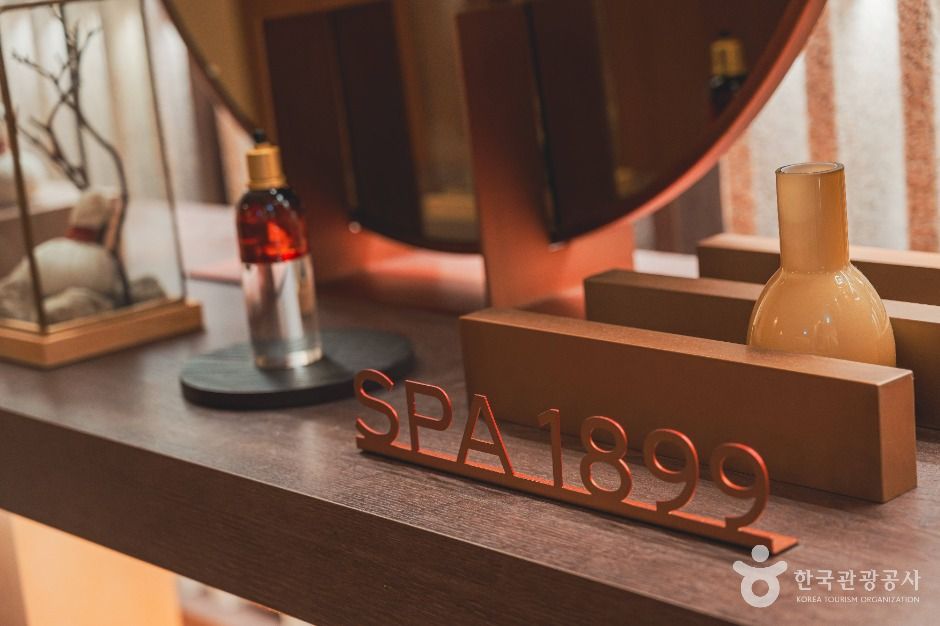
Spa 1978 Donginbi (SPA 1978 동인비)
7.9Km 2025-10-23
416 Yeongdong-daero, Gangnam-gu, Seoul
In traditional Korean medicine, summer is the season when one's energy is severely depleted as people tend to sweat a lot even with little movement. As you are more likely to feel fatigued and lose vitality, replenishing one's energy is crucial. According to Donguibogam, a traditional Korean medical encyclopedia, red ginseng is recommended for vitality. The book says red ginseng slows the aging process and boosts one's energy, helping you live longer. It's effective in restoring vitality and alleviating fatigue. Red ginseng is made by steaming ginseng for approx. 3 hours without peeling it and then letting it dry slowly. This steaming and drying process reduces ginseng's sugar level while creating an active compound, which enhances its efficacy. Saponin, which is abundant in red ginseng, is known for boosting one's immunity and restoring vitality. Notably, ginsenoside helps with digestion, metabolism, and the absorption of nutrients, thereby restoring one's energy. SPA 1978 Donginbi, run by the premium red ginseng brand Jung Kwan Jang, is a specialized spa facility that uses beneficial red ginseng.

Seorae Village (서래마을)
7.9Km 2022-12-16
Banpo-dong, Seocho-gu, Seoul
+82-2-2155-6220
Seorae Village is located in between Banpo 4-dong and Bangbaebon-dong in Seocho-gu, Seoul. Seorae Village took its form as a French neighborhood when French residents moved to the area after Ecole Francaise de Seoul, a school for French residents in Korea, was established here in 1985. According to 2008 census, about half of the total 1,000 French citizens residing in Korea were registered to be living in Seorae Village. The area naturally took shape as a global neighborhood as many international residents settled at Seorae Village much thanks to the strong presence of French residents. In addition to its convenient location near the central district area as well as Gangnam area and Hangang River Park, Seorae Village serves as a pleasant environment space for all.
Many shops and restaurants in Seorae Village are small in size and rather charming, resembling those in Europe. A bakery that makes traditional French baguettes using ingredients directly imported from France can be found here. In recent years, Seorae Village has undergone several changes, gaining much attention as one of the most modern and fanciest regions found in Seoul.
Montmartre Park (몽마르뜨공원)
7.9Km 2024-03-20
59 Banpo-daero 37-gil, Seocho-gu, Seoul
+82-2-2155-6860
Montmartre Park, situated above Seorae Village, earns its name due to the significant number of French residents in the vicinity. This small park exudes an atmosphere of art and romance, fitting its namesake. Adorned with poems and sculptures contributed by French poets and artists, the park also features busts depicting renowned figures like Vincent Van Gogh, Paul Gauguin, and Pablo Picasso. Towards the park's conclusion, Nue Bridge connects it to the Seoripul Neighborhood Park.
Gangnam Grand Eye Clinic (강남그랜드안과의원)
7.9Km 2025-10-23
4F-5F, 363 Gangnam-daero, Seocho-gu, Seoul
Gangnam Grand Eye Clinic is one of Korea's leading ophthalmology clinics. It received the Minister of Health and Welfare Award and is ranked among the top 10 companies participating in the Korea Grand Sale event.
With the latest medical technology and highly skilled medical staff, the clinic specializes in providing customized services for international patients. It offers interpretation services in various languages, including English, Russian, Mongolian, and Chinese, ensuring a comfortable medical experience without language barriers.
With over 30,000 cases in vision correction, including LASIK and LASEK, presbyopia, and cataract surgery, the clinic's medical staff delivers satisfying outcomes without unnecessary procedures. The clinic also boasts outstanding accessibility, with its convenient location right in front of Exit 5 of Gangnam Station.
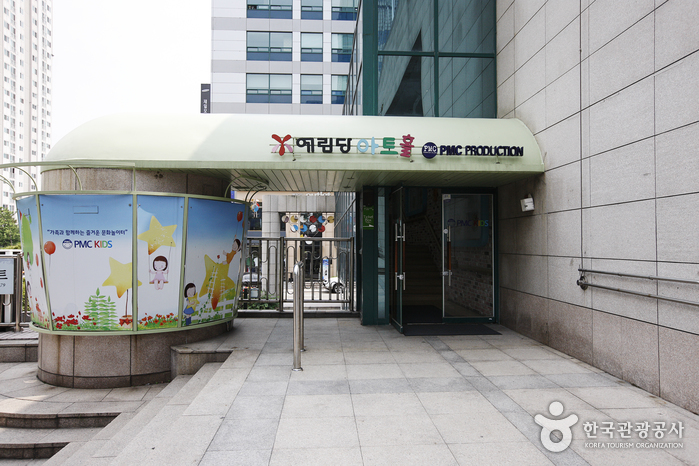
Yearimdang Art Hall (예림당아트홀)
8.0Km 2021-12-07
337, Eonju-ro, Gangnam-gu, Seoul
+82-2-6413-3689
Yearimdang Art Hall is a children’s theater that opened in March 2011. A joint project of Yearimdang publishing company and PMC Production, the art hall is a mid-sized theater with 439 seats divided into two floors. The first floor consists of VIP sets and S-class seats that allow for more interaction with the actors on stage and access to surprise events during the performances. Seats on the second floor (A-class) offer an affordable, bird’s-eye-view of the stage. The seats are designed to fit children’s body, while providing parents with much needed rest.
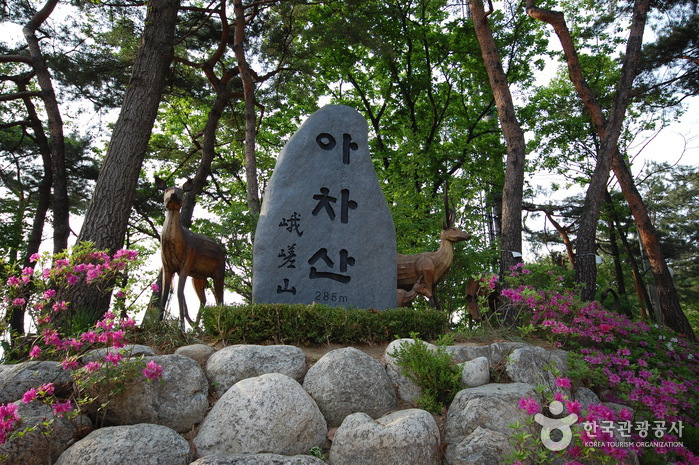
Achasanseong Fortress (아차산성)
8.0Km 2023-04-05
Gwangjang-dong, Gwangjin-gu, Seoul-si
+82-2-450-7593
Achasanseongseong Fortress boasts magnificent views of the Hangang River and skyline. The 200m-high mountain fortress wall was built to face southeast, towards the Hangang River. It is also called Janghan-seong or Gwangjang-seong. A fierce battle was once fought here among Gogury, Baekje and Silla because of its strategic location during the period of the Three Kingdoms. King Gae-Ro of Baekje (r. 455-475) died in the war by the Goguryeo forces sent by King Jang-Su (r. 413-491) and General Ondal of Goguryeo was also killed in a battle with the Silla army in 590.
Achasan Mountain is popular as a citizens’ resting place with a historical trail and a natural park including various facilities such as walkway, mountain walkway, a badminton court, a wrestling range, an archery range, various amusement facilities for children, benches, and pavilion.
![Stylenanda - Hongdae Branch [Tax Refund Shop] (스타일난다 홍대)](http://tong.visitkorea.or.kr/cms/resource/86/2888386_image2_1.jpg)
Stylenanda - Hongdae Branch [Tax Refund Shop] (스타일난다 홍대)
8.0Km 2024-04-17
23, Wausan-ro 29da-gil, Mapo-gu, Seoul
-
![Seoul Crown 88 Guest House [Korea Quality] / 서울크라운88 게스트하우스 [한국관광 품질인증]](http://tong.visitkorea.or.kr/cms/resource/46/2652746_image2_1.jpg)
Seoul Crown 88 Guest House [Korea Quality] / 서울크라운88 게스트하우스 [한국관광 품질인증]
8.0Km 2025-10-23
189 , Seongmisan-ro, Mapo-gu, Seoul
+82-2-720-2960
Seoul Crown 88 is a foreigner-only guesthouse located in Yeonnam-dong, Mapu-gu, Seoul. Accomodation is in dormitories for up to four people, which are equipped with personal lockers and toilets. The simple kitchen and living room are shared. The guesthouse is close to Hongik University Station, giving easy access to Incheon Airport or the Gangnam area, and there are many cafes and famous restaurants nearby: an alley traveller’s paradise! A simple free breakfast is provided, as is information in English and Chinese.
![JDX - Yeoksam Branch [Tax Refund Shop] (JDX 역삼)](http://tong.visitkorea.or.kr/cms/resource/52/2879952_image2_1.jpg)
JDX - Yeoksam Branch [Tax Refund Shop] (JDX 역삼)
8.0Km 2024-04-18
1F, 331, Eonju-ro, Gangnam-gu, Seoul
-
![Himart - Sangbong Branch [Tax Refund Shop] (하이마트 상봉점)](http://tong.visitkorea.or.kr/cms/resource/52/2889952_image2_1.jpg)
Himart - Sangbong Branch [Tax Refund Shop] (하이마트 상봉점)
8.0Km 2024-04-18
399, Mangu-ro, Jungnang-gu, Seoul
-
 English
 한국어
한국어 日本語
日本語 中文(简体)
 Deutsch
 Français
 Español
 Русский


