
KstarROAD 한류스타거리 (KstarROAD Hallyu Star Road)
5.2Km 2024-03-05
394, Apgujeong-dong, Gangnam-gu, Seoul
The K-Star ROAD is a place to meet the stories of celebrities who were at the forefront of the K-Wave phenomenon. The road features art toy statues inspired by K-Pop bands, such as SNSD, EXO, and TVXQ, while terminals next to shops help you find the fashion shops and restaurants frequented by celebrities. Moreover, the schools attended by the celebrities, houses in which they used to live, and other spots that capture their stories can also be found on this street.
Apgujeong Oracle Clinic (압구정오라클피부과)
5.2Km 2025-10-23
(4th Floor, Miseung Building, Sinsa-dong) 23 Apgujeong-ro 30-gil, Gangnam-gu, Seoul
A happy choice for a beautiful life!
Welcome to Apgujeong Oracle Clinic led by Dr. Park Je-young, a dermatologist from Seoul National University.
Dr. Park has given academic lectures and facilitated live seminars in and outside of Korea for 15 years. He is also certified as a Master Key Doctor for Ulthera, Thermage, Titanium, etc.
As a doctor who teaches doctors, Dr. Park is the largest source of competitive advantage for Apgujeong Oracle Clinic, a clinic beyond comparison with other hospitals.
Experience personalized care from dermatology specialists.
In addition, we offer personalized aesthetic programs according to each individual's skin type, and visitors can access comprehensive skin care services as well as skin disease treatment.
Dongnimmun Gate (독립문)
5.2Km 2022-12-15
251, Tongil-ro, Seodaemun-gu, Seoul
Dongnimmun stands at the location originally known as Yeongeun, where envoys were once treated. When a Chinese envoy visited, the King would go out through this door to greet. In 1898, to announce the independence from Japan, Dongnimun was constructed with the fund collected by the citizens. The traces of the past still remain on Dongnimmun with two pillars in front of Dongnimmun being the remains of Yeongeunmun.
The Arc de Triomphe in France can be recalled in comparison to Dongnimmun. Dongnimmun was built using granite with a passageway x_height of 14.28 meters. On the top it is written ‘Dongnimmun’ in Korean with the national flag drawn on each side. On the inner-left side there are stone stairs leading to the attic. The national flower Mugunghwa are planted around Dongnimmun. Now it is surrounded by roads and it is eye-catching to view when passing by.
Seodaemun Prison History Museum (서대문형무소역사관)
5.2Km 2024-12-02
251 Tongil-ro, Seodaemun-gu, Seoul
Seodaemun Prison was built under the Japanese administration to imprison independence movement activists. It first opened on October 21, 1908 under the name Gyeongseong Prison. Eventually, so many activists were imprisoned that the building had to be expanded. At that time, the name changed to Seodaemun Prison on September 3, 1912. Eighty years later, the prison was turned into Seodaemun Independence Park on August 15, 1992 to commemorate the Korean patriots who were tortured in prison, giving their lives for freedom. Of the many buildings, only seven were preserved for their historical significance, among which three prison buildings and the execution site were designated as a Historic Site. In 1998, the park underwent another transformation into today's Seodaemun Prison History Hall to educate the public on the importance of Korea's independence and the sacrifices of those who fought to achieve it.
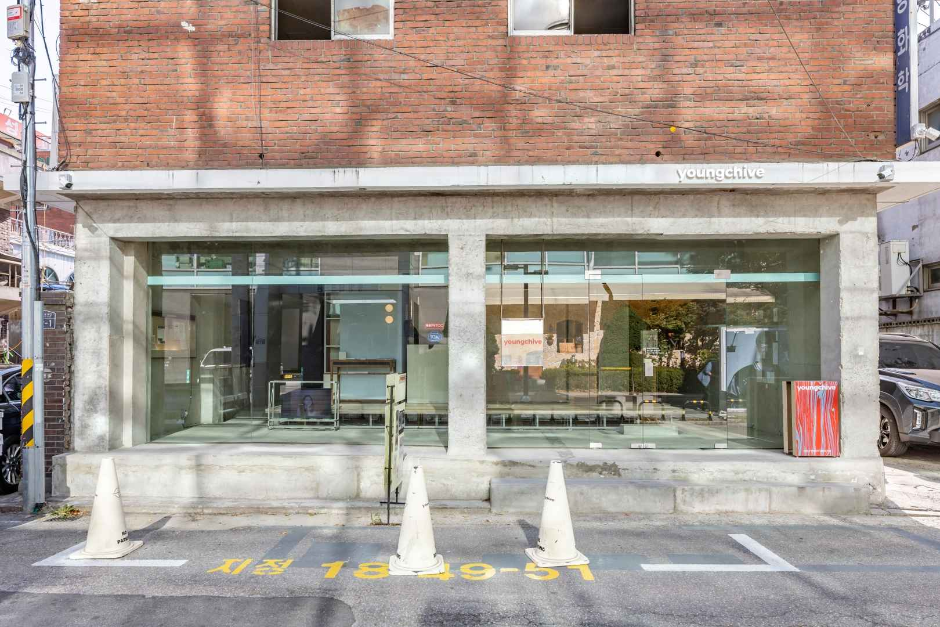
Youngchive Seongsu (영카이브 성수점)
5.2Km 2025-11-06
1F, 32 Seongsui-ro 18-gil, Seongdong-gu, Seoul
◎ Travel information to meet Hallyu’s charm
Youngchive Seongsu is the self-photo studio where Red Velvet’s Seulgi took photos with the staff while filming her vlog. It is known for its warm color tones, which set it apart from other self-photo studios. The Seongsu branch offers unique booths, such as the “still room” and “denim room,” which aren’t available at other locations, making it a must-visit spot.
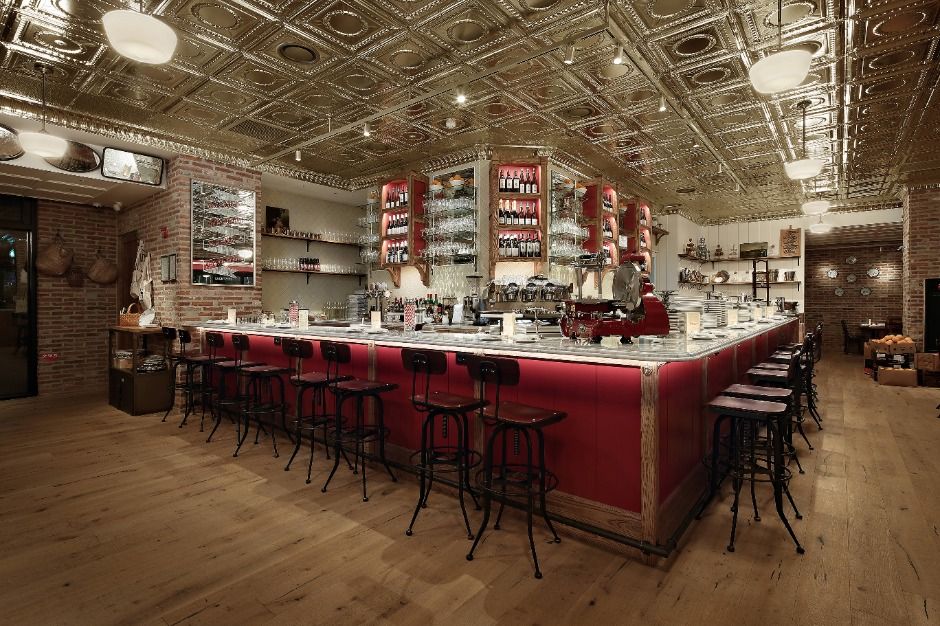
Buvette Main Branch (부베트 본점)
5.2Km 2025-12-02
854 Nonhyeon-ro, Gangnam-gu, Seoul
Located in Gangnam, Buvette is a French Gastrotheque where one can enjoy stories and aesthetics of European-style antiques. The place offers heartwarming home-style meals that have been passed down through generations. Early morning coffee and breakfast, lunch with friends, dinner with family, and after-meal cocktails are all possible at Buvette, where delicious food and a lively atmosphere come together to suit a variety of lifestyles. It also has an outdoor terrace that sets the perfect atmosphere for a glass of wine or champagne and is particularly popular among the younger generation. Its signature menu items include of sole meunière, French onion soup, and chorizo oil pasta. The place is easy to find as it is located in a commercial building on the first floor of Andaz Hotel in Apgujeong.
CAOLION Cosmetics (카오리온)
5.3Km 2025-01-06
8, Apgujeong-ro 50-gil, Gangnam-gu, Seoul
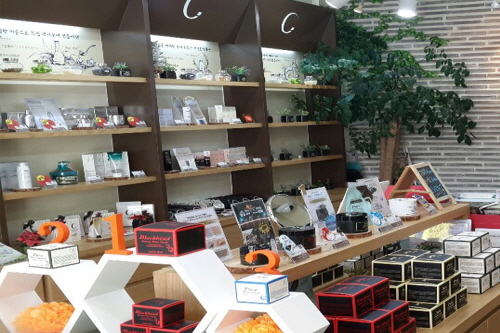
Established in 1995, CAOLION Cosmetics has been making hypoallergenic cosmetics for sensitive skin for 18 years.
The company launched natural cosmetics for the first time with a 3-free principle: pigment-free, fragrance-free, and alcohol free. At the present, the company has developed products that are exclude up to 17 adverse ingredients such as preservatives and mineral fibers.
CAOLION was the first Korean brand to enter into LVMH (Louis Vuitton Monët Hennessy)
Group's global cosmetics retail chain SEPHORA after being recognized as a quality natural cosmetic product for senstive skin after over two years of quality control. It is loyal customers as well.
Seodaemun Independence Park (서대문독립공원)
5.3Km 2022-12-15
251, Tongil-ro, Seodaemun-gu, Seoul
Seodaemun Independence Park was built on the former Seoul Detention Camp. It was used to imprison thousands of Korean independence activists until the liberation from the Japanese occupation on August 15, 1945, as well as the political prisoners during the political turmoil in the 1960s. When the prison was moved to Uiwang-si, Gyeonggi-do in November 1987, the area was restored and turned into a memorial park in August 15, 1992 to honor the sacrifices of the martyrs. The park preserves seven prison buildings, an execution ground, underground women’s prison, and the March 1st Movement Monument that has been moved from Tapgol Park in Jongno.
One of the most significant monuments of the Seodaemun Independence Park is Dongnimmun Gate (Independence Gate), which has been designated a Historic Site. Nearby is Dongnipgwan (Independence Hall), originally called Mohwagwan, which was used to greet Chinese envoys during the Joseon dynasty. Today, the hall enshrines 2,327 tablets inscribed with the names of Koreans who died for the cause of national independence. Standing right next to Dongnimmun Gate are the remnants of Yeongeunmun Gate, another Historic Site. Other sights inside the park include the Patriotic Martyr Monument, Declaration of Independence Monument, and Statue of Dr. Seo Jae-pil, who was an independence activist and publisher of Korea’s first independent newspaper. The main highlight of the park is the Seodaemun Prison History Hall, a former prison building that was renovated into a history museum.
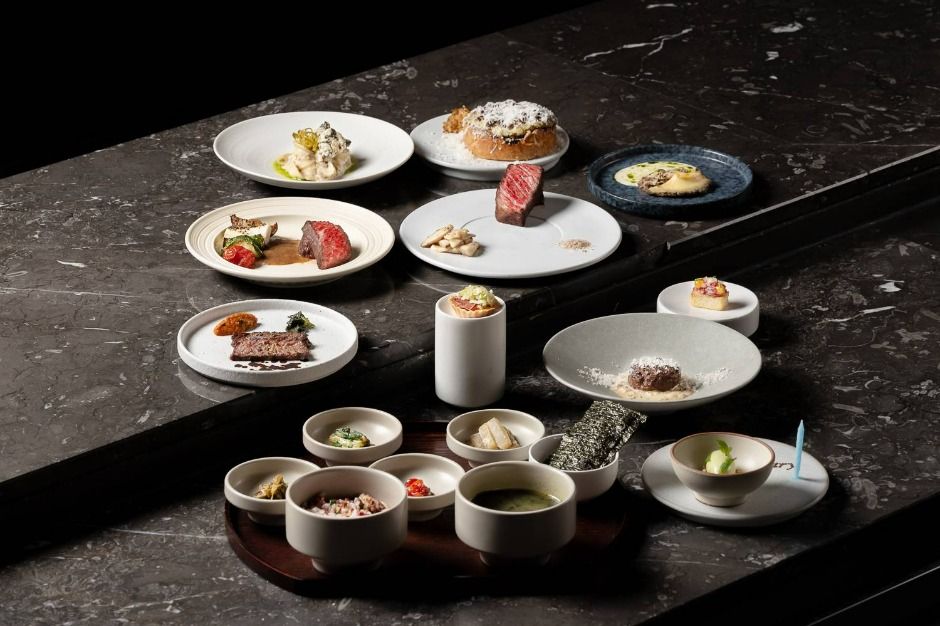
Wumok (우모크)
5.3Km 2025-10-27
22 Eonju-ro 170-gil, Gangnam-gu, Seoul
Wumok is a hanu (Korean beef) omakase restaurant that reinterprets Korean beef through fire and smoke, with its core philosophy centered on fire, wood, Korean beef, and smoke. The hanu used is a premium-grade hanu from Goryeong, Gyeongsangbuk-do. All dishes are prepared meticulously, balancing the texture and flavor. The interior is composed of dark wood and soft lighting, creating a quiet and focused dining environment.
![Uireung Royal Tomb [UNESCO World Heritage] (서울 의릉(경종, 선의왕후) [유네스코 세계문화유산])](http://tong.visitkorea.or.kr/cms/resource/80/2690680_image2_1.jpg)
Uireung Royal Tomb [UNESCO World Heritage] (서울 의릉(경종, 선의왕후) [유네스코 세계문화유산])
5.3Km 2021-06-03
146-20, Hwarang-ro 32-gil, Seongbuk-gu, Seoul
Uireung is the royal tomb of King Gyeongjong (reign 1720-1724), the 20th ruler of the Joseon dynasty, and his second wife, Queen Seonui.
King Gyeongjong was the first son of King Sukjong and Janghuibin, who was one of King Sukjong’s concubines. King Gyeongjong, who was born weak and anemic, died four years after becoming the king, without any great political achievements. Uireung tombs differ from the other royal double tombs in that they are not placed side-by-side. Instead, according to geomantic theory, one tomb has been placed directly behind the other one. The arrangement also shows that when making tombs, Korean ancestors did their best to protect the natural environment. Another feature of Uireung Royal Tomb is the stone fence raised using twelve stone posts. Each post has a letter inscribed, representing one of the twelve sibijisin gods.
 English
 한국어
한국어 日本語
日本語 中文(简体)
 Deutsch
 Français
 Español
 Русский


