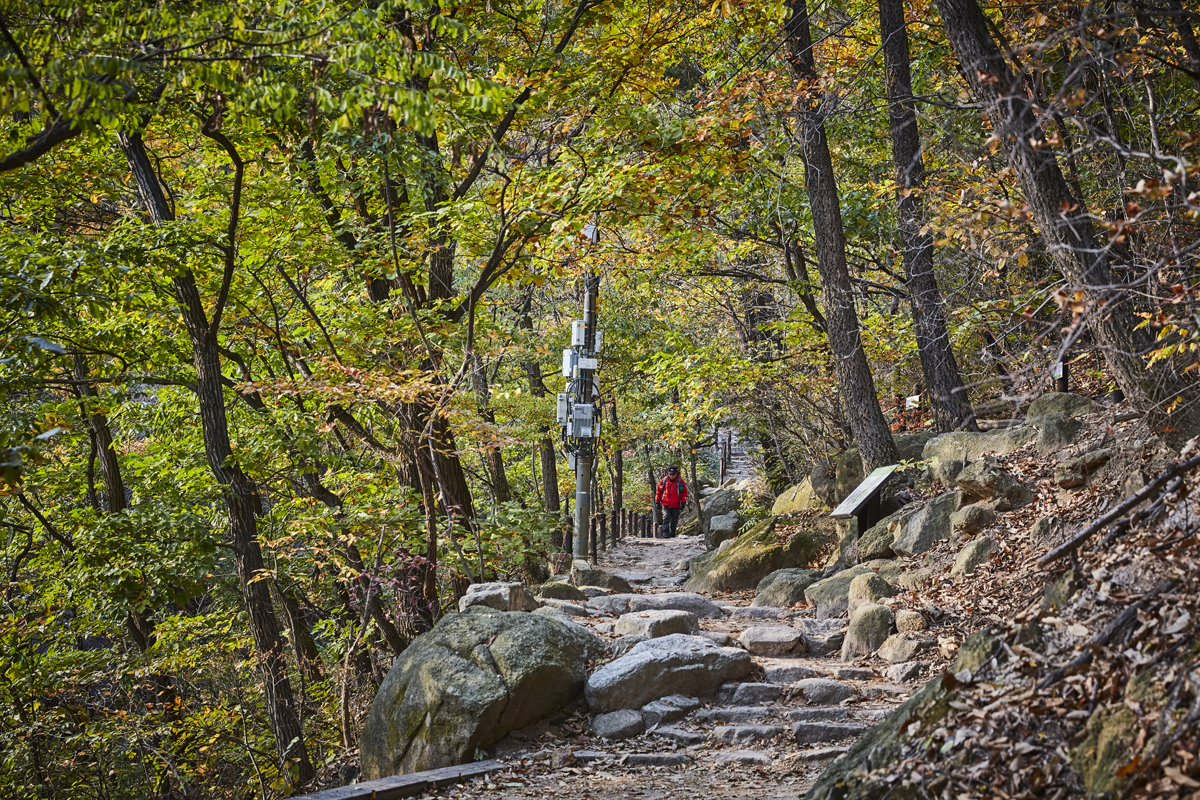
Bukhansan National Park (Seoul District) (북한산국립공원(서울))
4.0Km 2024-11-27
262 Bogungmun-ro, Seongbuk-gu, Seoul
+82-2-909-0497
Bukhansan Mountain was officially designated as a national park in 1983. Bukhansan National Park covers both Bukhansan and Dobongsan Mountains, and spans a total area of 80.699 ㎢. At the top of Bukhansan Mountain are Baegundae Terrace (835.6 m), Insubong Peak (810.5 m) and Mangyeongdae Terrace (799.5 m), which gave the mountain the nickname "Samgaksan" or the "three-horned mountain." The mountain had other names: Sambongsan (mountain with three peaks), Hwasan (flower mountain), and Buaak (mountain shaped like a person giving a baby a piggyback ride). The current name, Bukhansan, was given after the Bukhansanseong Fortress was built under King Sukjong of the Joseon dynasty.

Lotte Mart - Haengdang Station Branch [Tax Refund Shop] (롯데마트 행당역점)
4.0Km 2024-04-22
76, Haengdang-ro, Seongdong-gu, Seoul
-
Olive Young - CJ THE CENTER Branch [Tax Refund Shop] (올리브영 씨제이남산더센터)
4.1Km 2024-04-18
12, Sowol-ro 2-gil, Jung-gu, Seoul
-
Cha Fertility Ceter - Seoul Station ((의)성광의료재단 차여성의원)
4.1Km 2025-10-23
(2nd Floor, Seoul Square), 416 Hangang-daero, Jung-gu, Seoul
Since opening in 2015, CHA Fertility Center - Seoul Station has served as Korea's leading fertility treatment center. Based on the know-how of CHA University Gangnam Medical Center, the first private hospital to deliver a test-tube baby in 1986, CHA Fertility Center - Seoul Station is conveniently located near the center of Seoul, making it convenient for domestic and international fertility clients. Foreign fertility patients who arrive in Korea via Incheon Airport not only have easy access to the clinic via the direct rail linking Seoul and the airport but also benefit from the capital city's excellent infrastructure (transportation, tours, accommodations, restaurants, etc.) for a safe and comfortable fertility treatment during their stay. In particular, many international residents in Korea, embassy officials, U.S. soldiers, and Koreans living abroad visit CHA Fertility Center for fertility treatment.
SEOUL SHINSEGAE EYE CENTER (서울신세계안과의원)
4.1Km 2025-10-23
3rd–4th Floors, Y-Square, 52 Dobong-ro, Gangbuk-gu, Seoul
SEOUL SHINSEGAE EYE CENTER is a premium clinic with specialists from Korea’s top hospitals. With AI-based precision systems and an advanced surgical center, we offer safe, customized care. Sterile ORs, 7-stage purification, and age-specific checkups ensure lifelong family eye health.
Lotte Mart - Cheongnyangni Branch [Tax Refund Shop] (롯데마트 청량리점)
4.1Km 2024-04-22
210, Wangsan-ro, Dongdaemun-gu, Seoul
-
Seodaemun Independence Park (서대문독립공원)
4.1Km 2022-12-15
251, Tongil-ro, Seodaemun-gu, Seoul
+82-2-3140-8305
Seodaemun Independence Park was built on the former Seoul Detention Camp. It was used to imprison thousands of Korean independence activists until the liberation from the Japanese occupation on August 15, 1945, as well as the political prisoners during the political turmoil in the 1960s. When the prison was moved to Uiwang-si, Gyeonggi-do in November 1987, the area was restored and turned into a memorial park in August 15, 1992 to honor the sacrifices of the martyrs. The park preserves seven prison buildings, an execution ground, underground women’s prison, and the March 1st Movement Monument that has been moved from Tapgol Park in Jongno.
One of the most significant monuments of the Seodaemun Independence Park is Dongnimmun Gate (Independence Gate), which has been designated a Historic Site. Nearby is Dongnipgwan (Independence Hall), originally called Mohwagwan, which was used to greet Chinese envoys during the Joseon dynasty. Today, the hall enshrines 2,327 tablets inscribed with the names of Koreans who died for the cause of national independence. Standing right next to Dongnimmun Gate are the remnants of Yeongeunmun Gate, another Historic Site. Other sights inside the park include the Patriotic Martyr Monument, Declaration of Independence Monument, and Statue of Dr. Seo Jae-pil, who was an independence activist and publisher of Korea’s first independent newspaper. The main highlight of the park is the Seodaemun Prison History Hall, a former prison building that was renovated into a history museum.
![Samsung Digital Plaza - Wangsimni Branch [Tax Refund Shop] (삼성 디지털 왕십리점)](http://tong.visitkorea.or.kr/cms/resource/44/2890544_image2_1.jpg)
Samsung Digital Plaza - Wangsimni Branch [Tax Refund Shop] (삼성 디지털 왕십리점)
4.1Km 2024-04-18
217, Gosanja-ro, Seongdong-gu, Seoul
-
 English
 한국어
한국어 日本語
日本語 中文(简体)
 Deutsch
 Français
 Español
 Русский


