
Olive Young - Donam Jungang Branch [Tax Refund Shop] (올리브영 돈암중앙점)
2.1Km 2024-06-26
1F, 118, Dongsomun-ro, Seongbuk-gu, Seoul
-
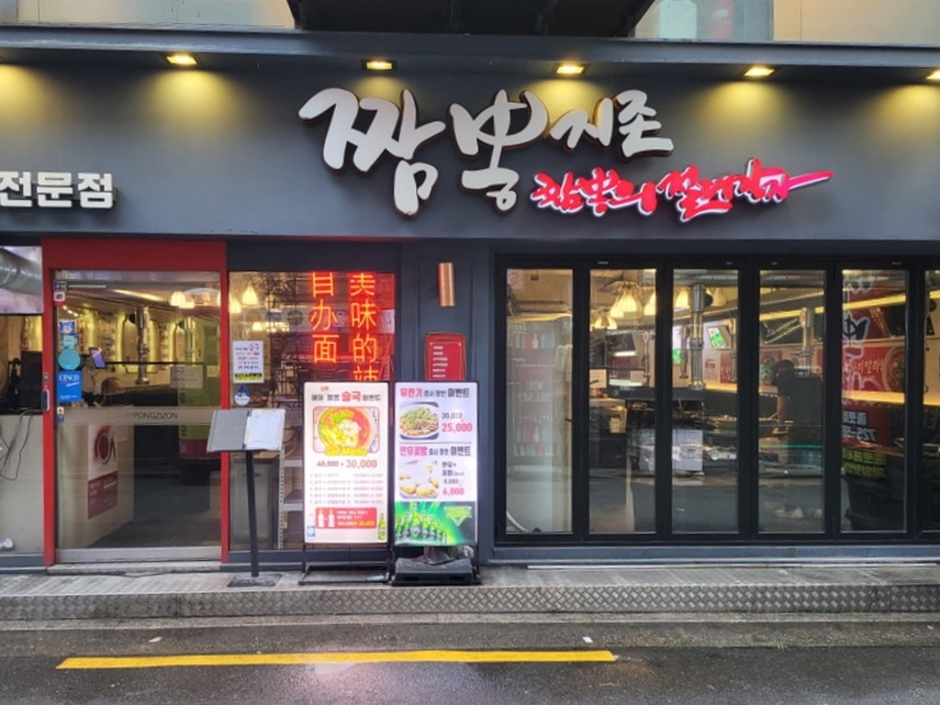
Jjamppong Zizon Jongno (짬뽕지존 종로)
2.1Km 2024-03-15
25 Samil-daero 15-gil, Jongno-gu, Seoul
+82-2-725-5161
Jjamppong Zizon is a Chinese restaurant located near Cheonggyecheon Stream. Their signature dish, zizon jjamppong (spicy seafood noodle soup), combines fresh seafood with a spicy broth enhanced with smoky flavors. They also offer zizon jjajangmyeon (black bean sauce noodles). For those craving extra heat, there are options like jiok jjamppong (extra spicy seafood noodle soup) and jiok jjajang (spicy black bean sauce noodles). Additionally, they serve chapssal tangsuyuk (deep-fried pork in sweet rice batter with sweet and sour sauce), coating pork in chewy sweet rice batter.
Tonymoly - Euljiro 3(sam)-ga Station Branch [Tax Refund Shop] (토니모리 을지로3가역점)
2.1Km 2024-06-27
B3-14, 131, Eulji-ro, Jung-gu, Seoul
-
![Jeongneung Royal Tomb [UNESCO World Heritage] (서울 정릉(신덕왕후) [유네스코 세계문화유산])](http://tong.visitkorea.or.kr/cms/resource/91/2622291_image2_1.jpg)
Jeongneung Royal Tomb [UNESCO World Heritage] (서울 정릉(신덕왕후) [유네스코 세계문화유산])
2.1Km 2021-02-09
116, Arirang-ro 19-gil, Seongbuk-gu, Seoul
+82-2-914-5133
Jeongneung Royal Tomb is the tomb of Queen Sindeok, the second wife of King Taejo (1392-1398), founder of the Joseon dynasty (1392-1910). The queen met a sudden death due to health complications. Although one of her sons was the crown prince, he was killed by a successive brother, Yi Bang-won, in order to obtain the throne. After Yi Bang-won rose to the throne as King Taejong, he relocated Queen Sindeok's tomb to outside of the city walls.
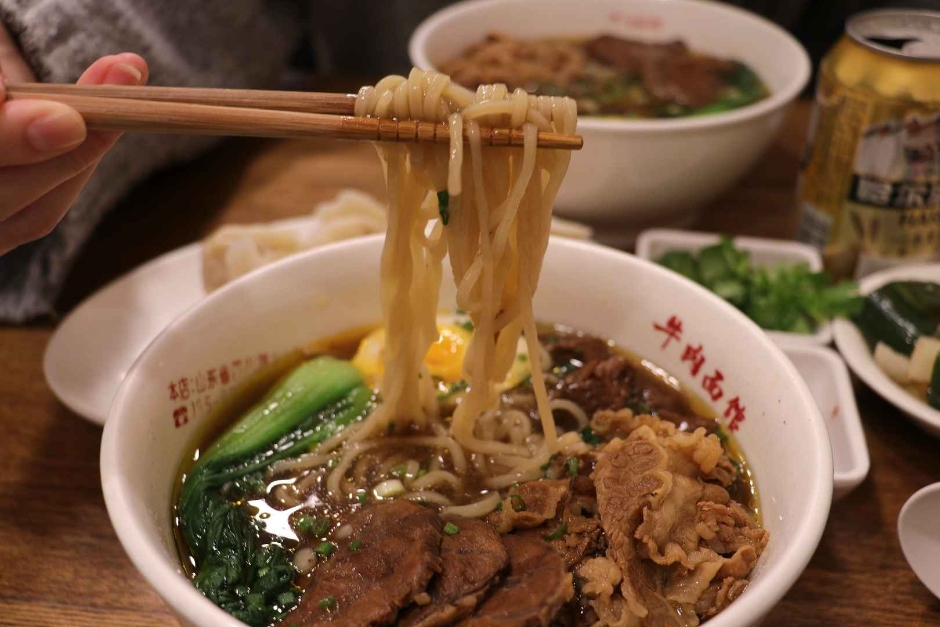
Uyungmyeongwan Cheonggyecheon Main Store (우육면관청계천점)
2.1Km 2024-04-19
75-2 Cheonggyecheon-ro, Jongno-gu, Seoul
Uyungmyeongwan is a noodle restaurant specializing in uyungmyeon (beef noodle soup) located near Cheonggyecheon Stream. Its flagship dish is the uyungmyeon, which harmonizes tender meat with rich broth. In addition, they also sell freshly made sugyo (Chinese-style boiled mandu) filled with shrimp, pork, and young cabbage daily. Loved by locals and tourists alike for its clean yet flavorful broth and chewy noodles.
![KGC - Dongmyo Branch [Tax Refund Shop] (KGC 동묘점)](http://tong.visitkorea.or.kr/cms/resource/91/2878191_image2_1.jpg)
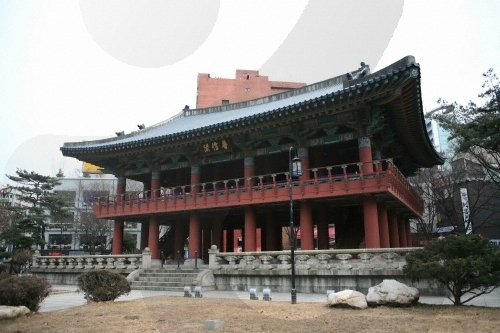
Bosingak Belfry (보신각 터)
2.1Km 2024-03-04
54, Jong-ro, Jongno-gu, Seoul
+82-2-2133-2641
Bosingak Belfry is also known as Jonggak. It was the site in which a large bell, used to keep the time in Seoul, was found during the Joseon period (1392-1897). Bosingak Belfry was burned down during the Korean War (1950-1953) and was reconstructed in 1979. The original bell was moved to the Gyeongbokgung Palace, and a new bell was forged in 1985. At midnight, January 1, the bell at the Bosingak Belfry is rung to welcome the new year. Many people gather around the belfry to make a wish for their new year.
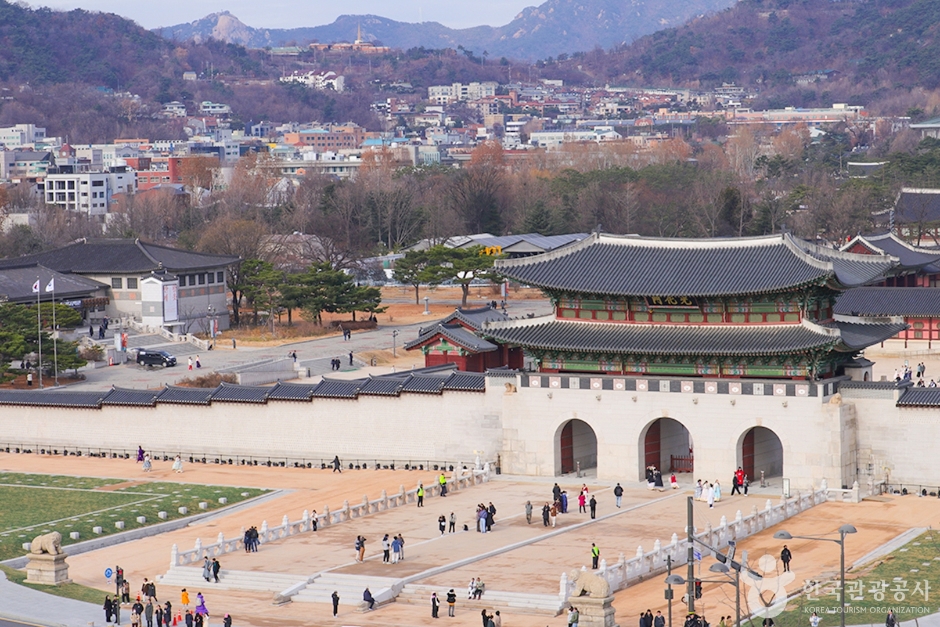
Gwanghwamun Gate (광화문)
2.1Km 2024-12-04
161 Sajik-ro, Jongno-gu, Seoul
+82-2-3700-3900
Built in 1395 under the reign of King Taejo, the first king of the Joseon dynasty, Gwanghwamun Gate is the southern gate of Gyeongbokgung Palace. It is also the main gate of the palace, therefore larger and fancier in comparison to the other gates. Gwanghwamun Gate consists of three arched gates; the center gate was used by the king, while the other two were used by the crown prince and royal officials. The tall granite walls of the gate serve as a platform for the wooden gate tower that watches over the city. The gate has a sign with its name written at the top center of the gate tower.
Gwanghwamun Gate went through several damages and restorations over the course of history. It was first severely damaged during the Imjin War (1592-1598) and was not restored until the reconstruction of Gyeongbokgung Palace in 1864. Under the Japanese administration, the gate was demolished and relocated to the north of the palace's eastern gate, followed by series of damages during the Korean War (1950-1953). In 1968, Gwanghwamun Gate was relocated back to the south of the palace and was rebuilt using concrete; however, the gate’s position was shifted a few meters away from its original location. In 2006, a major reconstruction project took place to restore Gwanghwamun Gate to its original state and location, disassembling the structure completely and replacing concrete with granite and wood. After three years and eight months of construction, Gwanghwamun Gate was fully restored to its original form and was open to the public on August 15, 2010.
 English
 한국어
한국어 日本語
日本語 中文(简体)
 Deutsch
 Français
 Español
 Русский


