
Seoul Baekje Museum (한성백제박물관)
11.4Km 2021-03-11
71, Wiryeseong-daero, Songpa-gu, Seoul
+82-2-2152-5800
Opened on April 30, 2012, Seoul Baekje Museum was founded by the Seoul Metropolitan Government in order to preserve artifacts related to Seoul's 2,000-year-old history and to shed light on Seoul's cultural identity. The museum is located inside Olympic Park, overlooking Mongchontoseong Fortress.
![Rogatis - Munjeong Branch [Tax Refund Shop] (로가디스 문정점)](http://tong.visitkorea.or.kr/cms/resource/70/2879470_image2_1.jpg)
Rogatis - Munjeong Branch [Tax Refund Shop] (로가디스 문정점)
11.4Km 2024-04-23
109, Dongnam-ro, Songpa-gu, Seoul
-
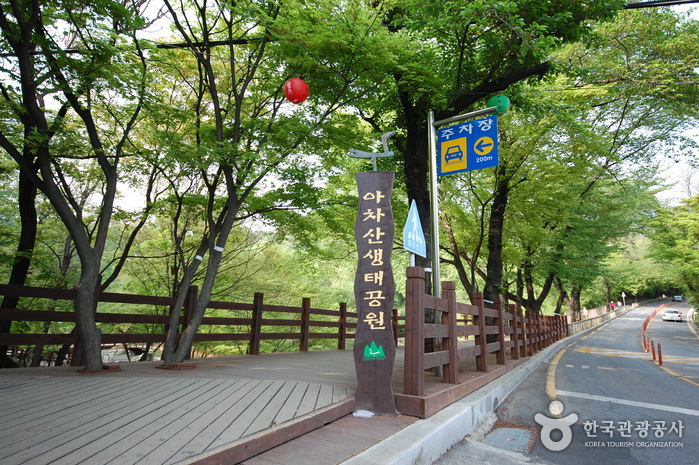
Achasan Ecological Park (아차산생태공원)
11.5Km 2021-05-14
127, Walkerhill-ro, Gwangjin-gu, Seoul
+82-2-450-1655
Achasan Ecological Park was established under the Seoul Metropolitan Government's Five Year Plan for Urban Green Expansion. Through various events and activities, the park provides opportunities to experience and learn about nature and its ecology. Major facilities include Eco Park, Rendezvous Square, Red Clay Road, Barefoot Path, Pine Forest, Mineral Spring, Eco Trail and pergolas.
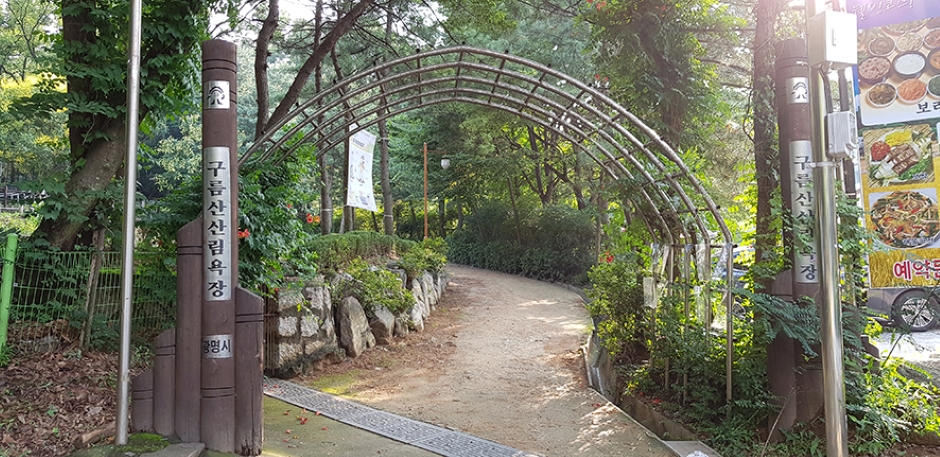
Gureumsan Forest Park (Gureumsan Urban Forest Park) (구름산 산림욕장 (구름산 도시자연공원) )
11.5Km 2024-04-08
27 Ori-ro 619beon-gil, Gwangmyeong-si, Gyeonggi-do
Gureumsan Forest Park is densely populated with trees that are 20 meters high. The forest park has a playground and wooden benches, and has the highest phytoncide concentration out of all the 13 forest parks in Gyeonggi-do. This hiking trail has been developed with 356 fir trees and an 184-meter red clay trail to provide citizens and tourists with a relaxing barefoot walking experience. Most of the forest paths in the park area are covered in wood chips, making it easier to walk.
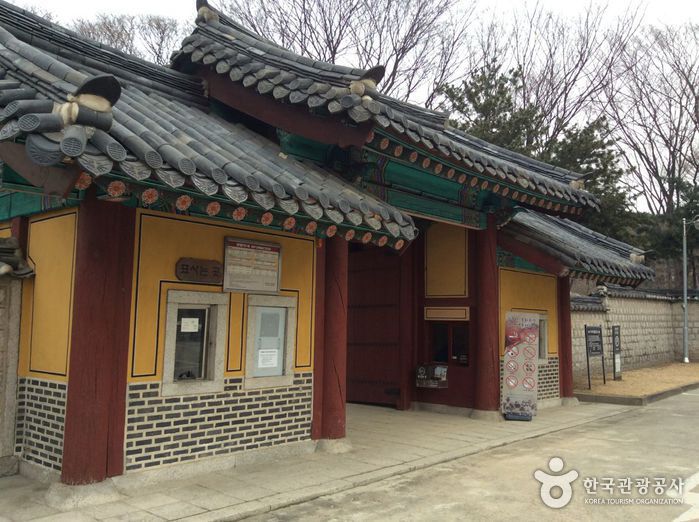
Yeonghwiwon and Sunginwon Royal Tombs (서울 영휘원(순헌황귀비)과 숭인원(이진))
11.5Km 2021-03-12
90, Hongneung-ro, Dongdaemun-gu, Seoul
+82-2-962-0556
Yeonghwiwon & Sunginwon Royal Tombs house the tombs of Queen Consort Sunheon and the first son of Imperial Prince Yeong, Yi Jin. Queen Consort Sunheon was a concubine of Emperor Gojong and the mother of Imperial Prince Yeong. The tomb site was originally the resting place of Empress Myeongseong, the first official wife of Emperor Gojong, but her tomb was moved to Namyangju after Gojong's death where they are interred together.
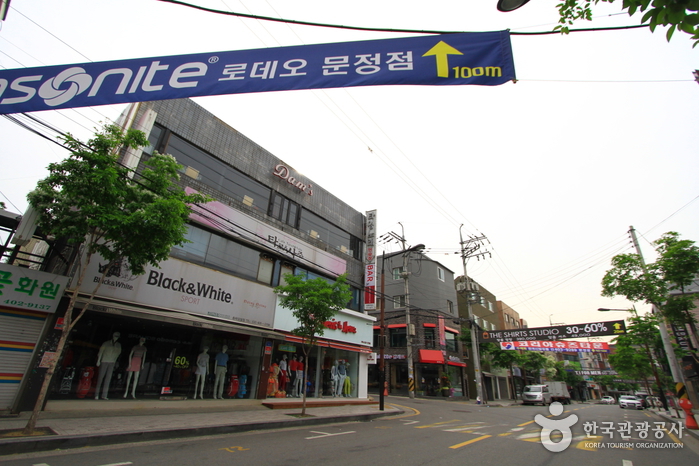
Munjeong-dong Rodeo Street (문정동 로데오거리)
11.5Km 2025-03-29
10, Dongnam-ro 4-gil, Songpa-gu, Seoul
+82-2-400-1633
Munjeong-dong Rodeo Street is a large shopping district containing over 200 brand-name discount stores. The street is T-shaped, with a 1-kilometer-long main street connected to a 400-meter-long alley, and the Munjeong 1-dong Resident Center located at the center. For shoppers’ convenience, there is a public parking lot (if visitors purchase goods at Rodeo Street, they can park here for free) and a parking lot for foreign tourists only (free of charge). Munjeong-dong Rodeo Street is one of Korea’s major shopping streets with customers ranging from teenagers to adults, since discount stores stocking sports wear, casual wear, shoes, men’s and ladies’ suits, and golf wear are all located on this street. Moreover, this is a great place to find deals on famous brands, at prices lower than at a department store. On some items you can get discounts of up to 70-80%.
Since most of the goods are stock from previous seasons, it might be better to purchase the more classic styles rather than the trendy fashions. In some cases, the goods might have been slightly crumpled or stained during the transfer from warehouse storage, but taking them to the dry-cleaners should fix most problems. However you should be careful when looking at the sewing quality, and check for missing buttons.
One more thing to bear in mind is the shopping season. Even discount stores have periods when stock runs low. The best time to shop is immediately after the stores in Rodeo Street restock their merchandise. This is done at about the same time as department stores. There is also an enormous variety of goods to choose from during the Rodeo Festivals in May and September. The purchased goods are exchangeable but non-refundable, so check the quality of the products carefully before purchasing.
In addition, Munjeong-dong Rodeo Street has a wide selection of restaurants and entertainment facilities. There are a number of pizza places, coffee shops, and food courts, as well as internet cafes and game rooms in the alleys behind the stores. Visitors can also relax in the surrounding parks. There’s a park with a 600-year-old zelkova tree right behind the Munjeong 1-dong Resident Center.
Munjeong Rodeo Street is not just a shopping district; it’s a cultural area. The ‘Munjeong-dong Cultural Festival’ takes place every year in May, and the ‘Munjeong-dong Rodeo Festival’ takes place in May every other year. During these festivals, visitors can watch traditional Korean performances, traditional wedding ceremonies, international fashion parades, hip-hop dancing, and more.
A charity sale is held on weekends and national holidays on the open-air stage of the Munjeong 1-dong Resident Center, and merchandise is sold for even bigger discounts.
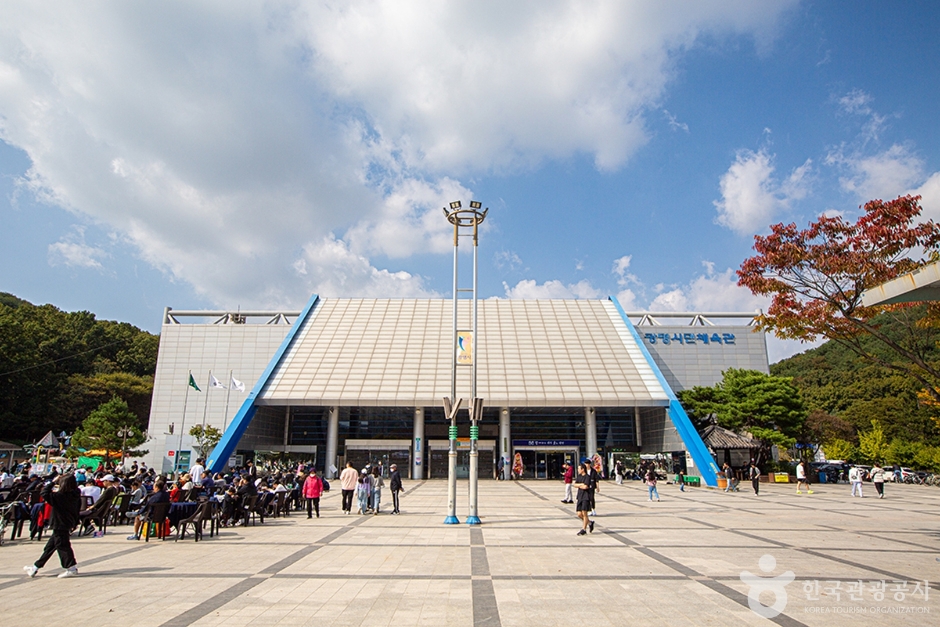
Gwangmyeong Indoor Gymnasium (광명시민체육관)
11.5Km 2024-02-20
703 Ori-ro, Gwangmyeong-si, Gyeonggi-do
Gwangmyeong Indoor Gymnasium is a stadium equipped with seating for 3,000 spectators. It houses facilities for physical training, including golf, fitness, and table tennis. The spacious and vibrant lawn plaza immediately draws attention. This complex includes an open art hall for performances, sports facilities like an inline bicycle track and basketball courts, and amenities such as a children's playground and an outdoor water play area. Additionally, it features a 16-meter-high artificial rock-climbing wall.
![The North Face - Munjeong Branch [Tax Refund Shop] (노스페이스 문정점)](http://tong.visitkorea.or.kr/cms/resource/78/2879478_image2_1.jpg)
The North Face - Munjeong Branch [Tax Refund Shop] (노스페이스 문정점)
11.5Km 2024-04-19
39, Jungdae-ro 10-gil, Songpa-gu, Seoul
-
World Cup Park (월드컵공원)
11.5Km 2024-10-23
243-60 World Cup-ro, Mapo-gu, Seoul
Opened on May 1st, 2002, the Wolrd Cup Park was once a 15-year-old landfill that held over 92 million tons of garbage. The park is located near Seoul World Cup Stadium, and is made up of five smaller parks - Pyeonghwa (Peace) Park, Haneul (Sky) Park, Noeul (Sunset) Park, Nanjicheon Park, and Nanji Hangang Park.
* Pyeonghwa Park: Closest to Seoul World Cup Stadium, it holds a pond, garden, children’s playground, and forest. As a representative park of World Cup Park, the park was designed in hopes of peace and harmony between mankind and nature. It is often used as a picnic area and place for nature studies.
* Nanji Hangang Park: Nanji Hangang Park was developed on the banks of the Hangang River. In contrast to other Hangang River parks, Nanji Hangang Park is a water-friendly park that has a gradual slope towards the riverbank. The park consists of a camping ground, soccer field, basketball court, grass field, cruise ship port, and an area for nature studies.
* Haneul Park: Haneul Park consists of vast grassland located at the highest elevation of the five parks. The park's pasture is covered with eulalias and wild flowers in their most natural state. In addition, 30,000 butterflies of different species were introduced in 2000 to stabilize the ecosystem. Five wind-powered generators provide power to the park and the park’s maintenance office. Once a mountain of garbage, it is now a green hill with 22 lookout points offering breathtaking views of Seoul, including the N Seoul Tower, Bukhansan Mountain, and Hangang River. Tall trees are line the park to provide shades and serve as resting spots for visitors. As a popular spot to enjoy the sight of eulalias, the park usually remains open until late in the evening during the Eulalia Festival period.
* Noeul Park: In order to prevent the vast area of land of what was once a wasteland from becoming an unnecessary chunk of land, a nine-hole golf course was constructed in what is now known as Noeul Park. The golf course serves as an environment friendly entertainment park to visitors while stabilizing the geographical formation and has an urban park nearby that offers scenic views of the Hangang River and beautiful sunset. Located west of the golf park is Noeul Square, decorated with shrubs and flowers.
* Nanjicheon Park: Nanjicheon Park was developed from the Nanji Stream, which flowed under Haneul Park. It was once overflowing with sewage runoff from a nearby landfill, but it has since been beautifully restored into a park with clear water. The park is built to serve as a recreational spot for those with for youths, elders, and people with disabilities.
 English
 한국어
한국어 日本語
日本語 中文(简体)
 Deutsch
 Français
 Español
 Русский


