
Gangnam Arumdaun Nara Beauty Clinic (강남 아름다운나라 피부과)
9.9Km 2025-10-23
(12th Floor), 390 Gangnam-daero, Gangnam-gu, Seoul
Gangnam Arumdaun Nara Beauty Clinic has been at the forefront of Thermage technology, starting with the first-generation Thermacool in 2003, followed by the second-generation Thermage NXT, third-generation Thermage CPT, and the fourth-generation Thermage FLX.
The medical team at Gangnam Arumdaun Nara Beauty Clinic has published eight SCI-level papers related to Thermage, accounting for 10% of all Thermage-related research worldwide.
The clinic’s expertise in achieving effective lifting results without skin damage is due to continuous research and the skilled medical team.
The clinic offers its own skincare brand, Arumdaun Nara Cosmetics.
Bright St. Mary’s Eye Center (밝은성모안과의원)
9.9Km 2025-11-28
3rd, 16th, 17th, and 18th Floors, Cambridge Building, 110 Teheran-ro, Gangnam-gu, Seoul
Bright St. Mary’s Eye Center opened in 2000 and has been a trusted leader since the early generation of vision correction surgery in Korea. With decades of experience and a strong clinical track record, we provide safe, precise procedures such as LASIK, LASEK, and SMILE LASIK using advanced technology.
To ensure both surgical accuracy and a satisfying patient experience, we offer state-of-the-art equipment, highly experienced specialists, reasonable procedure costs, and a comprehensive postoperative care system.
Recognized by patients from Korea and around the world,
Bright St. Mary’s Eye Center (Gangnam Branch) invites you to enjoy a brighter, clearer everyday life.
Will Spa (윌스파)
9.9Km 2025-01-08
524, Bongeunsa-ro, Gangnam-gu, Seoul
Willspa operates 24 hours in the Gangnam area, featuring luxurious spa that is equipped with suitable size, facility, and programs for foreign visitors’ taste.
Medical Korea Service Co., Ltd (주식회사 메디컬코리아서비스)
9.9Km 2025-11-27
4th Floor, 8 Teheran-ro 2-gil, Gangnam-gu, Seoul
Medical Korea Service is a global medical concierge agency specializing in premium skincare, regenerative therapy (stem cell & NK), wellness programs, and advanced plastic surgery in Korea. Recognized by the City of Seoul and Gangnam-gu, we partner exclusively with top-tier, accredited clinics and board-certified specialists with 10–20 years of experience. Our multilingual VIP teams (English, Indonesian, Chinese) provide end-to-end care—from personalized treatment planning to on-site support—making MKS a trusted choice for international clients across Southeast Asia.
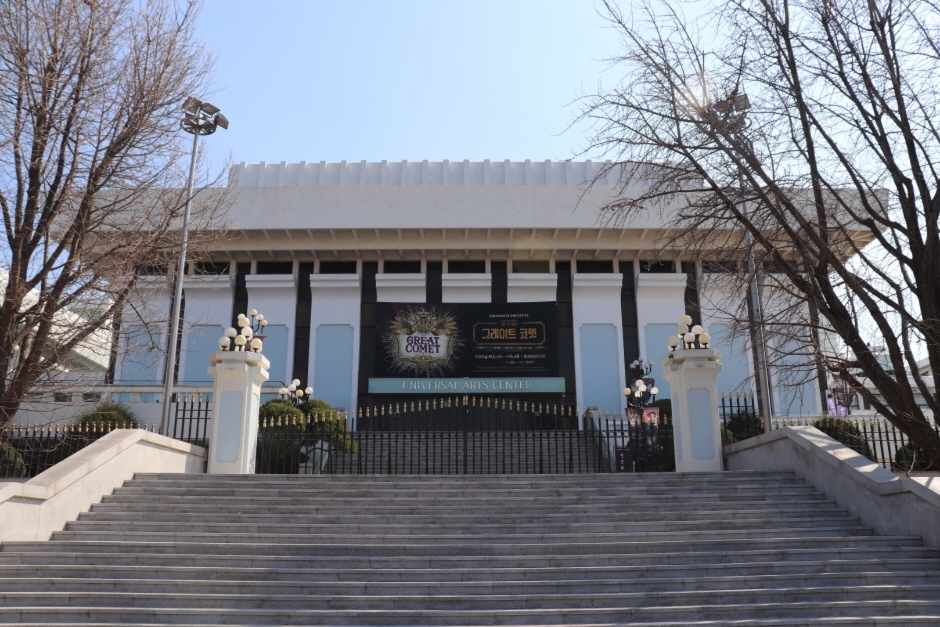
Universal Arts Center (유니버설아트센터)
9.9Km 2024-03-19
664 Cheonho-daero, Gwangjin-gu, Seoul
Universal Arts Center, inaugurated in 1981, stands as a prominent venue for performances. Renowned for its splendid and classic architectural interior, it is celebrated for its distinctiveness. Its main facilities include the Grand Theater, the Luna Hall capable of accommodating up to 300 guests for banquets, and an audience lounge. It serves as a harmonious space where performance venues, artistic community, and art educational institutions converge. Here, visitors can enjoy a diverse array of performances ranging from ballet and musicals to concerts.
365mc (365엠씨(mc)병원)
9.9Km 2025-11-26
126 Seochojungang-ro, Seocho-gu, Seoul
365mc is a medical institute specializing in liposuction and Local Anesthetic Minimal-Invasive Liposuction (LAMS) for 21 years.
It was established as a medical institution specialized for obesity treatment, a first in Korea. The clinic set a new record in terms of satisfaction with the liposuction procedure at 99.7%.
The clinic developed LAMS, a new liposuction technique, and presented it at various international academic conferences, including AACS and AAAM in the US. It has performed over six million obesity treatment cases.
To obtain optimized treatment results, 365mc has developed the Motion Capture and Artificial Intelligence assisted Liposuction (MAIL) system, and the Liposuction Efficacy Prediction Algorithm (LEPA), which is a big data-based AI system that predicts the result of liposuction.
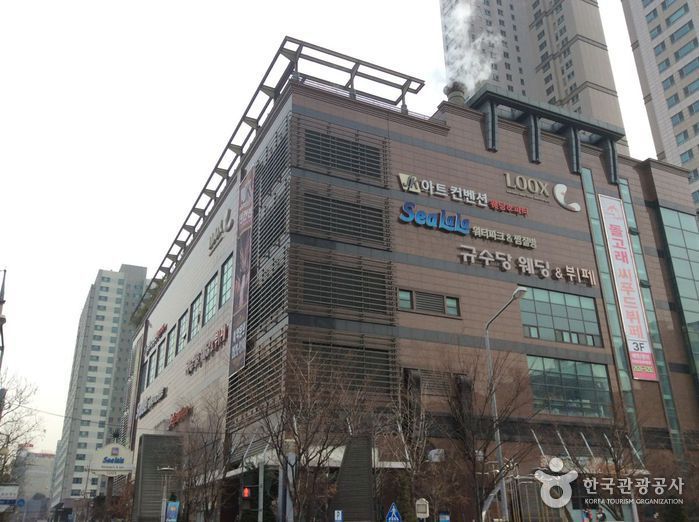
Sealala Water Park (씨랄라 워터파크)
9.9Km 2024-03-20
(2nd underground floor), 164, Mullae-ro, Yeongdeungpo-gu, Seoul
Sealala Water Park is a water park at the heart of the city where one can enjoy water activities across the four seasons. Its name is a portmanteau of the sea and lala, symbolizing the fun one can have in the water park. Inspired by the Mediterranean, the water park has water flowing pool, slides, beach pools, the Kids Land, bath pools, and rotating slides. Amenities onsite include convenience stores, manhwa cafe, and a swimming equipment store. Nearby tourist sites include the Yeongdeungpo Park, The National Assembly Building, and the Yeouido Park.
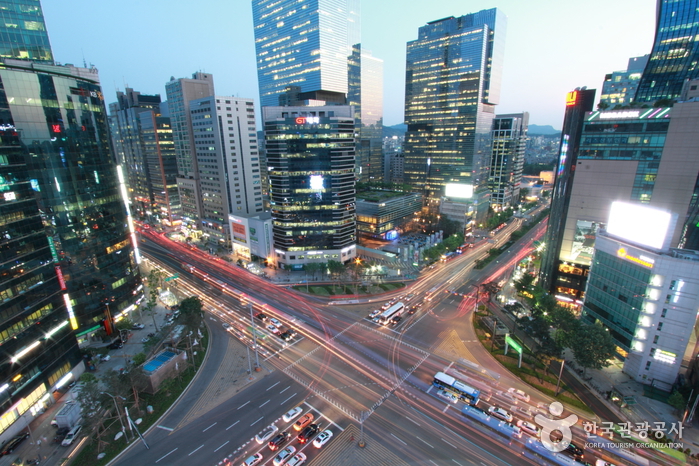
Gangnam (강남)
10.0Km 2024-12-03
Yeoksam-dong, Gangnam-gu, Seoul
Gangnam Subway Station area is the prime district for those living south of the Hangang River. Gangnam-daero Avenue links Teheran-ro Road in the east to Jamsil and Sadang in the west. Kyobo Tower Crossroad connects Express Terminal to Noryangjin and west of Seoul. Hannam-daegyo Avenue in the north extends to the north of the Hangang River. A southward direction leads to metropolitan areas such as Seongnam, passing Yangjae and Bundang.
Many people tend to gather at Gangnam Subway Station, as the location is geographically and commercially suitable as a meeting point for social gatherings, events, or personal engagements. Hence, during the weekdays it is usually crowded in the evenings while on weekends, areas around Gangnam Subway Station exit numbers 10 and 11, as well as City Theatre, and Giordano are often bustling with people. Visitors travel to Gangnam to take advantage of its convenient transportation, fashion malls, movie theatres, and bookstores.
Gangnam-gu Office operates Gangnam Tourist Information Center to offer tourist information to international and domestic visitors and hands-on activities related to tourism. Also, the center operates Medical Tour Center which introduces Gangnam-gu’s specializing hospitals and medical treatment as well as Hallyu Experience Hall.
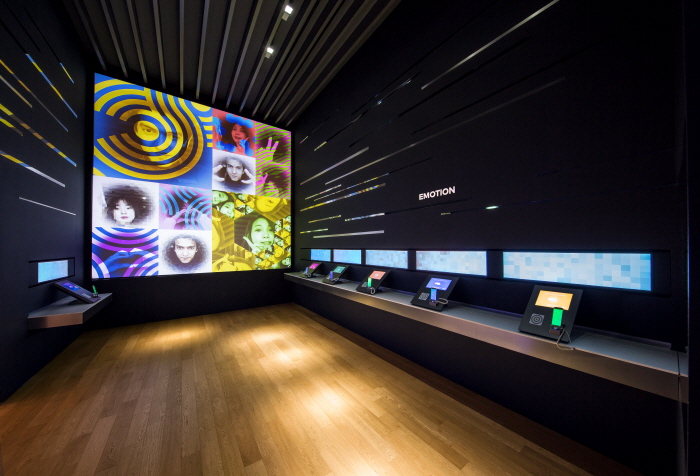
Samsung Gangnam (삼성 강남)
10.0Km 2024-11-26
411 Gangnam-daero, Seocho-gu, Seoul
Samsung Gangnam is a flagship store designed as a playground for Samsung Electronics. Within the building are a photo spot, Galaxy flagship, auditorium, bespoke studio, and coffee shop, attracting numerous visitors. They are invited to appreciate media art through art objects and admire stunning views of skyscrapers on Gangnam-daero via a giant display with pleasure.
Seoul National University Hospital Gangnam Center (서울대학교병원 강남의원)
10.0Km 2025-10-23
(38th,39th Floors and Part of 3rd Floor), 152 Teheran-ro, Gangnam-gu, Seoul
Seoul National University Hospital Gangnam Center, an extension of the world-renowned Seoul National University Hospital, offers specialized checkups annually to over 50,000 visitors. Notably, the center boasts exceptional success rates, including a global-leading 1% cancer diagnosis rate and top-level 50% detection rate for colorectal adenomas.
 English
 한국어
한국어 日本語
日本語 中文(简体)
 Deutsch
 Français
 Español
 Русский


