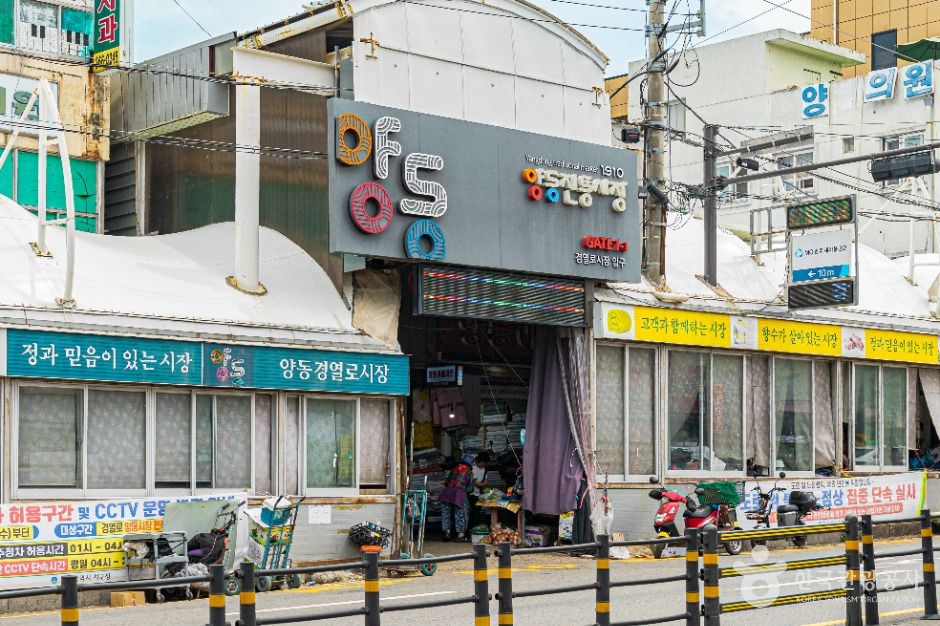
Gwangju Yangdong Market (광주 양동시장)
18.6Km 2025-08-13
238 Cheonbyeonjwa-ro, Seo-gu, Gwangju
Yangdong Market started in the 1910s as a traditional market held on dates ending in 2 and 7 of every month on the white sand beach under Gwangjugyo Bridge. The market has a long history and local citizens have many sayings referring to the multitude of items available here. During the May 18th Democratic Uprising, both Yangdong and Daein Markets were a grand venue where the citizens of Gwangju gathered together to rally for democratization of the nation. Merchants of the markets provided food, beverages, and medicine to the protestors and participated in the movement alongside their fellow citizens.
Yangdong Market is an outstanding traditional market among all markets throughout the nation. The market has upgraded with the times to include modern conveniences, including a consolidated market logo, online shopping mall, and merchant education classes.
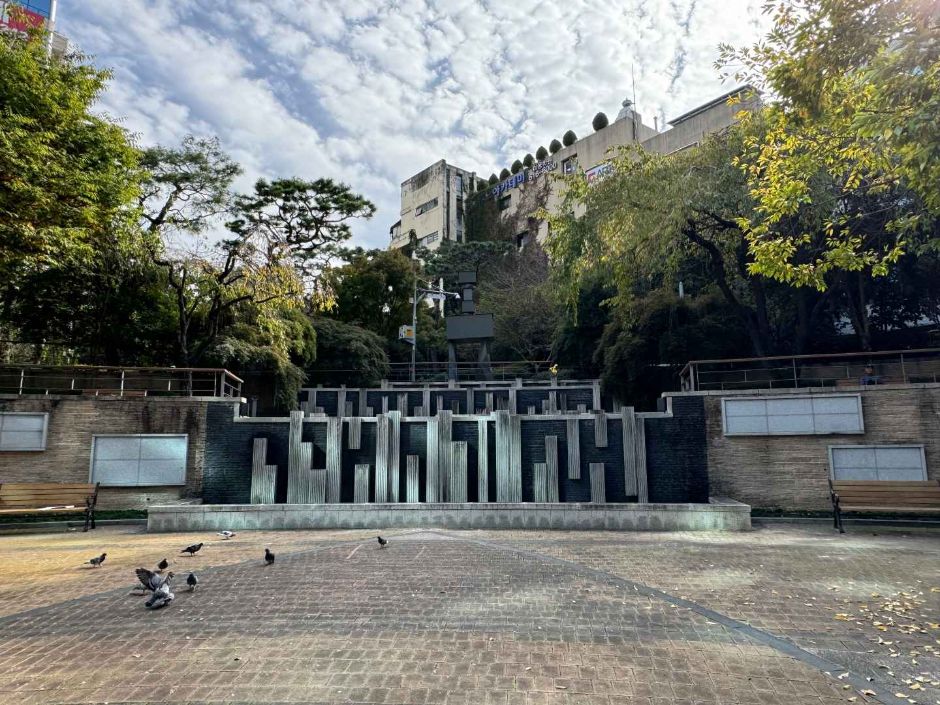
Geumnam Butterfly Garden (금남로공원 금남나비정원)
18.6Km 2024-11-14
20-2 Geumnam-ro, Dong-gu, Gwangju
Geumnamro Neighborhood Park, once the site of the Bank of Korea’s Gwangju branch, now hosts the enchanting Geumnam Butterfly Garden. Inspired by the glowing butterflies, the garden is a stunning curation by Gwangju, a UNESCO Creative City of Media Arts. It offers a magical setting for a night tour, transporting visitors into a fantasy world of vibrant colors and purple hues.
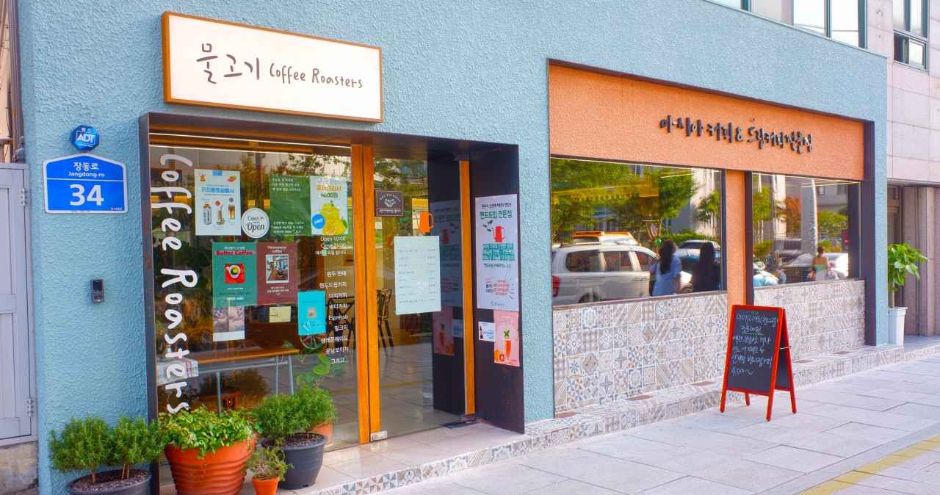
Mulgogi Coffee Roasters (물고기 커피 로스터스)
18.7Km 2024-11-14
34 Jangdong-ro, Dong-gu, Gwangju
Mulgogi Coffee Roasters is an award-winning hand-drip specialty store in Gwangju. This place is famous among coffee enthusiasts for its fresh beans, which are handpicked and roasted, one by one, and its 20 kinds of drip bags. Visitors can enjoy their specialty, Geisha Coffee, or other blends from Africa, Latin America, India, China, and other Asian countries.
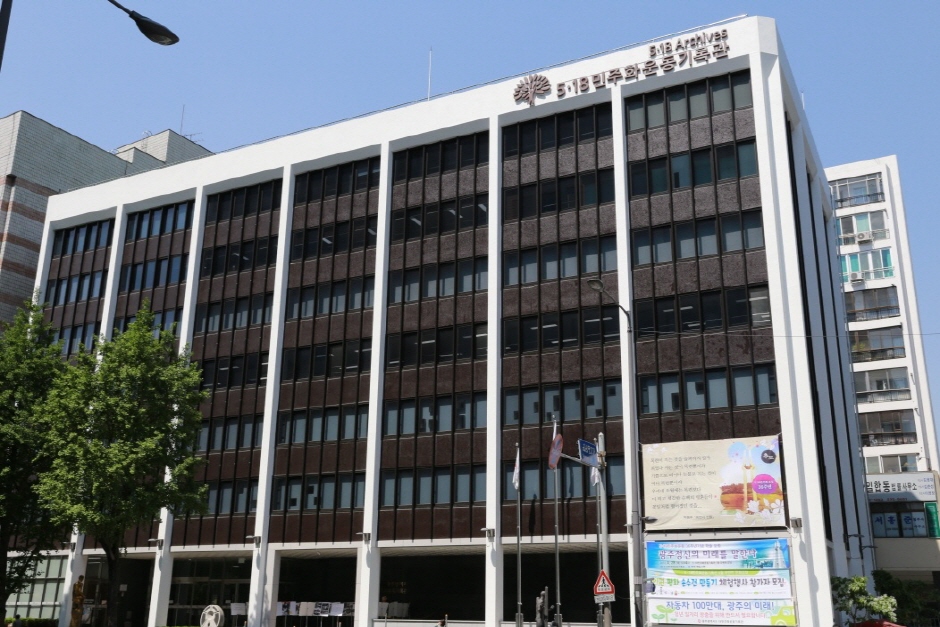
May 18 Democratic Uprising Archives (5•18민주화운동 기록관)
18.7Km 2024-01-03
221 Geumnam-ro, Dong-gu, Gwangju
The May 18 Democratization Movement was a righteous uprising by citizens that took place in Gwangju for ten days from May 18 to 27 in 1980. The May 18 Democratic Uprising Archives was established in 2015 at the former Gwangju Catholic Center, a historical site of May 1980, to systematically collect and preserve the May 18 Democratization Movement's heritage that led to the democracy in Korea today. Through the efforts of Gwangju citizens, visitors can see the original records of the May 18 Democratization Movement, inscribed on the UNESCO Memory of the World in 2011. Visitors can also view the records with a guide or through online exhibitions. The May 18 Democratic Uprising Archives is a place that preserves the history of all Korean citizens.

Gucci - Shinsegae Gwangju Branch [Tax Refund Shop] (구찌 신세계 광주점)
18.7Km 2024-04-23
1F, 932, Mujin-daero, Seo-gu, Gwangju
-
YSL - Shinsegae Gwangju Branch [Tax Refund Shop] (입생로랑 신세계 광주점)
18.7Km 2024-04-18
2F, 932, Mujin-daero, Seo-gu, Gwangju
-
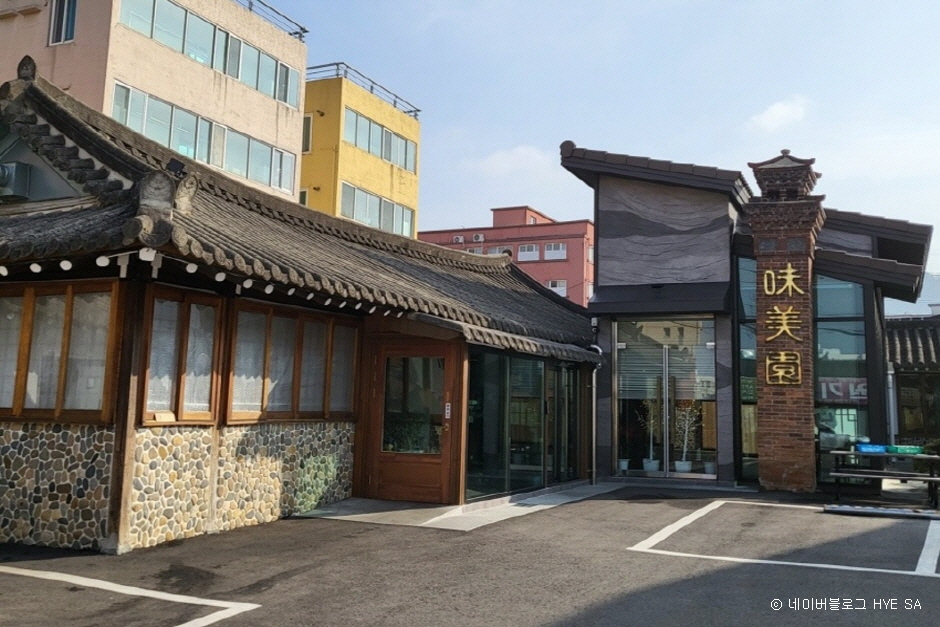
Mimiwon (미미원)
18.7Km 2024-12-03
광주광역시 동구 백서로 218
Emerging as a leading spot for yukjeon (Pan-fried Battered Beef) in Gwangju, Mimiwon has gained popularity through multiple media features. The restaurant’s traditional hanok building creates a neat atmosphere.
![Zara - Chungjang-ro Branch [Tax Refund Shop] (자라 충장로점)](http://tong.visitkorea.or.kr/cms/resource/85/2886885_image2_1.jpg)
Zara - Chungjang-ro Branch [Tax Refund Shop] (자라 충장로점)
18.8Km 2024-04-23
67, Chungjang-ro, Dong-gu, Gwangju
-
![Stay Hwangryong[Korea Quality] / 스테이황룡 [한국관광 품질인증]](http://tong.visitkorea.or.kr/cms/resource/48/2810848_image2_1.jpg)
Stay Hwangryong[Korea Quality] / 스테이황룡 [한국관광 품질인증]
18.8Km 2024-10-30
5-3, Haengbok 1-gil, Hwangnyong-myeon, Jangseong-gun, Jeollanam-do
+82-10-7142-5646
Stay Hwangryong is a tranquil hanok accommodation where the Hwangryonggang River flows in front. The hanok surrounded by a low stone wall is divided into two sections: Sarangchae and Anchae. The broad yard with flowering trees add more beauty to the landscape. The guest rooms of Stay Hwangryong include Hwangryong, good for six guests, Sarangchae 1 and 2 that are both good for two travelers, and a Maru that is the equivalent of a living room. The modern hanok retains the traditional beauty, while having added the convenience of modern facilities. Bright lightings on the ceiling and glass windows dressed in white curtains that replaced hanji give a more trendy look. Individual heating system per room, WiFi, and air conditioning are provided. The kitchen is equipped with a rice cooker, induction cooktop, and other kitchenware for those who wish to cook during the stay. Each room has a barbecue grill for guests to enjoy. The yard with plentiful sunlight is good for small gatherings, such as family gatherings and birthday parties.
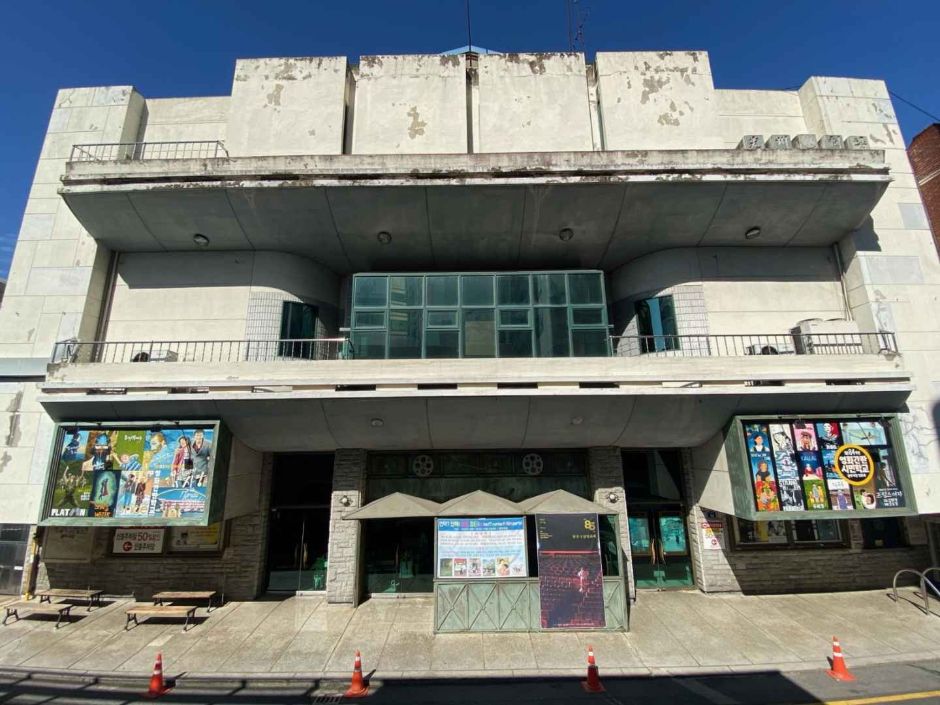
Gwangju Cinema (광주극장)
18.8Km 2025-08-13
10 Chungjang-ro 46beon-gil, Dong-gu, Gwangju
Gwangju Cinema opened in 1935 as an artistic and independent film theater and is the sole single-screen cinema to operate in Korea. In the past, the cinema mainly focused on Korean-focused productions such as pansori, but also screen Japanese films to increase business.
 English
 한국어
한국어 日本語
日本語 中文(简体)
 Deutsch
 Français
 Español
 Русский


