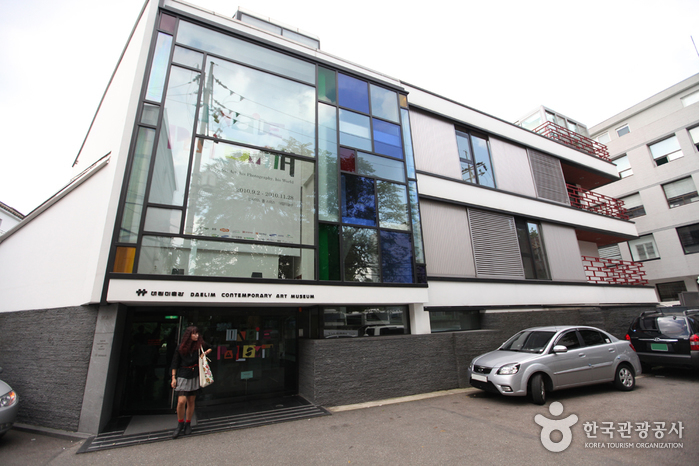
Daelim Museum (대림미술관)
8.5Km 2022-07-29
21, Jahamun-ro 4-gil, Jongno-gu, Seoul
+82-2-720-0667
The Daelim Museum, built by the Daelim Group, was first established in Daejeon in 1996 and later moved to Jongno, Seoul in 2002. The art gallery studies, analyzes, and presents modern art through the lens of photography and holds exhibitions centered around photo media.
The museum is located in the residential area of Tongui-dong, near the time-honored Gyeongbokgung Palace. The museum, which was designed by French architect, Vincent Cornu, and built by the Daelim Corporation, opened its door to the public in late May 2002.
On the first floor, there is a garden, parking lot, reception desk, storage area, and conference room. On the second and third floor are offices and exhibition hall approximately 595 m² in size, consisting of small and large rooms, a long gallery, and a special high-ceilinged exhibition space. On the fourth floor, there is a seminar room that can seat up to 120 guests and a balcony with a beautiful view. From the balcony of the seminar room, Visitors can also enjoy a wide open view of Inwangsan Mountain and Bukhansan Mountain. The stained glass panels (designed to reflect the beauty of traditional Korean wrapping cloth) and the scenic lounges on the 2nd and 3rd floors of the building add to the overall charm.
Above all else, the museum was designed with consideration of the photos, which are very sensitive to humidity, light, and temperature.

National Memorial of Korean Provisional Government (국립대한민국임시정부기념관)
8.5Km 2023-01-16
279-24, Tongil-ro, Seodaemun-gu, Seoul
The National Memorial of Korean Provisional Government was established to shine a light on the proud history of the Korean Provisional Government's independence and the spirit of a democratic republic and to pass it on to future generations. The four-story memorial building with three underground floors houses three permanent exhibits, one special exhibit, Larchiveum, Symbol Plaza, storage, multi-purpose hall, and rooftop garden over a total area of 3,656 square meters, a total floor area of 9,703 square meters and a total exhibition space of 2,240 square meters. The permanent exhibits consist of a series of historic events from the March 1st Movement, which served as a turning point for the formation of the Provisional Government, to the foundation of the Korean Government that succeeded the mantle of the provisional government, while the special exhibit on the 1st floor currently hosts a special opening exhibition under the title of 『The Return of the Provisional Government of the Republic of Korea』. Moreover, a symbolic wall installation under the theme of "Waves of History" is displayed in the outdoor plaza on the 1st floor of the memorial expressing the Provisional Government’s desire for independence and the dynamics of the past, present, and future of Korea.
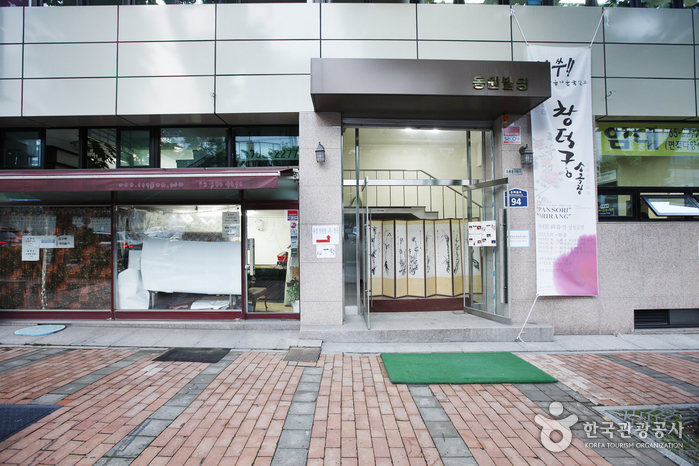
Theatre Changdeokgung (창덕궁 소극장)
8.5Km 2021-12-07
88-1, Donhwamun-ro, Jongno-gu, Seoul
+82-2-742-7278
Theatre Changdeokgung is located across from Changdeokgung Palace in the Gugak-ro Special Cultural Zone of Seoul. To recreate the traditional Korean entertainment setting and offer a better view of the stage, the theater is designed with floor seatings facing a platform stage. The theater offers a wide array of performances including samulnori (traditional Korean percussion quartet), traditional Korean music, and madanggeuk (a play infused with traditional music and performances). First time visitors often find the creative and cozy experience create a lasting memory of Korean culture and arts. Also nearby the theater are a number of tourist attractions including Changdeokgung Palace, Unhyeongung Palace, Jongmyo Shrine, and Insa-dong.
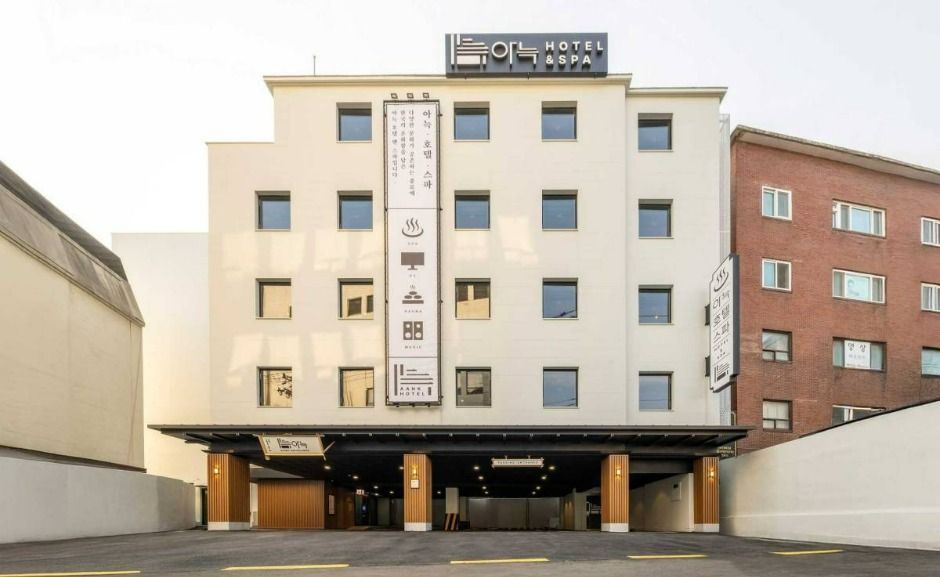
Aank Hotel & Spa Jongno Unni Branch (아늑호텔 앤 스파 종로운니점)
8.5Km 2025-04-24
89 Donhwamun-ro 11ga-gil, Jongno-gu, Seoul
Aank Hotel & Spa Jongno Unni Branch embodies the warmth and charms of Korea. Guests are welcome to unwind with diverse room options to choose from such as the msuic room, signature spa room, desktop 2-PC room, and standard room. It's location in the heart of Seoul makes it a great place for tourists as well as well.
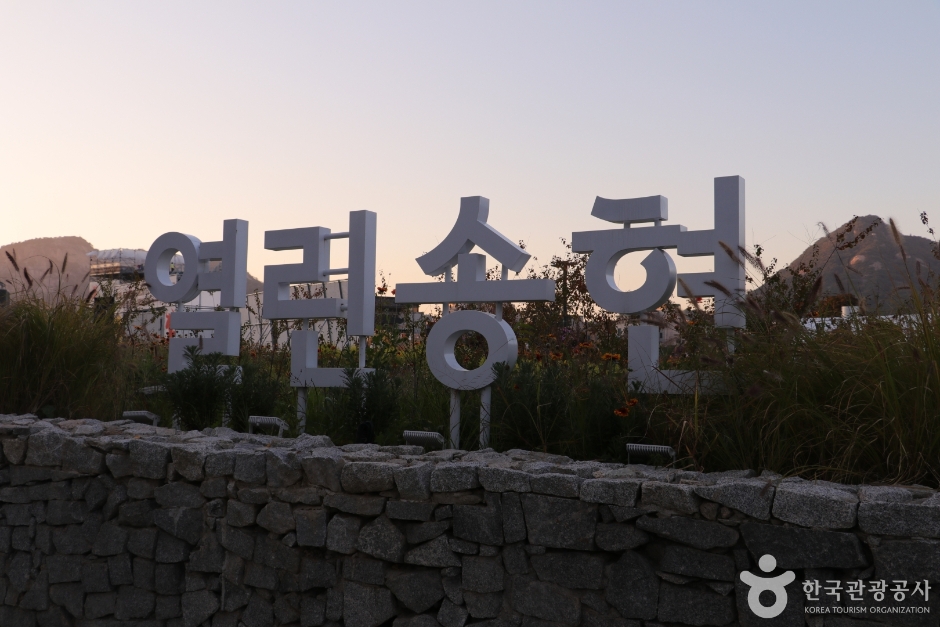
Songhyeon Green Plaza (열린송현 녹지광장)
8.5Km 2025-11-11
Songhyeon-dong, Jongno-gu, Seoul
Songhyeon Green Plaza, located between Gyeongbokgung Palace and Jongno, is a space for culture and rest. The site was formerly used as housing for Shiksan Bank during Japanese rule. After Korea’s liberation, it served as a residence for the US Embassy and military personnel. Later in 1997, it was returned to the Korean government but remained unused for years. In 2022, the ownership was transferred to the Korean House and Land Corporation and then to the Seoul Metropolitan Government, which redeveloped it into a green plaza and opened it to the public. Upon entering the plaza, visitors are greeted by a spacious lawn adorned with flowers during the blooming season. The plaza is connected to the nearby tourist attractions through shortcuts cutting through it, including Cheong Wa Dae (Blue House), Gwanghwamun Plaza, Insa-dong, and Bukchon Hanok Village.
Lee Ri-Ja Hanbok Museum (이리자 한복전시관)
8.5Km 2022-08-08
20, Samcheong-ro, Jongno-gu, Seoul
+82-2-734-9477
The Lee Ri-Ja Hanbok Museum displays the traditional clothing worn in Korea from birth to death. All hanbok displayed at the museum are created by the hanbok designer Lee Ri-Ja herself, who has over 40 years of experience.
Mangnidan Street (망리단길)
8.5Km 2025-05-20
Poeun-ro, Mapo-gu, Seoul
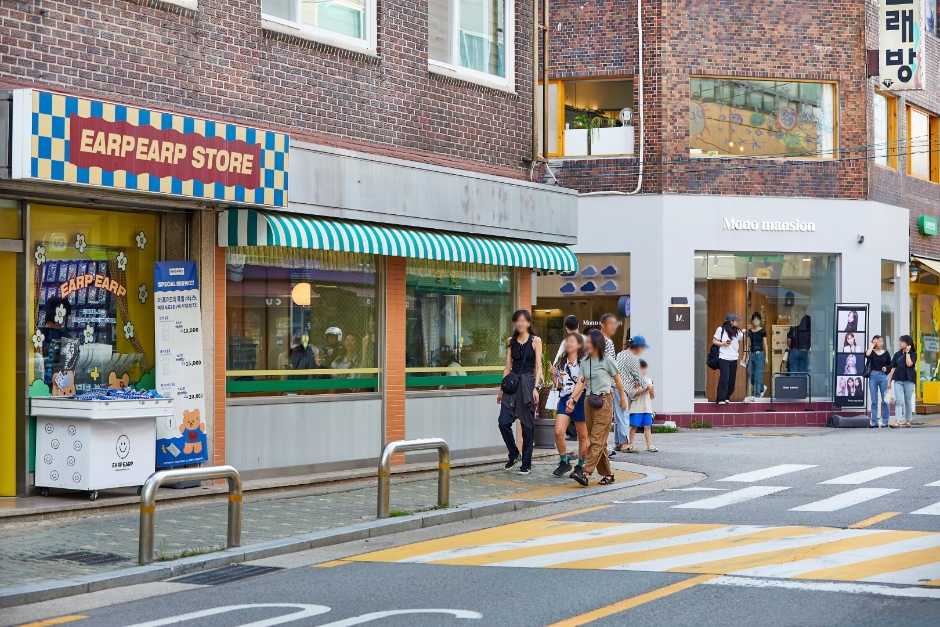
Mangnidan Street is located near Poeun-ro, which can be reached in about 6 to 8 minutes of leisurely walk toward Mangwon Hangang Park from Exit 2 of Mangwon Station on Subway Line 6. Its name comes from the combination of Mangwon-dong and the Gyeongnidan Street in Itaewon, meaning the “Gyeongnidan Street of Mangwon-dong.” There are a variety of restaurants, cafes, dessert shops, and other small shops, each with their own charm, making it a great place to take the kids shopping or just get some rest. This place is quite close to Mangwon Market, so visitors can stop by the market if time allows. Another way to fit this area into the itinerary is as a pit stop for desserts or some shopping before heading to Mangwon Hangang Park.
Mangwon Market (망원시장)
8.5Km 2025-07-11
27 Poeun-ro 6-gil, Mapo-gu, Seoul
Mangwon Market is one of the representative traditional markets of Seoul. Its proximity to both Mangnidan Street and Hangang Park makes it a great place to do some shopping in preparation for a riverside picnic. The market isn’t very large, but it is packed with delicious treats. One can find classics like the deep-fried and braised chicken, braised pigs' feet, crispy deep-fried green chili pepper, and other snack fare there, along with stores offering food and lifestyle items for some browsing.
Ground Seesaw Seochon (그라운드시소 서촌)
8.5Km 2023-01-17
18-8, Jahamun-ro 6-gil, Jongno-gu, Seoul
Ground Seesaw is a cultural complex located in Seochon, Jongno presented by Media & Art, an exhibition production company, and designed by SoA, an architecture firm, and Loci Studio, a landscaping studio. Visitors are able to check out a variety of exhibits at Ground Seesaw Seochon.
Seodaemun Independence Park (서대문독립공원)
8.5Km 2022-12-15
251, Tongil-ro, Seodaemun-gu, Seoul
+82-2-3140-8305
Seodaemun Independence Park was built on the former Seoul Detention Camp. It was used to imprison thousands of Korean independence activists until the liberation from the Japanese occupation on August 15, 1945, as well as the political prisoners during the political turmoil in the 1960s. When the prison was moved to Uiwang-si, Gyeonggi-do in November 1987, the area was restored and turned into a memorial park in August 15, 1992 to honor the sacrifices of the martyrs. The park preserves seven prison buildings, an execution ground, underground women’s prison, and the March 1st Movement Monument that has been moved from Tapgol Park in Jongno.
One of the most significant monuments of the Seodaemun Independence Park is Dongnimmun Gate (Independence Gate), which has been designated a Historic Site. Nearby is Dongnipgwan (Independence Hall), originally called Mohwagwan, which was used to greet Chinese envoys during the Joseon dynasty. Today, the hall enshrines 2,327 tablets inscribed with the names of Koreans who died for the cause of national independence. Standing right next to Dongnimmun Gate are the remnants of Yeongeunmun Gate, another Historic Site. Other sights inside the park include the Patriotic Martyr Monument, Declaration of Independence Monument, and Statue of Dr. Seo Jae-pil, who was an independence activist and publisher of Korea’s first independent newspaper. The main highlight of the park is the Seodaemun Prison History Hall, a former prison building that was renovated into a history museum.
 English
 한국어
한국어 日本語
日本語 中文(简体)
 Deutsch
 Français
 Español
 Русский


