
365mc (365엠씨(mc)병원)
17.2Km 2025-11-26
126 Seochojungang-ro, Seocho-gu, Seoul
365mc is a medical institute specializing in liposuction and Local Anesthetic Minimal-Invasive Liposuction (LAMS) for 21 years.
It was established as a medical institution specialized for obesity treatment, a first in Korea. The clinic set a new record in terms of satisfaction with the liposuction procedure at 99.7%.
The clinic developed LAMS, a new liposuction technique, and presented it at various international academic conferences, including AACS and AAAM in the US. It has performed over six million obesity treatment cases.
To obtain optimized treatment results, 365mc has developed the Motion Capture and Artificial Intelligence assisted Liposuction (MAIL) system, and the Liposuction Efficacy Prediction Algorithm (LEPA), which is a big data-based AI system that predicts the result of liposuction.
Gangnam Arumdaun Nara Beauty Clinic (강남 아름다운나라 피부과)
17.2Km 2025-10-23
(12th Floor), 390 Gangnam-daero, Gangnam-gu, Seoul
Gangnam Arumdaun Nara Beauty Clinic has been at the forefront of Thermage technology, starting with the first-generation Thermacool in 2003, followed by the second-generation Thermage NXT, third-generation Thermage CPT, and the fourth-generation Thermage FLX.
The medical team at Gangnam Arumdaun Nara Beauty Clinic has published eight SCI-level papers related to Thermage, accounting for 10% of all Thermage-related research worldwide.
The clinic’s expertise in achieving effective lifting results without skin damage is due to continuous research and the skilled medical team.
The clinic offers its own skincare brand, Arumdaun Nara Cosmetics.
Bright St. Mary’s Eye Center (밝은성모안과의원)
17.2Km 2025-11-28
3rd, 16th, 17th, and 18th Floors, Cambridge Building, 110 Teheran-ro, Gangnam-gu, Seoul
Bright St. Mary’s Eye Center opened in 2000 and has been a trusted leader since the early generation of vision correction surgery in Korea. With decades of experience and a strong clinical track record, we provide safe, precise procedures such as LASIK, LASEK, and SMILE LASIK using advanced technology.
To ensure both surgical accuracy and a satisfying patient experience, we offer state-of-the-art equipment, highly experienced specialists, reasonable procedure costs, and a comprehensive postoperative care system.
Recognized by patients from Korea and around the world,
Bright St. Mary’s Eye Center (Gangnam Branch) invites you to enjoy a brighter, clearer everyday life.
Medical Korea Service Co., Ltd (주식회사 메디컬코리아서비스)
17.2Km 2025-11-27
4th Floor, 8 Teheran-ro 2-gil, Gangnam-gu, Seoul
Medical Korea Service is a global medical concierge agency specializing in premium skincare, regenerative therapy (stem cell & NK), wellness programs, and advanced plastic surgery in Korea. Recognized by the City of Seoul and Gangnam-gu, we partner exclusively with top-tier, accredited clinics and board-certified specialists with 10–20 years of experience. Our multilingual VIP teams (English, Indonesian, Chinese) provide end-to-end care—from personalized treatment planning to on-site support—making MKS a trusted choice for international clients across Southeast Asia.
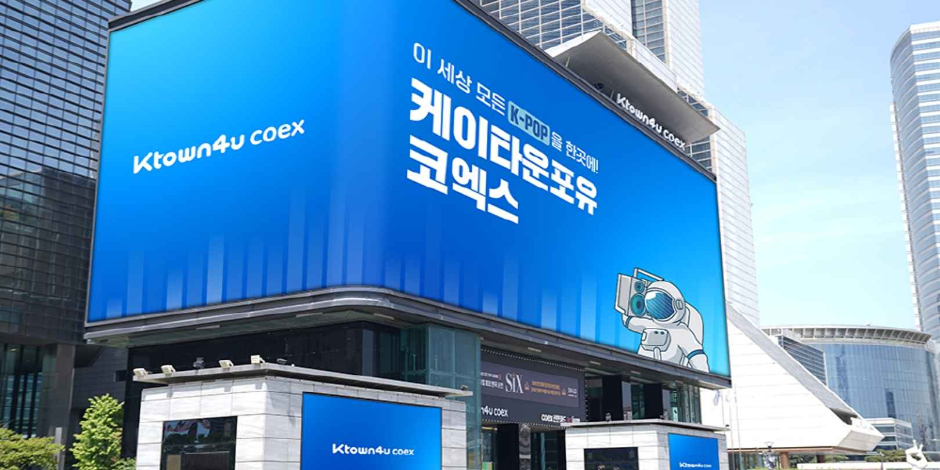
Ktown4u COEX (케이타운포유 코엑스)
17.2Km 2024-06-11
513 Yeongdong-daero, Gangnam-gu, Seoul
Ktown4u COEX is a K-culture complex located in the bustling COEX district. The center offers everything a hallyu fan could wish for, from K-pop to beauty, fashion, and even K-lifestyle. Each of the three floors focuses on a different way to experience K-culture, with the second floor offering sales of diverse goods, the third floor operating as an academy for learning K-pop dances and songs, and the fourth floor being an event space to facilitate communication between fans and artists.
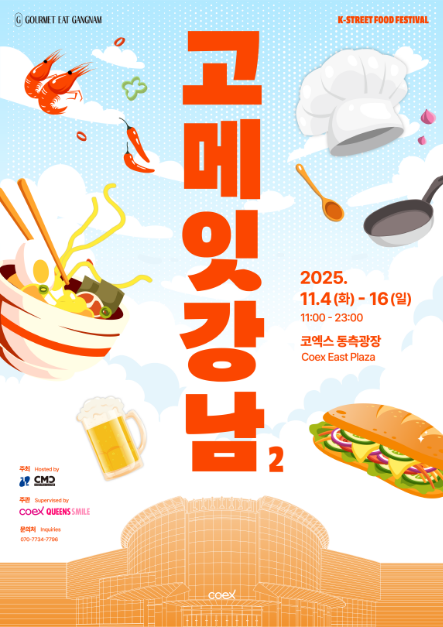
Gourmet Eat Gangnam (제2회 고메 잇 강남)
17.2Km 2025-11-14
513 Yeongdong-daero, Gangnam-gu, Seoul
+82-70-7734-7796
Marking its second anniversary, this year's Gourmet Eat Gangnam highlights the theme of gourmet festival, featuring a chef cooking show with 100 different menu items. The event takes place from November 4 to 16 at the plaza in front of COEX’s East Gate. As an F&B festival at the heart of the city, it offers visitors the opportunity to enjoy delicious food and drinks while engaging in a variety of activities.
COEX Artium (코엑스아티움)
17.2Km 2022-07-04
513, Yeongdong-daero, Gangnam-gu, Seoul
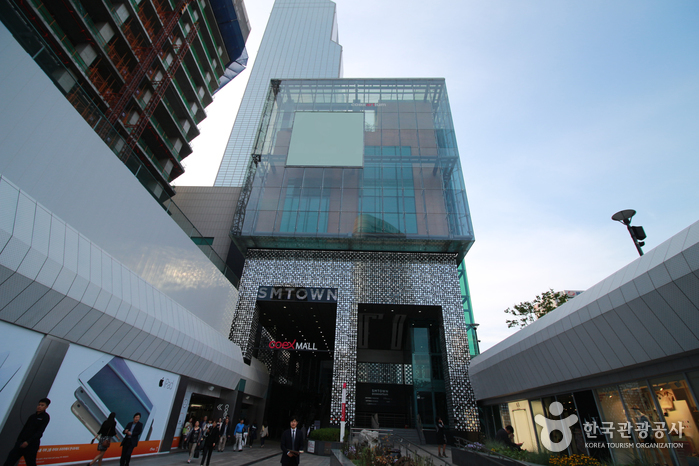
Established by Korea International Trade Association and COEX, COEX Artium is a spacious muscial performance hall with over 800 seats. High quality and diverse musical or theatrical performances are held year-round to satisfy both Korean and international visitors. Foreign language services (English, Japanese, and Chinese) are also available. It has the Trade Promotion Exhibition Hall. Near COEX Artium are many performance halls such as COEX Art Hall (184 seats), Auditorium (1058 seats), Convention Hall (7,000 seats), ang Grand Conference Room (450 seats), making the COEX area a main place for cultural and musical performances in Seoul. Visitors may want to visit the COEX website (www.coex.co.kr) to find out information on various performances.
COEX Aquarium (코엑스 아쿠아리움)
17.2Km 2024-07-17
513 Yeongdong-daero, Gangnam-gu, Seoul
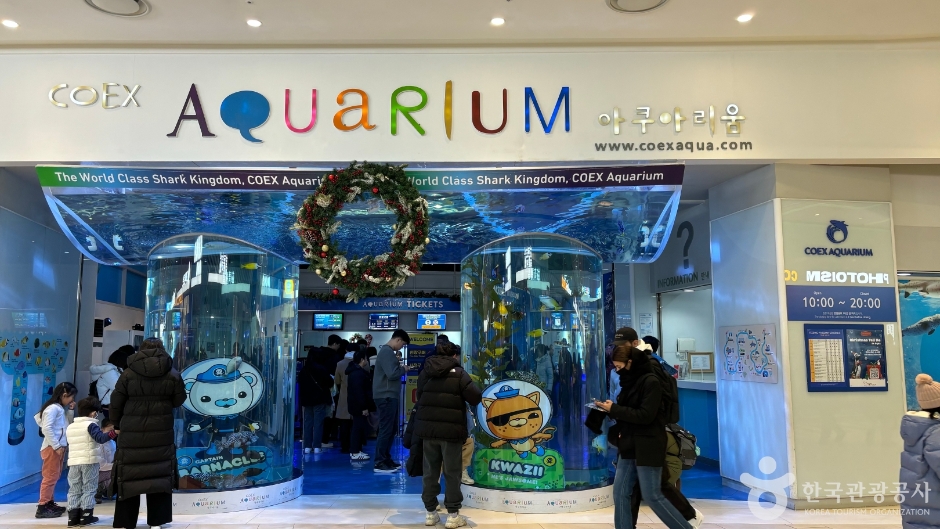
The COEX Aquarium comprises 183 display tanks and 90 breeding tanks with 3,500 tons of water volume, making it a large-scale aquarium. It houses 40,000 sea creatures of 650 different species, exhibited in 16 themed zones. In particular, the highest number of sharks and the largest variety of species in Korea are living in this aquarium. Over 20 rest areas located throughout the aquarium, as well as an open-top water tank releasing anions make this tourist site in the heart of Gangnam a perfect healing place for local and international visitors.
Starfield Library (별마당도서관)
17.2Km 2022-07-27
513, Yeongdong-daero, Gangnam-gu, Seoul
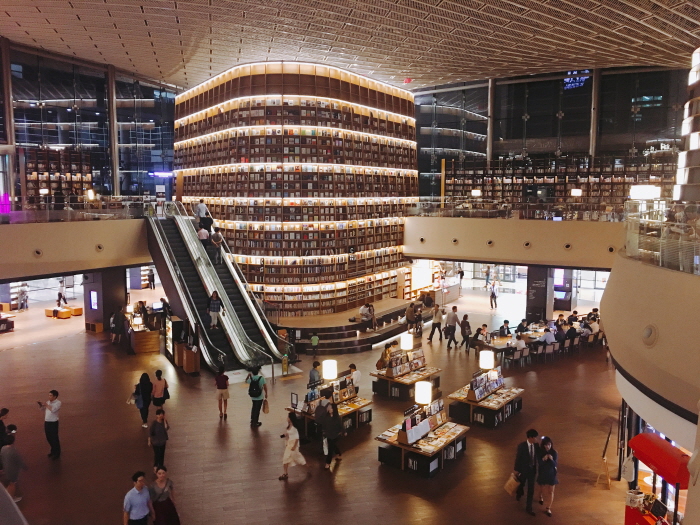
Located in the middle of COEX Central Plaza, Starfield Library offers visitors a perfect reading space. The two-story library has 13-meter-tall bookshelfs and soft lights to ease the eyes as well as various types of tables with electric plugs for those with laptops. With more than 50,000 books ranging from literature to hobbies as well as over 400 types of magazines, visitors are welcome to find pleasure in reading and relax.
Convention and Exhibition Center (COEX) (한국종합무역센터(코엑스))
17.2Km 2022-12-16
513, Yeongdong-daero, Gangnam-gu, Seoul
The Convention and Exhibition Center (COEX) was established on September 7, 1988 as a large-scale business town for domestic and overseas businessmen. Business operations can be managed easily as assembly halls, exhibition halls, the Korean City Air Terminal, InterContinental Hotel, and Hyundai Department Store are gathered in one spot.
A 57-story building contains 20 trade organizations including the Korea International Trade Association (KITA), as well as 250 companies and financial institutions. Convention and Exhibition, which houses three specialized exhibition halls and permanent exhibition halls, is composed of a four-story main building and three-story extension.
An underground passageway connects COEX Mall, completed in 2000, and Bongeunsa Temple to the north with Samseong Station (Seoul Subway Line 2). Additional facilities for culture, pleasure, and shopping make COEX a must-visit attraction.
 English
 한국어
한국어 日本語
日本語 中文(简体)
 Deutsch
 Français
 Español
 Русский


