
Seoul Museum of Art (서울시립미술관(서소문본관))
3.4Km 2024-06-19
61 Deoksugung-gil, Jung-gu, Seoul
The Seoul Museum of Art (SeMA) is a space for all to meet and experience the joy of art. Located in the center of Jeong-dong, a district that retains traces of Seoul’s modern and contemporary history, the museum integrates the historical facade of the former Supreme Court with modern architecture. In addition to various programs―encompassing exhibitions, educational outreach initiatives, screenings, workshops, performances, and talks, communal spaces including SeMA Cafe, the artbook store, the open space lobby, and the outdoor sculpture park SeMA WALK provide a rich range of ways for visitors to experience art.
Seonyudo Park (선유도공원)
3.4Km 2025-10-27
343 Seonyu-ro, Yeongdeungpo-gu, Seoul
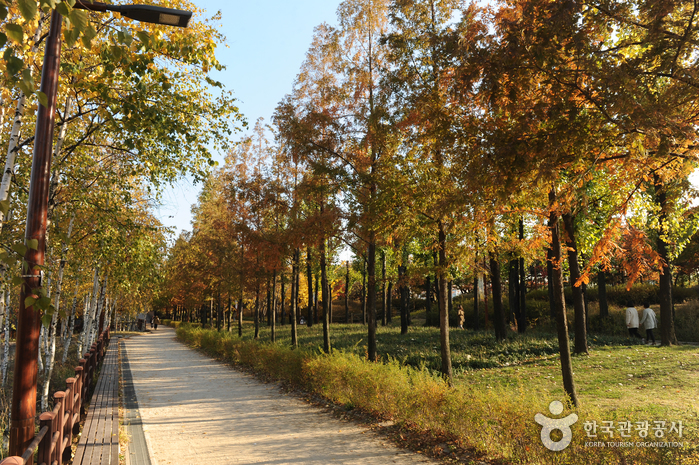
Seonyudo Park is Korea's first water-themed ecological park. The park was renewed from an old water treatment plant. Visitors can observe a water purification system, an aquatic plant garden, and an ecological forest, as well as exhibitions and other interesting facilities. The park also hosts diverse hands-on programs and exhibitions.

The Hyundai Seoul (더현대 서울)
3.4Km 2024-07-22
108 Yeoui-daero, Yeongdeungpo-gu, Seoul
The Hyundai Seoul, an ultra-modern flagship store, is located in the heart of Seoul, the center of globally trending K-content. Under the slogan of "Echoes for the Future," The Hyundai Seoul presents the vision for a happier tomorrow and standards for new life. Featuring an innovative design of spaces, global content curation, and, even, futuristic technologies, The Hyundai Seoul is the most prominent new global landmark in Seoul. At The Hyundai Seoul, the latest global trends in interior and architectural design can be witnessed from encounters with novel materials, the balance between planes and lines, and creative interior design filled with light. As soon as one steps into The Hyundai Seoul, the Sounds Forest and Waterfall Garden welcome them with open arms. This incredible piece of nature encountered in such a high-tech structure designed for the future is amazingly beautiful. A vast 3,306-square-meter indoor garden with natural grass and sunlight falling through the glass ceiling located some 20 meters high delivers echoes of a forest to all visitors. Art is a language in the broadest category that can be felt and empathized with without speaking. A large 595-square-meter three-dimensional exhibit instantaneously and overwhelmingly stimulates inspiration as soon as one enters. Inspiration for better lives and communication for culture start here. An artwork by Studio Swine designed with a message from nature - Unite & Shine, STUDIO SWINE - and appreciated by the audience that feels and enjoys it meets with high-end brands on the Exclusive Label (1F) floor.
Fairmont Ambassador Seoul (페어몬트 앰배서더 서울 (Fairmont Ambassador Seoul))
3.4Km 2025-10-27
108 Yeoui-daero, Yeongdeungpo-gu, Seoul
◎ Travel information to meet Hallyu’s charm - "Strange Lawyer Woo Young-woo"
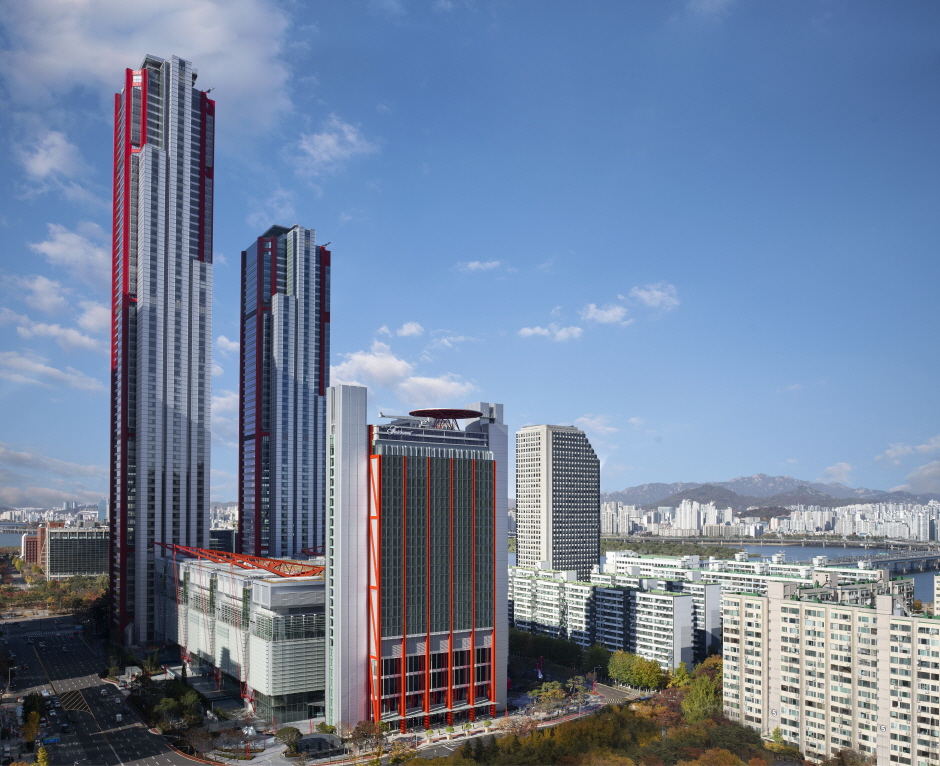
In the drama, an incident occurred during a wedding ceremony held at this hotel, and it is the place where Youngwoo visited to investigate. It is a 5-star luxury hotel with 308 rooms, and it is very impressive to see the skyline and view of Seoul. As it is close to Hangang Park as well as Hyundai Department Store and IFC Mall, it is the perfect place to stay, relax and enjoy shopping at the same time.
Jinju Hoegwan (진주회관)
3.4Km 2024-06-19
26 Sejong-daero 11-gil, Jung-gu, Seoul
Jinju Hoegwan is a renowned kongguksu (noodles in cold soybean soup) eatery near City Hall Station. Kongguksu is a traditional Korean summer dish made by boiling and grinding soybeans into a creamy broth, served with noodles, offering a refreshing and nutty flavor. Kongguksu is available from March to November. Their staff-recommended menu includes kimchi bokkeumbap (kimchi fried rice), freshly roasted by the staff, along with kimchi jjigae and samgyeopsal (pork belly).
Sungnyemun Gate (숭례문)
3.5Km 2024-11-27
40 Sejong-daero, Jung-gu, Seoul
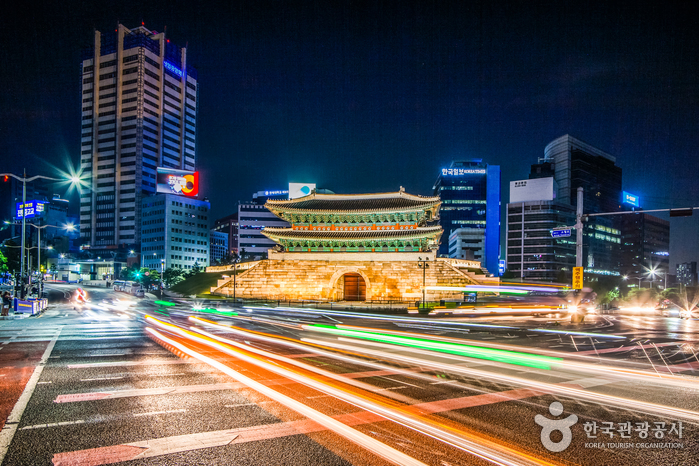
Sungnyemun Gate is Korea’s National Treasure No. 1, and its unofficial name is Namdaemun Gate. Sungnyemun Gate is the largest castle gate stone structure with an arched entrance in the middle. There’s a column on top of a platform, raising the roof, distinguishing the upper stories and lower stories of the building. Passageways for traffic are located at the east and west ends of the gate. Different from the other gates, Sungnyemun Gate’s tablet has its name written vertically.
On February 10, 2008, Sungnyemun was destroyed by fire. After a 5-year reconstruction work, the gate was re-opened to the public again on May 4, 2013.
Myeong-dong, Namdaemun, Bukchang-dong, Da-dong and Mugyo-dong Special Tourist Zone (명동 남대문 북창동 다동무교동 관광특구)
3.5Km 2021-12-30
40, Sejong-daero, Jung-gu, Seoul
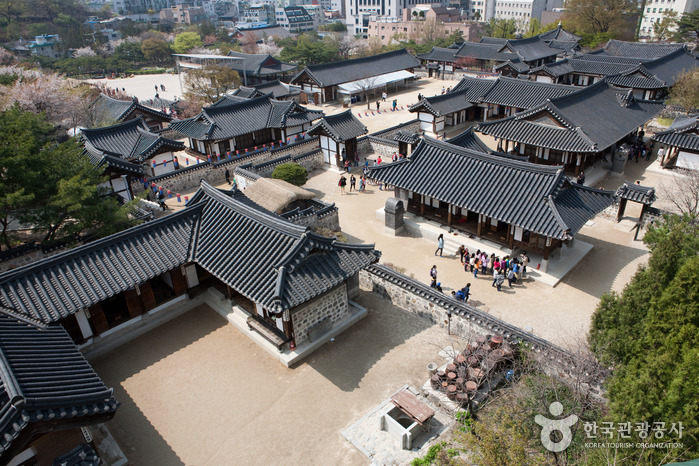
Myeong-dong, Namdaemun, Bukchang-dong and Da-dong are widely known among international visitors as hot spots for shopping and food.
Myeong-dong is a popular destination for shopping, culture, arts and fashion. Major shopping malls such as Lotte Department Store, Shinsegae Department Store, Myeong-dong Migliore and Samik Fashion Town are located here. Shoppers can find a variety of products here from high-end items to relatively inexpensive clothes. There’s also no shortage of street food, traditional restaurants, coffee shops and fancy cafes.
Namdaemun Market is the biggest traditional market in Korea. Visitors can purchase souvenirs and local produce at an affordable price in the shopping complex crowded with stores and street stalls. The market sells a variety of clothes, kitchenware, toys, accessories, food, flowers and imported goods.
Bukchang-dong and Sogong-dong have high-end accommodations including Lotte Hotel Seoul and Westin Chosun Seoul, duty-free shops, and restaurants serving traditional dishes.
[Myeong-dong, Namdaemun Market and Bukchang-dong Special Tourist Zone]
Areas included: Myeong-dong, Bukchang-dong, Mugyo-dong and Da-dong, Seoul
Area size: 872,809 ㎡
Tourist attractions: Myeong-dong, Namdaemun Market and Bukchang-dong, Department Stores (Lotte Department and Shinsegae Department Store, etc.), Traditional Market, Duty-free Shop, Hanok Village, N Seoul Tower, etc.
World Cup Park (월드컵공원)
3.5Km 2024-10-23
243-60 World Cup-ro, Mapo-gu, Seoul
Opened on May 1st, 2002, the Wolrd Cup Park was once a 15-year-old landfill that held over 92 million tons of garbage. The park is located near Seoul World Cup Stadium, and is made up of five smaller parks - Pyeonghwa (Peace) Park, Haneul (Sky) Park, Noeul (Sunset) Park, Nanjicheon Park, and Nanji Hangang Park.
* Pyeonghwa Park: Closest to Seoul World Cup Stadium, it holds a pond, garden, children’s playground, and forest. As a representative park of World Cup Park, the park was designed in hopes of peace and harmony between mankind and nature. It is often used as a picnic area and place for nature studies.
* Nanji Hangang Park: Nanji Hangang Park was developed on the banks of the Hangang River. In contrast to other Hangang River parks, Nanji Hangang Park is a water-friendly park that has a gradual slope towards the riverbank. The park consists of a camping ground, soccer field, basketball court, grass field, cruise ship port, and an area for nature studies.
* Haneul Park: Haneul Park consists of vast grassland located at the highest elevation of the five parks. The park's pasture is covered with eulalias and wild flowers in their most natural state. In addition, 30,000 butterflies of different species were introduced in 2000 to stabilize the ecosystem. Five wind-powered generators provide power to the park and the park’s maintenance office. Once a mountain of garbage, it is now a green hill with 22 lookout points offering breathtaking views of Seoul, including the N Seoul Tower, Bukhansan Mountain, and Hangang River. Tall trees are line the park to provide shades and serve as resting spots for visitors. As a popular spot to enjoy the sight of eulalias, the park usually remains open until late in the evening during the Eulalia Festival period.
* Noeul Park: In order to prevent the vast area of land of what was once a wasteland from becoming an unnecessary chunk of land, a nine-hole golf course was constructed in what is now known as Noeul Park. The golf course serves as an environment friendly entertainment park to visitors while stabilizing the geographical formation and has an urban park nearby that offers scenic views of the Hangang River and beautiful sunset. Located west of the golf park is Noeul Square, decorated with shrubs and flowers.
* Nanjicheon Park: Nanjicheon Park was developed from the Nanji Stream, which flowed under Haneul Park. It was once overflowing with sewage runoff from a nearby landfill, but it has since been beautifully restored into a park with clear water. The park is built to serve as a recreational spot for those with for youths, elders, and people with disabilities.
 English
 한국어
한국어 日本語
日本語 中文(简体)
 Deutsch
 Français
 Español
 Русский


