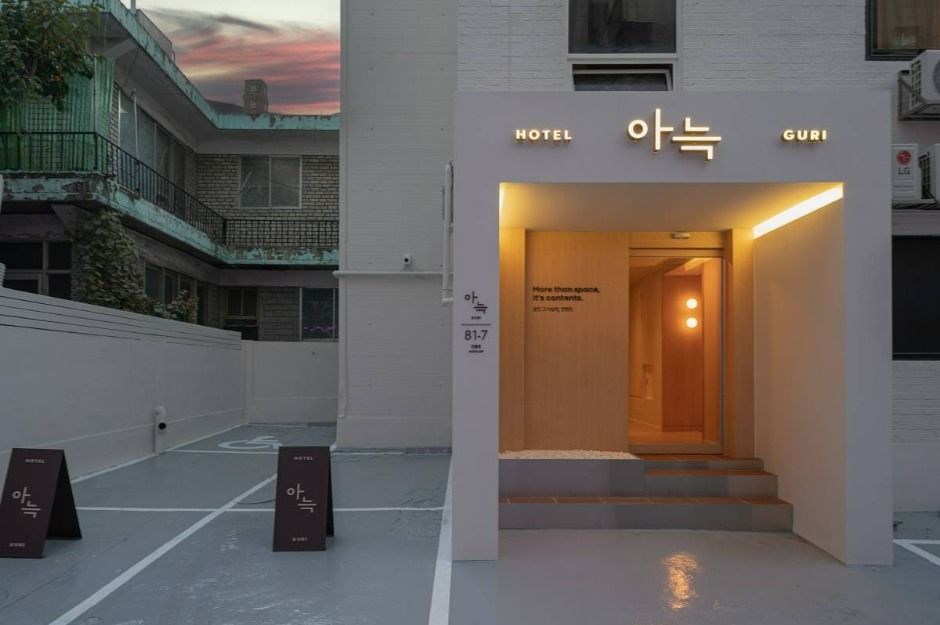
The Hyooshik Aank Hotel Guri (더휴식 아늑호텔 구리점)
18.4Km 2025-04-24
81-7 Angol-ro, Guri-si, Gyeonggi-do
The hotel offers a variety of themed rooms, such as a standard room for a comfortable stay, a cartoon room with comic books, a music room with a Geneva speaker, a wine room with a wine fridge and wine glasses, a 2PC room equipped with gaming computers, a movie beam room with a beam projector, a play room with a PlayStation 4, a golf room with golf equipment, and a deep sleep room with a massage chair. The hotel also offers parking facilities and a guest lounge.
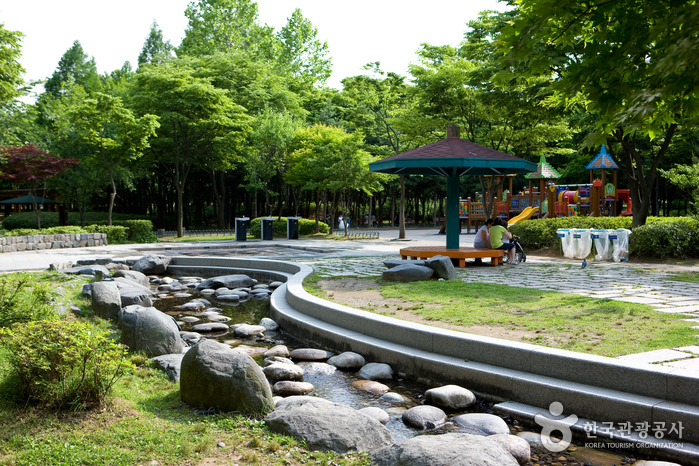
Maeheon Citizen's Forest (매헌시민의 숲)
18.4Km 2022-12-21
99, Maeheon-ro, Seocho-gu, Seoul
+82-2-575-3895
Maeheon Citizen's Forest, located near Yangjae Tollgate, was created in anticipation of the Seoul Asian Games in 1986 and the 24th Olympic Games in 1988. The forest provides a scenic habitat for 94,800 trees of 43 different species including pine, zelkova, purple bloom maple, horse chestnut, and nut pine. These trees are rarely seen in cities and the park is a popular date spot for couples. In the fall, the trees in the park bear an abundance of persimmons and quinces.
Amenities and facilities include an outdoor wedding hall, walking course, basketball court, volleyball court (also used for foot volleyball), tennis court, barefoot walking path, and outdoor workout equipment. Memorial sites and monuments like the memorial of Patriot Yun Bong-Gil can also be found scattered throughout the park grounds.
![Golfzon Market - Jamsil Branch [Tax Refund Shop] (골프존마켓 잠실)](http://tong.visitkorea.or.kr/cms/resource/14/2879314_image2_1.jpg)
Golfzon Market - Jamsil Branch [Tax Refund Shop] (골프존마켓 잠실)
18.5Km 2024-04-18
71, Samjeon-ro, Songpa-gu, Seoul
-
![CheongKwanJang - Jamsilbon-dong Branch [Tax Refund Shop] (정관장 잠실본동)](http://tong.visitkorea.or.kr/cms/resource/17/2879317_image2_1.jpg)
CheongKwanJang - Jamsilbon-dong Branch [Tax Refund Shop] (정관장 잠실본동)
18.5Km 2024-04-17
188, Baekjegobun-ro, Songpa-gu, Seoul
-

Amsa-dong Prehistoric Site Museum (암사동선사유적박물관)
18.5Km 2023-12-22
875 Olympic-ro, Gangdong-gu, Seoul
The archaeological sites in Amsa-dong, Seoul, were a collective settlement where people lived during the Neolithic Age about 6,000 years ago and became known to the world after the sand dunes along the Hangang River caved in during the great flood of 1925, exposing numerous pieces of comb-patterned pottery. The area designated as a historic site in 1979, and excavation of the site took place from 1981 to 1988. The cultural heritage protection area was expanded to a total area of 78,133㎡. Currently, nine Neolithic dugout huts and one experiential dugout hut have been restored. The exhibitions currently open to the public are Exhibition Hall 1, which displays a restoration of a Neolithic Age dugout, and Exhibition Hall 2, which displays various panels and models to help understand the prehistoric era as a whole.
Asan Medical Center (서울아산병원)
18.5Km 2025-10-23
(Pungnap-dong), 88 Olympic-ro 43-gil, Songpa-gu, Seoul
Opened in June 1989, Asan Medical Center is the largest tertiary hospital in Korea with 2,764 beds. In 2023, we treated an average of 13,260 outpatients and 2,539 inpatients per day, and performed 70,892 surgeries throughout the year.
With three specialty hospitals–Cancer Institute, Heart Institute, and Children's Hospital–and more than 50 specialized centers, we lead the world in cancer, organ transplantation, and cardiac care. In recognition of our efforts, we have topped the list of Korea's Most Admired Hospitals for 18 consecutive years and ranked NO. 1 in Korea for six consecutive years in U.S. Newsweek's World's Best Hospitals.
As a "quarternary hospital" serving critically ill patients from Korea and abroad who come to us as their last hope, Asan Medical Center treats more than 20,000 international patients from around 100 countries, including the United States, United Arab Emirates, and Mongolia. Medical professionals from developed countries visit us to learn our advanced medicine. Over the past decade, more than 3,700 professionals from nearly 90 countries have visited us to learn the latest medical techniques.
![Olive Young - Eunhaengnamu Sageori Branch [Tax Refund Shop] (올리브영 은행나무사거리)](http://tong.visitkorea.or.kr/cms/resource/86/2888486_image2_1.jpg)
Olive Young - Eunhaengnamu Sageori Branch [Tax Refund Shop] (올리브영 은행나무사거리)
18.5Km 2024-04-18
705, Geumha-ro, Geumcheon-gu, Seoul
-
Artbox - Guri Branch [Tax Refund Shop] (아트박스 구리)
18.6Km 2024-04-19
A section and 2F, 247, Gyeongchun-ro, Guri-si, Gyeonggi-do
-
![Olive Young - Guri Station Branch [Tax Refund Shop] (올리브영 구리역)](http://tong.visitkorea.or.kr/cms/resource/63/2888663_image2_1.jpg)
Olive Young - Guri Station Branch [Tax Refund Shop] (올리브영 구리역)
18.6Km 2024-04-18
247, Gyeongchun-ro, Guri-si, Gyeonggi-do
-
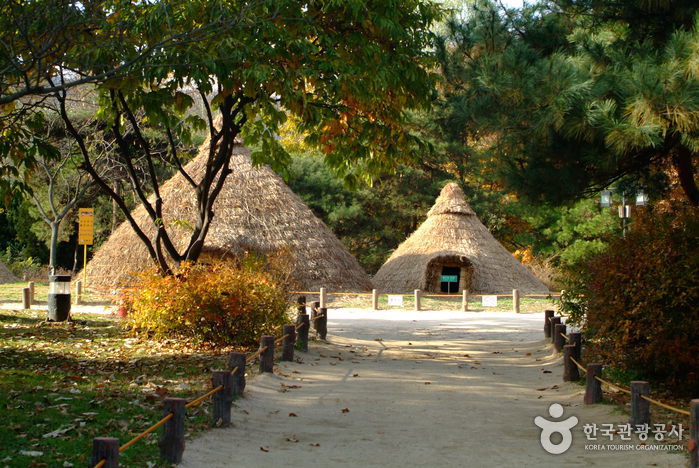
Archaeological Site in Amsa-dong, Seoul (서울 암사동 유적)
18.6Km 2021-07-27
875, Olympic-ro, Gangdong-gu, Seoul
+82-2-3425-6520
The Archaeological Site in Amsa-dong reproduces the lifestyle of the Neolithic Era. Even the entrance gate is shaped like a huge dolmen and the trash cans are ancient diagonal-line patterned earthenware. Archaeological Site in Amsa-dong was excavated in 1925 when a flood washed away the soil on the banks of the Hangang River and exposed a large number of diagonal-line patterned earthenware. After several excavations, the Archaeological Site in Amsa-dong was established.
The site was a location for a massive colony, thus many ancient buildings, stone axes and stone arrows have been uncovered as well as countless diagonal-line patterned earthenware. The housing site is round with a spot in the center for fire. The site is colossal and possesses nine mud huts, two exhibition halls displaying ancient artifacts and an open mud hut where visitors can experience life in the Neolithic Era. The site offers many attractions such as mud huts and promenades. Archaeological Site in Amsa-dong is also very educational for children and families who want to learn and experience the Neolithic Age.
 English
 한국어
한국어 日本語
日本語 中文(简体)
 Deutsch
 Français
 Español
 Русский


