![Series; Corner [Tax Refund Shop] (시리즈코너)](http://tong.visitkorea.or.kr/cms/resource/09/2891109_image2_1.jpg)
![Kolon Series; - Itaewon Branch [Tax Refund Shop] (코오롱 시리즈 이태원)](http://tong.visitkorea.or.kr/cms/resource/73/2889073_image2_1.jpg)
Kolon Series; - Itaewon Branch [Tax Refund Shop] (코오롱 시리즈 이태원)
7.2Km 2024-04-18
244, Itaewon-ro, Yongsan-gu, Seoul
-
![Lansmere - Hannam Branch [Tax Refund Shop] (란스미어 한남점)](http://tong.visitkorea.or.kr/cms/resource/77/2890177_image2_1.jpg)
Lansmere - Hannam Branch [Tax Refund Shop] (란스미어 한남점)
7.2Km 2024-04-18
267, Itaewon-ro, Yongsan-gu, Seoul
-
![Le Labo - Itaewon Branch [Tax Refund Shop] (르라보 이태원)](http://tong.visitkorea.or.kr/cms/resource/51/2888851_image2_1.jpg)
Le Labo - Itaewon Branch [Tax Refund Shop] (르라보 이태원)
7.2Km 2024-04-18
1-2F, 259, Itaewon-ro, Yongsan-gu, Seoul
-
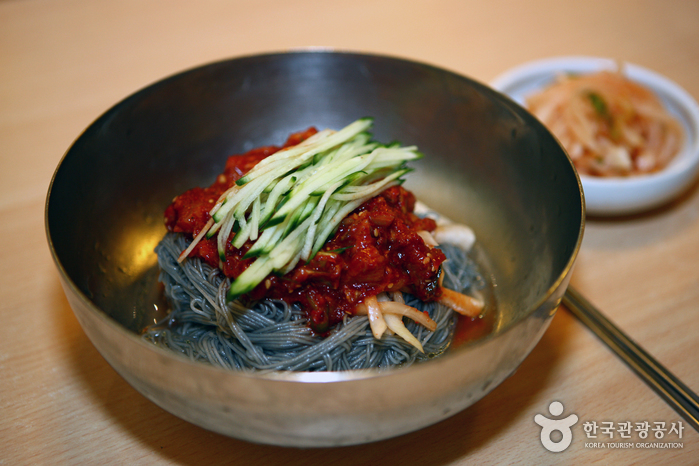
Ojang-dong Hamheung Naengmyeon (오장동 함흥냉면)
7.2Km 2024-02-22
108 Mareunnae-ro, Jung-gu, Seoul
Ojang-dong Hamheung Naengmyeon originated when grandma Han Hyesun, who migrated from Hamgyeongnam-do to Seoul during the Korean War, began selling Hamheung-style "nongma guksu (starch noodles)," eventually naming it Hamheung naengmyeon (Hamheung cold buckwheat noodles). Its signature dish, bibim naengmyeon (spicy buckwheat noodles), features chewy noodles infused with a tangy-sweet seasoning, showcasing the expertise behind its preparation. Alongside the flavorful broth served as a base, the menu also includes variations like hoe naengmyeon (cold buckwheat noodles with raw fish), mul laengmyeon (cold buckwheat noodles), suyuk (boiled pork slices) and mandu.
![Golfzon Market - Magok Branch [Tax Refund Shop] (골프존마켓 마곡 [사후면세점])](http://tong.visitkorea.or.kr/cms/resource/01/2880101_image2_1.jpg)
Golfzon Market - Magok Branch [Tax Refund Shop] (골프존마켓 마곡 [사후면세점])
7.2Km 2024-04-22
1-2F, 376, Yangcheon-ro, Gangseo-gu, Seoul
-
![Comme Des Garçons [Tax Refund Shop] (꼼데가르송)](http://tong.visitkorea.or.kr/cms/resource/81/2890181_image2_1.jpg)

H+ Yangji Hospital (에이치플러스 양지병원)
7.2Km 2025-11-21
1636 Nambusunhwan-ro, Gwanak-gu, Seoul
We operate a one-stop medical service with 15 specialty centers and 21 departments, along with a 24-hour emergency room. As a certified training hospital for gastroenterology endoscopy specialists, we have been accredited as an Excellent Endoscopy Unit for three consecutive terms and are equipped with state-of-the-art endoscopy and liver-specialized systems.
Our world-renowned medical team, including SRC Master Surgeons (U.S.), provides efficient and safe personalized bariatric and metabolic surgeries. The Spine and Joint Center performs minimally invasive and minimal incision surgeries through close multidisciplinary collaboration.
We also operate Da Vinci robotic surgery and maintain a dedicated Department of Critical Care Medicine.
![Olive Young - Guil Station Branch [Tax Refund Shop] (올리브영 구일역)](http://tong.visitkorea.or.kr/cms/resource/27/2880227_image2_1.jpg)
Olive Young - Guil Station Branch [Tax Refund Shop] (올리브영 구일역)
7.2Km 2024-04-18
Store #101-2, #102-1, 1F, 49, Guil-ro 10-gil, Guro-gu, Seoul
-
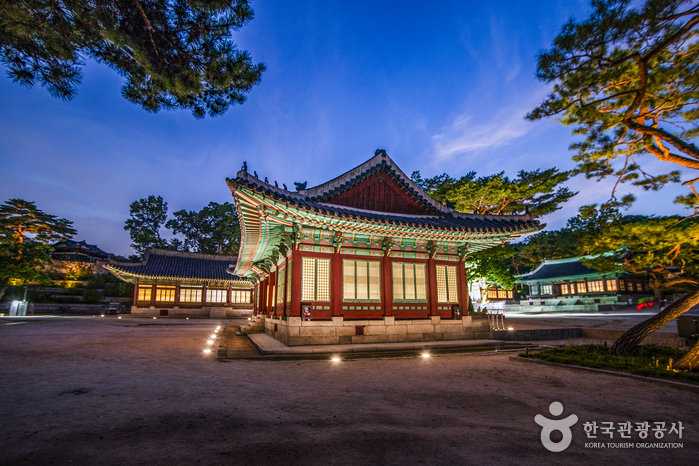
Changgyeonggung Palace (창경궁)
7.2Km 2024-10-31
185 Changgyeonggung-ro, Jongno-gu, Seoul
+82-2-762-4868
Located in the heart of Seoul, Changgyeonggung Palace was originally built as Suganggung Palace by the 4th ruler of the Joseon dynasty, King Sejong (r.1418-1450), for his retiring father, King Taejong. It often served as residential quarters for queens and concubines. During the reign of King Seongjong (r.1469-1494), the palace was renovated and renamed to Changgyeonggung Palace. It later became a park with a zoo and a botanical garden during Japanese colonial rule. The palace grounds remained this way until 1983 when restoration of its old grace was completed.
 English
 한국어
한국어 日本語
日本語 中文(简体)
 Deutsch
 Français
 Español
 Русский


