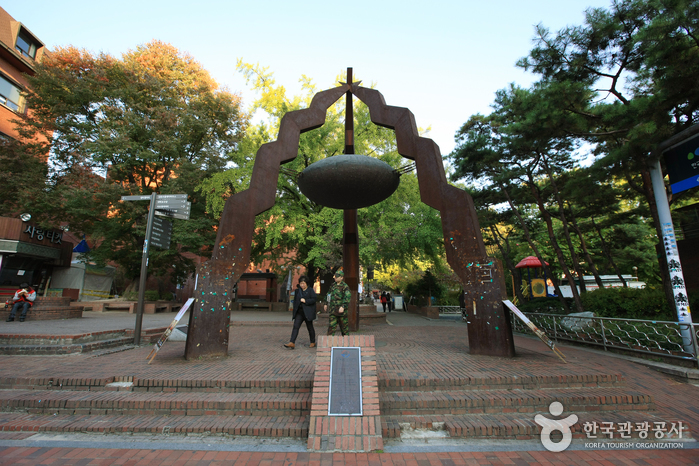
Marronnier Park (마로니에공원)
13.0Km 2021-07-14
104, Daehak-ro, Jongno-gu, Seoul
Marronnier Park was given its name due to the marronnier trees, or horse chestnut trees, growing within the area. The location where Seoul National University's College of Liberal Arts & Science and School of Law once stood, it is now a park dedicated to culture and arts open to the public. In addition to a variety of outdoor performances that take place throughout the area, exhibitions and cultural centers create a romantic atmosphere unique to the park.
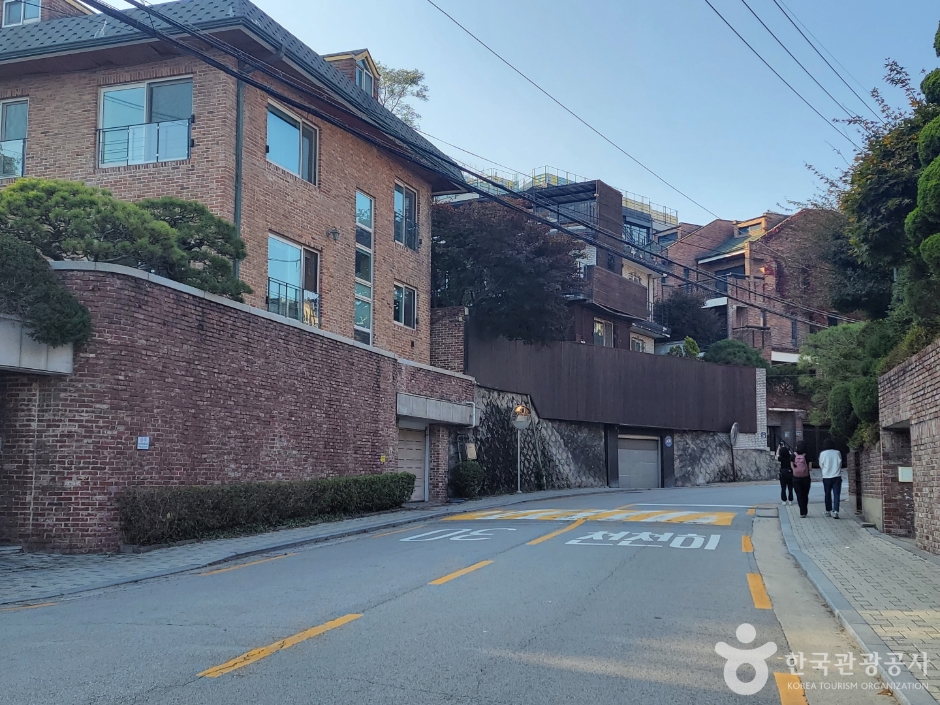
Seongbuk-dong–Bukchon Hanok Village Course (성북동고택북촌산책길)
13.0Km 2025-11-06
68, Seonjam-ro 5-gil, Seongbuk-gu, Seoul
The Seongbuk-dong–Bukchon Hanok Village Course is a nostalgic path connecting famous old houses in Seongbuk-dong and Bukchon Hanok Village, divided by the old city walls. Along the way, you'll find historic sites like Gilsangsa Temple, Jeongbeopsa Temple, Han Yong-un’s Simujang House, and novelist Lee Tae-jun's House. The trail also features charming cultural spots, such as the traditional tea house Sooyeon Sanbang and the Seongbuk Museum of Art.
◎ Travel information to meet Hallyu’s charm - "Parasite"
The scene in the alley where Ki-woo visited Mr. Park's house in a wealthy neighborhood for expensive tutoring was filmed in a residential area in Seongbuk-dong. Seongbuk-dong, an old wealthy village, has luxury mansions lined up in. There are many pretty cafés and galleries here and there, so it's good to take a leisurely look around. Mr. Park's house was a filming set, which was demolished after filming.
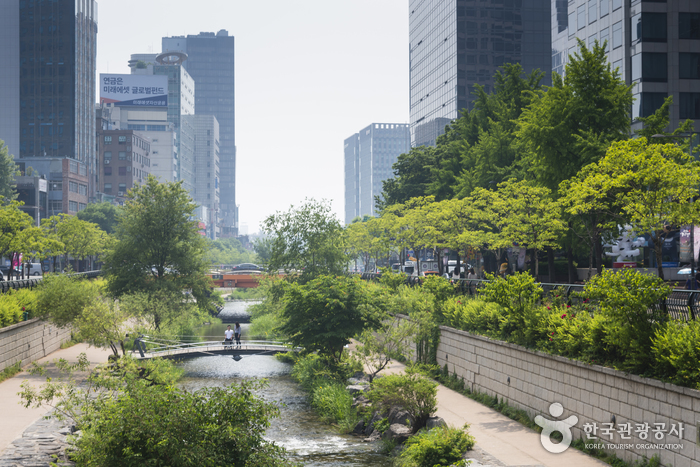
Cheonggyecheon Stream (청계천)
13.0Km 2024-05-16
Changsin-dong, Jongno-gu, Seoul
Cheonggye Plaza was built on Sejong-ro Street, where Cheonggyecheon Stream begins. It was built between Dong-A Ilbo, the starting point of the Cheonggyecheon Stream restoration, and Sindap Railroad Bridge, with a length of 160 meters, a x_width of 50 meters, and a total area of 6,962 meters squared. The plaza is decorated with fountains, waterfalls, and walking paths. It was created as a place for meetings, harmony, peace, and unification, to celebrate the significance of the restoration of Cheonggyecheon Stream. A miniaturized version of Cheonggyecheon Stream is displayed here, providing an overview of the restored stream. There are also interpretive panels about the 22 bridges that cross Cheonggyecheon stream. Fountains of various shapes create beautiful scenery. Cheonggyecheon Stream is accessible from the square through stairs on the left and Cheonggye Trail on the right. There is also an 18-meter tunnel on the Cheonggye Trail, providing a unique experience for citizens entering Cheonggyecheon Stream from the plaza. After constructing Cheonggyecheon Plaza, the Seoul Metropolitan Government made it a car-free street on public holidays so that the plaza, waterside area, and streets could be used as cultural spaces for citizens to relax. A spectacular sight is created by three-color lights illuminating the fountains and a two-tiered waterfall coming down from a x_height of four meters. Palseokdam, made of eight stones from eight provinces in Korea, was laid along the waterfall's sides.

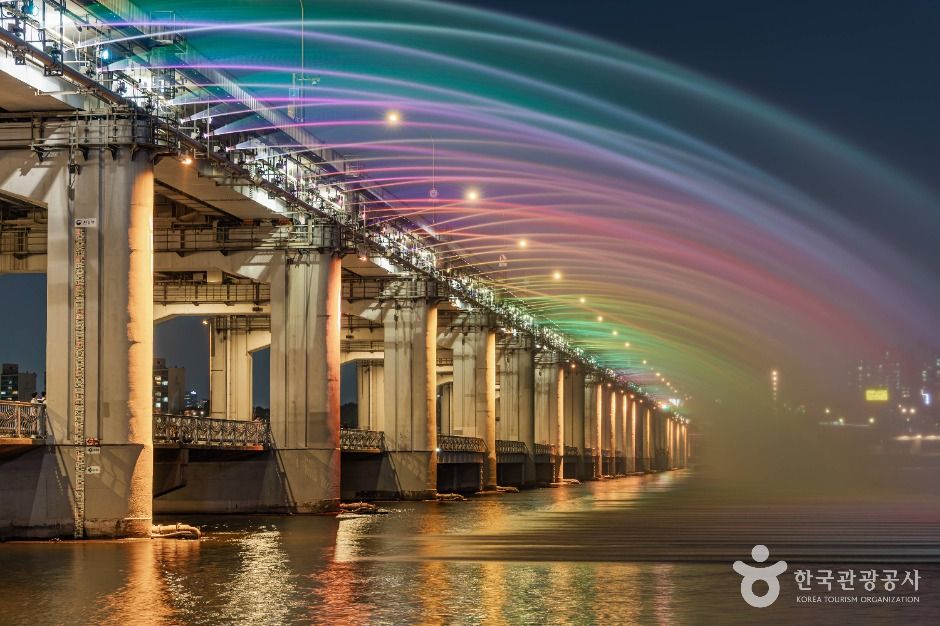
Banpo Bridge Rainbow Fountain (반포대교 달빛무지개분수)
13.0Km 2025-10-23
647 Banpo-dong, Seocho-gu, Seoul
The Rainbow Fountain plunges 20 meters into the water on both side of Banpo Bridge over the Hangang River. When the sun goes down, 200 lights illuminate the fountain as it sends out dancing, rainbow-colored jets of water in the air in synchronization with music. The fountain boasts spectacular views from the hills, the Hangang River observation deck, and the moon-shaped Moonlight Square. Banpo Bridge Rainbow Fountain operates every day from April to October, four to six times a day for 20 minutes.
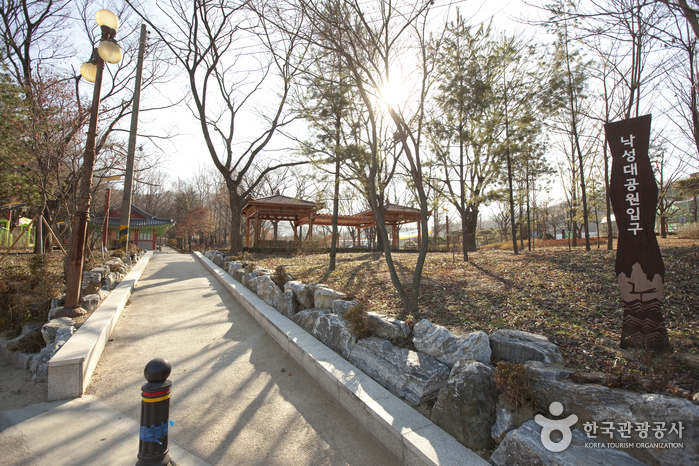
Gwanaksan Mountain Nakseongdae Park (관악산 낙성대공원)
13.0Km 2021-07-16
77, Nakseongdae-ro, Gwanak-gu, Seoul
Nakseongdae Park was built as a tribute to General Kang Gam-chan (948-1031) of the Goryeo dynasty. In 1973, the city of Seoul reorganized the birthplace of General Kang, resulting in changes to the park. Located inside the park are Anguksa Shrine, the general’s birthplace, and a three-story stone pagoda, which was made during the Goryeo dynasty. The 4.48-meter-high pagoda is made of granite, and is called “Kang Gam-chan Tap (pagoda)” or “Kang Gam-chan Nakseongdae Tap”.
*Anguksa Shrine
Anguksa is a shrine built in 1974 emulating the wooden architecture style of the Goryeo era. The shrine has high ceilings and houses the portrait of General Kang Gam-chan. The shrine is located on the road leading to the back gate of Seoul National University and has become a popular place in the area.
*Nakseongdae Yuji
Nakseongdae Yuji is the birthplace of General Kang Gam-chan and the original location of the three-story pagoda. During the maintenance of Nakseongdae area in 1973, the pagoda was moved into the vicinity of Anguksa Shrine, and a two-meter tall monument was erected in its original location to mark the historical significance of the site.
 English
 한국어
한국어 日本語
日本語 中文(简体)
 Deutsch
 Français
 Español
 Русский


