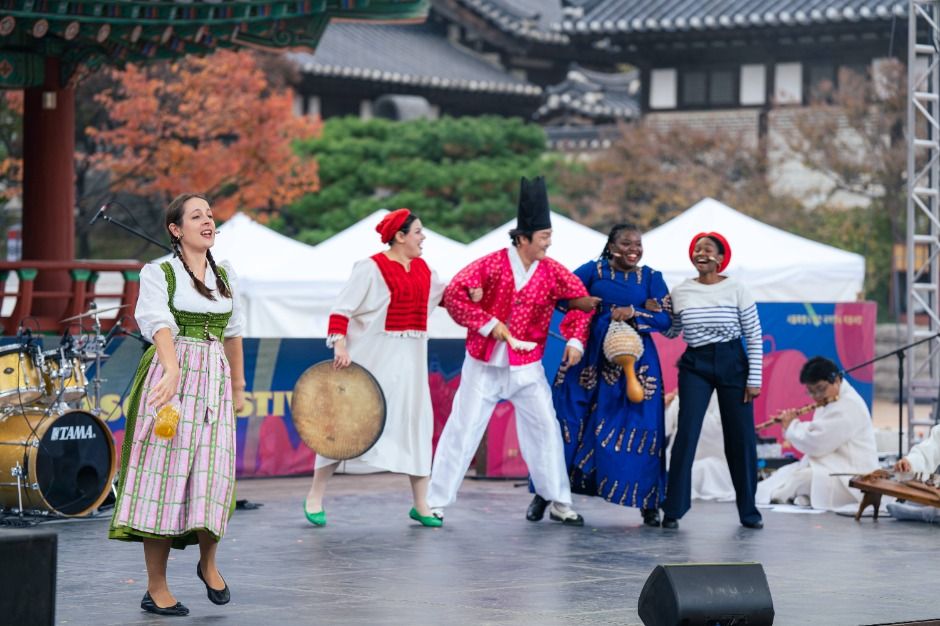
World Pansori Festival (월드판소리페스티벌)
11.9Km 2025-07-30
28 Toegye-ro 34-gil, Jung-gu, Seoul
+82-2-904-2835
World Pansori Festival is an international music festival that aims to promote pansori, the traditional Korean epic chant, and its values. The festival consists of a variety of performances and concert programs based on its yearly theme. In addition, the festival also has interactive activities for the attendees, such as a free pansori lesson and arts-and-crafts, to make pansori and traditional Korean music more accessible to the public.
![Jingwansa Temple (Seoul) [진관사(서울)]](http://tong.visitkorea.or.kr/cms/resource/33/3429433_image2_1.JPG)
Jingwansa Temple (Seoul) [진관사(서울)]
11.9Km 2025-06-30
73 Jingwan-gil, Eunpyeong-gu, Seoul
Jingwansa Temple is one of the four Buddhist temples that surround Seoul. It was known as the center of Buddhism and academics. Jingwansa Temple is home to a variety of buildings, such as Daeungjeon Hall, Myeongbujeon Hall, and Nahanjeon Hall, all surrounded by the beautiful nature of Bukhansan Mountain. In fact, the temple complex is a popular fall destination for its fall colors. Visitors can also visit the nearby Eunpyeong Hanok Village.

Healthpedia Co., Ltd. (㈜헬스피디아)
11.9Km 2025-10-23
#1014, 2 Toegye-ro 36-gil, Jung-gu, Seoul
HealthPedia is a medical tourism service that connects foreign patients with specialized clinics in Korea, such as dermatology and plastic surgery. We collaborate with partner hospitals by specialty to assist with appointment booking, interpretation, accommodation guidance, as well as pre- and post-treatment consultations and recovery programs. Multilingual support is available in English, Chinese, Vietnamese, and more for a convenient reservation experience.
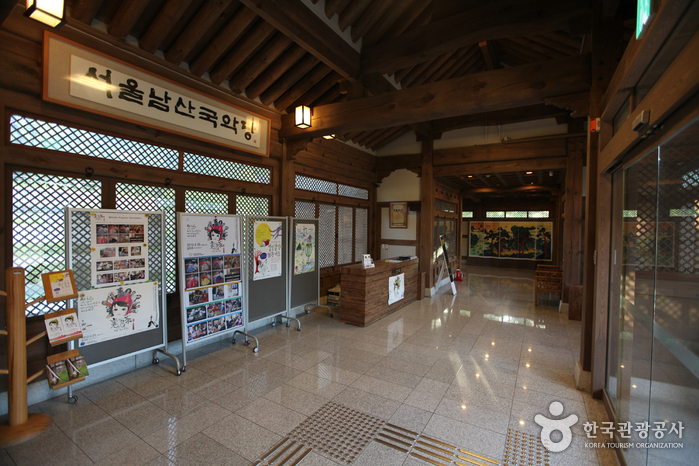
Seoul Namsan Gugakdang (서울 남산국악당)
11.9Km 2021-08-02
28, Toegye-ro 34-gil, Jung-gu, Seoul
Seoul Namsan Gukakdang was established by Seoul Metropolitan Government as a representative traditional art-centered performance hall in 2007. It is comprised of one ground and two basement levels. The performance hall is located on the basement floor with 300 seats, equipped with facilities that deliver pansori sounds and gayageum music to every seat. Visitors can make a reservation at the Namsangol Hanok Village website.
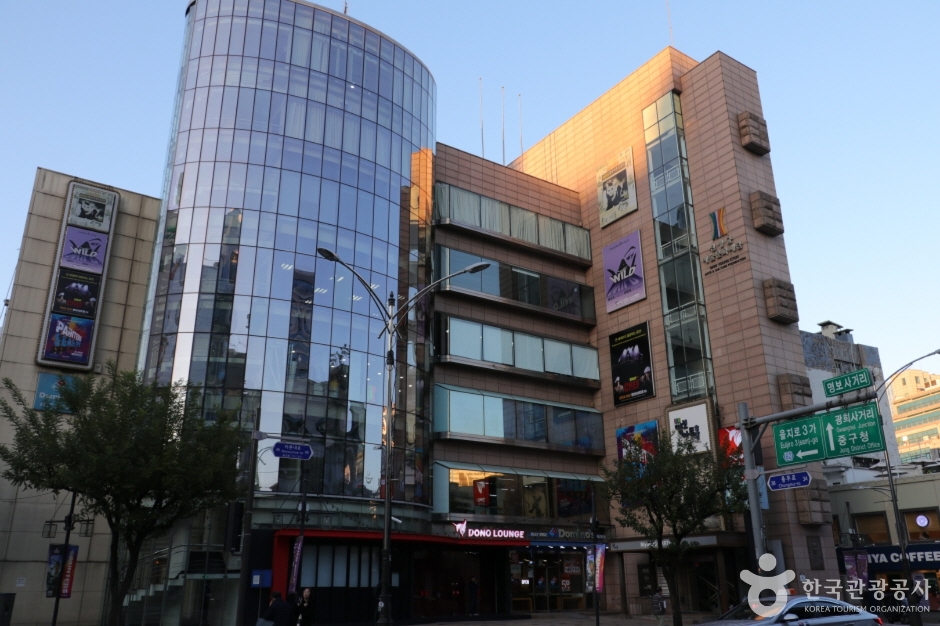
Myungbo Art Hall (명보아트홀)
11.9Km 2025-04-15
47 Mareunnae-ro, Jung-gu, Seoul
Located in Euljiro 3(sam)-ga, the heart of Seoul, Myungbo Art Hall is a cultural complex that consists of a professional theatre hall. Renovated from Myungbo Theater in 2009, Myungbo Art Hall is equipped with state-of-the-arts lighting and sound equipment that guarantees high-quality theatre experience for the audience. In addition, the hall also has comfortable seats along with other amenities for the audience's convenience. Myungbo Art Hall aims to globalize Korean performance culture by creating a variety of content that incorporate Korean theatre with tourism. This area is also where the house of Admiral Yi Sun-sin was located, which is honored with a memorial plaque listing his accomplishments.
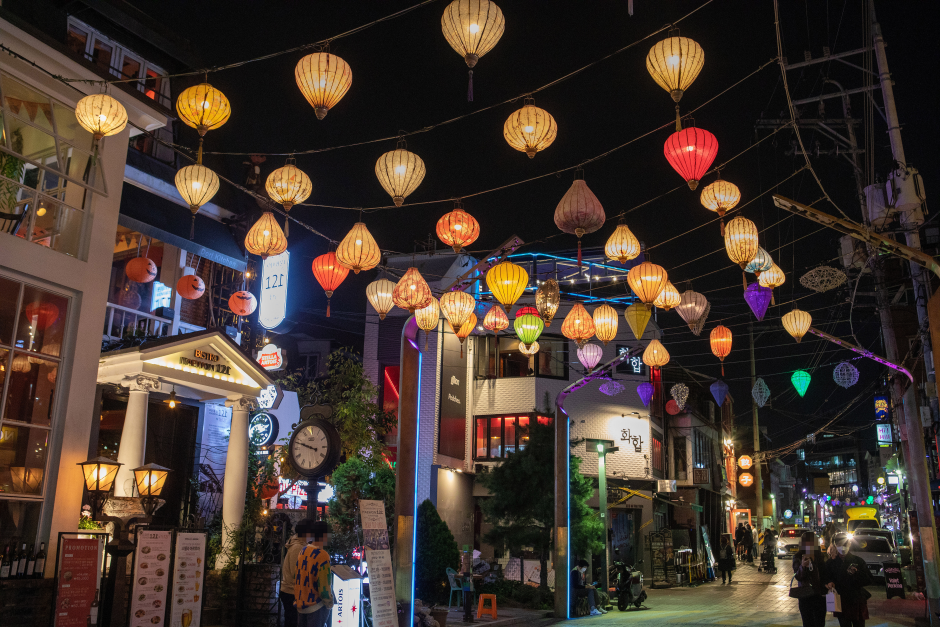
Itaewon Shopping Street (이태원 쇼핑거리)
11.9Km 2025-03-29
Itaewon-dong, Yongsan-gu, Seoul
Itaewon Shopping Street is a 1.4-kilometer-long road located near Itaewon Station. There is an enormous variety of shops, entertainment venues, and restaurants lined along both sides of the street. As the neighborhood has a reputation as a mini melting pot in Seoul where languages other than Korean are widely spoken, it is one of the most visited places by international visitors. It has become a gateway for many international visitors to receive services and information on basic tourist needs such as accommodations, shopping, tourist attractions, and more.
![Goyang West Three Royal Tombs (The tomb of Queen Janggyeong) [UNESCO World Heritage] (고양 서삼릉(장경왕후) [유네스코 세계문화유산])](http://tong.visitkorea.or.kr/cms/resource/85/1150385_image2_1.jpg)
Goyang West Three Royal Tombs (The tomb of Queen Janggyeong) [UNESCO World Heritage] (고양 서삼릉(장경왕후) [유네스코 세계문화유산])
11.9Km 2024-02-07
233-126 Seosamneung-gil, Deogyang-gu, Goyang-si, Gyeonggi-do
Goyang West Three Royal Tombs is a significant historical site comprising three major royal burial grounds in the western area. Huireung Royal Tomb is dedicated to Queen Janggyeong (1491-1515), the consort of King Jungjong during the Joseon dynasty. Hyoreung Royal Tomb is the resting place of King Injong (1515-1545) and his queen, Inseong. Yereung Royal Tomb holds the remains of King Cheoljong (1831-1864) and his queen, Cheorin. This area is home to numerous tombs and relics belonging to various members of the Joseon royal family.
Changdeokgung Injeongmun Gate (창덕궁 인정문)
11.9Km 2025-01-14
99, Yulgok-ro, Jongno-gu, Seoul
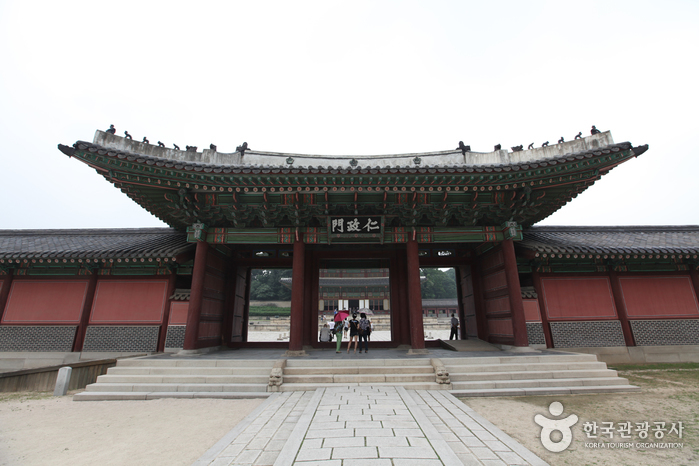
Serving as the main gate of Injeongjeon Hall, Injeongmun Gate was established in 1405 (5th year of King Taejo’s reign during the Joseon dynasty). Later on, the gate was destroyed by multiple fires during the Imjin War (Japanese invasion of Korea in 1592), therefore current form of the establishment displays designs that are more often seen in the late 19th century's. In addition, a lot
of subsidary marks and buildings are removed from the original places and relocated passing the time, however, still remains to represent prestigious ambience.
Injeongmun Gate served as the place for several coronation ceremonies of kings, prince's succession of throne, and many other national affairs celebrated by the royal members who gathered and aligned around this gate.
Namsangol Hanok Village (남산골한옥마을)
11.9Km 2025-07-14
28 Toegye-ro 34-gil, Jung-gu, Seoul
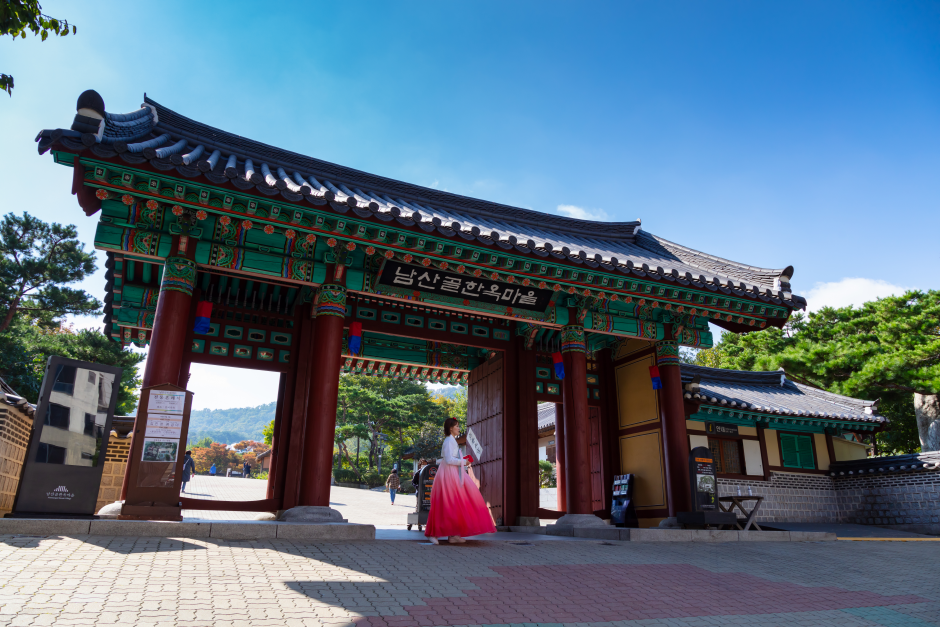
Namsangol Hanok Village opened in 1998 on the northern side of Namsan Mountain in the center of the capital. This village has five restored hanok (traditional Korean house) premises, a pavilion, a traditional garden, a performance art stage, and a time capsule plaza, making it a perfect spot for locals and tourists to take a leisure walk. Upon entering from the front gate, visitors will get a taste of Korea's traditional life while escaping from bustling city life. The traditional garden with its pavilion and old houses creates a peaceful ambiance before the forested Namsan Mountain. A time capsule commemorating Seoul’s 600th anniversary was buried in 1994 at the highest point of the village and is scheduled to be reopened 400 years later in 2394.
The five hanok premises at Namsangol Hanok Village once belonged to aristocrats and government officials of the Joseon dynasty. Each house was originally located in a different neighborhood, but they were all moved to this area and restored to their original form. The houses were rebuilt using their original materials, except for one house, where the materials were too old and deteriorated to be reused. The premises were carefully restored and replicated according to their original form to depict the owners’ social class and personality. These buildings are now used as an exhibit to portray the living environment during the Joseon dynasty and as a venue for educational and cultural programs for children and tourists.
Some of the unique programs and activities to participate in include wearing hanbok, folding hanji (traditional Korean paper), writing in Korean, traditional tea ceremony, traditional etiquette school, and herbal medicine experience. There are also taekwondo demonstrations and other various performances held around the village. Visitors can also try traditional games such as yunnori (traditional board game), or understand more about the area through a guided tour.
 English
 한국어
한국어 日本語
日本語 中文(简体)
 Deutsch
 Français
 Español
 Русский


