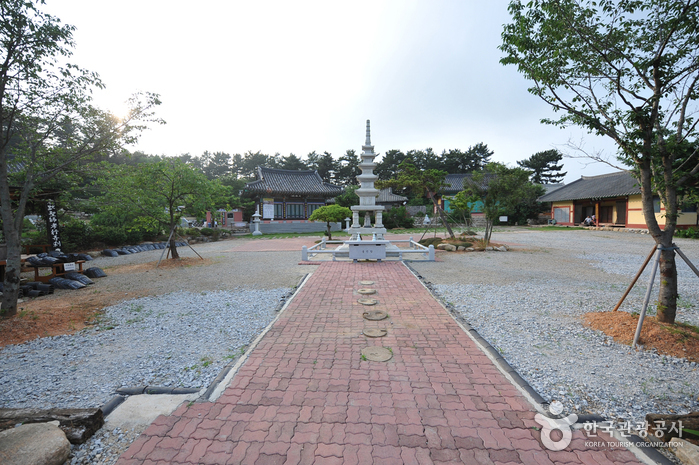
Gimje Seongmoam Hermitage (성모암(김제))
15.3Km 2024-04-07
54-9, Hwapo3-gil, Gimje-si, Jeonbuk-do
+82-63-544-0416
Seongmoam Hermitage, a temple of the Jogye Order, is located on Yuangsan Mountain in Mangyeong-myeon, Gimje-si. The temple is the final resting place of the mother of Jinmuk Daesa, a great Buddhist monk from the Jeonbuk region. Jinmuk believed that a person’s love and respect for Buddha is not that much different from the love and respect one has for his or her parents. As an expression of this philosophy, Jinmuk had his mother’s remains enshrined at the temple after she died at Mujasoncheonnyeonhyanghwajiji.
A neat little line of stone lamps leads visitors up from the parking lot to the temple grounds, revealing the well-attended grave of Jinmuk Daesa’s mother to the left. The temple is very unique in that it is the only one to house a caretaker’s office (Gosiraejoen Hall) that is responsible for maintaining the grave site.
It is said that prayers made to Seongmo (the holy mother) while visiting the temple will come true. Throughout the year, throngs of people journey to the temple to pay their respects and earnestly ask the holy mother to grant them their deepest desires.

Saemangeum Trail (새만금 광역탐방로)
16.0Km 2024-04-06
1192-1 Hwapo-ri, Jinbong-myeon, Gimje-si, Jeonbuk-do
Saemangeum Trail is a walking trail designed to showcase the exceptional natural scenery near the Mangyeonggang River. Spanning a total of 12.5 kilometers, starting from Mangyeong-eup's Tojeong Village and leading to Jinbong-myeon's Sampo Village, this trail allows walkers to immerse themselves in expansive rice paddy and lush greenery. Along the Mangyeonggang River, visitors can also observe various protected plant and animal species inhabiting the area.
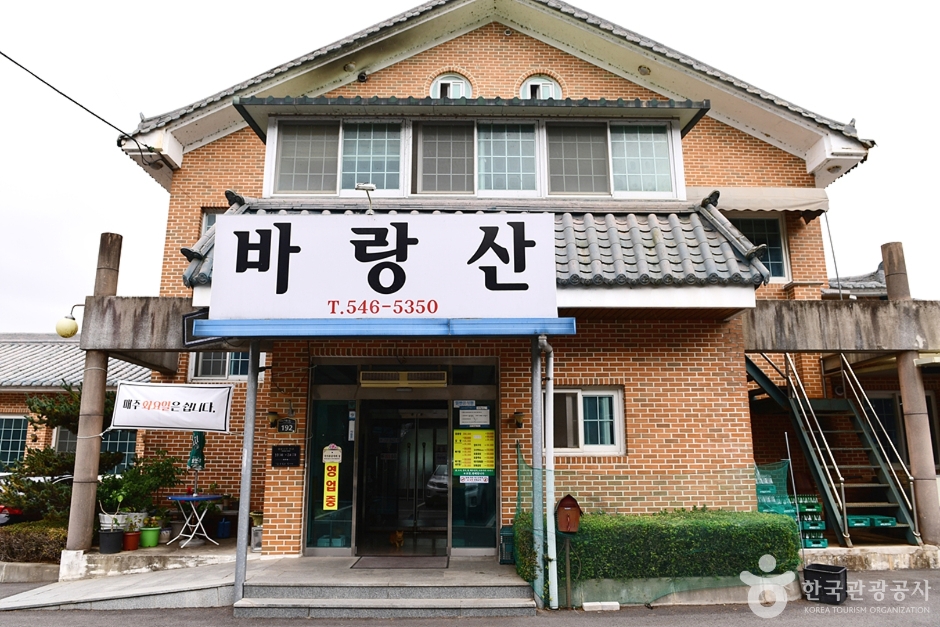
Barangsan Garden (바랑산가든)
16.2Km 2024-04-07
192 Daeyul 2-gil, Geumgu-myeon, Gimje-si, Jeonbuk-do
Barangsan Garden is a maeuntang (spicy fish stew) restaurant where visitors can enjoy their meal while admiring the scenery of Daeyul Reservoir. Their flagship dish is the megi tang (spicy catfish stew) made by boiling wild catfish and dried radish in a perilla seeds broth with seasoning. Other popular menu items include jap tang (assorted spicy seafood stew) made with freshwater fish and minmul jangeo gui (grilled freshwater eel).
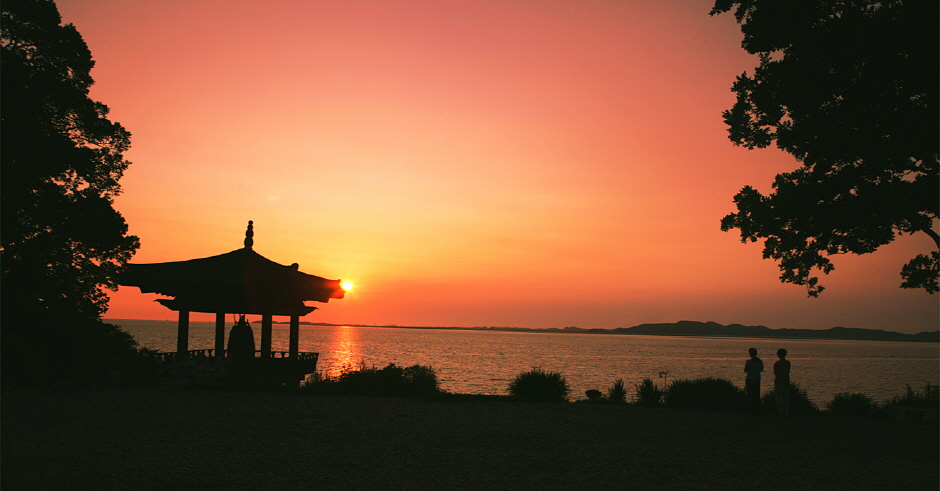
Manghaesa Temple (망해사)
16.9Km 2024-04-07
94, Simpo 10-gil, Gimje-si, Jeonbuk-do
+82-63-540-3324
Manghaesa Temple is located at the edge of the Gimje Plains before the sea. The temple stands at the summit of Jinbongsan Mountain. The temple was named for the view of the ocean and the fields of rice. The temple was established by the great monk Buseol Geosa during the 2nd year of King Uija of Baekje (AD 642). Years later, Dobeopsa (a Chinese monk from the Tang dynasty) renovated the temple. The temple was altered again during the reign of King Injo of the Joseon dynasty when the great monk Jinmuk Daesa built Nakseojeon Hall in 1589. Bogwangjeon Hall and Chilseonggak Pavilion were built much later in 1933. Manghaesa Temple is unique in that it is the only temple where the distant horizon is visible over both land and sea. Nearby attractions include a walking path through a field of reeds by Mangyeonggang River and views of the sunset over the sea.
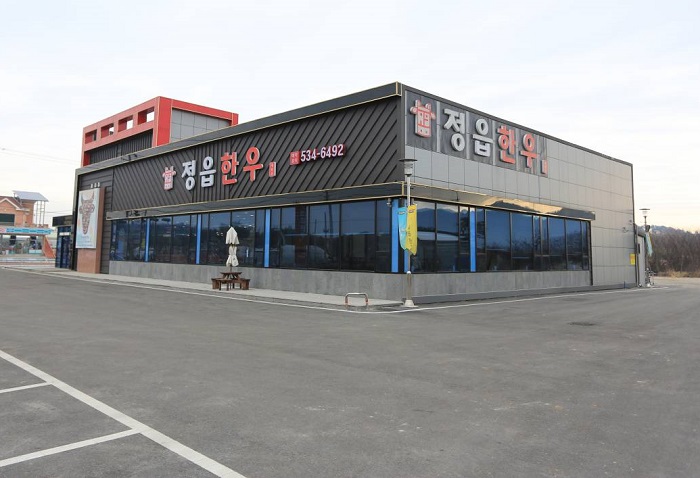
Jeongeupanu (정읍한우)
17.0Km 2024-04-07
2, Hwapyeong-gil, Jeongeup-si, Jeonbuk-do
+82-63-533-6492
It is a place with a large parking area that sells only 100% Jeongeup Korean beef. This Korean dishes restaurant is located in Jeongeup-si, Jeollabuk-do. The most famous menu is Korean beef tartare bibimbap.
Café By Chance (우연하게도)
17.3Km 2024-04-07
188-13 Urim-ro, Geumsan-myeon, Gimje-si, Jeonbuk-do
Café By Chance, located in Cheongdo-ri, Gimje-si, is an excellent place to relax while seeing the beautifully decorated garden and fountain spouting cool water. Guests can also sit with their dogs at the outdoor tables, making it a great place to spend leisurely time with one’s beloved dog. This place is also famous for its oven-baked pizzas, and its signature menu item is Oven-baked Gorgonzola Cheese Pizza. The chewy texture of the dough improves the flavor of the pizza. Moreover, there are various menu items such as figs, sweet potatoes, pepperoni, and margherita. Guests can choose two flavors and enjoy a half-and-half oven-baked pizza.
* Pets allowed
Gwisinsa Temple - Gimje (귀신사 - 김제)
17.3Km 2024-04-07
40, Cheongdo 6-gil, Gimje-si, Jeonbuk-do
+82-63-548-0917
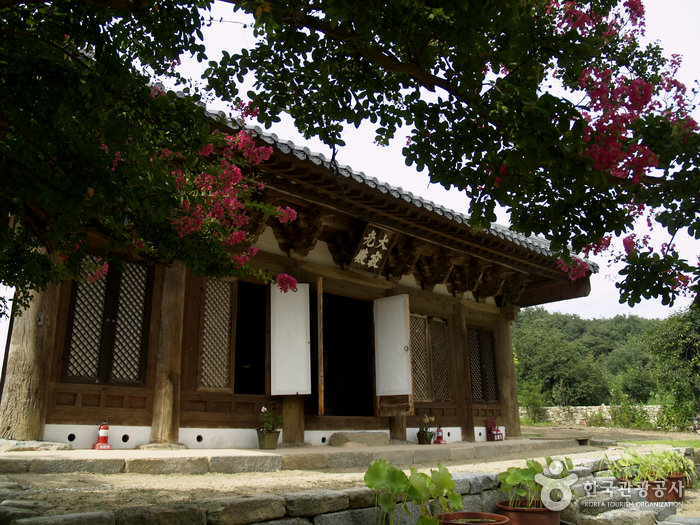
Gwisinsa, located in Cheongdo Village, Geumsan-myeon, Gimje-si, is now a temple of the Jogye Order, but once belonged to the Haweom Order. The temple is widely believed to have been established by the great monk Uisang Daesa during the 16th year of King Munmu (676). However, some experts site the existence of the Namgeunseok stone animal sculpture as proof that the temple was originally the private temple of King Beop of the Baekje Kingdom.
Throughout history, the temple has had many names—Guksinsa, Gwisinsa, Gusunsa, and Gwisinsa (same English spelling, different meaning)—but not much is known about when the temple was called by which name. On the temple grounds are a 3-story stone pagoda and some stone sculptures including seoksu (animal statues) and budo (a stupa in honor of a great master). Inside the temple are Daejeokgwangjeon Hall (Treasure No.826), Myeongbujeon Hall, and Gongyangjib Chamber (a chamber for Buddhist offerings).
Gimje Geumsansa Temple (금산사(김제))
18.2Km 2024-04-07
1 Moak 15-gil, Geumsan-myeon, Gimje-si, Jeonbuk-do
+82-63-548-4441
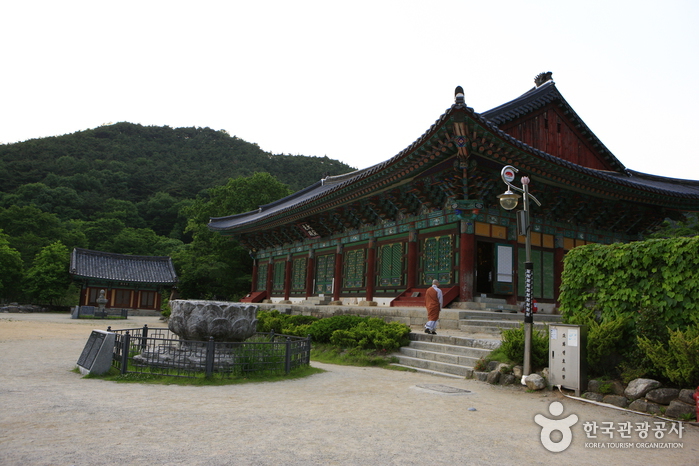
Geumsansa Temple, which stands tall at the entrance to Moaksan Provincial Park, was founded in the first year of King Beop of Baekje (599). It was rebuilt by Jinpyo in 776, leading to the appearance of a great temple. The precinct has about ten designated cultural heritages, including the Mireukjeon Hall, which is designated as a National Treasure. Many other annexed buildings make it one of the best ancient temples in the southern region. The wooden Mireukjeon Hall is Korea's only three-story Buddhist temple with a full-story interior. In spring, many tourists visit to see the spectacular sight of cherry blossom trees stretching from the mountain entrance to Geumsansa Temple. Even in the middle of winter, believers come to visit the Maitreya Bodhisattva statue in Mireukjeon Hall, bowing or circling the pagoda. The Maitreya Bodhisattva statue in Mireukjeon Hall is considered the world's largest indoor standing Buddha statue. Among the three Buddha statues, the middle Maitreya Bodhisattva statue is 11.82 meters tall, and the left and right Buddha statues are 8.8 meters tall. Various cultural events are held at the 1400th Anniversary Memorial Hall, built in 1999.
* Major cultural properties: Mireukjeon Hall (National Treasure), Stone Pillar (Treasure), Stone Lotus Pedestal (Treasure), Stele for Royal Preceptor Hyedeok at Geumsansa Temple (Treasure), Five-story Stone Pagoda of Geumsansa Temple (Treasure), Bangdeung Stairs at Geumsansa Temple (Treasure), Hexagonal Multi-story Stone Pagoda of Geumsansa Temple (Treasure), Flagpole Supports of Geumsansa Temple (Treasure), Three-story Stone Pagoda at Simwonam Hermitage of Geumsansa Temple (Treasure), Daejangjeon Hall of Geumsansa Temple (Treasure), and Stone Lantern of Geumsansa Temple (Treasure)
Buan Guam-ri Dolmens (부안 구암리 지석묘군)
18.3Km 2024-04-07
Seoksang-ri, Buan-gun, Jeonbuk-do
+82-63-580-4711
Buan Guam-ri Dolmens, designated as Historical Site No. 103, is comprised of southern-style dolmens. Dolmen refers to a particular structure of a tomb created during the Bronze Age. Dolmen is largely classified into two groups – Southern-type that has small footstones supporting large top stone; and Northern-type which is shaped like a desk. In Guam-ri, there were originally 13 dolmens, but only 10 remain. Most of the dolmens have 8 small footstones propping up one large top stone, compared to the dolmens in other regions which normally have 4 footstones.
Moaksan Provincial Park (모악산 도립공원)
18.4Km 2024-04-07
Moak 15-gil, Geumsan-myeon, Gimje-si, Jeonbuk-do
+82-63-540-3103
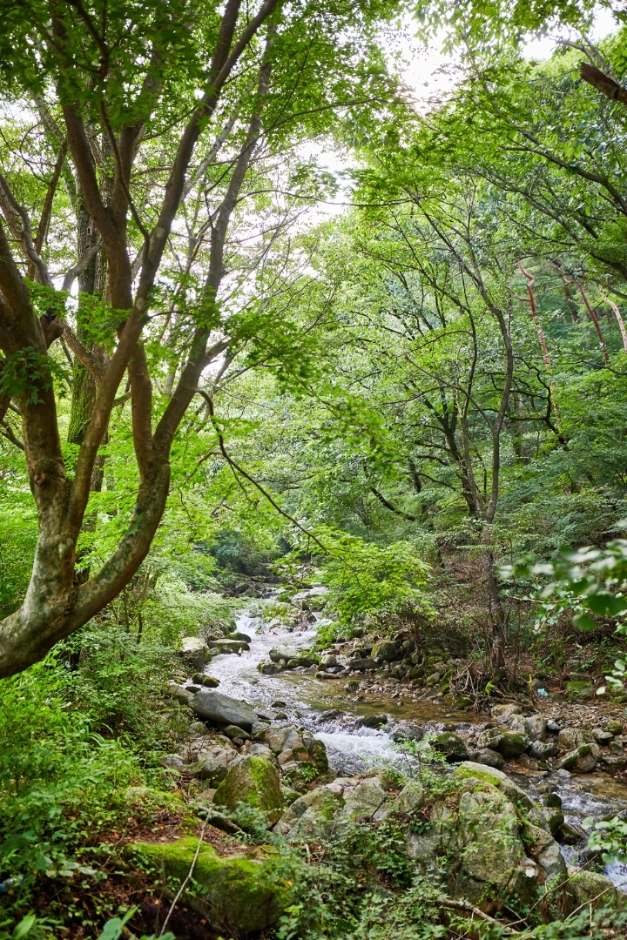
Moaksan Mountain, embracing Geumsansa Temple, Gwisinsa Temple, Suwangsa Temple, and Daewonsa Temple, is 795.2 meters high and stands tall on the east side of the Gimje Plains, offering a panoramic view of the Honam Plains. It was designated as a provincial park in 1971 and is one of the four scenic views in the southern region, with outstanding scenery and many cultural properties, including national treasures. In particular, Geumsansa Temple, built in the first year of King Beop of Baekje (599) and with about ten major cultural properties, is located here, where you can see splendid Buddhist art. If you cross Moaksan Mountain, there are temples such as Daewonsa Temple and Suwangsa Temple on the southeastern slope. Gwisinsa Temple is on the west side. Geumpyeong Reservoir, located near the Geumsansa Temple entrance, is also a suitable fishing spot.
Moaksan Mountain has been considered the home of the Maitreya beliefs since ancient times, and along with the headquarters of Jeungsangyo, it also attracted attention as a gathering place for various new religions in the 30s and 40s. According to records, as many as 80 temples are at the foot of Moaksan Mountain. To hike, leave Geumsansa Temple and climb along the ridge behind Simwonam Hermitage. In spring, azaleas are in full bloom all the way to the top. From the summit, the Gimje Plains and the Mangyeonggang River come into view, as well as Jeonju and Unjangsan Mountain. The cherry blossom tunnel from the parking lot to Iljumun Gate is also spectacular.
 English
 한국어
한국어 日本語
日本語 中文(简体)
 Deutsch
 Français
 Español
 Русский


