![Olive Young - Guro Best Western Hotel Branch [Tax Refund Shop] (올리브영 구로호텔)](http://tong.visitkorea.or.kr/cms/resource/61/2880261_image2_1.jpg)
Olive Young - Guro Best Western Hotel Branch [Tax Refund Shop] (올리브영 구로호텔)
10.3Km 2024-04-16
1F, 72, Digital-ro 32-gil, Guro-gu, Seoul
-

Seoul Hyochang Park (서울 효창공원)
10.3Km 2024-07-09
177-18 Hyochangwon-ro, Yongsan-gu, Seoul
+82-2-2199-7608
Hyochang Park covers 122,245 square meters spanning across Hyochang-dong and Cheongpa 2-dong. It is a historic landmark that once contained several royal tombs, and was known at that time as Hyochangwon. The cemeteries that were originally located in Hyochangwon belonged to Crown Prince Munhyo, King Jeongjo’s first son who died at the age of five; Royal Noble Consort Uibin of the Seong Clan, King Jeongjo’s royal concubine and Crown Prince Munhyo’s mother; Royal Noble Consort Sugui of the Park Clan, King Sunjo’s royal concubine; and her daughter Princess Yeongon. The royal tombs were moved to Seooreung Tombs in the waning months of the Japanese colonial period. The Japanese empire began the development of Hyochangwon into a park in 1924, and the Japanese governor-general officially assigned the site as a park in 1940.
Presently, several of Korea’s greatest leaders are buried in Hyochang Park. The remains mostly belong to independence activists including Yoon Bong-gil, Lee Bong-chang, and Baek Jeong-gi, whose graves are collectively known as Samuisa Tomb. A statue of Lee Bong-chang has been built in the graveyard. Among the other patriotic martyrs who are interred in the park are Kim Gu and some of the key figures of the provisional government such as Lee Dong-nyeong, Cha I-seok, and Cho Seong-hwan. An ancestral shrine named Uiyeolsa has been built along the main gate and holds the portraits of the deceased independence activists.
Olive Young - Gwangmyeong Cheolsan Branch [Tax Refund Shop] (올리브영 광명철산점)
10.3Km 2024-06-27
#101, 24, Cheolsan-ro, Gwangmyeong-si, Gyeonggi-do
-
Himart - Cheolsan Branch [Tax Refund Shop] (하이마트 철산점)
10.3Km 2024-04-19
22, Cheolsan-ro, Gwangmyeong-si, Gyeonggi-do
-
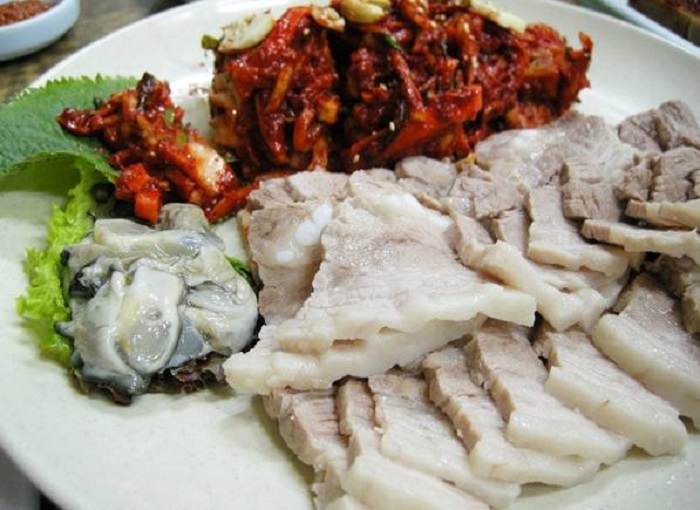
Jangchung Jokbal (장충족발)
10.3Km 2024-10-15
31, Noryangjin-ro 16-gil, Dongjak-gu, Seoul
+82-2-816-9824
Jokbal (pig’s feet) is a representative food loved by Koreans. The best menu at this restaurant is braised pigs' feet. This Korean dishes restaurant is located in Dongjak-gu, Seoul.
![M.Ffin - Guro Branch [Tax Refund Shop] (엠핀 구로)](http://tong.visitkorea.or.kr/cms/resource/46/2880246_image2_1.jpg)
M.Ffin - Guro Branch [Tax Refund Shop] (엠핀 구로)
10.4Km 2024-04-22
1F, 569, Siheung-daero, Guro-gu, Seoul
-
![Olive Young [Tax Refund Shop] (올리브영)](http://tong.visitkorea.or.kr/cms/resource/01/2882401_image2_1.jpg)
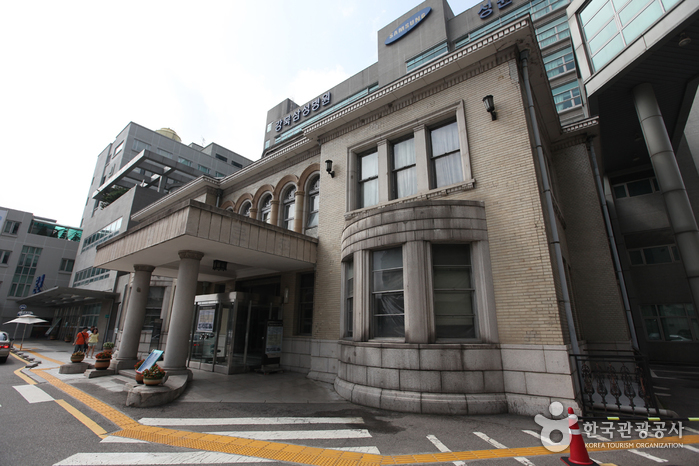
Seoul Gyeonggyojang House (서울 경교장)
10.4Km 2021-09-15
29, Saemunan-ro, Jongno-gu, Seoul
+82-2-735-2038
Gyeonggyojang House, a designated Historic Site, was the location of the provisional government and the place where Baekbeom Kim Koo passed away. Seoul reproduced the historical site, Gyeonggyojang House, to use the area as an educational site. Also, the house exhibits the history of the provisional government in order to see the history more clearly.
Restoration work included the demolition of the interior that was changed when the building was turned into a hospital facility and embassy after Kim Koo passed away in 1949. During the work, the remaining parts were maintained with the utmost care. Reconstructed parts were based on the building's floor plan written in Chosun and Architecture (8th edition in 1938). Visitors can see various contents related to the Korean Provisional Government history through relics, video, and information searching corners.
![Mario Outlet [Tax Refund Shop] (마리오아울렛)](http://tong.visitkorea.or.kr/cms/resource/07/2890507_image2_1.jpg)
![Mountia [Tax Refund Shop] (마운티아)](http://tong.visitkorea.or.kr/cms/resource/77/3313577_image2_1.jpg)
 English
 한국어
한국어 日本語
日本語 中文(简体)
 Deutsch
 Français
 Español
 Русский


