
Seoul National Cemetery (국립서울현충원)
11.3Km 2024-03-07
210, Hyeonchung-ro, Dongjak-gu, Seoul
+82-2-813-9625
Seoul National Cemetery is a national cemetery for individuals who worked or fought for Korea and sacrificed their lives. It encompasses those who fought for Korea's independence from the late 19th century to the early 20th century, those who perished in the Korean War (1950-1953), and former presidents, totaling over 165,000 individuals. There are exhibition halls and parks with related artifacts. Shuttle buses are provided for the convenience of visitors.
Ichon Hangang Park (이촌한강공원)
11.3Km 2025-10-23
62 Ichon-ro 72-gil, Yongsan-gu, Seoul
+82-2-3780-0551
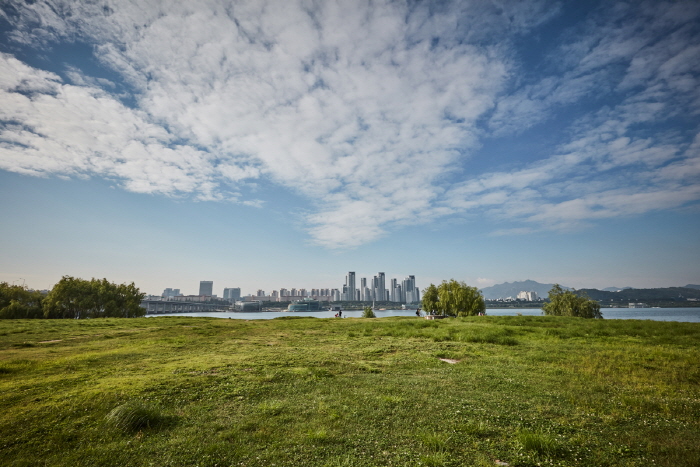
Ichon Hangang Park is built along the Hangang Park in Yongsan. From the park, one can see the Hangang River up close, and one can also find sports facilities like soccer fields, jokgu fields, inline skating rink, water sports facilities, bicycle paths, as well as a nature learning center built around a restored wetland and a lawn. One can follow the Hangangdaegyo Bridge to enter into the Nodeulseom Island, an island in the middle of the river.
◎ Travel information to meet Hallyu’s charm - TV series "Sisyphus: The Myth"
This park was featured in the TV series "Sisyphus: The Myth" as the setting where Seo Hae (played by Park Shin-hye) reflected on bittersweet memories with her father. Its expansive grounds make it an ideal spot for leisure activities such as walking, picnicking, and cultural events.
Kim Koo Museum & Library (백범김구기념관)
11.3Km 2022-08-30
26, Imjeong-ro, Yongsan-gu, Seoul
+82-2-799-3400
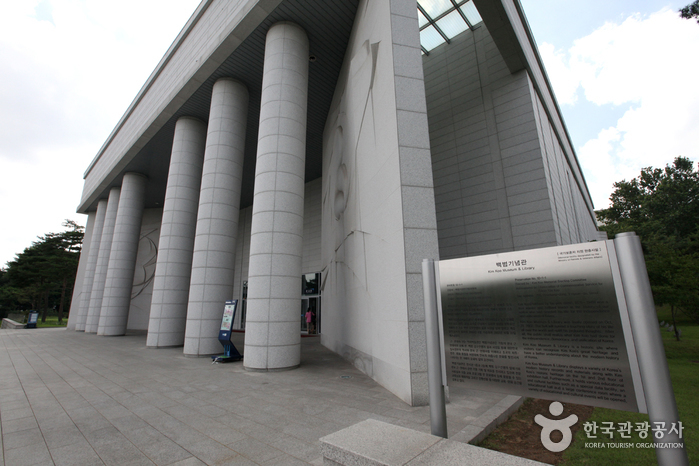
Kim Koo Museum & Library was built in Yongsan-gu, Seoul to commemorate Baekbeom Kim Koo (1876-1949), a highly respected Korean independence activist. It opened on October 22, 2002 to commemorate Kim Koo's efforts and achievements in Korean history. The main hall is comprised of two floors, exhibiting relics related to his entire life. A statue of a seated Kim Koo is situated in the central space of the first hall.
Amorepacific Museum of Art (아모레퍼시픽미술관)
11.5Km 2024-12-31
100 Hangang-daero, Yongsan-gu, Seoul
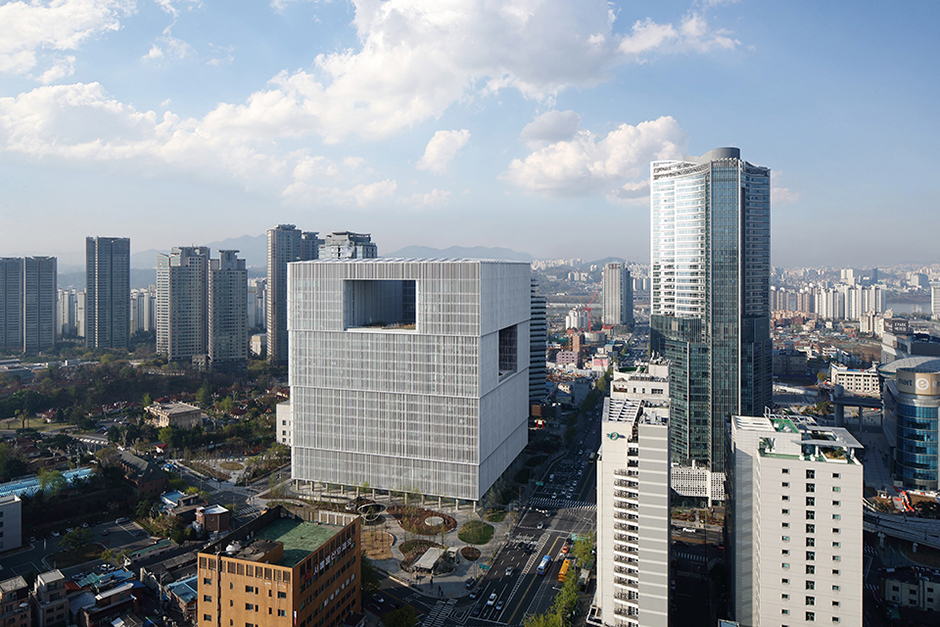
Amorepacific Museum of Art, located in Yongsan-gu, Seoul, was originally a museum exhibiting artworks collected by the late Seo Seong-hwan, the founder of Amorepacific, but later changed its name to Amorepacific Museum of Art, or APMA, in 2009 and has since been operating as an art exhibition hall. The mission upon its foundation was seeking to be "a space where beauty in the midst of daily lives is discovered" and communicating with the public. In accordance with this objective, the museum collects, researches, and exhibits Korean ancient art and both Korean and international contemporary art while, also, aiding researchers, scholars, and young artists. The underground exhibition hall hosts diverse exhibits encompassing ancient art, contemporary art, and Korean art. The 1st floor of the "Atrium," an enormous space that continues from the 1st to 3rd floors, features the museum lobby, a museum shop, an exhibition space called "APMA Cabinet" and apLAP, which is a library of art exhibition brochures from around the world. The art museum is located on the 1st floor of the new Amorepacific headquarters building, a famous work of architectural beauty of Yongsan designed after white porcelain.
Ewha Womans University Museum (이화여자대학교박물관)
11.5Km 2022-09-14
52, Ewhayeodae-gil, Seodaemun-gu, Seoul
+82-2-3277-3152
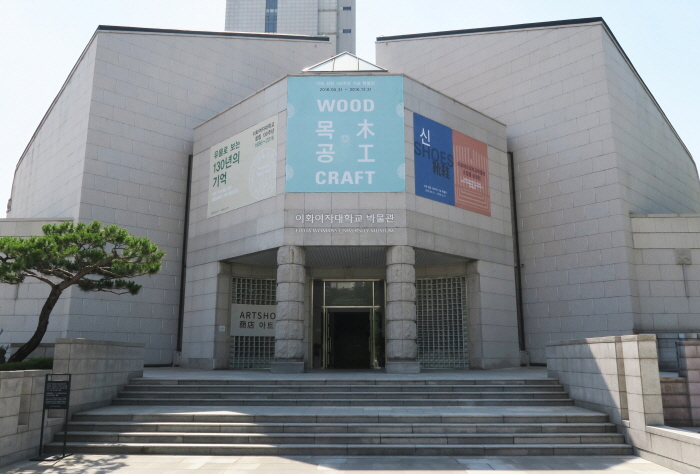
The Ewha Womans University Museum was established in 1935 with the goal of preserving the cultural heritage of Korea. Originally, items related to folk art, traditional woodwork, and pottery were put on display in the hall of the main university to keep them from being confiscated during the Japanese occupation. This later led to the opening of the museum to display and store the growing collection.
Regular exhibitions of the museum’s collection have been taking place annually from 1972. Since 1996, the museum also held special exhibitions that focus on other themes related to cultural heritage. Additional small-scale exhibitions are also held frequently to promote Korea's traditional culture and art.
A ceramics research facility as well as a more traditional museum, a large portion of the museum’s efforts is focused on the research and excavation of kilns. To this aim, excavation teams from the museum have traveled to various parts of the country to conduct studies on historic sites and assess the value of artifacts. Through the publication of books and reports on its discoveries, the museum has contributed to raising knowledge and awareness of Korean cultural heritage in academia and among the public.
Ewha Welcome Center (이화웰컴센터)
11.5Km 2022-09-13
52, Ewhayeodae-gil, Seodaemun-gu, Seoul
+82-2-3277-3277
Ewha Welcome Center opened in 2013 as the first promotional center and visitor center of its kind on a university campus in Korea, comprised of an information desk, exhibition lounge, and gift shop. The information desk offers useful information to help visitors get the most out of their Ewha campus experience. The exhibition lounge introduces the history, traditions, and vision of the present-day and future of the university year-round. Visitors can purchase university gear at the gift shop. Furthermore, foreign visitors can take part in a range of campus tour programs in English and Chinese for an enriching experience.
Hwanggeum Kongbat (황금콩밭)
11.5Km 2025-10-31
9 Mapo-daero 16-gil, Mapo-gu, Seoul
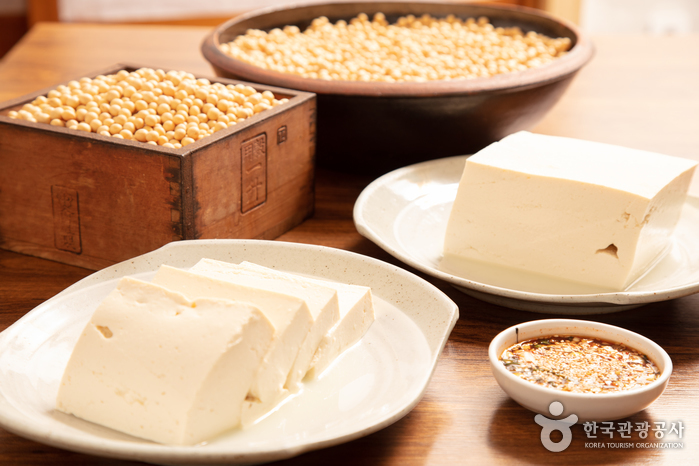
Hwanggeum Kongbat specializes in bean curd, using 100% Korean-grown soybeans and salt to make their bean curd fresh daily. The restaurant is famous for their method of making a bean curd that is smooth and maintains the nutty yet sweet flavor of the soybeans.
Seoul Hyochang Park (서울 효창공원)
11.7Km 2024-07-09
177-18 Hyochangwon-ro, Yongsan-gu, Seoul
+82-2-2199-7608
Hyochang Park covers 122,245 square meters spanning across Hyochang-dong and Cheongpa 2-dong. It is a historic landmark that once contained several royal tombs, and was known at that time as Hyochangwon. The cemeteries that were originally located in Hyochangwon belonged to Crown Prince Munhyo, King Jeongjo’s first son who died at the age of five; Royal Noble Consort Uibin of the Seong Clan, King Jeongjo’s royal concubine and Crown Prince Munhyo’s mother; Royal Noble Consort Sugui of the Park Clan, King Sunjo’s royal concubine; and her daughter Princess Yeongon. The royal tombs were moved to Seooreung Tombs in the waning months of the Japanese colonial period. The Japanese empire began the development of Hyochangwon into a park in 1924, and the Japanese governor-general officially assigned the site as a park in 1940.
Presently, several of Korea’s greatest leaders are buried in Hyochang Park. The remains mostly belong to independence activists including Yoon Bong-gil, Lee Bong-chang, and Baek Jeong-gi, whose graves are collectively known as Samuisa Tomb. A statue of Lee Bong-chang has been built in the graveyard. Among the other patriotic martyrs who are interred in the park are Kim Gu and some of the key figures of the provisional government such as Lee Dong-nyeong, Cha I-seok, and Cho Seong-hwan. An ancestral shrine named Uiyeolsa has been built along the main gate and holds the portraits of the deceased independence activists.
THE WELL SAEM HOSPITAL OF KOREAN MEDICINE (더웰샘한방병원)
11.9Km 2025-10-23
4th, 6th Floors, Hanil Plaza, 7 Namhyeon-gil (Namhyeon-dong), Gwanak-gu, Seoul
Integrative medicine, which links the strengths of Korea’s traditional medicine and Western medicine, is cutting-edge convergent medicine that provides optimal services for patients in most fields, except surgery and emergency medicine.
Traditional Korean treatments and modern medical treatments can deliver superior results compared to stand-alone therapies when applied in a patient-centered, multidisciplinary, and integrative manner. This is especially important for patients with intractable diseases such as cancer, severe chronic pain caused by aging and degenerative changes, and systemic symptoms resulting from recurrent inflammation and metabolic disorders. In such cases, integrative medicine represents a new paradigm that seeks not only physical health but also holistic recovery.
THE WELL SAEM HOSPITAL OF KOREAN MEDICINE pursues this integrative medicine, supporting patients’ faster recovery while also promoting the excellence of the Korean healthcare system worldwide, thereby aiming to create a pain-free, healthy world for all.
I'mdr. LLC. (아임닥터 유한책임회사)
12.0Km 2025-10-23
3F, 6-3 Bugahyeon-ro 2-gil, Seodaemun-gu, Seoul
I'mdr. LLC., leads the global medical tourism market with Korea's cutting-edge medical technology and world-class medical services.
With I'mdr, a health and beauty trip to Korea will be safer and more comfortable. It provides both aesthetic medical services and treatment for severely ill patients. Enjoy innovative, patient-centered medical tourism experience through I'mdr.'s customized medical concierge services.
 English
 한국어
한국어 日本語
日本語 中文(简体)
 Deutsch
 Français
 Español
 Русский


