![E-Mart - Gwacheon Branch [Tax Refund Shop] (이마트 과천)](http://tong.visitkorea.or.kr/cms/resource/88/2881788_image2_1.jpg)
E-Mart - Gwacheon Branch [Tax Refund Shop] (이마트 과천)
13.0Km 2024-04-22
11, Byeoryangsangga 3-ro, Gwacheon-si, Gyeonggi-do
-
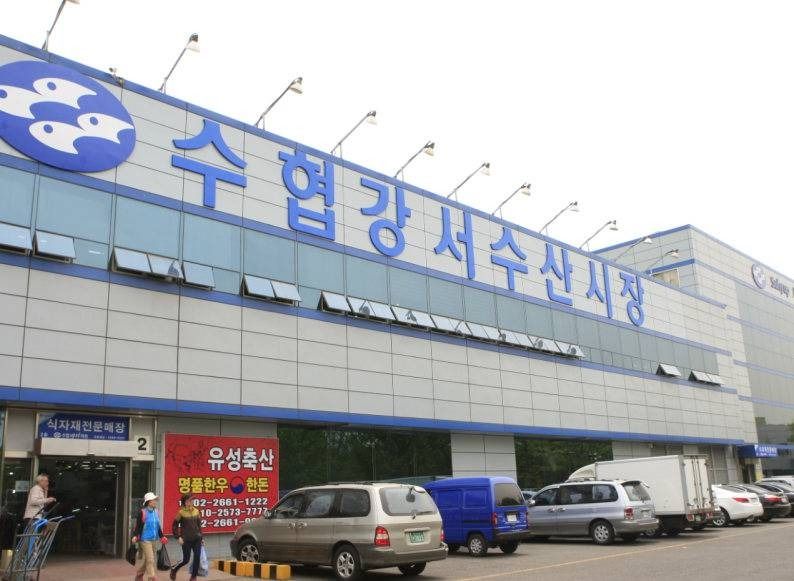
Suhyup Gangseo Seafood Wholesale Market (수협 강서수산시장)
13.0Km 2025-09-15
130 Gangseodomaesijang-ro, Gangseo-gu, Seoul
As Seoul's largest seafood market in the southwestern region, Suhyup Gangseo Seafood Wholesale Market supplies seafood from all over the country at stable prices through auctions every morning. It sells a variety of seafood, including live fish, fish, shellfish, crustaceans, dried fish, and fermented fish products in fresh condition. Consumers can enjoy the seafood they purchase directly from the market at the specialized restaurant area on the second floor, which offers a wide range of seafood dishes and a diverse menu. The spacious and comfortable area is also suitable for family gatherings or company dinners.
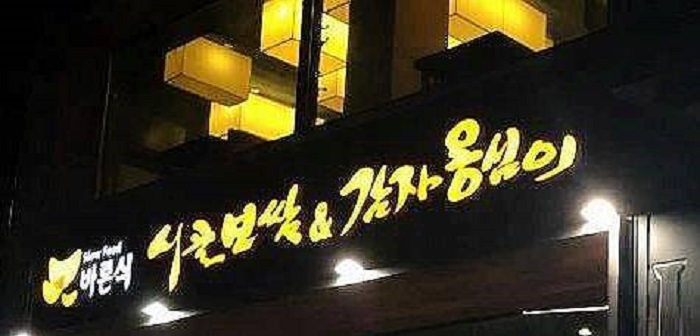
Sigol Bossam (시골보쌈)
13.1Km 2024-10-14
25 Bangbaecheon-ro 2-gil, Seocho-gu, Seoul
+82-2-3473-7358
Potato Ongsim is also a popular dish. The best menu at this restaurant is kimchi cabbage wraps with pork. This Korean dishes restaurant is located in Seocho-gu, Seoul.

Olive Young - Gwacheon Branch [Tax Refund Shop] (올리브영 과천점)
13.1Km 2024-06-26
25, Byeoryangsangga 1-ro, Gwacheon-si, Gyeonggi-do
-
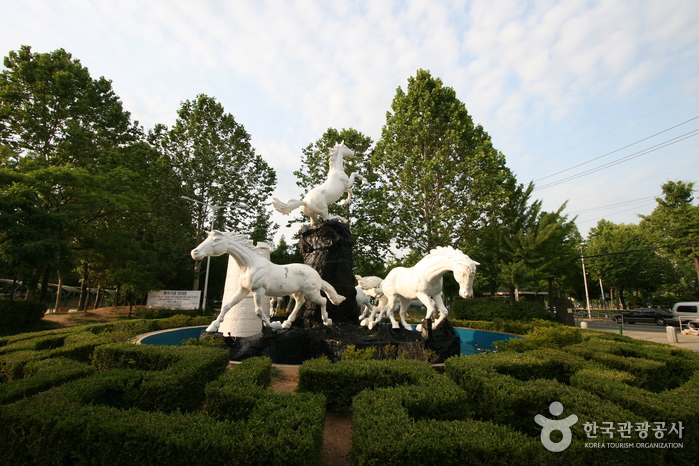
Sinteuri Park (신트리공원)
13.1Km 2021-07-08
21, Sinteuri-ro, Bupyeong-gu, Incheon
+82-32-509-6973
The city of Bupyeong is surrounded by Gyeyangsan Mountain, Cheolmasan Mountain, and Manwolsan Mountain, which all form a basin-shaped area in the center. Bupyeong slowly began to establish itself as a city after the opening of Gyeongin railway and the U.S. Army base established right after the Korean War. Sinteuri Park in Bupyeong 4(sa)-dong neighborhood is equipped with outdoor recreational facilities including a soccer field, tennis court, badminton court, children's playground, walking trail, and water fountain, spanning an impressive 58,594 ㎡. It also has a library with 1,500 seats, and a floor area of 7,869 ㎡. The park serves as a main recreational area for Bupyeong residents.
![Himart - Sadang Branch [Tax Refund Shop] (하이마트 사당점)](http://tong.visitkorea.or.kr/cms/resource/28/2880028_image2_1.jpg)
Himart - Sadang Branch [Tax Refund Shop] (하이마트 사당점)
13.1Km 2024-04-18
77, Dongjak-daero, Dongjak-gu, Seoul
-
![LG Best Shop - Gangseo Branch [Tax Refund Shop] (엘지베스트샵 강서점)](http://tong.visitkorea.or.kr/cms/resource/94/2880094_image2_1.jpg)
LG Best Shop - Gangseo Branch [Tax Refund Shop] (엘지베스트샵 강서점)
13.1Km 2024-04-18
431, Gonghang-daero, Gangseo-gu, Seoul
-
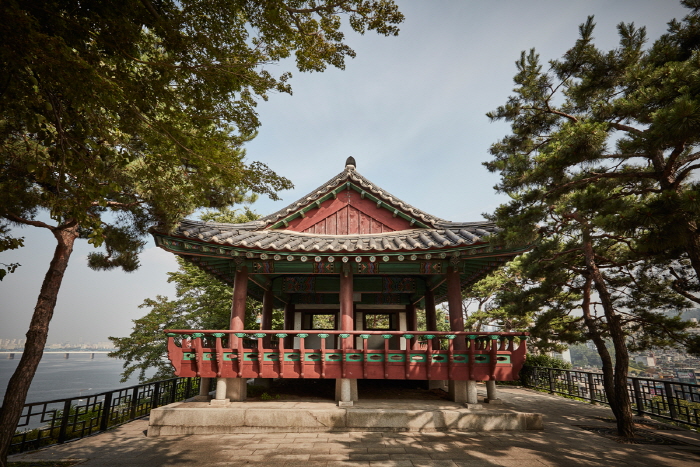
Hyosajeong Pavilion (효사정)
13.2Km 2025-01-13
55, Hyeonchung-ro, Dongjak-gu, Seoul
+82-2-820-9848
Hyosajeong Pavilion is where Nohan, the second vice premier of the Joseon dynasty during King Sejong and King Sejo’s reign, stayed. After he lost his mother, he built the pavilion to mourn at her grave while still being able to see his father’s grave in Gaeseong to the North. His brother-in-law, then Minister of the Interior, Gang Sa-deok named the pavilion “Hyosajeong,” which means pavilion of filial piety.
In order to find the original location of the pavilion, poems by Jeong Inji and Seo Geojeong and an old map of Korea were referenced, but the pavilion was not found because the surrounding landscape had changed too much. As a result, a location was selected and the pavilion was reconstructed at its current location. The house is 3 kan* in the front and 2 kan* on the side. The roof is a hip-and-gable roof. The pavilion has one room with under floor heating and a railing around the pavilion
(* kan: a traditional measurement that corresponds to the space between two columns)
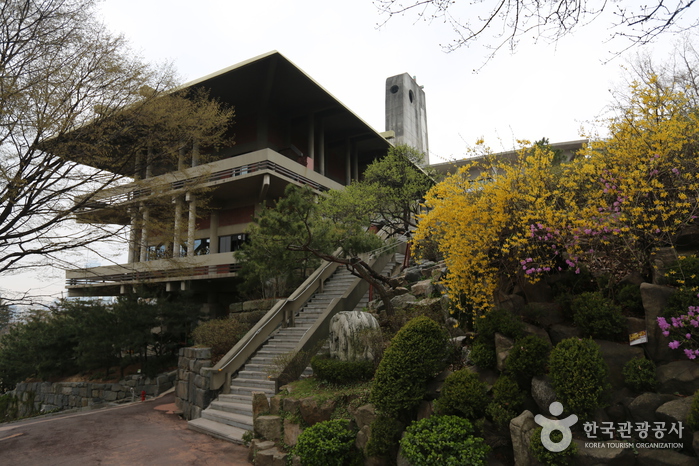
Korean Martyrs' Museum (한국천주교순교자박물관)
13.2Km 2023-01-03
6, Tojeong-ro, Mapo-gu, Seoul
+82-2-3142-4434
Korean Martyrs’ Museum was opened in October of 1967 as Jeoldusan Martyrs' Shrine, in memory of the Catholic martyrs who lost their lives during the Byeongin Persecution of 1866. The name of the museum changed to the current Korean Martyrs' Museum in August 2008. The museum displays artifacts and materials in exhibitions related to the Catholic Bishops' Conference of Korea.
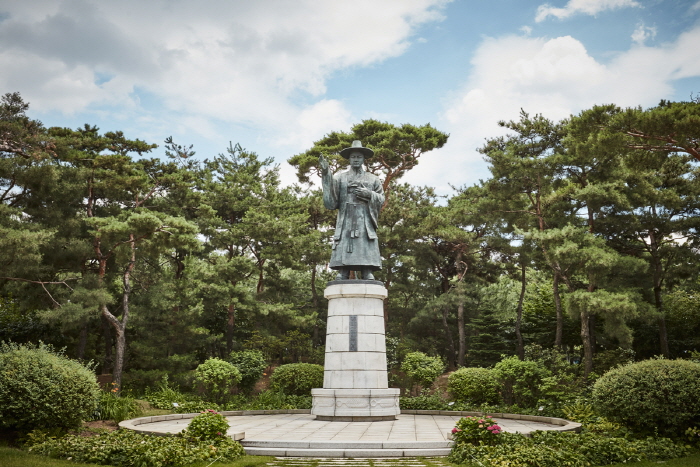
Jeoldusan Martyrs' Shrine (절두산순교성지)
13.2Km 2024-03-12
6 Tojeong-ro, Mapo-gu, Seoul
+82-2-3142-4434
Jeoldusan Martyrs' Shrine is the site where many Catholic believers were executed in 1866 due to persecution. In commemoration of the 100th anniversary of the martyrdom, the Korean Catholic Church opened the Memorial Hall in October 1967, exhibiting materials, relics, and souvenirs related to the Korean Catholic Church and operating a museum. Pope Johannes Paulus II visited the site in 1984, and Mother Teresa visited in 1985.
 English
 한국어
한국어 日本語
日本語 中文(简体)
 Deutsch
 Français
 Español
 Русский


