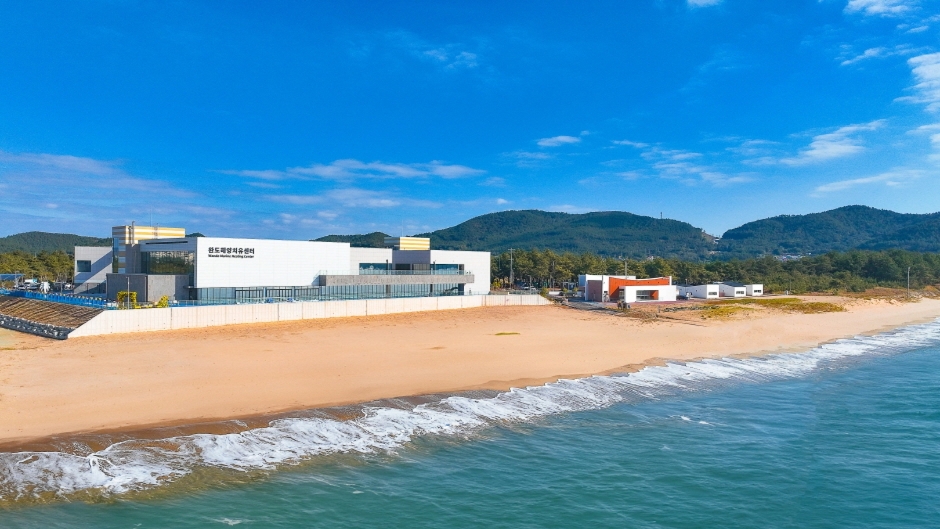
Wando Marine Healing Center (완도해양치유센터)
10.1Km 2025-10-23
100 Haeyangchiyu-gil, Sinji-myeon, Wando-gun, Jeollanam-do
Wando Marine Healing Center is the first marine therapy facility in Korea. It has 16 types of therapy facilities utilizing seawater, mud, and marine algae. There are five programs on the first floor, such as the Thalasso Pool, Mud Therapy, Marine Algae Bubble Therapy, and the Seawater Mist. On the second floor, the center runs wet therapy programs (steam shower, marine algae bath, wet therapy using seawater) and dry therapy programs themed around stimulating the five senses using colors, sound, music, scents, and stones.

Dadohaehaesang National Park (Wando Section) (다도해해상국립공원(완도))
12.9Km 2024-04-04
Wando-eup, Wando-gun, Jeollanam-do
Dadohaehaesang National Park was established on December 23, 1981 as the 14th national park, and it is the nation's largest park, spread over 2,344 ㎢. Within this area are nearly 1,700 islands of varying sizes, including Hongdo, Heuksando, Geomundo, and Baekdo Islands. During the Silla period, the King of the Sea, Jang Bogo established the maritime world and during the Goryeo dynasty, the area was a trading path with the Yuan and Song dynasties. Also, it was the battlefield where Admiral Yi Sun-sin defeated the invading navy during the Imjin War (1592-1598). Likewise, historical sites remain in many places.
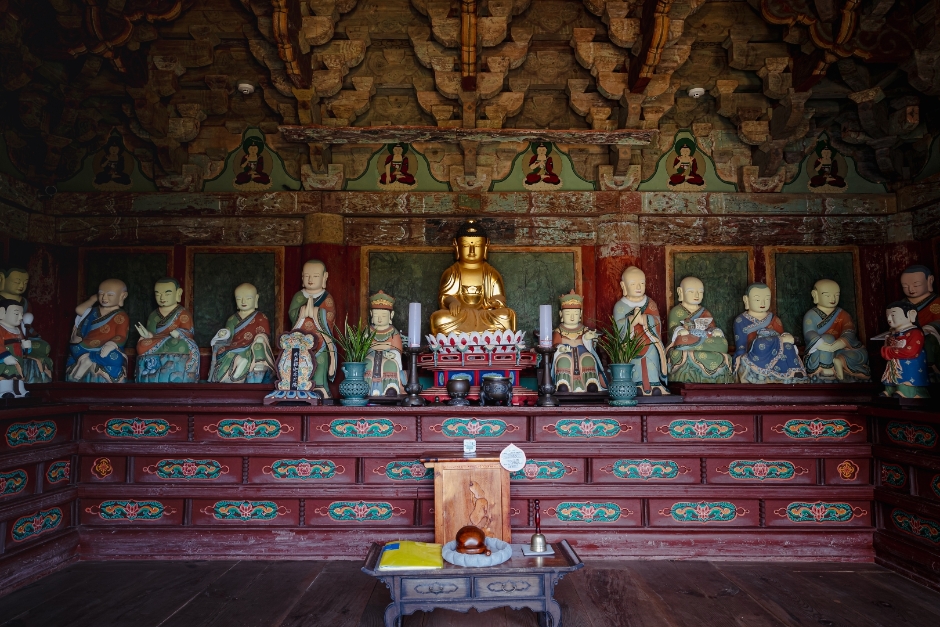
Mihwangsa Temple (미황사)
15.0Km 2025-10-23
164 Mihwangsa-gil, Haenam-gun, Jeollanam-do
Constructed during the eighth year of King Gyeongdeok of the Silla dynasty (749), Mihwangsa Temple is located on the western side of Dalmasan Mountain (489 meters), titled the Geumgangsan Mountain of the Southern Sea. The temple is situated the furthest south of all temples in the Korean peninsula. Beautiful sunsets and the view of the graceful Dalmasan Mountain from the temple attract numerous visitors. The foot of the mountain found behind the temple blends well with the suitable-sized temple and the appearance of Daeungbojeon Hall gives out an aura of comfort and tranquility. The cornerstone of Daeungbojeon Hall is carved with sea creatures, such as turtles and crabs that cannot be observed elsewhere. Other attractions include 18th century murals on the walls of Daeungbojeon and Unginjeon Halls.
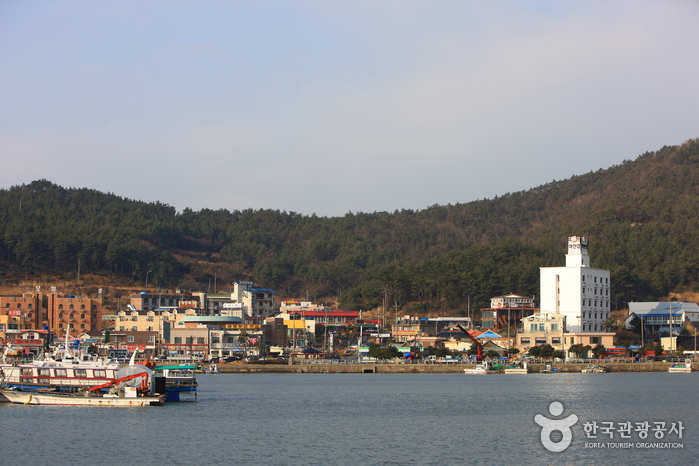
Galdu Village (Ttangkkeut Village) (갈두마을 (땅끝마을))
16.2Km 2025-03-16
82, Ttangkkeunmaeul-gil, Haenam-gun, Jeollanam-do
Galdu Village, also referred to as Ttangkkeut (Land's-end) Village in Haenam-gun, Jeollanam-do is at the southernmost point of the Korean peninsula. The island has an observatory at Sajabong Peak, where one can get an unobstructed view of the southern archipelago, and even a glimpse of Hallsan Mountain on Jeju Island on a clear day. The name "galdu" originated from the Chinese characters for arrowroot, which was commonly found in the nearby mountains.

Ttangkkeut Observatory (땅끝전망대)
16.5Km 2025-02-03
100 Ttangkkeunmaeul-gil, Songji-myeon, Haenam-gun, Jeollanam-do
The edge of the Haenam is referred to as ttangkkeut, which literally means at the end of the land. Located on Galdusan Mountain, the Ttangkkeut Observatory provides a panoramic view spanning from Jindo Island to Wando Island. The first floor of the observatory features a photo booth, where visitors can take pictures with Haenam’s Mascot and Ttangkkeut Village in the background. The café on the first floor provides visitors an opportunity to rest. Even though the observatory is easily accessible by walk, it is recommended to take the monorail, which offers a beautiful view of the Ttangkkeut Village.
Ttangkkeut Tower & Skywalk (땅끝탑 스카이워크)
16.6Km 2025-02-03
Songho-ri, Songji-myeon, Haenam-gun, Jeollanam-do
Ttangkkeut Tower is a triangle monument commemorating the southernmost tip of the Korean peninsula. The Skywalk was remodeled using glass material with the theme of “taking one step beyond the end of the land,” symbolizing the end the beginning of the Korean peninsula. The skywalk made with transparent glass panels, offers visitors the thrill of walking above the sea. The installed photo booth provides visitors a chance to click great pictures with the vast blue sea in the background on one side and the Ttangkkeut Tower on another. It is also renowned for stunning sunset views.
Ttangkkeut Monorail (땅끝모노레일)
16.6Km 2024-02-20
60-28 Ttangkkeunmaeul-gil, Songji-myeon, Haenam-gun, Jeollanam-do
Ttangkkeut Monorail is a tourist monorail that runs to the Ttangkkeut Village Observatory. It takes about 6 minutes for a one-way trip to the observatory, during which passengers can enjoy the beautiful scenery of Ttangkkeut Village in Haenam, stretching from the mountains to the sea. After enjoying the view from the top, visitors can descend via stairs to reach the Ttangkkeut Tower.
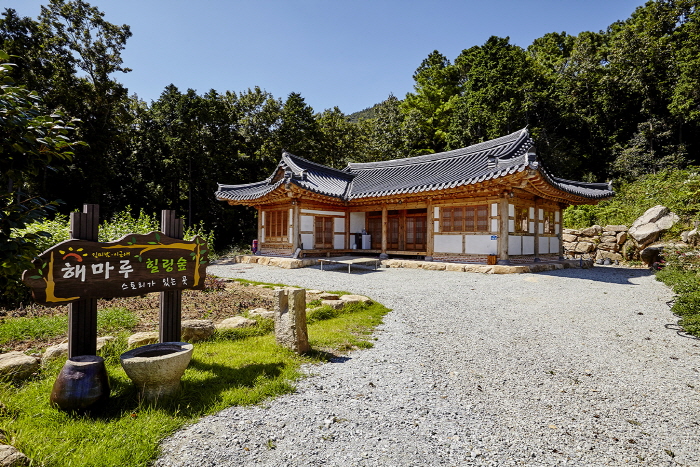
Songho Beach (송호해수욕장)
17.1Km 2021-11-23
1827, Ttangkkeutaean-ro, Haenam-gun, Jeollanam-do
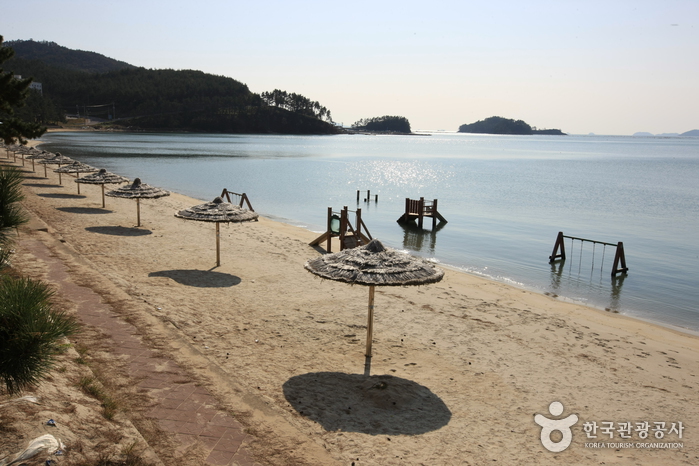
Songho Beach is the most representative beach in Haenam and was named so for its dense old pine trees, fine sand, and shallow water resembling a lake. The fine sand and shallow waters make it the perfect beach for families. Hundreds of pine trees create a scenic forest reaching almost 1 kilometer along the levee which provides a suitable camping site under in the forest. The Ttangkkeut Trail that starts from Songho Beach auto-campgrond connects to Galsan Village and Ttangkkeut Tower.
The windbreak pine forest in Songho-ri, Haenam is designated as Jeollanam-do Natural Monument, consisting of at least 600 pine trees aged 200 years that play a vital role in the coastal shelterbelt.
Soando Island (소안도)
17.5Km 2021-11-12
Soan-myeon, Wando-gun, Jeollanam-do
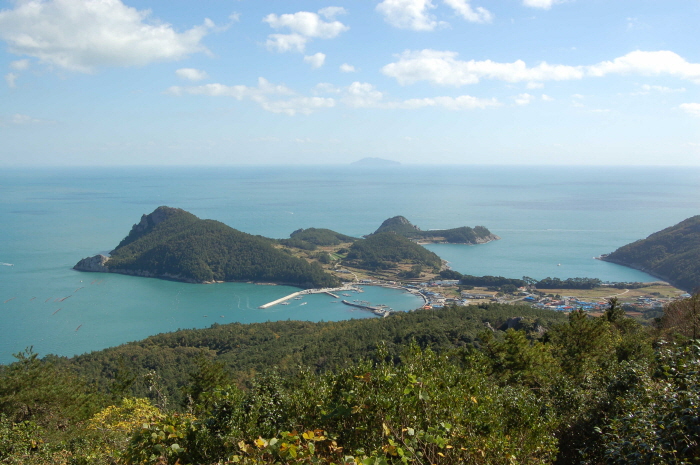
Soando Island was settled by the Oh Family of Dongbok and the Kim Family of Gimhae, who moved to the island during the Imjin War. It was a very patriotic island during the Japanese occupation, stated to have flown the Korean flag all-year round. Patriots like Song Nae-ho, who fought hard for Korean independence, are remembered on the island at Soan Independence Movement Hall.
In addition, Mira-ri and Maengseong-ri Evergreen Forests, which have been designated as Natural Monuments No. 339 and No. 400 respectively, offer a breathtaking ocean view. Mira-ri Evergreen Forest, in particular, is famous for its unique mudflat pebbles. The waters around the island are also popular among fishermen nationwide.
 English
 한국어
한국어 日本語
日本語 中文(简体)
 Deutsch
 Français
 Español
 Русский


