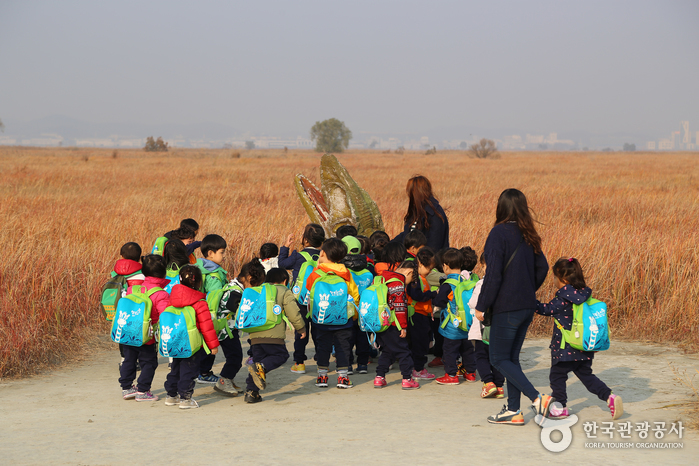
Hwaseong Fossilized Dinosaur Egg Site (화성 공룡알 화석지)
16.9Km 2021-12-23
659, Gongnyong-ro, Hwaseong-si, Gyeonggi-do
+82-31-5189-3508
The Hwaseong Fossilized Dinosaur Egg Site was discovered on an island in the tidal plain south of Sihwaho Lake. The island was revealed when seawaters were blocked during a land reclamation project. As the sedimentary layer formed during the Cretaceous period of the Mesozoic Era (dated around 83 million to 85 million years ago) was eroded by weathering, roughly 200 dinosaur eggs in thirty nests were discovered at twelve dig sites. It is anticipated that more fossils will be discovered once a thorough investigation is carried out and more land is reclaimed.
The discovery of the Fossilized Dinosaur Egg Site in Hwaseong has greatly expanded the scope of Korean paleontology; previous paleontological discoveries were exclusively limited to fossilized dinosaur footprints. This significant discovery has attracted many internationally renowned scholars who have visited the site in Hwaseong.
![Artbox - Ansan Branch [Tax Refund Shop] (아트박스 안산)](http://tong.visitkorea.or.kr/cms/resource/40/2888540_image2_1.jpg)
Artbox - Ansan Branch [Tax Refund Shop] (아트박스 안산)
16.9Km 2024-04-19
915, Jungang-daero, Danwon-gu, Ansan-si, Gyeonggi-do
-

Olive Young - Ansan Wolpi Park Branch [Tax Refund Shop] (올리브영 안산월피공원점)
16.9Km 2024-06-27
1F, 31, Yesulgwangjang-ro, Sangnok-gu, Ansan-si, Gyeonggi-do
-
![Olive Young - Bucheon Wonjong Branch [Tax Refund Shop] (올리브영 부천원종)](http://tong.visitkorea.or.kr/cms/resource/26/2888126_image2_1.jpg)
Olive Young - Bucheon Wonjong Branch [Tax Refund Shop] (올리브영 부천원종)
16.9Km 2024-04-17
759, Sosa-ro, Bucheon-si, Gyeonggi-do
-
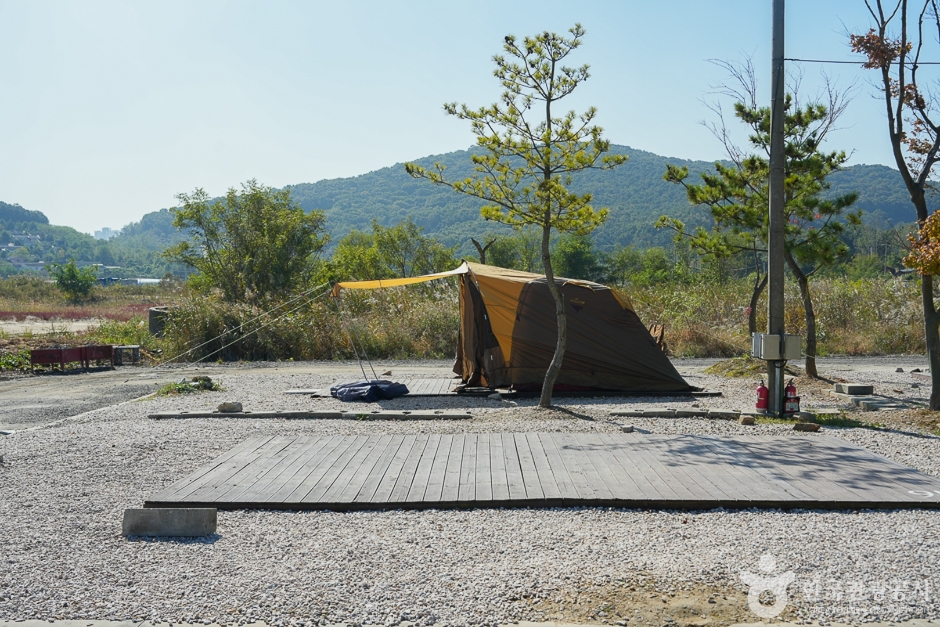
Manjung Campground (만정캠핑장)
17.0Km 2024-02-16
279-20 Yeongjongsunhwan-ro, Jung-gu, Incheon
Manjung Campground, situated on Yeongjongdo Island, offers spacious campsites allowing for undisturbed rest. Adjacent to the campground are fishing areas for both freshwater and sea fishing, making it a favored spot among fishing enthusiasts. Additionally, its proximity to Yeongjongdaegyo Bridge enhances accessibility, and visitors can enjoy spectacular sunset views as well.
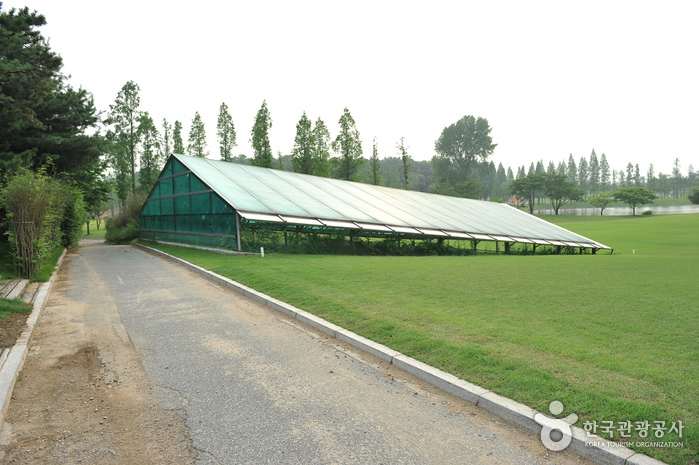
Incheon Gyeongseo-dong Nokcheongja Kiln Site (인천 경서동 녹청자 요지)
17.1Km 2021-04-23
54, Doyoji-ro, Seo-gu, Incheon
+82-32-440-4063
The Nokcheongja (Green Celadon) Kiln Site was designated as Historic Site No. 211 in May 1970. On December 9, 1984, the 82.6 ㎥ of the protective film was restored here. In addition, the unearthed models consisted of bowls and plates, as well as porcelain and pots. The colors of the glaze are greenish brown and dark green, opaque and non-glossy, and there are spots on the surface, but this is the component of the glaze. It is believed to have come from the influence of the special structure of the kiln and the firing temperature.
Dodeoksan Suspension Bridge (도덕산 출렁다리)
17.1Km 2025-11-06
317-80 Gwangmyeong-dong, Gwangmyeong-si, Gyeonggi-do
Dodeoksan Suspension Bridge is located in Dodeoksan Park, which serves as a resting place and a light hiking course for citizens of Gwangmyeong. Dodeoksan Park has a well-maintained wooden walkway, and the slope is not too steep, so anyone can walk safely there. It is about 400 meters from Dodeoksan Park parking lot to Dodeoksan Suspension Bridge, allowing one to reach the bridge at a leisurely pace on foot. The bridge is in a Y-shape and 82 meters long in total and has an artificial waterfall under the midpoint of the bridge, giving a thrilling yet refreshing experience.
Nokcheongja Museum (녹청자박물관)
17.1Km 2021-10-23
54, Doyoji-ro, Seo-gu, Incheon
+82-32-563-4341
Since opening in 2002, the Nokcheongja Museum has been preserving and exhibiting academic materials about the Green Celadon Kiln Site, a Historic Site designated in 1970. It is the only museum dedicated to celadons in Incheon. The museum is divided into the History Exhibition Hall where visitors can observe the celadon making process and the Special Exhibition Hall that displays modern-day celadons. In addition to the two indoor exhibition halls, the museum also has an outdoor exhibition site with a collection of approximately 200 donated potteries, ranging from traditional to recently trending designs.
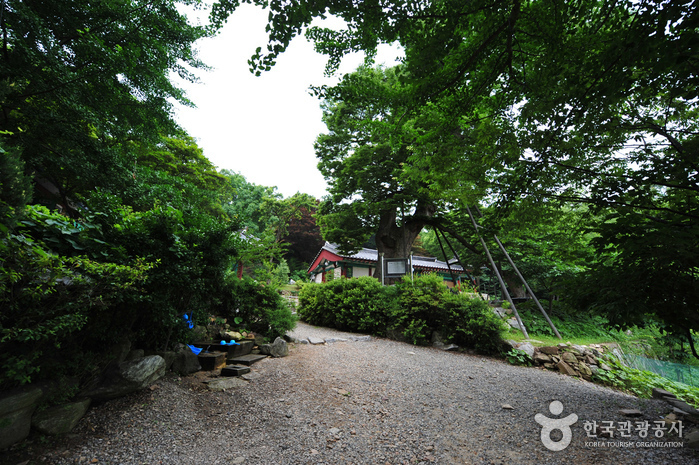
Incheon Yonggungsa Temple (용궁사 (인천))
17.1Km 2021-11-12
199-1, Unnam-ro, Jung-gu, Incheon
+82-32-746-1361
Yonggungsa Temple is located in the same region as the Incheon International Airport and sits on the northeastern slopes of Baegunsan Mountain. During the Silla Kingdom (about 1,300 years ago), the temple was named ‘Baegunsa’ by King Munmu, in reference to the temple’s mountain home. During the Joseon dynasty, it was the temporary residence of Heungseon Daewongun (1820-1898, a politician and father of King Gojong), who stayed at the temple for 10 years praying for his son to ascend to the throne. When his son was finally crowned king, Heungseon Daewongun rebuilt the temple and changed the name to Yonggungsa.
The temple consists of various buildings such as Gwaneumjeon (re-constructed by Heungseon Daewongun), Yosachae (home of the monks), Chilseonggak, and Yonghwanggak. In Yosachae, the writings of Heungseon Daewongun are hung on the wall and recently, an 11 meter-high statue of Maitreya was put in place. In front of the temple are two 1,300 year-old zelkova trees.
Olive Young - Gwangmyeong Sageori Station Branch [Tax Refund Shop] (올리브영 광명사거리역)
17.2Km 2024-04-18
897, Gwangmyeong-ro, Gwangmyeong-si, Gyeonggi-do
-
 English
 한국어
한국어 日本語
日本語 中文(简体)
 Deutsch
 Français
 Español
 Русский


